Psychology
Matin Kakhsaz's Article: Therapeutic Ways to Overcome Anxiety and Obsession Caused by the Coronavirus (COVID-19)
Coronavirus-induced anxiety and OCD threaten the immune system; Matin Kakhsaz examines therapeutic ways to overcome these disorders using cognitive approaches and metaphor therapy that can be practiced at home.
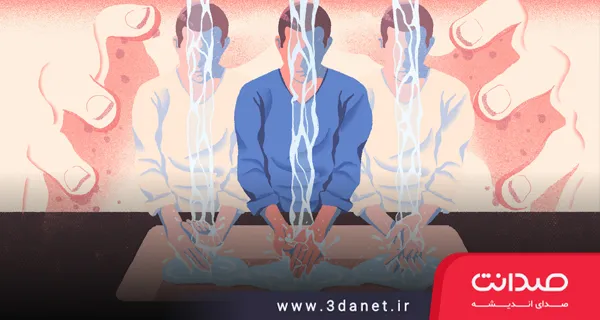
When you came through the door with the fiery cup / Obsession and sorrow, like smoke, drift toward the roof
From that wine you have given to the sun, the moon, and the sky / Each one, with such joy, is thus tamed and goes along
(Jalal al-Din Balkhi, The Works of Shams)
One of the consequences of the global spread of the coronavirus is the fear, anxiety, and psychological obsession that many people have either developed or are in the process of developing. The main reason for this is that a definitive cure does not yet exist. In fact, for many individuals, the fear of contracting the coronavirus is tantamount to the fear of death. On the other hand, currently, the best approach is prevention and boosting the body's immune system. Since psychological disorders, especially anxiety and obsession (from practical obsessions regarding washing to intellectual obsessions about death, etc.), have a significantly negative impact on the immune system, it is necessary to treat these disorders. This article attempts to examine, in simple language suitable for public understanding, therapeutic methods and techniques for overcoming anxiety and obsession using approaches such as cognitive-behavioral therapy, metaphor therapy, mindfulness, family therapy, and others. These are methods that can be easily implemented at home by the afflicted individual (with obsession or anxiety) or with the help of family members acting as assistants. However, in severe cases of anxiety and obsession, a psychiatrist is necessary.
Obsessive-Compulsive Disorder (OCD): In a general definition, it manifests in two domains (thoughts and actions) within the individual. It is an anxiety disorder involving obsessions (thoughts) or compulsions in repetitive actions, causing many problems in the individual's daily life and their interaction with society (Kaplan: 753/1 and Steketee: 11). The characteristic of these thoughts and behaviors is that they are compulsively and constantly repeated without the individual having any control over them, and their recurrence causes disturbance. Regarding our article, the practical or mental review and contemplation of news about deaths caused by the coronavirus, anxious and obsessive thinking about one's own death or that of loved ones, obsession with washing, hoarding and stockpiling hygiene products, obsession and fear of contracting the illness and potentially harming others, obsessive fear of appearing in public (for necessary tasks outside the home) (Social Phobia), etc., all constitute a psychological disorder if they possess the aforementioned characteristic. It should be noted that fear and anxiety are not inherently negative; rather, they guarantee an individual's health. However, when they get out of control, they are considered an enemy in the form of obsessive thoughts and actions (Yalom: 270).
Solutions for Treating and Overcoming Anxiety and Obsession
From a general perspective (existential therapists), anxiety and obsession are somewhat related to death and the fear of death; that is, the obsessive individual engages in obsessive behavior due to fear and anxiety about death (ibid: 82) to temporarily quell their anxiety. It seems, at least in many cases, that if one can overcome the fear of death, obsession can also be treated. Confronting the fear of death and prevailing over it, of course, requires philosophizing and contemplation and is not considered a simple solution.
First Treatment: Rational-Emotive Therapy: This can be addressed through logic and reasoning. In this treatment, the individual, with the help of family and friends, examines the generalizations, assumptions, errors, and negative feelings arising from anxiety (Steketee: 53). A list of false beliefs associated with the obsessive patient will be provided at the end of this article. For instance, a person who equates touching objects outside the home with contracting the coronavirus and death, and constantly repeats washing rituals or is incessantly bombarded with thoughts of contracting the coronavirus, must logically realize that an all-or-nothing (black-and-white) perspective on this matter is a very mistaken assumption. Not all objects outside are necessarily carriers of the virus. Assuming they are carriers and the hands become contaminated, the virus is eliminated with one careful wash. Furthermore, in the event of infection, not every patient is necessarily going to die. A very important point that is usually overlooked and causes anxiety is that when confronting illness, and especially the coronavirus, one should not use metaphors such as battling a deadly and lethal virus, or crushing and suppressing a wicked virus, and the like. In simple terms, a metaphor means interpreting one thing through another. In the example above, wickedness, in the comprehensive sense of vices and errors, has been attributed to the characteristic of the coronavirus, and suppression, which is a military and army characteristic, has been used to elaborate its feature. In more technical language, several mental spaces have been blended (Fauconnier: 63-71). This has no effect other than creating false anxiety in the face of illness. For example, if we are to use the characteristic of a fight in the interpretation, we should speak of a fight involving a few strikes and ducks (in the language of kickboxers, a few Ducks, a type of dodge, and a few Low Kicks, a not-so-devastating strike from the shin to the lower part of the opponent). Great care must be taken in using these interpretations, especially when explaining the illness to children. In this regard, one can use this interpretation: "Facing Corona is a game of keep-away" (where one can win or even score points by dodging). As in the film "Life Is Beautiful" (1997) directed by Roberto Benigni, a father who is imprisoned with his young son tries to present the entire captivity and ultimately his own death to his son as a game, and succeeds in ensuring the child suffers no psychological harm or the suffering of captivity. Susan Sontag, in her book "Illness as Metaphor," historically demonstrates how inappropriate metaphors for cancer have caused shame, despair, and psychological problems for cancer patients (Sontag: 132). In some branches of psychotherapy (especially Cognitive) and Metaphor Therapy, great attention is paid to this subject (Littelmore: 356-7 and Kopp: 133).
Second Treatment: Thought Stopping: This method can be implemented by the patient themselves or with the help of others. It works like this: the patient closes their eyes, and one of the people around them describes a scenario in which the patient is placed in an obsessive situation (for example, regarding washing). The patient is asked to raise their hand whenever obsessive thoughts come to them while listening to the scenario, and when they raise their hand, the helper says: "Stop," and in this way, the thought disappears. Then, it is pointed out to the patient that this sentence cannot be uttered loudly in public; however, this sentence can gradually be associated with stopping the thought. In the next stage, the therapist describes the scenario plus an obsessive thought, and this time, upon the patient raising their hand, the therapist says the same sentence. The next stage is like the previous one, with the difference that the patient themselves utters the mentioned sentence, and in subsequent times, the patient brings this sentence to mind mentally. The total time for each therapy session is twenty minutes, and it can continue for three sessions or more (Hawton: 218). In other cases, when those around the individual observe them speaking repeatedly and obsessively about contracting the disease or coronavirus statistics, they should try to prevent the continuation of the obsessive behavior by interrupting their speech, for example, by changing the direction of the conversation, etc.
Third Treatment: Exposure:
a) In-vivo exposure: In this technique, with the help of others, the patient is placed in a live or real situation involving obsessive thoughts (washing, encountering people, etc.) and anxiety, and despite them, refrains from obsessive behavior. They first rate anxiety-provoking situations in terms of anxiety from one hundred to zero (the situation of encountering people or going to the hospital, etc.) and place themselves in the least anxiety-provoking situation and then in situations with higher anxiety, and in all cases, they avoid obsessive behaviors and only practice hygiene at the standard level of coronavirus disinfection. Meanwhile, they try to bring the washing time and the amount of disinfectant liquid used to the standard level over three weeks (Hyman: 131-134). This method is not recommended for those with high anxiety, and it is better for them to implement the imaginal exposure method.
b) Imaged exposure: In this method, obsessive thoughts, between four and ten thoughts (shortage of hygiene products, contracting coronavirus, death of loved ones, or encountering a coronavirus patient, etc.), are depicted in detail by the patient or others. So that the patient feels themselves in that situation, and then the patient is asked to address the adverse consequences of these situations. This exposure (each session one to two hours per day) continues until the patient's anxiety level from imagining such situations decreases (Steketee: 44-45).
In a self-therapeutic form, the patient can, for example, record their obsessive thought with a mobile phone for thirty seconds and listen to it for twenty minutes without ever deciding to neutralize those thoughts. Until their anxiety level from hearing that image and thought decreases. In subsequent stages, they record other obsessive thoughts in addition to that previous thought and listen to them in the same way; this time, one to two hours a day. It is necessary to gradually listen to those thoughts even in stressful conditions; for example, someone who obsessively avoids encountering people in a store, etc., listens to it in the store (Hawton: 214 and Steketee: 41).
The Fourth Treatment: Mindfulness: A type of practice for experiencing the "here and now." In this method, the individual, in a calm position (on a sofa or bed), with eyes open or closed, after three deep breaths, begins to count inhalations. During the inhalation, they say the number one in their mind and then exhale naturally. On the second inhalation, they do the same up to the number ten (for fifteen minutes). Throughout this time, allow any thought and imagination to roam freely in the mind. Only metaphorically imagine yourself at a train station, sitting on a platform, and thoughts are trains that come in order, and you are merely a spectator. Gradually try to extend calmness and stillness to parts of the body that are tense. This exercise can show its desired effects within a month (Hyman: 191-192).
In all methods except mindfulness, it is better to note a list of obsessive thoughts and behaviors in a notebook and, by scoring from zero to one hundred, examine the level of their reduction during treatment. Note that these treatments are all based on regular sessions and follow-up and should not be abandoned after being done once. Moreover, everyone can test each method and its level of effectiveness on themselves.
Finally, a list of obsessive and incorrect thoughts (ibid: 161-162) with an approach to contracting the coronavirus will follow.
Exaggeration of risk and harm: I must keep myself and my loved ones safe from the risk of infection. Even the smallest probability, a 1 percent chance, is exactly the same as a 99 percent chance.
Excessive control and perfectionism: I must control all my thoughts and actions completely and have mastery over them, and if even one thing and one task is neglected by me, it is as if I have done nothing. If I cannot gather a three-month supply of hygiene products (hoarding obsession), I will certainly suffer many calamities.
Persistent doubt that does not necessarily have a logical or real basis: I have not observed hygiene sufficiently. I may be infected and may infect another.
"What if?" thinking: What if I get infected? What if I have the coronavirus?
Magical thinking: Thoughts are extraordinarily powerful. Merely thinking about something bad and terrible, like infection, will definitely cause it to happen.
Catastrophizing: If I was near someone suspected of having the coronavirus in the store, I will definitely contract the disease.
Unnatural reasoning: Phenomena can defy the laws of nature; the virus can traverse great distances or may even develop resistance to alcohol in the long run!
Pessimistic bias: If someone is going to get infected, it will certainly be someone from my family or close circle.
Intolerance of anxiety: I cannot bear the anxiety of infection, even for a short time, and I must be free of it right now.
Emotional reasoning: I must be at risk of infection, otherwise I wouldn't feel this anxious; or, I feel bad today, so a bad event surely awaits me.
.
.
References and Sources:
Steketee, Gail and Pigott, Teresa: Obsessive-Compulsive Disorder, The Latest Strategies for Assessment and Treatment, translated by Habibollah Ghasemzadeh, Arjmand: 2012
Sontag, Susan: Illness as Metaphor and AIDS and Its Metaphors, translated by Ehsan Kianikhah, Herfeh Honarmand: 2014
Kaplan and Sadock (11th Edition): Synopsis of Psychiatry, Behavioral Sciences/Clinical Psychiatry by Sadock et al., Vol. 1, translated by Farzin Rezaei, Arjmand: 2017
Hawton, Kirk and Salkovskis, Clark: Cognitive Behaviour Therapy, A Practical Guide to the Treatment of Mental Disorders, Vol. 1, translated by Habibollah Ghasemzadeh, Arjmand: 2018
Hyman, Bruce and Pedrick, Cherry: Getting Over OCD, A Workbook for Patients, translated by Habibollah Ghasemzadeh, Arjmand: 2013
Yalom, Irvin: Existential Psychotherapy, translated by Sepideh Habib, Ney: 2014
Gilles Fauconnier: Mental Spaces: Aspects of Meaning Construction in Natural Language, Cambridge: 1994
Jeannette Littlemore, John R. Taylor and Contributors: The Bloomsbury Companion to Cognitive Linguistics, Bloomsbury: 2014
Kopp, Richard Royal: Metaphor therapy: using client-generated metaphors in psychotherapy, BRUNNER/MAZEL: 1995
.
.
Title: Therapeutic Ways to Overcome Anxiety and Obsession Caused by the Coronavirus (COVID-19)
Author: Matin Kakhsaz
matinkakhsaz@gmail.com
.
.






Discussion0 comments
No comments yet; let yours be the first voice.