Sociology
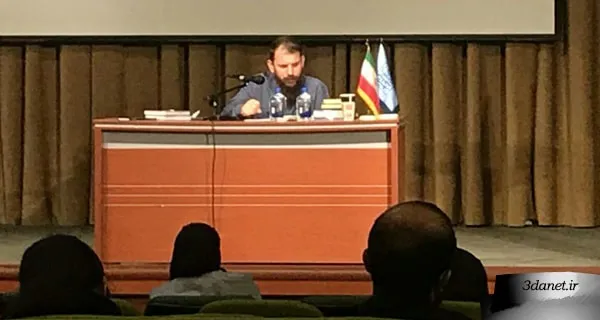
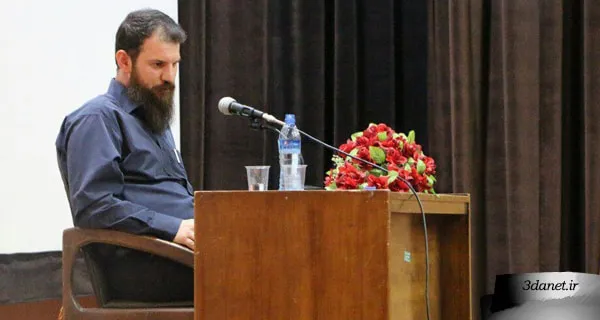
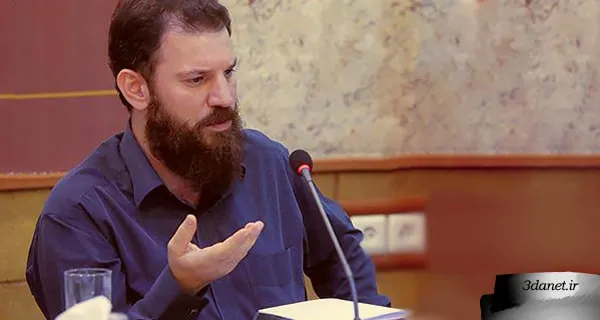
Mohammad Mehdi Ardebili's Lecture: “Ways Society Evades Confronting Itself”
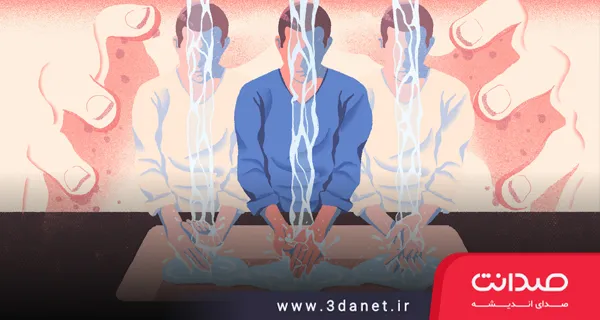
Our activities are often escapes from confronting ourselves and our condition—suicide, emigration, antiquarianism, mysticism-mania, and pristine nature. Ardabili examines eight patterns of societal flight from the self that prevent a reckoning with reality.
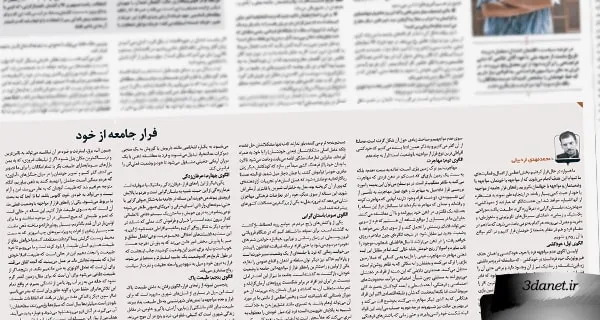
We are always in flight. A large part of our actions and activities are carried out with the sole aim of evading confrontation with ourselves, confrontation with our situation, and confrontation with our world. The ways society evades confronting itself are quantitatively very numerous. Here, by way of example, eight of them will be pointed out. These eight patterns, which are “suicide,” “emigration,” “archaism,” “mysticism-mania,” “pure nature,” “plastic and cosmetic surgery,” “watching television and satellite series,” and “unrestrained shopping and consumption,” each in some way cause us (both as individuals and as a society) to flee from ourselves and, in most cases, not to face it.
First Pattern: Suicide
The first pattern of the individual’s non-confrontation with the self is suicide, that is, the physiological elimination of the individual themselves; in suicide—of which, unfortunately, an aestheticized and romantic conception also exists today, and some even present it as a virtue—the individual encounters inadequacies that they are unable to bear, and consequently tries to do the easiest thing and eliminate the empirical self. In this way, they abandon the playing field toward “nothingness” and give up on themselves and the world. Although suicide is an important subject and one could discuss it for hours, since we are dealing with the physical elimination of the self and the subject’s departure toward nothingness, and many debates have formed around it, we will pass over it for now and content ourselves with stating this claim that suicide is the most extreme form of fleeing from confrontation with the situation; a flight into the abyss of nothingness.
Second Pattern: Emigration
Emigration is also an abandonment of the playing field; but not toward “nothingness.” Rather, toward a playing field that, at least in the mind of the individual who emigrates, is seemingly more desirable. This phenomenon can be examined on two levels: the desire to emigrate and the act of emigration itself. Following this division, there are two groups of people: those who have emigrated and left, and those who have not emigrated but have for many years nurtured this issue as a fantasy in their minds and flirted with it. Therefore, in many instances, we witness that the individual, on the one hand, cannot tolerate their living environment and, on the other hand, does not want to confront the new situation either. As a result, they carve out a notion such as “I will leave someday” in their mind in order to endure the existing undesirable environment for years and essentially shirk their own suffering. But in contrast to this mental idea of emigration, we have objective emigration; that is, those who actually leave the playing field and transfer their bodies to a place that is seemingly brighter. The main reasons that this group of individuals cultivate in their minds relate to issues such as social status, income, social and cultural restrictions, career prospects, and the future of their children in general. But the point is that the status and economic class of most of these individuals clearly decline when they emigrate to another country, and at best, they are considered second-class citizens. These individuals, of course, do not accept their failure, and even when they struggle with cultural tensions, they do not believe that not only have their problems not been solved, but they have also brought the main cause of their problems (that is, themselves) along with them. Thus, the aforementioned conflicts continue and cause the individual either to distance themselves so much from the culture of their country of origin that their children forget their mother tongue, or to be overcome by such an intense (and, of course, mostly hypocritical) longing for their “homeland” that the same distressing people and experiences from which they fled turn into sweet memories or an idealized fantasy. This issue, on the other hand, manifests itself in the cultural conflicts of immigrants, which has today become one of the greatest problems of developed countries.
Third Pattern: Archaism
One of the common reactions of people in declining societies is a return to the past. For instance, we witness that during the collapse of the Middle Ages, at the time of the Renaissance and rebirth, reading the poems of “Homer” suddenly becomes fashionable, or people even read Plato’s “Symposium” more. When an individual or a society is disillusioned with a situation and the dominant paradigm no longer has the power to dominate minds and persuade the public, one of the first and easiest ways to escape that society’s confrontation with its own situation is a return to the past. Our society is not immune to this affliction either. In Iran, too, in the face of the failure of idealistic projects and their subsequent experiences, individuals take refuge in the past and ancient times—an ancient era that is unknown, and a large part of our knowledge about it may be delusions. In a sense, it is like loving a void. It resembles Freudian “sublimation”; the individual directs the object of their desire toward something that is pure emptiness. It is neither satisfied nor completely repressed. All of a sudden, figures like Darius or Cyrus are transformed into democratic, justice-seeking saviors, and the individual engages in a mental lovemaking with an ideal-imaginary era in order to forget themselves and their current situation. The fourth pattern: Mysticism-mania Another one of these escape routes is romantic or Sufistic mysticism-mania. In this respect, mysticism-mania resembles archaism, and both are linked to Freudian sublimation. This issue appears in our society in the form of Sufism or even imported East Asian and South American varieties; a kind of taking refuge within oneself and building a defensive system to compensate for and forget the harms one has suffered from the outside. A model that might be seen in other societies in the form of Stoicism and extreme Romanticism. Hence, this tradition fosters bizarre moral virtues, a kind of absolute passivity, and sheer patience or acceptance of matters, believing that “whatever is, is good, and one should not strive to change this situation.” Interestingly, throughout history, whenever a society’s situation becomes more miserable and decadent, the escape into oneself, the desire for the direct intuition of truth, and hatred of politics become more prevalent.
The fifth pattern: Pure nature
The fifth example of escape routes is the pattern of retreating into the bosom of pure nature. This desire is evident in many urban humans who, to escape and avoid confronting the tensions of urban life, take refuge in the heart of nature. For most of us, nature represents a form of beauty, tranquility, purity, and innocence, in contrast to urban life, which is rife with filth, congestion, pain, and suffering. Of course, this ideal nature is the very same nature that, if devoid of the signs of civilization such as water, electricity, the internet, etc., can turn into the most unsafe and terrifying place. If we look past today’s advertisements, which, thanks to capitalist markets, depict pristine nature with all amenities for us, and bring to mind our own image amidst the “Amazon” forests where our lives might be threatened at any moment, we will then realize that nature is not as safe and calm as it seems and can, in itself, be a nightmare. But as far as it relates to our discussion, one of the ways to escape confronting our current situation is to flee toward nature. This is while the image of a nature in which no human exists and we are stepping into it for the first time is highly dreamy and a construct of our minds. Humanity has destroyed nature, and we go to save nature itself. This is while nature has no self to be saved. Consequently, if nature is defended, it is so that, for example, the earth does not warm up so much that my house goes underwater or I die of thirst. In reality, all these efforts are for preserving the “self” and the animal species we call human. But on the other hand, with a little attention, one can realize that the essence of nature is, in fact, destruction. The idea of defending nature has three specific goals: First: our effort to preserve our own living conditions. Second: preserving the entertainments we have cobbled together for ourselves on this planet (such as zoos and programs like “Secrets of Survival”). Third, and perhaps most importantly, our desire to conceal the miserable state of human life and society itself. Experience has shown that the more violence, killing, poverty, and hunger grow in our own societies, the more gestures of environmental conservation and animal rights to save this or that particular animal species also increase.
The sixth pattern: Plastic surgery and beauty
But another example is the discussion of the excessive desire for self-beautification, and its most prominent and tangible instance in our society is cosmetic surgery. The individual feels there is a problem in their life, is unaware of the true roots of these problems, does the most naive thing to find the roots of their problems, and stands before a mirror to find their flaws. The self that is considered here is a superficial self, reduced to the biological body. In this position, the individual feels that if a certain problem in their body is solved, all the problems around them will be resolved. Whereas, according to experience, these problems remain in full force after their surgery. One manifestation of this issue can also be excess in makeup. Here too, the “I” is constantly reduced to my physical body. In this context, of course, one must not forget the role of institutions or companies active in this field. With their dominance of a media and advertising mafia, they effectively inculcate their own marketable services into minds in advance as the definition of beauty.
The Seventh Pattern: Television and Satellite Series
The life of modern man is inherently tedious. Although, as Freud says, the source of this tedium lies in the essence of civilization, man tries to forget it in some way. In this case, especially the media, series, and the film and entertainment industry rush in to, in the words of “Roger Waters,” amuse us “to death.” Series can, by mentally holding an individual hostage for several months, ensnare them and seemingly remove the tension between desire and tedium, satisfaction and repression, and cause the individual, even among their family members, not to confront the tension and tedium of the situation, and to live elsewhere, in another country, another family, and another situation, through the mediation of a series and mental identification with its hero.
The Eighth Pattern: Excessive Shopping and Consumption
When an individual deems their existing means insufficient to meet their needs, the need to purchase is felt. The problem is that the individual has a particular model of house, car, and clothing in mind, but this is not enough for them; they want to have more and think that by having more, their problem will be solved. It has happened to all of us many times that when we buy a product, we are usually pleased with it for a little while and feel that our problem has been resolved. But in the long run, we realize that the problem remains. We constantly buy things to dispel the existing ennui, yet we always witness that the ennui remains in place. In fact, through excessive buying, we try each time to compensate for the ennui resulting from the failure of the previous purchase, and this vicious cycle continues. In Dialectic of Enlightenment, Adorno points out that at this juncture, there are two serious illusions: first, the mistaken notion that we truly buy things to satisfy our needs. With a little attention, one can see that our prior needs have no direct relation to our purchases, and in fact, our needs are defined by the very circles and financial networks that ostensibly are meeting these needs and, in the guise of a savior, sell us a commodity. Here too, we are faced with the vicious cycle of advertising, the feeling of false need, purchase, the feeling of false satisfaction, and then the next advertisement and subsequent purchases. The second illusion is that we imagine the new product is genuinely different from the old one. Adorno says: "The fact that the difference between the range of products from the Chrysler factory and the products of General Motors is fundamentally illusory is clear and obvious to any child who delights in this variety and difference." Today, the matter is even clearer than in Adorno's time. For instance, what real difference does a certain new mobile phone model have from the previous model? The only difference in these commodities lies in the display of their variety. We seek this variety itself, not that it has answered a need within us. Circulating amidst the flux of excessive purchases and consumption is another example of evasion. Undoubtedly, the eight examples above are not the only ways of evading confrontation with the self. A long list of such ways could be provided. But it seems that the rough mention of the above examples can serve as a wake-up call for us. What is important is that we ourselves, amidst the ceaseless flux of seemingly important and serious matters, in the midst of our fast-paced lives, can pause for a moment and no longer yield to the false flux of apparently necessary affairs, look at ourselves and the world, and ask ourselves: Where am I going at all, why am I going, and who is really taking me?
.
.
PDF File: Ways Society Evades Confronting Itself
.
. Summary of Mohammad Mehdi Ardebili's Lecture Titled "Ways Society Evades Confronting Itself"
Source: Shargh Newspaper No. 1787 - Monday, 30 Tir 1392
.
.

Discussion3 comments
ملال چیست؟
راهی بزن که آهی، بر ساز آن توان زد !!!؟ خود مرحوم فقید فروید هم فرق فارقی میان پالایش و مکانیزم های دفاعی گزارده بود. معنای پالایش، منطقی در خودش نهفته دارد که برخلاف مکانیزم های روانی، جنبه مرضی و بیماری ناهشیارانه ندارد، لذا فرار از خود محسوب نمی شود بلکه پرورش سایر استعدادهای خویشتن ست. اینگونه کلی گویی و شماره گذاری های غیرمنطقی، خودش ابطال ناپذیر بوده لذا فقط علی می ماند و حوضش.
چه ربطی به ابطال پذیری دارد؟ مگر گفته شده است که این مطالب علمی است و نویسنده هم پیرو فلسفه ی علم پوپر است که شما معیار ابطال پذیری به کار می برید. ------------------------------- برخی در ایران فکر می کنند معیار ابطال پذیری پوپر وحی مطلق است که هر چیزی را به آن ربط میدهند! این هم از بساط هایی است که در ایران داریم.