Philosophy
Mohammad Mehdi Ardebili's Lecture at the Conference 'A Critical Re-reading of Nietzsche's God Is Dead'
Mohammad Mehdi Ardebili sees the death of God in Nietzsche's thought as equivalent to humanism, with nihilism and meaninglessness as its consequence. In his view, Nietzsche is simultaneously euphoric and mournful about the death of God, and he predicted the modern world as a world of the marketplace.
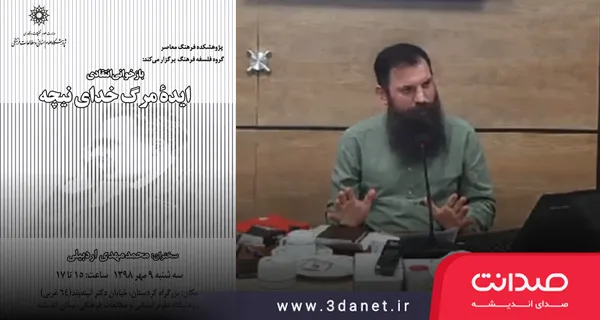
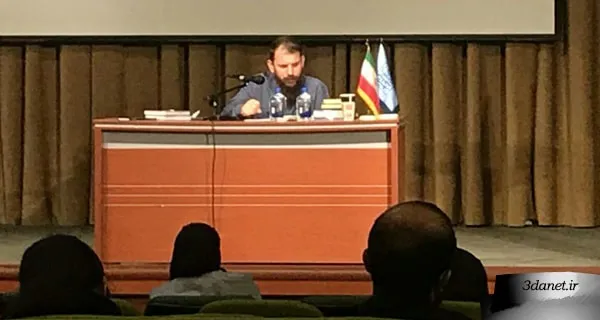
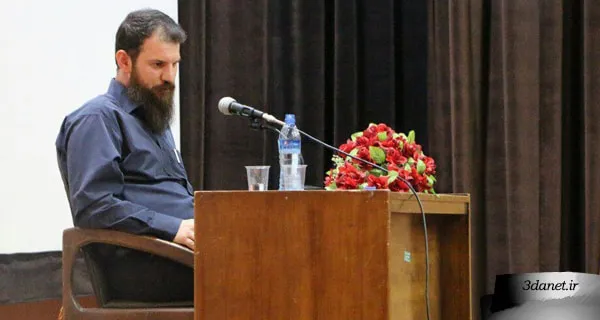
The session "A Critical Re-reading of Nietzsche's God Is Dead" was held on Tuesday, Mehr 9, with a lecture by Mohammad Mehdi Ardebili at the Institute for Humanities and Cultural Studies. In this session, Mohammad Mehdi Ardebili stated: The first discussion that arises about God in philosophy is the existence or non-existence of God. This is the lowest level of discussion about God, and with such discussions, no atheist becomes a believer. The concept of God, like any concept, has a historical process and accumulation. From the second half of the nineteenth century, we encounter postmodern atheism. The peak of this approach, which is very important for understanding Nietzsche, is Feuerbach, who in his book The Essence of Christianity offers a kind of psychology of theology. In this book, Feuerbach says that the personality of God is nothing other than the personality of man projected into the heavens. Man without God is nothing, and God without man is nothing. Nietzsche says the same thing in a different expression. At this level, Nietzsche is an atheist.
The faculty member of the Institute for Humanities and Cultural Studies added: So the issue of God in this view is not ontological; rather, the discussion is about the death of God. At the beginning of his book Thus Spoke Zarathustra, Nietzsche also shows his joy at the death of God. In humanism, God's power has been delegated to man, and the view of God is something akin to a ceremonial monarchy.
This philosophy researcher continued: The death of God, in one sense, means humanism. It gives man a feeling of absolute freedom and that everything is permitted, which simultaneously contains a feeling of fear. Hegel says the experience of such a world is terrifying. Eighty years before Nietzsche, Hegel articulated the death of God, with the difference that he is not happy about it. Given Hegel's Christian beliefs, the death of God is the crucifixion of Christ. Hegel is an elegist of God's death, not, like Nietzsche, joyful about the death of God.
He then stated: The question here is, is Nietzsche gleeful about the death of God? No, Nietzsche has a form of confrontation with the horror of a godless world. The consequences of God's death are important. In the epistemological dimension, the loss of criteria and foundation is one of these consequences. Man is incapable of playing God. Does existence have meaning without God? Nietzsche says it will take several centuries for even this question to be heard. Another consequence, in the civilizational dimension, is that we encounter a form of pure banality, meaninglessness, and despair.
Mohammad Mehdi Ardebili added: The replacement of God with the Devil is far more terrifying for Nietzsche. Nietzsche says somewhere that he sides with God against the Devil, because the Devil is a heavy burden. For the godless human, Nietzsche uses the term "a herd without any shepherd." Nietzsche believes that the "last man" believes not only in God but in nothing at all, and says nihilism is the inevitable fate of us all. Nietzsche repeatedly shows his horror and fear of God's death. Both glee and mourning are seen simultaneously in Nietzsche's expression. It is as if Nietzsche mourns the death of one God and laughs uproariously at the death of another. The point is that Nietzsche is simultaneously gleeful and mournful.
He also remarked: Christianity itself, and the one who claimed divinity, caused the death of God. It can be said that all postmodern philosophy and contemporary science is a reaction to the disappearance of God as a criterion. The audience of the "madman" in Nietzsche's discourse is not in the church, but those who mock both God and Nietzsche himself, who are the last men. Nietzsche prophesied today's world, which is a marketplace world. Everyone has translated Nietzsche's term der tolle Mensch as madman. Whereas in this concept, there is a recklessness and rebellious wisdom that does not exist in the word madman.
.
.
Download the audio file of this lecture
Watch the lecture video on Aparat
Watch the Q&A video on Aparat
.
.
The Session "A Critical Re-reading of Nietzsche's God Is Dead"
Speaker: Mohammad Mehdi Ardebili
Text source: Mehr News Agency
.
.

Discussion2 comments
من نخواهم در دو عالم بنگریست تا ندانم این دو مجلس آن کیست بی تماشای صفتهای خدا گر خورم نان در گلو گیرد مرا چون گوارد لقمه بی دیدار او بی تماشای گل و گلزار او جز به امید خدا زین آبخَور کی خورد یک لحظه الا گاو و خر مثنوی معنوی ایمان به خدا، شرط آری گفتن به زندگی است. به قول حافظ بزرگ: جان بی جمال جانان میل جهان ندارد
مستغنی است چون از مکان و از زمان نمی میرد خداوند این را باری خود بدان ذاتش بوده بی تغییر لذا بود بلا موت بلکه همه فانی اند چو زاده اند در جهان با زادن و بمردن باشد ممکن تغییرات لیک خالق امکانات غنی ماند از دوشان