Psychology
More Dangerous Than Corona: Examining the Psychosocial Challenges of COVID-19 Infection in Conversation with a Physician and a Psychiatrist
Beyond its threat to life, the coronavirus has created profound psychological and social challenges, and fear of it can sometimes be more dangerous than the virus itself. A physician and psychiatrist discuss the medical dimensions of the pandemic and its psychological consequences, such as the 'anxiety pandemic.'
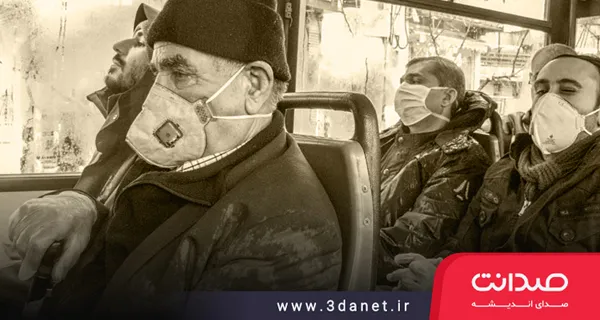
The pandemic of the "COVID-19" virus, known as "Corona," has confronted our society with psychosocial challenges. Most people are worried about contracting this virus and have lost the order of their daily lives. Some have become severely anxious, and some are experiencing feelings of depression due to the intensification of job and economic worries, as well as the restriction of family and social relationships.
Despite the usefulness of disseminating medical and health advice in the media and social networks, and the serious necessity of following this advice, it seems that one of the important challenges of our society these days is simultaneously maintaining physical and mental health. The coronavirus pandemic once again shows us that contracting the virus and its interaction with the human body is not merely a subject of virology, immunology, or pure medicine. In examining any human phenomenon, one must keep in mind that human existence has various dimensions, such that even to control an infectious, contagious disease, one must pay attention to the totality of the human being with a comprehensive view and consider the psychological dimensions of the issue alongside the physical dimensions.
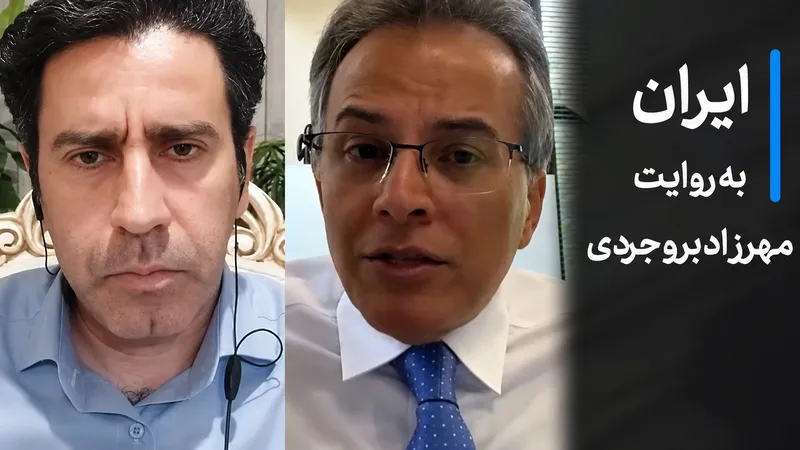
In this roundtable, with the presence of a pulmonologist and a psychiatrist, we will examine the various physical and psychological dimensions of the Corona pandemic. Ramin Sami, a pulmonologist, faculty member of Isfahan University of Medical Sciences, and head of Khorshid Hospital, and Hafez Bajoghli, a psychiatrist and analytical psychotherapist, analyze the multidimensional phenomenon of the Corona pandemic from two different perspectives.
The outbreak of the coronavirus disease in Iran has caused many concerns at the societal level. One of the worrying issues is that the number of deaths among those infected in our country seems high compared to other countries. Has Corona been more lethal in Iran than in other societies, and is the severity of the situation dire and alarming?
Sami: The severity of the situation cannot be predicted at the start of an epidemic. However, in general, the coronavirus has a high transmissibility, which is measured by an index called the basic reproduction number. This index shows how many other people an infected person can infect on average. This number for Corona is about four; meaning each infected person can infect an average of four other people. Another index we consider for a viral epidemic is the probability of death among those infected, which is measured by the case fatality rate. This index is low for the coronavirus, around three percent. The seemingly higher ratio of deaths to the number of infected people in Iran stems from the fact that we do not perform diagnostic tests for all Corona cases. In fact, during an epidemic outbreak, diagnosing all suspected cases is not necessary. The rate of diagnosing actual patients in different societies varies based on the diagnostic policies of that society. But the death rate is clear. Therefore, the numerator of the fraction is measurable; while the denominator of the fraction is a function of the conditions of different societies. There are many mild and subclinical cases that have not been tested and have not been entered into the denominator of this fraction. For this reason, the case fatality rate of this disease in Iran has been perceived as high.
Why have mild cases not been tested? Some patients complain that they went to the hospital with cold symptoms but were discharged without any test being performed. Is it not necessary to test all suspected cases?
Sami: Performing a diagnostic test is necessary when it affects the individual's treatment. If performing or not performing a test does not significantly impact an individual's treatment process, there is no need for the test. Therefore, it seems that for patients who are to be treated on an outpatient basis, performing a test may not be necessary. However, for hospitalized patients, a virology test is necessary to confirm the diagnosis. Here, an important issue called "health economics" arises. In crisis management, economic aspects must also be considered. Identifying all mild cases of the coronavirus in the current situation is not logical. For this reason, those with mild symptoms, given the existing conditions, do not need a test.
One of the controversial issues is whether or not mask use is essential. To what extent is a mask really effective in controlling Corona?
Sami: Some microbes or viruses, such as tuberculosis and influenza, are aerosols, meaning they are suspended in the air and inhalable due to their low weight; whereas some viruses, like Corona, are "droplets," meaning they settle on the ground and surfaces quickly due to their high weight, and their transmission route is primarily through hand-to-face contact. Although evidence has been presented suggesting Corona is an aerosol, stronger evidence indicates that this virus exists more in "droplet" form, and regular handwashing is a much more important issue in controlling this disease. Therefore, if someone is infected, they must wear a mask to prevent infecting others. Hospital medical personnel who come into contact with patients' contaminated respiratory secretions are required to wear masks while performing their duties. Also, in closed and crowded spaces where the risk of inhaling the virus is higher, mask use is beneficial. But in other cases, wearing a mask does not significantly help prevent infection.
The fear of contracting the Corona disease and the consequences of its pandemic in society has become as worrying as the pandemic itself. Dr. Bajoghli, how do you assess the current state of society's mental health in terms of anxiety levels and feelings of depression?
Bajoghli: Following this viral pandemic, the Iranian people have been exposed to a collective threat. This situation confronts us with inner fears that we usually suppress in the course of daily life. The false, powerful image we have constructed for ourselves collapses, and we realize that we can easily be overcome by a virus. On the other hand, the "illusion of omnipotence" is dispelled, and we face this deep anxiety that sometimes we cannot have much control over the situation. Of course, these are not new fears. We all experience these fears in the most hidden layers of our unconscious; but we usually do not allow them entry to the conscious level through defense mechanisms. In critical conditions, we lose these defense mechanisms and confront the terrifying realities that have always existed but which we have been denying. Of course, when we talk about a collective threat, the story becomes a bit more complex psychologically. The reason for this is the contagiousness of fear. Fear breeds fear, and fear fuels the intensification and spread of fear. In a collective threat like a viral epidemic, before the actual virus spreads, the fear arising from it becomes pandemic with greater speed and intensity; meaning we are facing two pandemics here: a viral pandemic and an anxiety pandemic. This anxiety is largely constructive and protective, leading to greater caution; but beyond a certain point, it becomes harmful and unconstructive.
One of the serious challenges that has become more visible with the Corona pandemic is the challenge of trust. People do not trust some officials and are dissatisfied with the performance of some in dealing with this crisis. In your opinion, which behaviors of officials in facing the crisis have made people distrustful and dissatisfied?
Bajoghli: Trust is a two-way dynamic. One side of it relates to the people themselves and the historical, cultural, and psychological aspects that affect the level of trust among humans; but the other side concerns the authorities. The most important factor related to the authorities is the degree of transparency. The more transparent the authorities are, the more the people's trust increases. Especially in times of crisis and collective threats, when the rumor mill is rife and people are prone to distrust. Another issue is the observance of the principle of justice by the authorities. If people see that in critical conditions there are those better off who have access to more resources, it is natural that they lose their trust. Of course, it is natural that in any society resources are not distributed equally, and humans have more or less come to terms with this reality; but if the discussion is about a specific subject like medical services in a crisis situation, the matter is far more sensitive. For example, in the current conditions of our society, it is not possible to test everyone with mild viral symptoms for Corona, and these diagnostic kits are allocated to those with severe symptoms; but unfortunately, we see that some officials have used these diagnostic kits merely for mild to moderate symptoms and have announced their positive Corona status in the media. Perhaps those officials were uninformed about the limited nature of the diagnostic kits and the scientific considerations regarding the Coronavirus. It is the responsibility of those involved in the health system to educate the people and the authorities about the importance of adhering to the principle of justice and its instances. Wrong behaviors on the part of the authorities inflict serious damage on public trust; for instance, one of the officials said in his remarks that quarantine belongs to the Middle Ages. Whereas anyone can see with a simple internet search that quarantine laws exist in advanced countries. It is true that quarantine has many legal considerations and is, in fact, contrary to civil liberties under certain conditions; but if there are evidence-based scientific reasons for it and it is approved by the countries' Ministries of Health, governments have the right to impose quarantine to control the disease under certain conditions. When people see that officials so easily turn a blind eye to global realities, it is natural that their trust is undermined.
Dr. Sami, in your opinion, is quarantine necessary in the current situation, and could it be a suitable option for us?
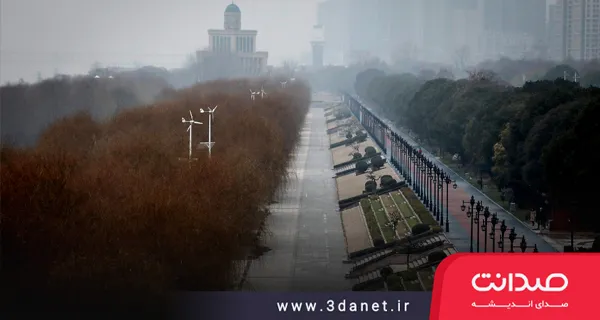
Sami: I agree with Dr. Bajoghli that quarantine can be useful for controlling an infectious disease under certain conditions; but this issue has many dimensions. Consider that when the city of Wuhan in China was quarantined, people stayed in their homes, the government gave them tokens for procuring food, and ultimately the people complied with this quarantine; but in our country, the government closed the schools; however, people took their children by the hand and took them shopping to the arcades or went on trips. The issue of quarantine is not that simple. We cannot say that because it worked in China, we must do the same thing. A method might work in one society and fail in another. Let me give you an example from my own field. One of our problems is patients who have severe asthma and diabetes together. The treatment for severe asthma is cortisone, whereas cortisone is not good for patients with diabetes and can raise their blood sugar and even, in some cases, cause diabetic ketoacidosis, which is an emergency situation. Managing these patients in our society is very difficult. The reason is that the physician must start a treatment for the patient that is inherently dangerous. Perhaps in another society, the physician's hands are more open for managing such a difficult condition.
It seems that a significant part of our problems in managing this crisis also stems from distrust in the health system and even in physicians.
Sami: Unfortunately, in recent years we have witnessed severe attacks on healthcare systems, especially on physicians. Social networks and the producers and directors of media programs, without considering the consequences of creating distrust toward the medical profession, have made people cynical about the medical community through various methods. Erroneous media behavior creates an atmosphere of uncertainty. This is while, under the current circumstances, we are witnessing the round-the-clock efforts of the healthcare system—including doctors, nurses, etc.—to control this disease and save patients' lives. Personnel and physicians are carrying out this crucial task under conditions where they have put their own health at risk. Trust is not built overnight, nor is it destroyed overnight. In such a situation, we are compelled to act with greater caution in crisis management. Bajoghli: Dr. Sami raised a very important point. Just as they mentioned in the example of a patient simultaneously suffering from severe asthma and diabetes, it often happens that health crisis management is accompanied by misinterpretations on the part of the public. Allow me to address the issue of health economics. Consider a rare disease in the country that, for instance, only a thousand people have contracted. Suppose its medication is available in a foreign country, but the cost of that drug, which is useful for treating a thousand people, is equivalent to providing for the livelihood of 10 million people. Here, when the government wants to make decisions at a macro level, it has no choice but to factor the issue of economics into its equations. A superficial reading might raise an inhumane interpretation, but from a more comprehensive perspective, the story is different. Just as prescribing cortisone for a patient with severe asthma who also has diabetes, although dangerous from one viewpoint, can overall benefit the patient if precautionary measures are observed. Provided, of course, that people trust physicians and officials, and that this trust has not been damaged by officials and physicians. Sami: Exactly. Crisis management has various dimensions. Judging crisis management is not within my competence or expertise, and experts in this field must answer that question. That is why I do not permit myself to comment on this macro decision.
You, as a specialist physician, do not permit yourself to comment on macro decisions, but unfortunately, in this critical situation, many individuals without expertise are commenting on various dimensions of this crisis on social networks and in the media, creating worry and panic. Dr. Bajoghli, as a psychotherapist, do you think that repeated non-expert, and even expert, warnings might behaviorally backfire and, in the medium term, cause a decrease in people's attention to safety warnings?
Bajoghli: One of the complications of health crises is the spread of false and inaccurate news. These rumors and erroneous comments must be taken seriously and should definitely be part of the crisis management protocol. The spread of these erroneous comments causes expert health directives to be overshadowed. On the other hand, these rumors are unfortunately not limited to incorrect analyses or news. We see therapeutic methods and nutritional recommendations that have no scientific basis and are sometimes even anti-science becoming widespread in society, and unfortunately, countering them is not taken as seriously as it should be. Sami: Currently, the stress of this disease has become so great that, as a result, individuals are inflicting harms upon themselves that have nothing to do with Corona. One of the personnel at a hospital, due to restlessness caused by fear of Corona, stuck a needle in their hand while drawing blood from a patient with Hepatitis C. This person did not contract Corona but exposed themselves to a greater danger. What I see on a daily basis is that the fear of Corona has become more damaging than Corona itself. People's visits to hospitals and clinics are very frequent and sometimes unwarranted. The very high number of people visiting hospitals following every simple cold with mild symptoms has become a problem and itself fuels the further spread of this virus. Furthermore, stress can weaken the immune system.
In addition to reducing physical immunity levels, what psychological and functional issues does stress create?
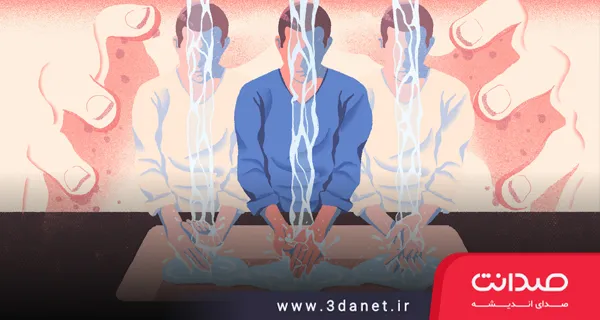
Bajoghli: Many articles have shown the effect of stress on weakening the immune system. Of course, one cannot comment with certainty on the effect of stress on the contagiousness of COVID-19, and more studies are needed. But what can be said with certainty, in line with the example Dr. Sami gave about hospital staff, is the increased prevalence of maladaptive behaviors following fear of the disease. This fear can lead to lack of concentration while driving and accidents, cause carelessness and occupational injuries, especially in sensitive jobs, lead to family problems, and overall create many consequences that are not directly related to COVID-19. From this perspective, the fear caused by the disease can have dangerous and sometimes irreparable consequences on a wide scale. Of course, one must consider the fact that being on alert to deal with an infectious disease definitely increases public anxiety. This anxiety is natural and necessary to some extent. But the discussion is about its boundaries. The important question is at what point this anxiety ceases to be functional and becomes a harmful anxiety. Of course, for us psychiatrists, these boundaries are also difficult in these circumstances; the reason is that our definitions have changed; for example, if two weeks ago I had a client who told me they wash their hands with soap and water 20 times a day for 20 seconds each time, and in between disinfect their hands with alcohol several times, I would certainly have started treatment with a diagnosis of severe obsessive-compulsive disorder, whereas in the current situation, this is a normal behavior. Sami: Yes, in critical situations, we have to show more flexibility and make decisions depending on the situation.
What are the most important points people should pay attention to in order to maintain their health in the face of this pandemic?
Sami: Our encounter with the coronavirus disease has meant that if the complications resulting from coronavirus stress are not more than the virus itself, they are no less. My advice to dear people is that instead of daily monitoring of the statistics of those infected and the resulting deaths, they should follow the health messages of specialists and competent authorities, observe personal hygiene, wash their hands regularly, avoid contact with infected individuals, refrain from gathering in crowded places, and by observing these principles, try to continue their normal lives.
In these circumstances, people are given repeated advice about limiting presence in society, gatherings, travel, shaking hands, and kissing on the cheek, which are necessary to follow but put individuals under psychological pressure. How can one protect physical and mental health simultaneously?
Bajoghli: One of the hidden dangers of any crisis is that a mental health crisis rides on it and, like a snowball, makes itself bigger and bigger. All these health recommendations must be taken seriously, but we should by no means allow them to greatly affect our normal lives. In these circumstances, if we have cold symptoms, even mild ones, it is good to avoid our close ones or talk to them from a distance while observing hygiene principles. But those who have no symptoms should not deprive themselves of the blessing of human relationships due to fear of transmitting the infection and create a bigger crisis within themselves, which is depression and anxiety. I even see people who, out of fear of transmitting the infection, do not go to visit their father or mother. These fears cause serious damage to our mental health. An important part of our psychosocial functioning is interpersonal relationships, and we must be able to maintain this functioning in ourselves by observing precautionary measures.
.
.
More Dangerous Than Corona: Examining the Psychosocial Challenges of COVID-19 Infection in Conversation with a Physician and a Psychiatrist
Shargh Newspaper, 3 Esfand 1398
.
.


.webp)
Discussion0 comments
No comments yet; let yours be the first voice.