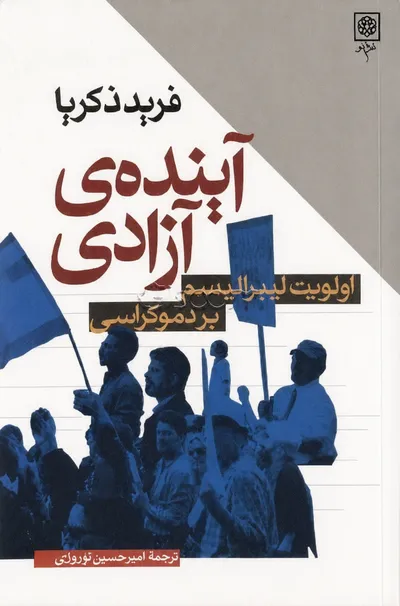
Why this book?
- It clarifies the important distinction between electoral democracy and liberal freedom.
- It is a key source for understanding the concept of “illiberal democracy.”
- It examines the relation of politics, economics, religion, and civil institutions in the formation of freedom.
- It helps the reader see democracy not as an absolute slogan, but as an order that requires balance.
About the book
The Future of Freedom is one of Fareed Zakaria’s best-known works in political science and liberal thought. The book’s central question is why the spread of democracy does not always lead to the spread of freedom, and how systems with regular elections may in practice weaken individual rights, the rule of law, and independent institutions.
In this book, Zakaria distinguishes between democracy as majority rule and law-governed liberalism. For him, political and civil freedom does not emerge merely through voting; it requires legal traditions, limits on power, institutional independence, and civic culture. For this reason, the book is less a simple defense of democracy than an invitation to rethink the relationship between democracy and freedom.
The place of this work in Zakaria’s thought lies in its formulation and development of the concept of “illiberal democracy,” a concept through which he explains societies where elections exist, but basic freedoms and mechanisms for restraining power have been damaged. By turning to Western history, the book also shows that liberal freedom took shape before mass democracy and needs institutions beyond majority rule in order to endure.
This book is suitable for readers interested in politics, liberalism, democracy, the relation between freedom and law, and transformations in the contemporary world. It is also a helpful work for those who want to move beyond general praise of democracy and think about the institutional and historical conditions of freedom.