Why this book?
- The book challenges common stereotypes about the Middle Ages and presents a more complex picture of the period.
- The book examines the relationship between philosophy and religion in Islamic, Jewish, and Christian traditions.
- It highlights the role of translation, transmission of Greek heritage, and interaction between civilizations in intellectual history.
- The book enables a critical engagement with medieval thinkers beyond a purely historical perspective.
About the book
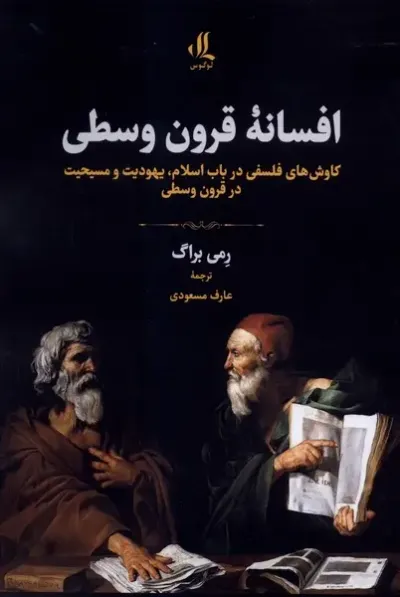
The Legend of the Middle Ages by Rémi Brague is a collection of essays on medieval intellectual history and the relationship between philosophy, religion, and Islamic, Jewish, and Christian civilizations. Brague engages with two common images of the Middle Ages: the image of a period of darkness, ignorance, and religious domination, and the romantic image of an ideal age of harmony among traditions.
Brague seeks to offer a more historical and philosophical account between these two narratives. He argues that the three religious traditions of Islam, Judaism, and Christianity followed similar yet distinct paths in their engagement with Greek philosophy, especially the works of Plato and Aristotle.
The book explores themes such as the place of philosophy in medieval cultures, the meaning of Islamic philosophy, Aristotle’s role in the Latin world, the transmission of Greek heritage through Arabic, interreligious relations, and modern representations of thinkers such as Averroes.
This book is suitable for readers interested in intellectual history, philosophy of religion, relations between civilizations, and the ways in which the history of philosophy is narrated. It also provides a basis for critically examining Brague’s views, which have been challenged by some scholars for emphasizing Christianity’s role and giving insufficient attention to certain Islamic philosophical traditions.
From the table of contents
- 1The Meaning of Philosophy in Three Medieval Cultures
- 2The Relationship Between Philosophy and Islam
- 3The Concept of the Body
- 4Jihad among Philosophers
- 5The Translation of Greek Texts into Arabic
- 6The Entry of Aristotle into Latin Europe
- 7Non-European Sources of European Philosophy
- 8The Possibility of Interreligious Dialogue
- 9The Modern Image of Averroes