Why this book?
- To become familiar with a critical study of the issue of veiling in Islamic tradition.
- To examine the relationship between history, early Islamic Arabian culture, and jurisprudential rulings.
- To study the method of historical criticism in rereading religious sources.
- To understand one of the controversial works in contemporary religious intellectualism.
About the book
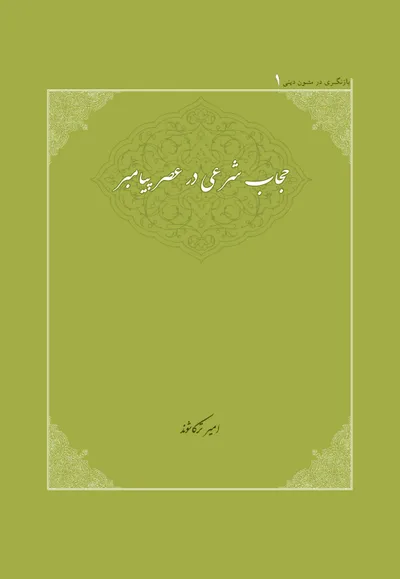
"Religious Veiling in the Prophet's Era" by Amirhossein Tarkashvand is a detailed study of women's dress in Islam. The author examines the concept of veiling not only from a jurisprudential perspective but also in connection with history, language, culture, and the social conditions of the Prophet's era.
The book is organized into three main sections: "Veiling Before Islam and the Muslim Response," "In the Light of the Quran," and "Jurisprudential Discussions." Tarkashvand examines pre-Islamic Arabian dress practices, Quranic verses related to clothing, concepts such as khimar and jilbab, and jurists' views on religious veiling.
One of the main themes of the book is the use of historical criticism in studying religious sources. The author attempts to offer a different reading of veiling by considering the historical contexts of Quranic revelations, linguistic analysis, and examination of hadith reports.
This book is suitable for readers interested in Islamic studies, jurisprudence, history of religious thought, and contemporary religious intellectualism. It is considered one of the significant and controversial works on rereading the jurisprudential tradition.