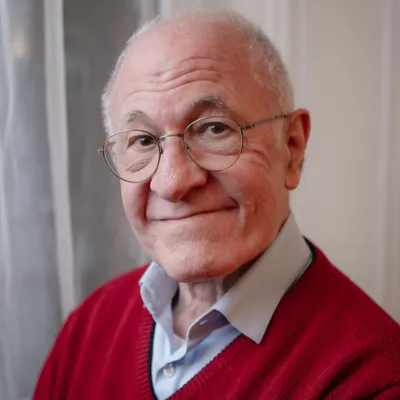
Foreign thinker
Rémi Brague
Rémi BraguePhilosophy of History and Medieval PhilosophyFrenchb. 1947
In their times
Open in the Timeline of Thought


Life and Thought
Rémi Brague is a French philosopher and historian of ideas, and one of the leading scholars of Greek philosophy, Arabic-Islamic philosophy and medieval thought. He is known for his work on the cultural identity of Europe, the relation between religion and philosophy, and the nature of modernity, and he is a member of the Académie des sciences morales et politiques.
Rémi Brague was born in Paris on 8 September 1947. He studied philosophy and wrote his doctoral dissertation on Aristotle and the question of the "world"; it was published in 1988 as *Aristote et la question du monde*. For many years he was professor of Arabic philosophy at the Université Paris 1 Panthéon-Sorbonne. He also held the Romano Guardini Chair at Ludwig Maximilian University of Munich, dividing his time between the two universities until his retirement. He has been a member of the Académie des sciences morales et politiques of the Institut de France since 2008, and the Académie française has honored his body of work with its Grand Prix de philosophie.
Brague's research spans three interconnected fields: ancient Greek philosophy, especially Plato and Aristotle; the philosophical and religious traditions of medieval Islam and Judaism; and the question of what modernity is and what place Europe holds in cultural history. His major works include *Du temps chez Platon et Aristote* (1982), *Aristote et la question du monde* (1988), *Europe, la voie romaine* (1992; English: *Eccentric Culture*), *La Sagesse du monde* (1999; English: *The Wisdom of the World*), *La Loi de Dieu* (2005; English: *The Law of God*) and *Les Ancres dans le ciel* (2011). He has also translated and commented on works by Leo Strauss and other thinkers.
His central idea, developed in *Europe, la voie romaine*, is that European culture is "eccentric." In his view, Europe draws its identity from two external sources, the Greek heritage and the Hebrew-Christian religious heritage, and awareness of this cultural indebtedness and "secondariness" explains its historical dynamism. In *The Wisdom of the World* he examines the ancient conception of the cosmos as an ordered whole endowed with meaning, and tries to show how that conception faded in the modern era. On modernity, he sees it as a process that emerged from within earlier traditions and fed on them. For that reason he speaks of a "moderate modernity" that avoids claiming a complete break with the past.