Why this book?
- It is a significant example of social realism in Persian fiction.
- It examines the issue of polygamy and the status of women within the heart of a family life.
- It portrays the conflict between tradition and modernity through the characters' behaviors and choices.
- It reconstructs the social atmosphere of 1930s Kermanshah with extensive detail.
- It is a noteworthy work for understanding the trajectory of the modern social novel in Iran.
About the book
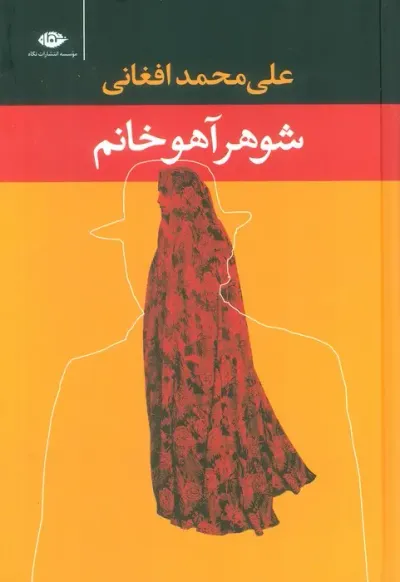
Shohar-e Ahoo Khanom is Ali Mohammad Afghani's first novel and one of the prominent works of social realism in Persian literature. The story begins in the winter of 1934 in Kermanshah and places Seyyed Miran Sarabi, a baker and head of the bakers' guild, his wife Ahoo, and their children at the center of the narrative. The arrival of a young woman named Homa disrupts this family's equilibrium, and gradually a complex conflict between love, lust, duty, religion, and familial responsibility takes shape.
One of the novel's main axes is Ahoo's experience confronting polygamy. She is a patient woman devoted to her family, who, with Homa's arrival, is forced to fight to preserve her position and the family's cohesion. On the other side, Homa is not a merely one-dimensional character either, and her presence makes the tension between tradition, individual freedom, and social transformations more apparent.
Afghani advances the narrative with abundant detail, meticulously describing houses, bazaars, neighborhoods, family relationships, and everyday behaviors. This very attention to detail, along with the linear narrative and expansive fictional world, has resulted in the work presenting a relatively comprehensive picture of the social life of that period.