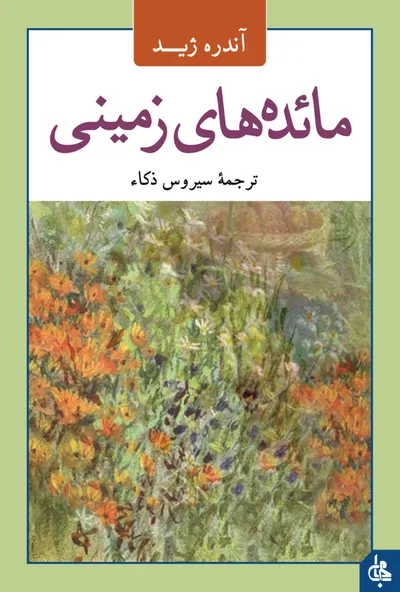
Why this book?
- To become acquainted with one of André Gide’s influential texts on the passion for life.
- To read a work that lies between literature, philosophical reflection, travelogue, and poetic fragment-writing.
- To reflect on freedom, liberation from attachment, and a fresh perspective on the world.
- For readers interested in French literature and spiritual-literary writings.
- To understand the intellectual roots of works Gide later wrote in continuation of these same concerns.
About the book
“The Fruits of the Earth” is one of the major works of André Gide, the French author and Nobel laureate in literature; a book that, rather than being a linear story, is a collection of poetic fragments, travel notes, inner reflections, addresses, and aphorisms. With a passionate tone, the work calls the reader to a direct experience of life, the discovery of the world, and release from the constraints of debilitating habits.
In this book, characters such as the narrator, Ménalque, and Nathanaël are less narrative characters in the usual sense than voices for expressing an intellectual and existential experience. Through these voices, Gide writes about desire, travel, nature, the body, pleasure, liberation, impermanence, and a perpetually renewed gaze upon existence. “The Fruits of the Earth” has thus become a work situated between literature and the philosophy of living.
Its place in Gide’s oeuvre is highly significant, for many of his later concerns are present in it in a condensed, youthful form: the questioning of the self, the transcendence of closed moral and social conventions, the negation of burdensome attachments, and the search for individual freedom. Although the work initially met with little acclaim, it later became an inspirational text for generations of readers, both French and non-French.