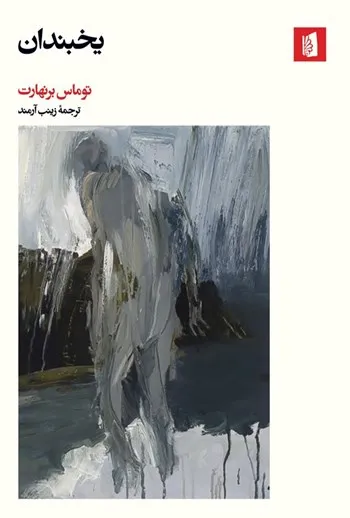
Why this book?
- To become acquainted with Thomas Bernhard's first major novel and the formation of his distinctive style.
- To read a philosophical and psychological narrative about isolation, despair, and human suffering.
- To experience the repetitive, monologue-driven prose that later became Bernhard's literary signature.
- To reflect on the boundary between observation and interpretation, truth and writing, reason and madness.
- To understand Bernhard's scathing critique of society, human relationships, and social institutions.
About the book
Frost is Thomas Bernhard's first novel, published in 1963, and it contains many of the hallmarks of his literary world from the very beginning: isolated characters, obsessive discourses, radical pessimism, black humor, and an atmosphere in which physical and mental illness intertwine with social and existential decay.
The novel's narrator is a young medical student who is sent by his professor to a remote village in Austria to observe his brother, a reclusive painter named Strauch. The mission is ostensibly medical and observational, but the narrator gradually becomes trapped in Strauch's mental world. The painter's continuous, bitter pronouncements on life, society, art, nature, and humanity dissolve the distance between the observer and the subject of observation.
The cold of the village in this novel is not merely a natural element; it is linked to the inner world of the characters and a feeling of freezing, isolation, and exhaustion. Strauch looks with a merciless gaze upon human relations, social institutions, and humanity's striving to find meaning. In contrast, the narrator, who was supposed to be an impartial observer, gradually comes under the influence of this same gaze, and his confidence in the possibility of accurately knowing another person, and even the possibility of reporting the truth, begins to waver.
One of the central concerns of Frost is the relationship between reality, observation, and language. The narrator repeatedly asks himself whether he truly sees Strauch or merely constructs an image of him, and whether writing can convey the truth of experience. These very questions elevate the novel beyond a psychological story, turning it into a meditation on the limits of knowledge and language.
Frost holds an important place in Bernhard's oeuvre because many of the features that later became more pronounced in his novels and plays were formed in this work: long monologues, rhythmic repetitions, extreme characters, a critique of Austrian society, and an obsession with illness, death, and failure. This book is an important and challenging work for readers of modern European literature and those interested in philosophical, psychological, and dark novels.
"I have completely forgotten what I am here for. I have forgotten that I must carry out my observations. It only occurs to me when I suddenly see something strange in the painter, for instance when we are in the pine forest, or in the middle of the street, or in the inn, when the painter takes a sip of his milk, like healthy people, and then immediately regrets it. When the train of thought originating from the painter carries me away, when I distance myself from myself, in the midst of strange and peculiar thoughts and fantasies, only then does the matter cross my mind. And I know I will get nothing more than whatever I see with my own eyes. In a letter I wrote to the assistant today, I mentioned this issue. And also that it is very dark and gloomy here, always, even on sunny days. That sometimes the words I speak torment me. Sometimes the words I hear do the same. I wander alone through the village and hear nothing but the murmuring of the people. And the sky, which, leading nowhere, seems not to exist at all. I am in hell here and I am forced to be silent. The painter says nothing is comprehensible, because everything is human and the world is not made of humanity, therefore everything is comprehensible and profoundly sad. He offers no explanation for his statement. He says 'profoundly sad' and utters it in such a way that it breaks anyone's heart. Beauty itself is also considered a kind of danger, just like darkness, which is the 'freedom of desires.' Or I wander into a hayloft and imagine he is sitting there, annihilating me with a single glance. Then I remember my mission. I must devise a mechanism, something like a kind of chart, to classify all my information, each night transferring certain items from top to bottom or bottom to top, thus changing their priority, those of lesser importance becoming more important tasks and vice versa. But perhaps they are all a series of objective facts that cannot be ordered. Why do they have no order? I mean my observations of the painter. Am I really observing him? Or am I just looking at him? By looking at him, am I observing him? Or when I have observed him, do I also look at him? What happens then? I sit confused and helpless at the desk opposite the assistant, and not a single word comes out of my mouth. He imagines that after some time I will return to Schwarzach, lay all my observations of the painter before him, and say: You see, this is how things stand! He said such a thing! I conducted this observation in exactly this way! There is no possibility of error! His sorrow was nothing like what I had imagined, but it was like this! Do you understand? No. I am certain I cannot even string two words together properly. Even though everything is clear in my mind. Perfectly clear! And then silence, nothing seems right. If I read from my notes, it becomes something entirely different. Completely different. Because anything that is written down is wrong. No piece of writing can be correct. It cannot claim to be correct. Even if we write with the utmost precision, with knowledge of all we know, with faith that we know something about a perfectly clear truth, still, at best, our writing merely has fewer errors. Nevertheless, it is still wrong. It is not the truth."