Why this book?
- To understand one of the important contemporary debates about the relationship between science and religion.
- To become acquainted with the perspective of a progressive Catholic theologian on cosmology and evolution.
- To examine questions to which science alone does not provide final answers.
- For readers interested in the philosophy of religion, theology, and modern science.
About the book
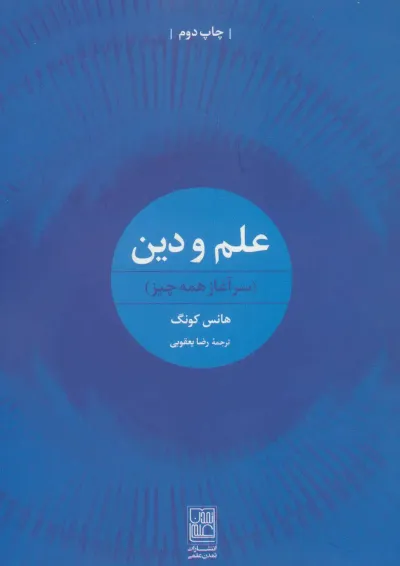
"Science and Religion" by Hans Küng addresses one of the enduring controversies of modern thought: Are science and religion inevitably in conflict, or can they be two complementary horizons for understanding the world? Küng, a Swiss Catholic theologian, attempts in this book to show that the traditional opposition between science and theology no longer answers today's questions.
The book proceeds with the issue of "beginnings": the beginning of time, the beginning of the universe, the beginning of life, the emergence of consciousness, and human will. Along this path, Küng pays attention to theories such as the Big Bang, quantum physics, relativity, evolution, chaos theory, and other achievements of modern science, but simultaneously asks what these theories do and do not say about meaning, purpose, ethics, and the place of God.
The book's importance lies in its dialogical approach. Küng neither denies science nor reduces religion to a scientific explanation. He tries to show that science is powerful in explaining the mechanisms of the world, but questions about meaning, value, purpose, and human responsibility still demand a theological and philosophical horizon. This book is worth reading for those interested in the philosophy of religion, contemporary theology, science and religion, and the issue of the relationship between faith and the scientific worldview.