Philosophy
Charles Darwin and the Tree of Life
In Charles Darwin and the Tree of Life, David Attenborough explores the voyage of the Beagle and natural selection, explaining the diversity of species and the interconnectedness of life. The work examines the evidence for evolution and clarifies the significance of Darwin's theory for our understanding of the world.
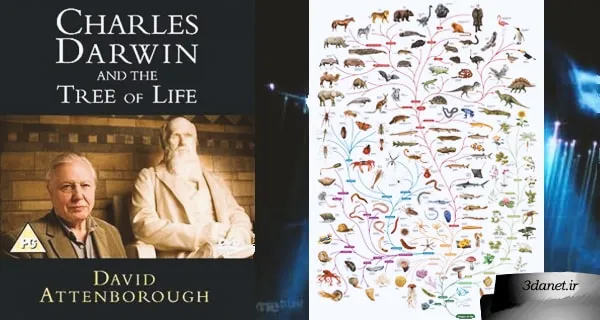
The documentary Charles Darwin and the Tree of Life, directed by David Attenborough, the renowned nature documentary maker.
In this documentary, you accompany David Attenborough as he looks back on his past (as a documentary maker) and poses the question: what is the reason for this diversity in life (for example, 1,000 types of bats, 200 types of monkeys, etc.)? He turns to Darwin, the only person who can explain this diversity.
He recounts the Beagle's voyage to South America, how Darwin encountered its famous tortoises in the Galapagos. And after returning, he pondered a crucial question: how can one species transform into another?
He reported not about all animals, but about most animals, that they produce more offspring than they can raise. This female dipper, for example, might lay 12 eggs in a year, and perhaps 50 in her entire lifetime, yet only two of the chicks need to survive and reproduce themselves.
In order to maintain the population size of this species, those that survive are, of course, most likely the healthiest chicks and the ones best adapted to their surroundings. Their specific traits are hereditary, so perhaps, over many generations, and especially if environmental changes occur, species may well change. Only the fittest survive, and that was the key to the puzzle; he called this process natural selection.
Finding evidence to prove or disprove natural selection was the task Darwin began. David Attenborough uses artificial selection by humans to explain this part. Subsequently, the debates and conflicts between Darwin and the Church after the publication of On the Origin of Species are shown. The documentary Tree of Life is not just about Darwin; it addresses Richard Owen, Mendel, Crick, Watson, and everyone who played a role in advancing Darwin's theory.
Fossils are Attenborough's favorite part of the evidence for evolution, but the most interesting of them is his living proof to show the relationship between organisms. The duck-billed platypus, which lives in Australia, is a combination of various animals, part mammal and part reptile. Another question raised is about the reason for the distribution of certain animals across the world.
In the end, the story of life from the seas to the present day is examined. That all life on Earth is connected to one another. Darwin's profound insight revolutionized the way we view the world. Now we understand why there are so many different species, why they are distributed in different parts of the world, and why their bodies and our bodies are shaped the way they are…
In short, Attenborough tries to answer three questions: Who was Charles Darwin and how did he formulate his theory; why do we think he was right; and why is he more important than ever.
.
.
Download the documentary Charles Darwin and the Tree of Life: Server 1 | Server 2
Download subtitles: Server 1 | Server 2
Watch Online
Download software from the Tree of Life reference site
View the Tree of Life poster: Server 1 | Server 2
.
.
Source: Awareness – Evolution, Science, Darwinism Website
.
.


Discussion2 comments
سلام زیر نویس کار نمیکنه لطفا راهنمایی کنید ممنون
سلام و درود راه حل اول (راه حل مخصوص KMPlayer ): در برنامه دکمه F2 رو فشار بدین در پنجرهای که باز میشه از سمت چپ قسمت پردازش زیرنویس و سپس نوع قلم رو انتخاب کنید. در سمت راست کادر مقابل Charset رو باز کرده و عربی رو انتخاب کنید. راه حل دوم : یونیکد ویندوز در ویندوز روی Start کلیلک کنید و Control Panel رو باز کنید. سپس روی Reginal and Language Option کلیک کنید. در پنجره ای که باز میشود به تب آخر رفته و کادری رو که در قسمت Language for non-Unicode Programs قرار داره باز کنید -Change system local – و بعد از منوی آبشاری Farsi یا Persian رو انتخاب کنید. احتمالا از شما میخواد که سیستم یک بار ریست بشه.