Philosophy
Falsificationism and Constructivism in the Philosophy of Science
By critiquing induction, Karl Popper argues that empirical science is not inductive and demarcates science from pseudo-science through falsifiability—a view opposed to schools like Marxism and psychoanalysis, whose claims were always confirmed.
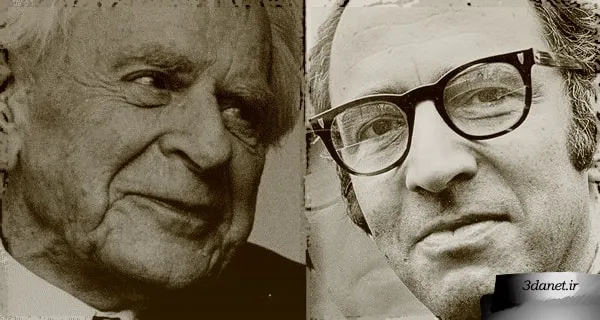
Among the important perspectives in the philosophy of science are the views of Popper and those of philosophers of science such as Kuhn and Feyerabend, which had a significant impact on the philosophy of science in the early and mid-twentieth century. In this article, we will introduce Popper's view and that of the constructivists in the philosophy of science.
.
Falsificationism and Constructivism in the Philosophy of Science
- Introduction Among the important perspectives in the philosophy of science are the views of Popper and those of philosophers of science such as Kuhn and Feyerabend, which had a significant impact on the philosophy of science in the early and mid-twentieth century. In this article, we will introduce Popper's view and that of the constructivists in the philosophy of science.
- Introducing Popper's View
It can perhaps be said that the most familiar philosophical doctrine among scientists is Popper's doctrine of falsifiability. Here we will try to present his views, though not in detail:
a) The Problem of Induction: In the discussion of causality, we said that Hume denies causal necessity and ultimately arrives at a kind of skepticism. Hume's problem of induction is closely tied to his problem of causality. As with the problem of causality, two matters must be distinguished in the case of induction: one is the logical problem of induction, and the other is its psychological problem.
Logically, no matter how many instances of object A we see that possess a property such as P, we are still not permitted to consider an object A that we have not yet observed as possessing property P. But psychologically, we do this (just as with causality, where despite lacking epistemic justification, we believe in causal necessity), and according to Hume, this arises from habit. Popper accepts Hume's critique of induction and considers induction to be invalid in general. "It is obvious that the principle of induction does not possess logical truth and is not tautological or analytic. If it were, the problem of induction would not arise at all, and all inductive inferences would have to be, by virtue of the principle of induction, purely logical and tautological, like deductive inferences. Thus, the principle of induction is a synthetic proposition; that is, its negation is not contradictory but logically possible. So what compels us to accept this principle, and what rational reason necessitates its acceptance?
Those who believe in inductive logic strive mightily to side with Reichenbach and say with him that 'the acceptance of the principle of induction is a postulate of all sciences, and who could doubt it even in everyday affairs?' Now, if for the sake of argument I accept this claim, I will still argue that the principle of induction is the source of logical difficulties and is useless. Indeed, error is possible even in 'all sciences.' Hume's views clearly show how easily the principle of induction leads to logical contradictions, the avoidance of which is very difficult, if not impossible. Is not the principle of induction itself a universal proposition? So if we say its truth is known from experience, we are back at the starting point, and the same difficulties lie ahead, because to justify the principle of induction, we must resort to other inductive inferences, which themselves must rely on a stronger principle of induction; we then shift the argument to this stronger principle, and so on. Therefore, whatever we do, the principle of induction will not be grounded in experience and will inevitably lead to an infinite regress." (Popper, translated by Kamali, 1381, p. 41)
Now if we say that induction is based on another principle that permits induction—that is, induction is valid because it is based on causality—Hume will say you have used something called the principle of the uniformity of nature. That is, in cases where a causal relation existed between two objects (A) and (B) in the past, it will also be so in the future, because the future resembles the past. Thus, induction and the move from experienced matters to unexperienced matters is deduced by assuming the establishment of causality between them and the governance of the principle of the uniformity of nature. Note that, as we showed in the discussion of causality, Hume denies causal necessity; therefore, if a causal relation existed between (A) and (B), there is no necessity involved, and the idea that there might be no causal relation between (A) and (B) in the future contains no contradiction whatsoever. So, to say that (A) and (B) will have a causal relation in the future as well, we resort to the principle of the uniformity of nature. But the fundamental question is: where does this principle itself come from? We are forced to say: we have always experienced it this way; that is, we have performed an induction. You observe that to explain induction we resorted to the principle of the uniformity of nature, and to explain the principle of the uniformity of nature we used induction. Therefore, we have clearly fallen into a circle, so induction is unjustified (Sheykh Rezaei and Karbasizadeh, 1391, pp. 42-44).
Popper accepts this point and does not consider empirical science to be inductive. Following Kant, he calls the problem of induction Hume's problem (Popper, trans. Kamali, 1381, p. 48).
B) The Problem of Demarcation[1]: With the denial of induction, an important problem arises, which is: if induction does not provide an empirical basis for empirical science, what does the empirical nature of this science mean, and why are we justified in calling it empirical? In other words, why do we distinguish between empirical science and other forms of knowledge, such as logic, mathematics, and metaphysics? Here we face the problem of demarcation, a problem Popper calls "Kant's problem"; because "in Kant's philosophy, this problem took center stage in the theory of knowledge" (ibid.). The logical positivists considered induction to be the criterion of demarcation.
Popper, who had become acquainted with Marxism and the psychological schools of Freud and Adler in his youth and was initially drawn to them for a short time, felt a clear distinction between them and Einstein's newly devised theory. These schools had abundant confirmations, and it was as if every event was a stamp of approval upon them. They were so vague and imprecise that they encompassed a wide range of events.
The claims of these schools were so general that they conflicted with nothing; for example, consider this statement: Every human being in life seeks perfection, although some mistake a false thing for actual perfection. Whatever happens in the world, this proposition will be true; because, firstly, it is a vague concept. Secondly, if someone seeks perfection, the conclusion will immediately be drawn that this proposition has been confirmed. If someone does not seek perfection and pursues something else, one can easily say that they mistakenly considered that thing their perfection, and therefore pursued it, and again the proposition is confirmed. In any case, there is no way for the world to be in a state where the above proposition is falsified. Popper's view of Marxism, Freud's psychoanalysis[2], and Adler's individual psychology[3][4][5] bears a strong resemblance to propositions of the above type. The following passages clearly illustrate his view on this matter.
«After the collapse of the Austrian Empire, a revolution occurred in Austria: the air was filled with revolutionary slogans and ideas, and new and often extravagant theories[6]. Among these theories that interested me, the most important by far was undoubtedly Einstein's theory of relativity. Three other theories were Marx's theory of history[7], Freud's psychoanalysis, and Adler's individual psychology ... We all (a small circle of students to which I belonged) were excited by the result of Eddington's eclipse observation, which in 1919 was the first important confirmation of Einstein's theory of gravitation. It was a great experience for us, and one of the experiences that had a lasting influence on my intellectual development. The three other theories I mentioned were also widely discussed ... It was during the summer of 1919 that I began to feel more and more dissatisfied with these three theories ... and I began to feel dubious about their claims to scientific status. My problem perhaps first took the simple form: What is wrong with Marxism, psychoanalysis, and individual psychology? Why are they so different from physical theories, from Newton's theory, and especially from the theory of relativity? ... Few of us would have said that we believed in Einstein's theory of gravitation. This shows that it was not my doubting the truth of those other three theories which bothered me, but something else. Nor was it that I merely felt mathematical physics to be more exact than the sociological and psychological type of theory ... Rather, I felt that these three theories, though posing as empirical sciences, had in fact more in common with ancient myths[8] than with science; that they resembled astrology[9] rather than astronomy[10].
I found that those of my friends who were admirers of Marx, Freud, and Adler, were impressed by a number of points common to these theories, and especially by their apparent explanatory power[11]. These theories appeared to be able to explain practically everything that happened within the fields to which they referred. The study of any of them seemed to have the effect of an intellectual conversion[12] or revelation, opening your eyes to a new truth hidden from those not yet initiated. Once your eyes were thus opened you saw confirming instances everywhere: the world was full of verifications[13] of the theory. Whatever happened always confirmed it. Thus its truth appeared manifest; and unbelievers were clearly people who did not want to see the manifest truth; who refused to see it, either because it was against their class interest, or because of their repressions which were still 'un-analysed' and crying aloud for treatment. (Popper, 1962, pp.34-35)
It was in this way that Popper concluded that confirmation is of little significance, and that confirming instances can be found for almost any theory. Unfalsifiable theories are always being confirmed. Therefore, the opposite of confirmation is what matters, and that is falsification.
What is important for a theory is a high possibility of its falsification; in other words, if a theory is such that it is always confirmed, this is a defect. But if a theory is such that the possibility of its falsification or refutation is high, this is a desirable characteristic for the theory in question. What inductive logic cannot do is provide a suitable criterion for distinguishing empirical science from other forms of knowledge. Logically, the verification of universal statements is impossible, but their falsification is possible. No universal statement can be verified by induction, but it can be falsified by a single counterexample. Thus, the criterion for demarcating science from non-science is falsification, not verification. Therefore, a theory is scientific if it can be falsified by experience; that is, unfalsifiable theories are unscientific.
Thus, a clear distinction can be observed between the logical positivists and Popper. They employed induction as a justification for scientific statements and believed that although scientific theories containing universal statements cannot be proven through induction, they can nonetheless receive inductive confirmation, thereby securing their epistemic justification[14]. Popper, however, in fact accepts Hume's view on the circularity of induction and is even more committed to this issue than Hume, to the extent that he believes Hume himself ultimately remained an inductivist (Popper, 1384, p. 30); in other words, Popper holds that induction is unwarranted and invalid. Thus, it possesses no epistemic justification, and consequently, science does not avail itself of induction in the context of justification, which delineates and specifies the scientific method (as will be discussed). But if science does not derive epistemic justification from induction, how are scientific statements called knowledge? The issue is that in epistemology, the consensus was (indeed, such a consensus existed until 1963, when Gettier's article[15] was published) that knowledge is justified true belief. (Pollock, Cruz, 1999, p.13)
Popper, however, opposed this, and indeed the key to understanding his viewpoint on objectivity and rationality (in all domains, including philosophy, politics, and society) lies in the fact that knowledge is not in the form of "justified belief"[16], and this is contrary to the view of many philosophers. (Gattei, 2009, p.1) In fact, Popper consistently endeavored to show that "every attempt to provide a foundation for our knowledge is mistaken and [sought to] describe science as something that is empirical but not inductive; testable and confirmable, yet never certain; and distinguished from metaphysics by falsifiability, without deeming metaphysics meaningless" (ibid, p.2).
Thus, another important distinction between Popper and the logical positivists becomes apparent, namely the meaningfulness of metaphysical statements, and indeed their usefulness for science; because it is possible that, over time, some metaphysical ideas may enter the realm of science (naturally with modifications); for example, the atomic theory in ancient Greece, which was a metaphysical theory, entered modern scientific thought in the early nineteenth century with the work of Dalton. (ibid, pp. 33-34)
Another important point regarding Popper's philosophical view of science that we must mention is the distinction he draws between the context of justification[17] and the context of discovery[18] (a distinction that some, such as French and Da Costa, do not accept).
Inductivists, particularly naive inductivists[19], believed in a kind of mechanical method for arriving at natural laws. Among them was Bacon, whose new inductive logic tells us that our investigation of phenomena in a specific field will ultimately lead mechanically to the discovery of generalizations and the laws governing them, whereas if only one thing can be learned from twentieth-century philosophy of science, it is that the production of scientific theories is by no means a mechanical affair, but rather stems from creative activity (Ladyman, 2002, p.74).
In fact, Popper was among the first philosophers to believe that science can be produced through various methods; science can emerge from creative thought, a metaphysical or religious belief, dreams, superstitions, and the like. This is the context of discovery; there are no rules for the context of discovery, and no specific formulation can be presented for the process of producing the various sciences. Therefore, there is no particular method for the context of discovery, and this means that the scientific method cannot be founded upon the context of discovery; thus, we must base the method of science on the context of justification. It is in the context of justification that we examine and evaluate theories, and our method and criterion of justification is the falsifiability of theories. It should also be noted that in this view, ideas become independent of their originators; in other words, the product must be separated from the motive. Ideas are independently tested against experience. (ibid, pp. 75-77)
The final point that needs to be explained in clarifying Popper's view is the role of basic statements in his philosophy of science. Basic statements are statements that can bring about falsification; they are also necessary for evaluating whether or not theories are falsifiable.
"Basic statements must have two characteristics: (a) first, no basic statement can be deduced from a universal statement without initial conditions, and (b) second, a basic statement and a universal statement must be able to contradict each other: this situation only arises when the negation of a basic statement can be deduced from the theory that the basic statement contradicts. This characteristic together with characteristic (a) implies that the logical form of basic statements is such that their negations are not basic statements" (Popper, 1381, pp. 129-130).
Basic statements are singular existential statements that generally take the form "in region x, such-and-such an event is occurring" or "in region x, such-and-such a thing exists," and the events that basic statements report must refer to events that are observable. But as for what observable means, Popper is strictly reluctant to reduce observables to sense-data; because he strongly avoids psychologism: "It is true that a psychologistic meaning can be understood from the term 'observable event.' But I do not intend such a meaning for this term. Instead of this term, one could say 'an event involving the position and movement of macroscopic physical bodies.' More precisely, we should say that every statement either reports on the position of physical bodies relative to one another, or is equivalent to such 'mechanistic' or 'materialistic' basic statements" (ibid., p. 131).
He further adds: "Any experience perceived through one of the senses can logically be replaced by the receptions of other senses. Therefore, the attribution of a secret surrender to psychologism to me is as unfounded as the attribution of a belief in mechanism or materialism. Thus, my theory is free from any such attachment and should not be branded with these stigmas. My point in bringing up these remarks is to keep the term 'observable' safe from the blight of psychologism. (Even if perceptions and observations are psychologistic, observability is not). I have no intention of providing a definition for the term 'observable' or 'observable event' ... In my view, this term should be considered an undefined concept that gradually acquires a precise meaning in practice. Epistemologists must learn the use of this undefined concept in practice, just as they learn the use of the concept 'symbol,' or as physicists learn the use of the concept 'point mass'" (ibid., pp. 131-133).
It should be noted that basic statements themselves are fallible, therefore they must be tested, but ultimately we are forced to choose a basic statement without testing it and end the process of testing there. Otherwise, we would have to test forever, and this is impossible. But as to at which stage or with which basic statement we abandon the test, there is no logical compulsion. "In this method, ceasing to test is deemed permissible when we have found statements on which the consensus of researchers regarding their rejection or acceptance is highly probable. If no consensus is reached on this matter, then either the testing of the statements must be continued, or the testing of the theory must be started anew" (ibid., p. 133).
In this way, Fries's trilemma[20] is also resolved. Fries said that if we do not want to accept scientific statements dogmatically without reason, we must provide a proof for them, but to do this we are forced to use other statements; on the other hand, this cannot continue forever. Therefore, he and many epistemologists turned to psychologism to escape the infinite regress. Psychologism, that is, the assertion that statements can be grounded not only on other statements but also on sense-perceptions or immediate experiences. So, one must either believe in a statement dogmatically, fall into an infinite regress, or resort to psychologism. This is Fries's trilemma (ibid., p. 120).
With the proposal Popper makes here, none of these three becomes necessary; we accept basic statements dogmatically—that is, we do not continue testing them and we temporarily postpone providing rational (or empirical) justification for their truth. (ibid., p. 134)
“As it happens, this kind of dogmatism is harmless, for whenever necessary, the said statements can easily be tested. We accept that the chain of our deductions logically has no end. But this kind of ‘infinite regress’ is also harmless, for we have no intention whatsoever of proving any statement by means of this infinite regress. And as for psychologism: I repeat that accepting, deeming sufficient, and being satisfied with basic statements is a result of our perceptions—especially our inner perceptions. But we will not take these perceptions as reasons for the truth of basic statements. Perceptions are motives for rejecting or accepting statements; but just as no statement can be rationally justified by banging on the table, perceptions themselves cannot be considered the backing for the truth of basic statements.” (ibid., pp. 134-135).
2-1. Critique of Popper’s View
Several criticisms have been leveled at Popper’s views, the most important of which, in my opinion, is the problem of confirmational holism and semantic holism; that is, the Duhem-Quine thesis, just as it applies to the confirmation of all our theories—including mathematics, logic, physics, chemistry, etc.—also applies when faced with anomaly or conflict. In fact, when experience shows us a conflict, any of the epistemic components can be held responsible; which of these components should be revised depends on our decision.[21] Indeed, here the issue of confirmational holism[22] and its relation to the hypothesis of “underdetermination”[23] is raised. To explain, the Duhem-Quine holism hypothesis indicates that a statement is refuted or confirmed only in comparison with a body of background knowledge, or in other words, in connection with a set of statements. One can always save a statement from refutation by adding ad hoc auxiliary hypotheses. In other words, a single statement is never refuted in isolation. Thus, confirmational holism entails that a theory is underdetermined by experience, and for any theory, one can always find theories that are empirically equivalent but globally (in the domain of theoretical terms) incompatible with it.[24]
Which component we blame the error on depends on our confidence in the hypotheses. Although this is a significant problem for Popper’s theory, we nonetheless benefit from it, in that a serious disruption has, in any case, occurred in our body of knowledge, and the world teaches us this; that is, we learn from nature in any event. Another difficulty is the problem of probability: it has been said that Popper’s theory does not include probabilistic predictions as part of science; for example, when we roll a die, the probability of each number occurring is 1/6, but if we suppose we roll the die three times and get 1/6 each time, this still poses no problem for our hypothesis; because in probabilistic discussions, any event with any probability is compatible with the main hypothesis. Of course, if probabilities are defined over large populations, the matter differs. When we say that in 50% of cases over a million coin tosses, heads will come up, if in practice heads comes up 90% of the time, our hypothesis runs into trouble. Popper himself defines probability theory based on the frequency of events, a discussion which cannot be contained in this article.
Another objection raised against Popper’s falsification theory is the “tacking problem[25],” in that if a statement or set of statements like A has observational predictions, then tacking any other statement like B onto it will also have them; therefore, A&B will also have observable predictions—that is, it is falsifiable—and this is something that worries Popper; because he wanted to separate metaphysical statements from science. Now, if statement B is a metaphysical statement, it seems that A&B would also be one (Sober, 2000, p. 48).
In my view this objection can be resolved, because Sober[26] has raised it on the basis of the following falsifiability criterion. (ibid)
“A statement P is falsifiable if and only if P deductively entails at least one observation statement such as O.”
The criterion can be modified as follows: “A statement P is falsifiable if and only if:
1- If P is an atomic statement, then P has an observational consequence such as O.
2- If PºA&B then both A and B are falsifiable.
3- If PºAÚB then both A and B are falsifiable.
4- If PºA®B then both A and B are falsifiable.
5- If Pº~A then A is falsifiable.
This is a recursive definition[27] (Ardeshir, 1383, p. 18) which appears not to suffer from the aforementioned objection. Because if A is falsifiable and B is unfalsifiable, it readily follows that A&B is unfalsifiable.
Another objection that Sober raises against Popper’s criterion is that this criterion has special requirements concerning the relation between a proposition and its negation.
Sober’s point can be expressed as follows: as we said, Popper states that the proposition “All A’s are B” is falsified by a single counterexample, but the problem is that the negation of this proposition; that is, the proposition “There exists an A that is not B” is unfalsifiable; because no single statement or finite set of statements can falsify an existential statement. (Sober, 2000, p. 49)
Sober’s remark that the existential statement is unfalsifiable is correct. Note that existential statements are verifiable (even though they are not falsifiable), or at least Popper’s view on basic statements can be applied here and they can be tentatively accepted. In this way, universal statements are assessed by the above falsifiability criterion, and basic statements by the criterion of tentative acceptance conditional on observability. Of course, this differs from Popper’s criterion, but it fulfills Popper’s intent.
Another objection raised against his theory is that certain principles, such as conservation principles, are such that they are never falsified. For instance, if we observe that the conservation principle is violated somewhere, we say that another form of energy exists and thereby preserve it (Ladyman, 2002, pp. 82-85).
This objection does not apply regarding the infallibility of the conservation principle; because, in principle, conceiving its violation is possible, but in practice we do not do so, and this goes back to the Duhem thesis that we trust an auxiliary hypothesis or background knowledge so much that we prevent its falsification.
Another objection concerns the problematic nature of the degree of falsifiability, meaning that “the potential falsifiers of a universal generalization are always infinite, so an absolute measure of falsifiability cannot be found, but only a relative measure can be obtained” (ibid, p. 85).
It is necessary to note that in the falsificationist view, theories are not seen as units; some theories are more falsifiable than others, in the sense that whenever the set of potential falsifiers of a theory such as T is a subset of the set of all potential falsifiers of a theory such as T¢, we call T¢ more falsifiable than T (ibid, p. 73).
This is called the degree of falsifiability, and the above problem relates to this issue. Critics argue that in most cases the situation is not so simple. Consider, for example, the theories of relativity and Newtonian mechanics. It is assumed that general relativity is more falsifiable than Newton's theory. But as will be discussed in the Duhem-Quine thesis, this theory, together with background knowledge, leads to empirical consequences. Therefore, only if we assign a high probability to the truth of the background theories can we conclude that the above theories have empirical consequences. The Duhem-Quine thesis tells us that our judgment about the degree of falsifiability of theories depends on our entire theoretical apparatus, including auxiliary hypotheses and background knowledge, and that our attributing more content to the theories in question (e.g., relativity and Newtonian mechanics) stems from our past experience of the background knowledge, based on which we assume, through induction, that their sets of potential falsifiers are small; that is, induction has crept in through the back door (ibid, p. 86).
Another criticism leveled at Popper is that he goes even further than Hume and says we are not even entitled to believe that our best theories are probably true. He says scientists must completely avoid induction, but is this possible? Do we never have a positive stance for believing in our theories? It does not seem that our scientific knowledge is purely negative, and we do believe in scientific beliefs (positively) (ibid).
When engineers and scientists design a spacecraft, they actually believe they have overcome a force, and when nuclear reactions take place, scientists believe that mass has truly been converted into energy. If past observations carried no weight whatsoever, we should not expect that if we jump into water and cannot swim, we will probably die. Complete avoidance of induction does not seem very reasonable. Suppose Akbar cannot swim and wants to cross a path ten meters long in a river 3 meters deep. By Popper's criterion, we cannot say that crossing via the bridge has a more rational basis than going through the water. If we disregard induction, we cannot make inferences based on past experiences. Popper believes he can answer this problem by introducing the concept of corroboration of theories: "a theory is corroborated whenever a bold conjecture is made that yields novel predictions which have not been falsified" (ibid, p. 87).
Popper believes that "it is reasonable for us to assume that the theory which has been most corroborated is true; because we have tried to falsify it in various ways, but have failed" (ibid).
In fact, the theories that are most corroborated are not those for which we have reason to believe in their truth, but rather those which we can least regard as false.
Therefore, it is rational to use them for designing in the future. "Popper emphasizes that the fact that a theory is corroborated only means that the theory invites further challenges" (ibid).
But there is a problem: here, induction seems to enter the scene again. The concepts of bold and novel, although relative, the former means predictions that are improbable based on background knowledge, and the latter means predictions that have not been made before or are not expected based on current theories. In other words, induction based on background knowledge enters into Popper's explanation (ibid).
The next problem is that infinitely many theories can be conceived that say the same thing about the past, but tell a different story about the future. For example, it seems that a theory stating that the universe operates according to quantum field theories and general relativity until the year 2020, and from that date onward the universe will operate according to Newtonian mechanics, is just as corroborated as the theory of quantum fields and general relativity, yet we do not accept such theories. Again, it seems there is no alternative but to introduce (at least to some extent) inductive explanations (ibid, p. 88).
Another objection raised against Popper's view is that scientists do not always vote for the falsification of theories, but in many cases proceed to modify them. He himself accepts this, but believes that the additional hypotheses that lead to the modification or rescue of a theory must entail additional predictions. In fact, he distinguishes between ad hoc[28] and non-ad hoc modifications (ibid, p.88).
If the modified theory does not contain further predictions, the modification employed is ad hoc and unacceptable. The famous example in this regard was the perturbations in the orbit of Uranus, where what was predicted did not match observation, but a non-ad hoc modification resolved it, and that was the prediction of another planet; namely, the planet Neptune[29], with the discovery of which Newton's theory was strengthened. But the problem is that this does not always happen in science, and there are cases in history that show this; such as the Bohr model, which was in fact inconsistent, yet was widely used as a working model, or the orbit of Mercury[30] can be mentioned, where, although scientists were aware of the discrepancy between theory and observation, Newton's theory was not discarded and was used for a long time until the theory of relativity replaced it (ibid, p.89).
It might be said that scientists did not act correctly in working with inconsistent theories, and in my opinion, this objection is partly valid; of course, it is not the case that in the history of science or philosophy, every path taken has been the best path, and perhaps if the stated objections had been addressed much more seriously, theories such as relativity or quantum mechanics would have been devised sooner, and science would now be at more advanced stages. A possible response is that there was no alternative theory at hand, but in my view, if these problems had been taken as seriously as those that emerged at the beginning of the twentieth century, alternative theories would probably have also formed sooner.
In the end, I must say that although there are serious objections to Popper's view of science, some of which can probably be resolved by changing certain criteria (as I have tried to show), others are fundamental and pose problems for the foundations of Popper's thought; such as the Duhem-Quine problem and induction. Nevertheless, a great lesson can be learned from Popper's ideas, and that is considering human knowledge to be fallible and maintaining a critical approach, which I believe is very essential. Such a view blocks the path to extravagance and cuts one's coat according to one's cloth. We must always open the door to creative theorizing and make possible the flight of thought to very distant horizons, but ultimately our theories must be based on evidence, and we must always factor in the element of fallibility within them and know that the door to theorizing is never closed and this path is endless.
"Infinite is His Majesty, this court; leave the front, the front is your path" (Rumi, Book Three, Verse 1961)
The following passage from Popper well illustrates our situation regarding science and serves as a fine conclusion for this section:
"The empirical basis of objective science has thus nothing 'absolute' about it. Science does not rest upon solid bedrock. The bold structure of its theories rises, as it were, above a swamp. It is like a building erected on piles. The piles are driven down from above into the swamp, but not down to any natural or 'given' base; and if we stop driving the piles deeper, it is not because we have reached firm ground. We simply stop when we are satisfied that the piles are firm enough to carry the structure, at least for the time being." (Popper, 1381, pp. 141-142).
- Constructivists
Social constructivists[31] are philosophers who believe that "scientific knowledge is a product of scientists' theorizing and not discoveries about the facts of the world." (Votsis, Ph.D Thesis, p.10) The view of these philosophers regarding empirical science stems from extensive historical, sociological, and psychological studies conducted on science.
It should be noted that despite the caveats and warnings of Duhem[32] and Poincaré[33] that the history of science shows the existence of theories that have been successful in practice so far but are now discredited, the logical positivists disregarded historical investigations and considered empirical science to be both cumulative and progressive.
However, in the 1960s, figures such as Kuhn and Feyerabend, through extensive historical, psychological, and sociological investigations, deemed empirical science to lack the two aforementioned characteristics and, on this basis, presented an argument against realism referred to as the incommensurability[34] of scientific theories (ibid, pp. 24-25).
This argument is also based on another holistic view called semantic holism[35]. Just as an observation, or rather an observation statement, can only be confirmed, justified, or refuted within a connected network of statements that constitutes the entire epistemic apparatus, the content of a concept[36] is also only comprehensible within a complex network of concepts (Quine, in his essay "Two Dogmas of Empiricism" [37], proposes both confirmational holism and semantic holism. Of course, the main arguments for semantic holism were presented by Wittgenstein (2009) and Sellars[38] (1956) (Esfeld, 2006).
In semantic holism, "the basic idea is that the content (meaning) of a concept is given by its position in a complete network of concepts; that is, a complete theory. In short, the content of a concept consists of its inferential relations[39] with other concepts ... For example, the concept of an electron cannot be presented by pointing to electrons. This concept is introduced by showing its inferential relations with other concepts in a complete theory. In that case, the theory as a whole has observational consequences... Semantic holism entails that there is no gap between matters of fact[40] and matters of conceptual content (meaning)" (ibid).
Semantic holism has been accepted mainly in the domain of entities corresponding to theoretical concepts; in other words, in the realm of unobservable objects, where there are no immediate sensory data in macroscopic and tangible observation, holism has been widely accepted (ibid).
Of course, the implications of the constructivist hypothesis apply to all concepts and are not limited to a specific domain. It is also recalled that semantic holism is another confirmation of the absence of a sharp distinction between theoretical concepts or terms and observational concepts or terms (though it is more accurate to speak of the distinction between theoretical and non-theoretical concepts or the distinction between observable and unobservable entities). According to the aforementioned points, when the dominant scientific theory changes, we are not merely faced with a change in the laws governing previous concepts; rather, new concepts, by virtue of being placed in new inferential relations with other concepts and creating a new network, establish a new conceptual structure, each of whose components can only be understood within this new semantic relation.
But constructivists, one of whose main representatives is Thomas Kuhn[41], further believe that concepts in different theories are not translatable into one another. For example, the mass used in the Newtonian paradigm[42] is a completely different concept from mass in the relativistic paradigm, and moreover, these two are not translatable into each other.
In other words, due to their complete distinctness, the aforementioned concepts are not even comparable so that the proximity to reality of one of the two could be determined.
To properly understand the matter, we must explain the concept of paradigm, one of the key and central terms used by Kuhn in his famous book The Structure of Scientific Revolutions. Unlike the works of positivist philosophers of science, such as Carnap, Kuhn did not provide a precise definition of the concept of paradigm; rather, he attempted to clarify the concept mostly by citing various examples from the history of science and demonstrating its different applications—that is, precisely the method the later Wittgenstein employed to show the meaning of an expression.
Nevertheless, in general, one can say that a paradigm is a set of principles, scientific and philosophical beliefs, norms, problems, problem-solving methods, and, broadly, the scientific relations accepted by the community of scientists, to which the members of this community are committed and which constitutes their main common ground. In the constructivist approach to science, the paradigm determines which observations are important and what kind of observations lead to confirmation or falsification. The result of the foregoing statements is that there is no pure observation independent of the paradigm (or theory). In other words, observations are theory-laden[43] (the Duhem-Quine thesis), and it is the paradigm that gives them meaning and significance.
It should be noted that a paradigm is something beyond a theory. A scientific paradigm is a set of systems that, in addition to determining the theory accepted by the scientific community, also determines the relations within this community, its norms, and its desiderata. Scientists usually engage in solving problems and puzzles within the paradigm.
The result of an anomaly is a puzzle that scientists always hope to solve (soon). In other words, an anomaly is usually viewed as a phenomenon that the paradigm will ultimately resolve. In fact, the paradigm creates a kind of dominance and authority that affects all professional aspects of scientists' lives. For example, the paradigm can be likened to the powerful and absolute rule of an autocratic monarch that affects all aspects of the subjects' and people's lives; the way of thinking, livelihood, social, cultural, and economic relations, and so on, are all entirely influenced by this totalitarian apparatus in such a system.
During the reign of a paradigm, scientists are engaged in normal science. In normal science, scientists are occupied with problem-solving or puzzle-solving, expanding the domain of the ruling theory, presenting novel predictions and matching them with matters of fact, and the like.
It must be noted that the commitment scientists and the scientific community have to the existing paradigm is not a purely rational matter based on evidence, but is rather something akin to faith. Scientific textbooks[44] are one of the primary means of creating such commitment and adherence, inculcating the values accepted by the paradigm into individuals belonging to the scientific community right from the beginning of their learning period.
In the period of normal science, scientists are engaged in puzzle-solving, but not every previously existing problem is a puzzle of interest to the paradigm, nor is every phenomenon that has not been understood important. The paradigm itself indicates which problem is worth addressing and also determines what solutions and how they will lead to an answer; in other words, the paradigm determines the rules of puzzle-solving:
"We have already seen, however, that one of the things a scientific community acquires with a paradigm is a criterion for choosing problems that, while the paradigm is taken for granted, can be assumed to have solutions. To a great extent these are the only problems that the community will admit as scientific or encourage its members to undertake. Other problems, including many that had previously been accepted as standard, are rejected as metaphysical, as the concern of another discipline, or sometimes as just too problematic to be worth the time. A paradigm can, for that matter, even insulate the community from those socially important problems that are not reducible to the puzzle form, because they cannot be stated in terms of the conceptual and instrumental tools the paradigm supplies" (Kuhn, 1970, p. 37).
The above statements represent Kuhn's view on the selection of scientific problems within each paradigm. However, at times in the history of science, anomalies emerge that occupy the minds of scientists and the scientific community for long periods. When the aforementioned anomalies persist to a significant degree, the dominant paradigm enters a state of crisis, just as a political regime enters a crisis of legitimacy due to the inability of existing institutions to respond to social needs. Of course, in creating a crisis in the dominant paradigm, the breakdown of normal technical puzzle-solving activity is not the only effective factor; social conditions, philosophical views, and other related historical elements also influence the emergence of crisis, but "technical breakdown remains at the core of the crisis" (ibid., p. 69).
In the face of crisis, scientists initially usually try to resolve it within the existing scientific tradition. Even when confronted with severe and prolonged anomalies, they are not easily willing to abandon the existing paradigm. But at times, and only when a candidate exists to replace the previous paradigm theory, the former paradigm is replaced by a new one through a scientific revolution.
It should be noted that in a paradigm shift, scientists who turn to the new paradigm do not experience a rational process in the transition from the previous paradigm to the new one; rather, something akin to a change of religion occurs. Kuhn himself refers to it as "conversion" [45]. This is a term used when changing one's faith.
A scientist trained in the new paradigm lives as if in a different world; in other words, scientists belonging to different paradigms live in different worlds. Psychologically, a change of the Gestalt[46] type occurs[47]; what was previously seen as a rabbit is now seen as a duck. The above statements are another expression of the hypothesis[48] of the incommensurability of paradigms. It is necessary to mention that the incommensurability of paradigms leads to the incommensurability of their internal elements, such as the incommensurability of concepts, the incommensurability of methods, the incommensurability of goals, and the incommensurability of observations.
According to what has been said, although within each paradigm, empirical science can be considered cumulative and progressive, such a viewpoint can by no means be adopted when comparing paradigms. That is, when a new paradigm replaces the previous one, contrary to one of the postulates of realists, we do not get closer to the truth, but rather we transition from one conceptual system to another. There is no standard of rationality that can serve as our judge for understanding which paradigm is closer to the truth. Each paradigm possesses its own specific rationality, and no system exists independent of a paradigm, and therefore no reality independent of a paradigm is knowable. In fact, the world is constructed by the dominant scientific tradition or scientific paradigm, and thus there is no method for science independent of the paradigm; it is the paradigm that determines which theories, hypotheses, laws, and problems fall within the domain of empirical science.
There are two closely related formal responses to the constructivist view (Boyd, 1991, p. 203.): One is that it is said that to judge between two competing scientific theories, one can always find a third theory that judges both of them neutrally. In other words, although every testing method is theory-laden, there is always a method for testing them which, despite being theory-laden, is neutral with respect to the two theories in question.
And the other reply concerns the incommensurability thesis, the official response to which is to appeal to the existence of a reference[49], in addition to sense[50], for a term. To explain, externalists[51] in the philosophy of language hold that the content of a term or concept includes, besides its sense, another element called reference or denotation[52] (roughly something like Frege’s view on the sense of a term). These philosophers call the sense-component[53] of a term the primary meaning[54] and the denotation- or reference-component its secondary meaning[55].
What changes in paradigm shifts is that part of a word’s meaning that stands in inferential relations with other concepts and will change due to the paradigm shift and the alteration of these relations, which is the primary meaning of that word; but in this paradigm shift the secondary meaning or denotation of the term remains constant.
Perhaps the most prominent figure in presenting this argument is Putnam. He believes that the sameness of the reference (denotation) of incommensurable concepts makes it possible to compare theories in two paradigms by attending to this common element (which at least overlaps) (Esfeld, 2006).
Following this statement by Putnam, it was said that no reference exists without a description, so the description must be expressed in a way that is free from the influence of the incommensurability of the theories in question; in other words, it must be neutral with respect to them. (Here the second reply connects with the first.)
For example, it is often said that natural language possesses such a characteristic. But constructivists would probably respond to these rejoinders by stating that even if a neutral theory were found (with respect to the two theories in question), the problem of objectivity[56] would still not be resolved; for in realism, reaching or approaching objective truth is the goal, even if a third theory could adjudicate between the two theories under discussion. But because its methods are theory-laden, it cannot judge the world independently of theory, objectively and realistically. With the loss of objectivity, a fortiori, there will be no objective, theory-independent method either.
Regarding the second reply, Boyd says: if such a connection holds for concepts, then much of what Kuhn said about scientific revolutions is false. Nevertheless, the constructivists’ answer is still not given, unless we find a theory that is neutral with respect to two successive paradigms so that we can judge the transition from one paradigm to another. But according to the constructivist view that methods are entirely theory-dependent, we will not find such a method. The interesting point is that if we accept the constructivist view (the construction of theory within the scientific community), the belief in the existence of a scientific method for empirical science, constructed within an epistemic community, cannot be false, since constructivists themselves believe that theory is constructed within the scientific community.
In my view, there are two important points regarding Kuhn’s argument: one is that if the paradigm determines everything; that is, if, for example, the paradigm also determines the type of historical and philosophical outlook and perceptions, and the participants in that paradigm are unable to understand rival paradigms, then Kuhn’s own statements are also based on a paradigm and are not true of all paradigms. But if individuals engaged in scientific activity in different paradigms are able to understand one another, it seems that many of Kuhn’s arguments will run into trouble.
The second is that it is unclear how Kuhn speaks of the emergence of a crisis if knowledge is constructed by the scientific community and no kind of objectivity exists. What, then, does experience come into conflict with? It seems that the existence of a minimal objectivity is necessary for a crisis to arise.
Another problem with the constructivist view, including Kuhn's, as the eminent physicist Weinberg also rightly points out (Weinberg, 1998), is that it is by no means the case that scientists within one paradigm are unable to understand another paradigm. In fact, most of our university graduates in science and engineering (outside the field of physics) learn almost nothing of the new scientific paradigms (i.e., the relativistic and quantum paradigms), and physics students must first be well-trained in classical physics (i.e., before learning the theory of relativity and quantum mechanics) and examine many problems using this domain of knowledge. In other words, it is not at all the case that the Newtonian paradigm has been entirely discarded and a generation has been raised that does not comprehend the Newtonian paradigm and is capable of thinking only in relativistic and quantum paradigms. That is, incommensurability in the sense that practitioners in different paradigms, due to the dominance of a paradigm and the inability to understand the previous paradigm, are unable to measure them against each other, is incorrect.
Finally, we must point out that structural realism is a fitting response to the incommensurability of scientific theories, which is now a dominant current in the philosophy of science, but addressing it requires another occasion.
Footnotes
[1]- demarcation
[2]- psychoanalysis
[3]-Freud
[4]-individual psychology
[5]- Adler
[6]- wild
[7]- Marx
[8]- myths
[9]- astrology
[10]- astronomy
[11]- explanatory power
[12]- conversion
[13]- verifications
[14]- justification
[15]- Gettier
[16]- justified belief
[17]- context of justification
[18]-context of discovery
[19]- naive
[20]- Fries
-[21] The formal form of this objection is as follows.
T &A |______ O
where A is the auxiliary hypotheses, T is the theory under test, and O is the observational statement resulting from the theory. If in experience we find ~O, then either A or T can be false,
[22]- confirmation holism
[23]- underdetermination
[24] -Of course, this does not mean that in practice there are always two rival, empirically equivalent theories both accepted by the scientific community; rather, in most cases, only one dominant and pervasive theory is accepted by scientists and the scientific community. An example of such rival and incompatible theories is standard quantum mechanics and Bohmian mechanics, which are apparently empirically equivalent (for now, at least) but are theoretically and ontologically incompatible.
Of course, it is always possible that in new domains, with the advancement of science or technology, new experiences derived from the aforementioned theories may not be equivalent; perhaps such a situation will arise for the standard and Bohmian quantum theories in the domain of quantum field theory (Esfeld, 2006).
[25]- tacking problem
[26]- Sober
[27]- recursive
[28]- ad hoc
[29]- neptune
[30]- mercury
[31] -social constructivists
[32]-Duhem
[33]-Poincare
[34]- incommensurability
[35]- semantic holism
[36]- concept
[37]- Two Dogmas of Empiricism
[38]- Sellars
[39] - inferential
[40] -factual
[41]-Thomas Kuhn
[42]-paradigm
[43]-theory laden
[44]-text books
[45]- conversion
[46]- gestalt
[47] - Gestalt psychology is a school of thought that holds that psychological experiences, as a whole, are something more than their parts and cannot be equated with the sum of the elements of that experience. Although sensory and psychological experiences constitute this whole, each experience in its totality transcends its parts. In fact, this perspective is a kind of non-reductionistic view.
[48]- thesis
[49]- reference
[50]- sense
[51] - Externalism is a view in which at least part of what is considered as the referents of the speakers' words in any language, which is designated by at least some of the words they use, is influenced by their physical and social environments (Miller, 2007, p.324).
[52]- extension
[53]- sense
[54]- primary intension
[55]- secondary intension
[56]- objectivity
.
.
References
Ardeshir, Mohammad (2004). Mathematical Logic, Tehran, Hermes.
Popper, Karl (2002). The Logic of Scientific Discovery, Seyed Hossein Kamali, 2nd edition, Tehran, Scientific and Cultural Publishing Company.
Popper, Karl (2005). Objective Knowledge: An Evolutionary Approach, Ahmad Aram, Tehran, Scientific and Cultural Publishing Company.
Sheikh Rezaei, Hossein and Karbasizadeh, Amir Ehsan (2012). An Introduction to the Philosophy of Science, Tehran, Hermes.
Boyd, R. Gasper, P. and Trout, J. D., eds. (1991). The Philosophy of Science, Cambridge, MA : The MIT Press.
Esfeld, Michael (2006). in Gennaro Auletta, ed.: The controversial relationships between science and philosophy: a critical assessment,Vatican City: Libreria Editrice Vaticana, pp. 251–275.
Gattei, Stefano (2009). Karl Popper’s Philosophy of Science: Rationality Without Foundations, New York: Routledge.
Kuhn, T.S. (1970). The Structure of Scientific Revolutions, Chicago: The University of Chicago Press.
Ladyman, James (2002). UNDERSTANDING PHILOSOPHY OF SCIENCE, London and New York: Routledge.
Pollock, John L., Cruz Joseph (1999). CONTEMPORAR THEORIES of KNOWLEDGE, Second Edition, Maryland:Rowman & Littlefield.
Popper Karl (1962). CONJECTURES AND REFUTATIONS, London: Routledge.
12-Sober, Elliott (2000). Philosophy Of Biology, Second Edition, Colorado: Westview Press.
Votsis, I. (2002). The Epistemological Status of Scientific Theories : an Investigation of The Structural Realist Account, London School of Economics and Political Science, PhD Thesis.
Weinberg, Steven (1998). http://hps.elte.hu/~gk/Sokal/Sokal/Weinberg_Steven/rev.html.
.
.
Saeed Masoumi
.
.





Discussion1 comments
با سپاس فراوان از آقای معصومی، در پایان مقاله نوشته شده واقع گرایی ساختاری پاسخ درخوری به قیاس ناپذیری نظریه های علمی است که در مجالی دیگر به آن پرداخته میشود. آیا مقاله ادامه دارد؟