اندیشهفلسفهخردگفتگوحکمتمعناپرسشفرهنگ
Sociology
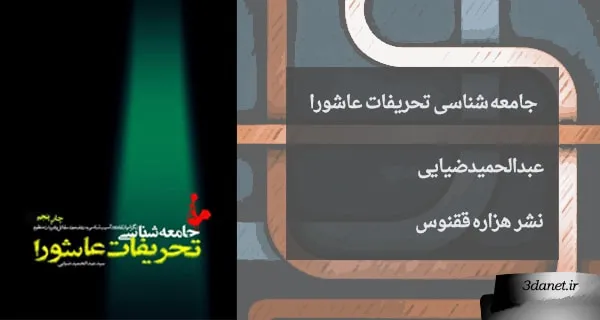
Introducing the Book: The Sociology of Ashura Distortions
Examining the distortions of Ashura is not merely a religious concern; for understanding modernity and cultural renewal, a critique of the social dimensions of religion is a prerequisite for social transformation. The book *The Sociology of Ashura Distortions* sheds light on the hidden angles of this culture and raises questions.
Why should we even address the distortions of Ashura?
Are there not enough critically important issues, large and small, whose examination would both untie epistemological knots and have practical social functions?
Given this, why is there such insistence and urgency from religious intellectuals regarding the examination of Ashura distortions?
The culture and rituals of Ashura have long enjoyed widespread public appeal, possess a strong, rich, and diverse literature, and also constitute one of the sensitive epistemological-practical bottlenecks for Muslims, drawing the attention of both impartial and biased observers from within and without.
In justifying the reason/cause for examining Ashura distortions, this single point may suffice: even if we set aside all religious concerns, in the pursuit of cultural renewal and development in contemporary society, we must admit that in understanding modernity—which, according to Jürgen Habermas, is manifested particularly in its political and aesthetic dimensions—based on our own culture, we will inevitably face a massive volume of cultural-linguistic, historical, and religious-ethical problems. The most extensive and significant of all these aspects is precisely this customary/religious dimension that resists the acceptance of newly emergent concepts. From a sociological perspective, one could even say that without belief in religion, it must be accepted that the creation and genesis of any social transformation is contingent upon one important precondition: the critique of the social aspects of religion.
The author of the book The Sociology of Ashura Distortions has no claim other than to shed light on some of the unknown and hidden angles of Ashura culture and, perhaps, to pose questions regarding the nature and quality of the Ashura event and culture.
.
.
The Sociology of Ashura Distortions
Author: Seyyed Abdolhamid Ziaei
Publisher: Hezareh-ye Qoqnus
.
.




Discussion0 comments
No comments yet; let yours be the first voice.