Religion
Introducing The Varieties of Religious Experience
William James's The Varieties of Religious Experience examines religious experience through a psychological lens, focusing on individual experience and inner transformation rather than religious institutions, in order to elucidate the relationship between being religious and becoming better.
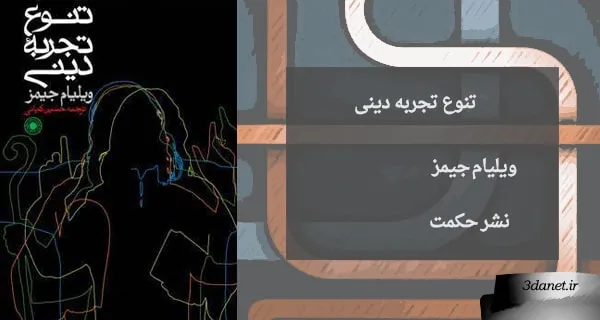
Writing about a book and explicating its concepts under the rubric of critique or analysis is a monumental and difficult task. For an honest critique of a product such as a book or other goods, one must possess a theoretical perspective on its positive and negative aspects that goes beyond mere expertise and avoids simple identification and introduction. For this reason, the writer limits himself to introducing the book and not to critique, leaving that to the scholarly and intellectual reformers who are engaged in thought and reflection in this field.
The book The Varieties of Religious Experience by William James, that fluid thinker and American philosopher, has recently been translated into Persian through Hekmat Publications, with the labor of translation undertaken by "Hossein Kiani".
The conceptual title of the work falls within the domain of "religious studies", and Iranian society, due to its attention to and emphasis on spiritual and religious matters, ought to devote more effort than it has to the analysis and exposition of this book, because religious studies is among the new issues that we, the people of Eastern civilization, are in the process of confronting. Religious studies, which branches from the "methodology of modern science" and whose center is held by Western thought. Understanding this title is linked to interdisciplinary knowledge that, in countless varieties, addresses a single subject, namely religion, ranging from the psychology of religion
to the sociology of religion.
Religious studies at the level of religious psychology contains within itself this approach or method: to assess, from a psychological standpoint, the relationship of the religious individual with religious or spiritual categories and to bring their meaning-making experiences before the eye of identification. An approach that prioritizes the authenticity of the human psyche over the qualities existing in ideas and recognizes every psychological structure as aligned with or opposed to a type of idea.
What is faith, or what is asceticism, or religious purity, and the countless host of meaning-making patterns that we ascribe within the spiritual and religious apparatus are brought to identification in the "psychology of religion", and William James has also utilized this style. James had the opportunity to encounter an immense volume of handwritten sources from Christian priests or from individuals who wrote descriptions and interpretations of their own religious feelings, and to bring them into a semantic coherence. The important point of this book is that James does not seek to prove or disprove anything, nor to construct a theoretical apparatus; rather, his philosophical capacity lies in the analysis and recognition of the religious behavior of human beings—behavior not in a positivistic or verificationist manner that considers only the act itself in a mechanical style devoid of values, but a look at the religious behavior and thought of human beings that takes into account the outcome, function, and effectiveness—from the extremist and immoderate to the valuable—on human life. James says on p. 399: "Let us consider the benevolence which all saints possess, and the supreme degree of it found in some, as a creative social force that single-handedly realizes many virtues in society."
The book The Varieties of Religious Experience, as its name suggests, brings to our minds the notion that there exists an infinite variety and plurality in the experiences of each and every human being regarding religious categories; that is, the book proceeds from human individuality to a general and universal subject such as religious behavior.
James says of his own book (p. 19): If the inquiry in question is to be a psychological study, its subject of discussion must be not religious institutions, but rather religious feelings and religious impulses.
Why should this book be read?
Now that I have written a few lines by way of introduction, I wish to offer a reason so that the reader may know what need there is to read this book at all. Assuming I become acquainted with classical religious psychology as penned by William James—what is added to me that was not there before?
James has undertaken the effort to show us the relationship between holding religious duties—that is, being in religion—and being a better human being. A demonstration through the description of diverse categories: when he writes of saintliness and says that asceticism and strength of soul and purity and charity exist in the saintly person, he draws our minds to curiosity about what saintliness is and what relationship exists between the religious person and his saintliness. How does asceticism turn into a dangerous practice and how does it arrive at the self-cultivation of the soul? What does charity, in its own independent analysis, bring forth in a person? Or the priest M. Vianney in this book recounts his own confrontation with his carnal struggles—why has the struggle against the self been pursued with such scrutiny in the history of religions and spiritualities? These very descriptions might make it worthwhile for the reader to stroll patiently through the book’s pages and not ask himself, “What values within me can transform me into a better individual than I am now?” and “Can I feel better through this transformation? (Popular psychology wants to give a quick answer to this style of questioning, but it must be said with regret that quick answers lack lasting durability and consistency.)” One needs to encounter a deeper and more precise question: what is the need to be better? (a philosophical-teleological question) and with the knowledge of what categories is being better synchronous? (a meaning-bestowing epistemological question) .
But it is not that simple, for James does not wish to give us a model and say that whoever follows this model will find everything easy for them, and we must not forget that we are confronting the cognitive apparatus of a philosopher. It is important for the author that people’s knowledge of the variety of religious categories and the experiences they have had of them be increased. We very often encounter the titles of religion or religious obligations, but we have paid less attention to the role of the inner transformation of these categories in the human being. What is it? Suppose a person becomes saintly; now, what has this saintliness added to him that he can palpably feel? The receptive role of religion and spirituality is spoken of a great deal, but for someone who is truly living by one of the models, namely strength of soul, and possesses his strength of soul from religious models and his relationship with the Creator—what, according to the experiences gleaned from individuals’ biographies, does this strength of soul transform in the lives of those individuals? To answer these questions, one must turn to the study of the book and free oneself from simple answers. Ultimately, it must be said that this book aids in the understanding of spiritual-mindedness in individuals.
.
.
In the translator’s note for The Varieties of Religious Experience, we read:
In this book, William James, using an empirical method and referring to numerous sources and documents, explores the manner of the human being’s encounter with the religious and the sacred. While offering a specific definition of religion, he addresses the vital religious manifestations and expressions in the possessors of religious experience and the faithful across different religions. He begins with the discussion of religion and neurology, and after a general definition of religion, examines two approaches to religion: the religion of the healthy-minded and the religion of the sick-minded. In the chapter on “The Will to Believe,” he provides a detailed account of the quality of an individual’s conversion from unbelief to faith and religious fervor. In another chapter, after describing the state of saintliness, he explains the value of this quality in life. Thereafter, regarding the various characteristics of religious life, he specifically considers mysticism and philosophy, and at the end of the book, he presents his overall conclusion on the effects, results, value, and necessity of religious life. The abundance of research sources and documents, and the depth of his reflections and inquiries, are truly astonishing.
Hekmat Publications has published this book in 578 pages.
.
.
Book Title: The Varieties of Religious Experience
Category(ies): Religion
Publisher: Hekmat Publications
Publication Date: Mehr 1393 (October 2014)
ISBN: 978-964-8713-037-4
Language: Persian
.
.
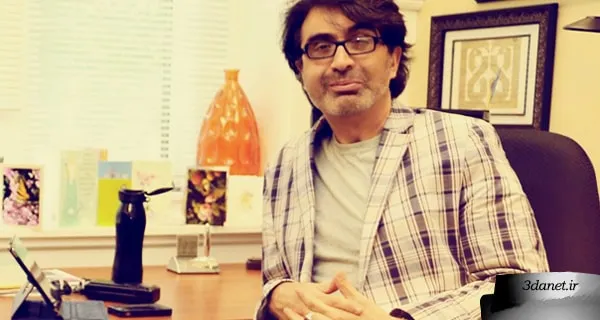
Introducing the book "The Varieties of Religious Experience by William James" by Milad Ataei
.
.


Discussion4 comments
با سلام .بیل ویل سون متولد ۱۸۹۵ و جیمز متولد ۱۸۴۵بود سالها بعد از مرگ جیمز زندگی میکرد و مطالب کتاب الکلیها هیچ ارتباطی از این متون ندارد .بلکه فقط مثالی بوده در جهت اینکه خواننده کتاب این انجمن مدعی تنها راه حل روحانی و رسیدن به تعالی نمیداند .
سلام ارادت نمیدونم این نوشته به دیدارشما خواهدرسیدیانه اما این کتاب به گفته بیل ویلسون بنیانگذار جمعیت الکلیهای گمنام از منابع اصلی کتاب این انجمن است که زندگی بسیاری انسان رامتحول کرده..کاش میشد تحقیق کنید درباره ارتباط بیل ویلسون واین کتاب و چگونگی تسکیل قدمهای دوازده گانه چون زبان اصلی هستن منابعش اکثرا. ممنون
جناب آقای میلاد عطایی با سلام و عرض احترام از شرح خوبتان درباره این کتاب که مترجمش بنده هستم تشکر میکنم. امیدوارم این کتاب خوب در طیف گسترده تری مورد مطالعه قرار گیرد. با همکاری یکی از دوستان تلاش داریم تا خلاصه این کتاب را در یک مجلد حدود 250 صفحه ای نیز در آوریم. تا خدا چه خواهد. ارادتمند حسین کیانی
درود بر شما و سپاس فراوان بابت زحمتی که در این راه کشیده و میکشید. انشاالله در خدمت به فرهنگ و آگاهی بخشی موفق باشید.