Philosophy
Lectures on “An Introduction to Epistemology” by Pirooz Fatoorchi
An Introduction to Epistemology: Pirouz Fattouchi's lecture series analyses knowledge, the Gettier problem, and the responses of Goldman and Dretske. Belief, epistemic duty, and scepticism are among the course topics.
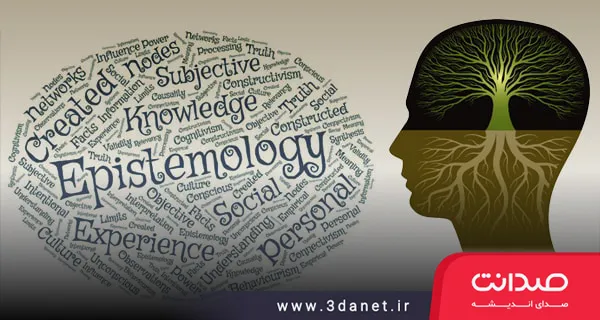
Epistemology (in Persian: Ma'refat-shenasi or Shenakht-shenasi) is a branch of philosophy defined as the theory of the nature of knowledge and the ways of acquiring it. Whenever and always we have a methodical discussion to discover a considerable rule about the states and accidents of knowledge (and sciences), we are delving into the philosophy of science. So, if we examine a brain cell from the perspective that it plays an essential role in the emergence of a knowledge-structuring rule, in order to explain and repair a general rule, we are, to a lesser or greater extent, philosophizing about science. Epistemology is the study of questions concerning the possibility of knowledge and the nature of knowledge.
.
Lectures on “An Introduction to Epistemology” by Pirooz Fatoorchi
.
Session 1. 12/7/1383
Server 1: Audio of this session | PDF text of this session
Server 2: Audio of this session | PDF text of this session
General topic: Analysis of Knowledge
Specific topic: 1_ The Gettier Problem and Responses to It 2_ Clark's Response to the Gettier Problem 3_ Goldman's Response to the Gettier Problem
.
.
Session 2. 19/7/1383
Server 1: Audio of this session | PDF text of this session
Server 2: Audio of this session | PDF text of this session
General topic: Analysis of Knowledge Specific topic: 1_ The Gettier Problem and Responses to It 2_ Goldman's Response to the Gettier Problem
.
.
Session 3 26/7/1383
Server 1: Audio of this session | PDF text of this session
Server 2: Audio of this session | PDF text of this session
General topic: Analysis of Knowledge Specific topic: 1_ The Gettier Problem and Responses to It 2_ Goldman's Response to the Gettier Problem 3_ Goldman's Critiques of Clark 4_ The Defeasibility Theory and Lehrer and Paxson's Account of It
.
.
Session Four. 10/8/1383
Server One: Audio of this Session | PDF Text of this Session
Server Two: Audio of this Session | PDF Text of this Session
General Topic: The Analysis of Knowledge Specific Topic: 1_ The Gettier Problem and Responses to It 2_ Dretske's Response to the Gettier Problem 3_ Dretske's Critiques of Goldman
.
.
Session Five
Server One: Audio of this Session | PDF Text of this Session
Server Two: Audio of this Session | PDF Text of this Session
Topics Presented by Pirooz Fatoorchi:
1_ A Note on the Methodology of Contemporary Epistemology 2_ Continuation of the Discussion on Dretske's Theory in the Analysis of Knowledge
1_ Attention to the Characteristic of Cases 2_ The Possibility of Error and Knowledge 3_ Judgment on the Critiques of Dretske
One of the common objections to many analyses, including Dretske's analysis, is that these analyses do not correspond to the reality of knowledge and what is intuitively understood by it. Several points can be made in response to this: one is that this discussion is, to some extent, a meta-epistemological one, meaning it is a discussion about whether the method of contemporary epistemology is correct or not. For instance, among the later approaches in epistemology is Quine's naturalistic approach, which, although his view was extreme and essentially saw epistemology as subordinate to linguistics and was not accepted, the core of his perspective has been quite influential after him. Even in the current approach of epistemology, it is not the case that analyses must always correspond to the reality of matters; the question of in which parts we are dealing with pure analysis and in which parts our analyses must correspond to reality requires a separate discussion.
.
.
Session Six
Server One: Audio of this Session | PDF Text of this Session
Server Two: Audio of this Session | PDF Text of this Session
Topics Presented by Pirooz Fatoorchi:
1- Continued examination of Dretske's theory of knowledge 2- Fallibility and knowledge 3- The relation between having and expressing knowledge 4- Critiques of Dretske 5- The critique of Pappas and Swain 6- The critique of Pojman 7- Examination of the critiques leveled against Dretske 8- Examination of Audi's account of knowledge and certainty 9- Summary of previous discussions on the Gettier problems and the analysis of knowledge
In everyday life, in ordinary contexts, people claim knowledge of matters that do not even come close to the threshold of conclusive reasons and Dretske's criterion. Dretske's response is that in many ordinary contexts, we are not dealing with a single piece of knowledge or experience, but with a set of intertwined, intersecting experiences. Although each individual unit of this set, based on the stated criteria and conclusive reasons, cannot be considered knowledge, as a set they can satisfy the conditions stated in the criterion of conclusive reasons. For example, much of our testimonial knowledge is not merely a single piece of knowledge but a set of testimonies with a good track record from the past, such as knowing the capital of a country. This set of knowledge covers the possibility of error, and while it does not eliminate it entirely, the remaining amount is no longer significant.
.
.
Session Seven
Server One: Audio of this session | PDF text of this session
Server Two: Audio of this session | PDF text of this session
Topics presented by Pirooz Fatoorchi:
1_ A note on the methodology of contemporary epistemology 2_ Continued discussion of Dretske's theory in the analysis of knowledge
1_ Attention to the particularity of cases 2_ The possibility of error and knowledge 3_ Judging the critiques of Dretske
1- The discussion of belief Commonalities between belief and knowledge The discussion of belief in the history of Western philosophy 2- Examination of Lehrer on the components of knowledge and the substitution of acceptance for belief 3- Epistemic purpose and duty The discussion of epistemic purpose and the relation between belief and will in the history of Western philosophy 4- Degrees of epistemic duty 5- Skepticism
Classifications regarding skepticism
1_ Division into global and comprehensive 2_ Division into critical and substantive
In the history of Western philosophy, Hume is the first person to discuss belief seriously. In fact, the discussion of belief was previously considered in a religious context and in its relation to faith, and Hume is the first to address the discussion of belief independently, apart from a religious context. This primacy of Hume persisted until the late twentieth century. Of course, Hume emphasized that this discussion is very mysterious and obscure and one of the greatest mysteries of philosophy. Many emotional and affective states, such as anger, rage, happiness, etc., can generate belief. The fortuitous and unprecedented nature of belief was also among the points Hume made. This characteristic, and the fact that belief is not subject to the will—and from this perspective, epistemic duty would also be meaningless in its regard—has been a central feature of belief from Hume's time until now.
.
.
Session Eight
Server 1: Audio of this session | PDF text of this session
Server 2: Audio of this session | PDF text of this session
Topics discussed by Pirooz Fatoorchi:
1_ Some points from previous sessions 2_ Discussion of Descartes The three stages of Cartesian skepticism 3_ Putnam's account of Cartesian skepticism, brain in a vat 4_ Fakhr al-Din al-Razi's exposition and arguments on skepticism 5_ The absence of an argumentative starting point in confronting skepticism
A common theme among old and new responses against skepticism is that, in the debate against skepticism regarding the external world, we have no argumentative starting point. This is a discussion that Avicenna explicitly stated in the introduction to the Shifa, and it is affirmed in the responses of figures like Moore, with an emphasis on common sense. What is meant by the statement that we have no argumentative starting point in the debate against skepticism is that if someone denies the existence of the external world and harbors global doubt, one cannot enter into an argumentative discussion with such a person. Because neither your argument nor its premises are accepted by them. In fact, in both old and new responses against skepticism, the inability to engage in argumentative discussion against global skepticism has been emphasized. Of course, this inability is not due to weakness; rather, this matter is fundamentally not amenable to argument. And any argument put forward would beg the question.
.
.
Session Nine
Server 1: Audio of this session | PDF text of this session
Server 2: Audio of this session | PDF text of this session
Topics discussed by Pirooz Fatoorchi:
1- Contemporary views on skepticism 1. Moore's view on skepticism The structure of Moore's argument Moore and common sense Moore's attempt to argue for his position Moore's method 2. Jonathan Vogel's response to skepticism Inference to the best explanation and underdetermination Conditions for a good explanation The confrontation of skeptical hypotheses with the hypothesis of the external world
Philosophers who believe in the method of common-sense understanding, in every era, have acted in a single manner in their encounters with skeptics. Generally, their appeal is to indubitable examples, and this appeal is not for argumentation and proof but for alerting and enlightening the audience. For instance, when Diogenes, an ancient philosopher who held to common-sense understanding, heard someone in a gathering deny motion, he left that gathering, because he believed that there are undeniable self-evident truths such as motion. Or another, later philosopher named Johnson, in response to Berkeley's theory of the non-existence of matter, strikes his head against a stone in order to both prove the existence of matter and to express that the existence of matter is self-evident. In fact, both Johnson, who is later, and Diogenes, who is earlier, used the same method to prove their belief, and this is a common pattern among proponents of common-sense understanding: in the face of the denial of a self-evident matter, they attempt to show a practical example of that concept.
.
.
Session Ten
Server One: Audio of this session | PDF text of this session
Server Two: Audio of this session | PDF text of this session
Topics presented by Pirooz Fatoorchi:
Continuation of the discussion on Vogel's response to skepticism
1_ Conditions for comparing the skeptical hypothesis with the hypothesis of the existence of the external world 2_ The preferences stated for the superiority of the hypothesis of the existence of the external world 1- The inexplicability of the components of the C.S.H hypothesis 2- The greater simplicity of the R.W.H hypothesis a: Based on the number of explanatory components: b: Based on the explanatory principles, rules, and laws:
Vogel's path to refuting skepticism is to try, based on common sense, to prove sensory experience and the observations and experiences of the observer regarding the external world. He places two fundamental hypotheses against each other: one is R.W.H, which is the common-sense hypothesis, and the other is C.S.H, which is a version of skepticism. Vogel's intention is to examine which of these two hypotheses has greater adequacy in an explanatory competition. Vogel believes that not every skeptical hypothesis necessarily has the capacity to compete with R.W.H. Only a skeptical hypothesis that is structurally similar to R.W.H and possesses explanatory virtues in itself and in relation to R.W.H can be a rival.
.
.
Session Eleven
Server One: Audio of this session | PDF text of this session
Server Two: Audio of this session | PDF text of this session
Topics presented by Pirooz Fatoorchi:
Continuation of Responses to Skepticism 1- The Theory of Relevant Alternatives 1_ Exposition of the Theory 2_ The Principle of Closure and Its Denial 1_ Explanation of the Relevance of Alternatives 2- Contextualism 1_ Definition of Contextualism: 2_ The Unitary View of Epistemic Standards 3_ The Gradational Nature of Standards in Contextualism 4_ The Difference Between Epistemic and Sociological Contextualism 5_ Distinguishing Epistemic Contextualism from Malcolm's Two Senses of Knowledge 6_ Explanation of the Epistemic Paradox in Contextualism 7_ Linguistic Aspects of Contextualism 8_ The Relationship Between Contextualism about Knowledge and Contextualism about Justification 9_ The Difference Between Contextualism about Knowledge and Epistemic Contexts 10_ First-Person and Third-Person Perspectives in Contextualism 11_ The Background of Epistemic Contextualism
Another contemporary view, which is also connected to the relevant alternatives view, is contextualism. This theory, as its name suggests, places great importance on context and grants it primacy. An important discussion in epistemology concerns the standards we set for knowledge; these standards are, firstly, multiple and diverse, and secondly, this plurality in the realm of standards is gradational and exists on a spectrum of strength and weakness. Naturally, the stricter and stronger the standard, the fewer the instances of knowledge, and the weaker the standards, the more the instances of knowledge. These spectrum-like standards are determined by context. Context here means the context of discussion, dialogue, and knowledge-acquisition. This theory is almost the logical continuation of the relevant alternatives theory.
.
.
Session Twelve
Server One: Audio of this Session | PDF Text of this Session
Server Two: Audio of this Session | PDF Text of this Session
Topics Presented by Pirooz Fatoorchi:
1- Contextualism 1 . The Background of Contextualism 2 . Contextualism as a Criterion for Analyzing Knowledge 2- Semantic Externalism 1 . Three Illustrative Examples from Putnam 2 . Semantic Externalism's Response to Skepticism 3- Epistemological Externalism 1 . The Link Between Epistemological Externalism and Psychology 2 . Epistemological Externalism's Response to Skepticism
Contextualism, besides being a response to skepticism, is itself one of the prominent theories in the definition and analysis of knowledge. In this domain, contextualism well explains the paradoxical experience of humans in the realm of knowledge: the fact that a person, on the one hand, in the course of ordinary life, sees themselves as possessing knowledge, but during philosophizing and encountering skeptical arguments, does not see themselves as possessing knowledge. Contextualism's explanation for this state is the switching of contexts of knowledge, where the individual is constantly moving between strict and lenient contexts. Of course, although contextualism in practice results in a kind of openness and flexibility in knowledge, it permits skepticism at higher levels and is not an absolutist view.
.
.
Lecture Series Title: An Introduction to Epistemology
Speaker: Pirooz Fatoorchi
Location: Sharif University of Technology
.
.




Discussion3 comments
دوستان, آیا ادامه جلسات موجود است ؟؟
با تشکر ، لطفاً یک مسیر دیگری هم برای دانلود این فایل ها در نظر بگیرید. سپاس
ارادت فراوانی به استاد فطورچی دارم