Philosophy
Living Ethically: Talks by Mostafa Malekian, Maghsoud Farasatkhah, and Amir Akrami
Ethics is the cement of social relations, not a set of groundless injunctions. Talks by Malekian, Ferasatkhah, and Akrami were published from the seventh conference on Rumi's ethical system; Malekian identified the belief that 'what I have, I earned myself' as the greatest obstacle.

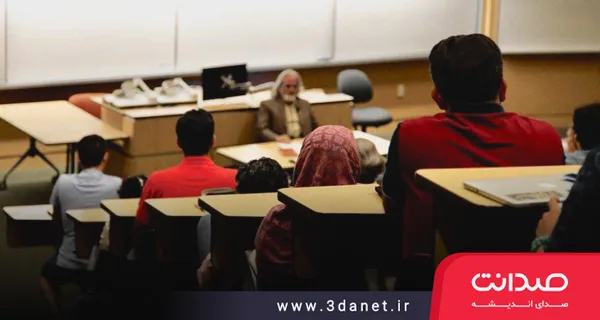
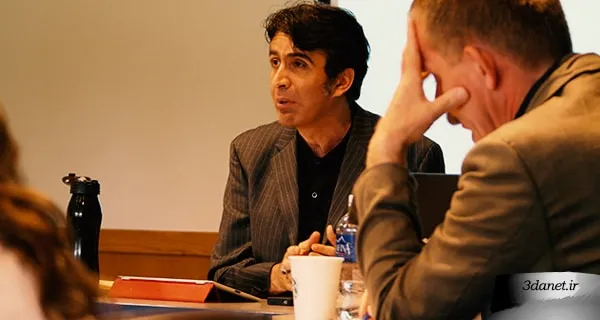
Mohsen Azmoudeh | Unfortunately, in the common understanding of our society, ethics has been reduced to a set of benevolent but unfounded dos and don’ts, and when someone speaks of ethics, everyone’s mind turns to a sack of tedious and wearisome advice and recommendations. This is while ethics is, in fact, the cement of social relations, and as it happens, moral norms and principles are not arbitrary and haphazard matters; they are fundamentally based on rationality and reason. In this respect, reflecting on the necessity of living ethically and its difficulties is a necessary endeavor to enhance the quality of human life at both the individual and collective levels. The seventh conference on Rumi’s Ethical System, on the evening of Friday, April 12, was dedicated to the topic of the obstacles and difficulties of living ethically. At this conference, which was held through the efforts of the Soroush-e Mowlana Institute in the conference hall of the National Library, a number of top-tier Iranian researchers and scholars gave lectures on various aspects of this subject. Mahnaz Ghaneirad examined the non-epistemic psychological obstacles and aids to living ethically, Milad Nouri addressed the positive or negative role of love in living ethically, Mohsen Javadi investigated the effect of self-love on living ethically, and Maghsoud Farasatkhah analyzed the issue from a sociological perspective. Amir Akrami also discussed the topic from Rumi’s viewpoint, and Mostafa Malekian analyzed the epistemic psychological obstacles and aids to living ethically. On the following page, due to the brevity of space, only the talks of three of these researchers—namely Mostafa Malekian, Maghsoud Farasatkhah, and Amir Akrami—are presented, and we hope to be able to provide a report of the other researchers’ lectures at another opportunity.
Epistemic Obstacles and Aids to Living Ethically
Mostafa Malekian
Why, despite the fact that we all desire to be ethical, can we not be ethical? In other words, why can one not become ethical merely by willing to be ethical? That is, why is being ethical far more difficult than it appears at first glance? This question has occupied the minds of thinkers in moral psychology and, to some extent, in moral philosophy for a very long time. Naturally, in answer to this question, one could say that perhaps there is a series of external, sociological, and social factors that prevent every human being from living ethically. If we accept this view, then the discussion of the social or sociological obstacles to living ethically arises. But someone might pay attention to the internal and psychological factors of living ethically. Here, the discussion of the psychological obstacles to living ethically is at issue.
The psychological obstacles to living ethically are divided into two categories: 1- Non-epistemic psychological obstacles: Psychological obstacles to living ethically that are not of the category of belief, conviction, and knowledge but are of the category of feelings and emotions or the category of desires; that is, both a person’s feelings and emotions and their desires can take shape in such a way that they create an impediment in the path of living ethically for the owner of those feelings and emotions or the owner of those desires. 2- Epistemic psychological obstacles: A number of beliefs and convictions that hinder a person from living ethically. That is, it seems there are beliefs in a person that, if realized within them, interfere with living ethically. My discussion concerns the epistemic psychological factors that disrupt and interfere with living ethically. Of course, there is no doubt that when one speaks of an obstacle—whether sociological, non-epistemic psychological (from the category of feelings and emotions or desires), or epistemic psychological (from the category of beliefs)—to living ethically, then the opposite of that obstacle becomes an aid and helper to living ethically; therefore, the discussion of obstacles and aids are, to some extent, complementary. That is, if something is an obstacle to living ethically, its opposite and its negation become an aid and helper to living ethically; thus, the discussion of the obstacles to living ethically is concomitant with the discussion of its aids. But what beliefs in a person become an obstacle or interference to their living ethically? In what I have read and pondered so far, I have arrived at 8 obstacles and interferences to living ethically for the holder of the belief. Of course, in the present time, it may not be possible to present all of them, so I will try to enumerate them in order of importance:
1- What I have, I have obtained myself
The greatest epistemic obstacle to living ethically stems from the belief that what I possess, I have earned myself, and that my assets should be credited to my own account, and that it was my own skill that brought me these assets. In other words, that I deserved to have them. This belief—that what I have in life was my due, as if it were the wages of my own effort and striving—is the greatest obstacle to living ethically. Our perception, more or less, especially in moments of life which are unfortunately not few, is that if we have fame, wealth, power, respect, popularity, reputation, beauty, or eloquence, we have earned them ourselves and they are the result of our own effort and striving. Proving these propositions absolutely does not require philosophical argument. Anyone can refer to themselves and, in the words of epistemologists, intuit these propositions. Every human being, when born, possesses five categories of characteristics that cause them to gain pleasures in the worldly market of life, and with which we trade:
1- A series of characteristics in the body: There are three first-rate characteristics in the human body, of which every human being enjoys a certain percentage and degree: first, health; second, strength; and third, beauty. These three characteristics are considered the privileges of a body, and every human being benefits from a certain degree of each. There are many who have reached a position because they were physically beautiful, strong, or healthy.
2- In the area of the mind, humans also have eight privileges that cause a person to flourish or fail in life. These characteristics are: first, the power of learning; second, the power of memorization; third, the power of recall; fourth, the power of IQ (intelligence quotient); fifth, speed of transmission; sixth, the power of thought; seventh, depth of understanding; and eighth, the power of persuasion. Every human being benefits from one or more of these characteristics to varying degrees. Of course, this enumeration of mental characteristics is inductive, and their number can be increased through research.
3- Psychologists have discovered 56 psychological privileges in humans, and every person benefits from a percentage of each of these 56 psychological characteristics. For example, the power of repartee, the power of wit, the power of management, or the power of eloquence are some of these characteristics.
4- The characteristics of the geographical climate are among the other privileges that every human being benefits from at birth, and there are differences among people in this regard.
5- The characteristics of one's cultural and social climate are another advantage that every person enjoys—to a greater or lesser degree—at birth. For example, the child of a wealthy family differs from the child of a poor family, just as the parents' education makes a difference in the upbringing of children, or an individual's teachers and instructors are influential in their development and effective in their success and failure. Therefore, the above five categories of factors are an individual's assets in life for growth and advancement. None of these factors and assets has the individual given to themselves, and the reason for this is that the individual cannot increase their amount on their own. All of these characteristics have been given to the human being gratuitously. In this discussion, it makes no difference whether the individual is a theist, a skeptic, a denier, religious, or otherwise... rather, the important point is that the individual did not acquire these characteristics themselves. That is, even if we are in pure darkness and absolute ignorance regarding ontology, we can still acknowledge that we did not acquire these characteristics ourselves and that we were not the giver of these characteristics. The source of these characteristics is the gratuitous giving of existence. That is, whatever we have in existence has been given to us gratuitously and was not given to us due to prior merit. Neither what is given nor what is withheld indicates prior merit or lack of merit. The existence in which we are immersed has bestowed these characteristics upon us gratuitously, and we imagine that we have acquired them ourselves. It might be objected to me: consider two identical twin brothers to whom all the givens of existence are the same. Now, if one wins the Nobel Prize and the other is an ordinary shopkeeper, can the social success of the first (winning the Nobel Prize) not be considered the result of his own effort? In my view, this statement is also incorrect; that is, if we speak with the parents of these children, we will notice the psychological differences and different temperaments of the two. Therefore, we are all immersed in the gratuitous givings of existence, and we have not acquired these characteristics ourselves. With this view, the self-sufficiency that a person finds within themselves is lost, and this feeling of self-sufficiency transforms into a kind of complete and utter neediness. We receive entirely gratuitously, and for this reason, we are entirely need. In other words, when we realize the gratuitous giving of existence, the negation of any self-sufficiency and feeling of needlessness arises within us. As a result, 'self-admiration' (ʿujb), egotism, and arrogance vanish from the human being. The more a human being's need for existence increases, the more their love for existence also increases. In my view, love for God means love for existence. In ordinary life, the more a person becomes needful of something, the more they fall in love with that thing. When I become needful of the totality of existence, I fall in love with the totality of existence. The reason I could not love the totality of existence until now is that I had not yet reached the conclusion that I have an emphatic need for this totality. In the words of Mulla Sadra of Shiraz, one should not say 'I am needful of existence,' but rather one should say 'I am the very essence of need for existence.' For this reason, the mystics used to say that human egotism and selfhood (ego) must disappear, and the human being must be watchful of themselves. In the Quranic expression: 'And be not like those who forgot Allah, so He made them forget themselves' (Surah Al-Hashr, verse 19). That is, do not be among those who have forgotten God, for in that case, God makes them forget themselves. It is as if forgetting oneself is not only not a desirable thing but is the greatest punishment that God can inflict upon an individual. Therefore, the negation of egotism means the negation of a self that imagines it is independent, self-subsistent, and standing on its own two feet.
The first effect of realizing the gratuitousness of existence is that a person no longer boasts to themselves or others about enjoying the gifts of existence, does not take pride in themselves, does not belittle others, and their emotional distance from others disappears. Thus, instead of arrogance and haughtiness toward others, a person endowed with a particular attribute feels compassion and, to use a precise expression, their heart aches for the other—wondering why it was given to me without merit, while another, without demerit, does not enjoy this attribute. In other words, a person realizes that the gratuitous gifts of existence create differences among people and strives to reduce these differences arising from existence's gratuitousness. That is, the first effect of understanding and accepting the gratuitousness of existence in a person is a kind of universal compassion toward everyone, and they strive, through their own voluntary gratuitous giving, to minimize the differences caused by the gratuitous gifts of existence. This minimizing of differences arising from existence's gratuitousness, if done voluntarily, is what it means to live ethically. Living ethically means I voluntarily give gratuitously in order to minimize the differences caused by the gratuitous gifts of existence. The second effect of believing in the gratuitousness of existence is that I assess the gifts I enjoy, consider those that are more important, and feel greater compassion for those who lack these gifts. In contrast, a person who does not believe in the gratuitousness of existence feels greater pride toward others who lack or have less of the important gifts they possess. The third effect of believing in the gratuitousness of existence in an individual is a kind of appreciation toward existence, because we were not, and it was not our request. This human appreciation toward existence creates a kind of inner delight in them, a delight far removed from self-conceit. Unfortunately, our joys are often mixed with self-conceit, but this joy arises from receiving gratuitous gifts and stems from an inner thankfulness. Of course, if this inner thankfulness is to become thanksgiving, the individual must believe in a personal being. But even if they do not believe in that personal being, by accepting the gratuitousness of existence, they still possess inner thankfulness. In any case, inner thankfulness creates a joy without self-conceit in a person, a joy that is not from their own achievements but from what they have received, and they feel gratitude and thankfulness toward existence. The fourth effect of this view of existence is that, in addition to paying attention to what I lack, I also pay attention to what I have been given. A huge part of our deep sorrow is that we focus on what we lack but do not look at what we have, and we do not weigh the proportion between the two. Many psychotherapists, for treating certain psychological disorders, including some types of depression like melancholia, advise the individual to write down five of the gifts they possess every night, and never write anything repetitive. Then you will realize that this list never ends, and consequently, you will understand that what you have been given is truly incalculable and innumerable compared to what you have not been given. This creates in us a feeling of a kind of existential capital.
In my opinion, our mystics followed this path. That is, they first arrived at the gratuitousness of existence, then their sense of self-sufficiency vanished, their self-conceit disappeared, and as a result, their love for existence increased. In the very first sentences of the Maqalat-e Shams (Discourses of Shams), it says: whenever you want to give a gift to a friend, you try to bring a gift that they do not have. Do the same before God. That is, bring your need before God, because God has no need. Unfortunately, the feeling of need has vanished within us, and that is why we treat each other this way.
2- Living Ethically
There is no doubt that living ethically has a cost, and those who live ethically must pay certain costs compared to those who do not. The good news, of course, is that no way of life is without cost; even the most hedonistic lifestyles have their costs. Therefore, one should not say, woe to the ethical, who must pay the cost for living ethically. But the meaning of this statement is that a person who lives ethically may even damage their own popularity, because, for example, seeking justice may create discontent. If a person wants to live ethically, they cannot have much wealth, fame, power, respect, reputation, or popularity. To pay these costs, a person needs one belief: the five psychological desirables—namely pleasure, well-being, happiness, peace, and contentment (regardless of their differences)—are not attained through social desirables. One of the greatest achievements of psychology since the mid-twentieth century is that it has demonstrated, in the most urgent and rigorous manner in experimental psychological laboratories, that wealth, fame, and power do not bring happiness, and if a person seeks pleasure, well-being, happiness, peace, or contentment, they cannot attain them through the acquisition of the seven social desirables (wealth, power, fame, respect, reputation, popularity, academic knowledge).
In closing, I will merely outline some other beliefs that hinder ethical living.
3- We imagine that imposing order on ourselves creates weakness in us. Whereas, on the contrary, principled human beings who recognize limits and boundaries, who hold themselves to account, and who make compacts with themselves, are more powerful. Thinkers such as Spinoza and David Hume have emphasized this point.
4- We imagine that the value judgments of others can improve our lives. This is an erroneous belief.
5- Another erroneous belief is that we imagine we are more or less different from others, as if we are made of a different fabric.
6- We imagine that spiritual pleasures do not exist as an independent category of pleasure, and that pleasures are either only physical or ultimately lead to physical pleasure, and this hinders ethical living.
7- We imagine that the failures of many human beings have been due to their being ethical.
8- We imagine that ethics is tedious and robs a person of life's vitality.
9- Another false belief is that we imagine the order of the world is not ethical, and that in a system that is not ethical, we have been asked to be ethical.
Researcher and Professor of Philosophy
***
Sociological Obstacles and Aids to Ethical Living
The end of ethics is the end of society
Maghsoud Farasatkhah
A serious question in the study of ethics is: to what extent does the world cooperate with human beings in being ethical, living ethically, and remaining ethical? The answer to this question is contentious. In the present discussion, I will try to problematize this question. The social systems in our current history do not help much in living ethically. I am not speaking of the impossibility of ethics, but rather I sense the hardship of ethics in Iranian society. The human being is a biological, psychological, cognitive, and social entity. Consequently, ethics requires a sphere and an ecosystem, and is an extension of human life. If defective cycles have taken root in human life, the work of ethics is pitiful. The moral order of society depends on a reasonable political, social, economic, legal, and governance order. Therefore, ethics has an institutional logic. Also, being ethical requires a degree of emotional intelligence, that is, the understanding that the other is not my instrument. Thus, ethics is a kind of social learning and requires social rationality. That is, ethics needs a social wisdom. When that social wisdom is distorted and lying becomes an industry, ethics becomes impossible. Several joint studies by my students and me have shown that there is now a lying industry in Iranian society, meaning that lies are supplied and demanded as a commodity. Therefore, ethics and unethicality are a social construct, although the ethical matter is not reducible to the social matter. Just as ethics cannot be reduced to a purely psychological or cognitive matter, there is much evidence that Iranian society is becoming socially unethical. It is not without reason that Plato pursues educational discussions in the Republic and the Laws, and Aristotle addresses ethics in the final two sections of the Politics. In the study of ethics, a discussion has emerged under the title of moral luck, about which thinkers such as Williams and Nagel have spoken. These thinkers believe that historical, cultural, and situational factors can increase or decrease the moral luck of human beings. When moral luck is low, a person's eagerness to live ethically diminishes. This theory says that in Iranian society, there is a hyper-judgment regarding ethics, meaning we expect people to be ethical too much. That is, if we once had 'Advice to Kings' (Nasihat al-Muluk), now it is the kings who want to make people ethical through advice. This theory says that moral luck has a capacity, and one must be realistic about ethics. Is not ethics synonymous with caring for humanity? You unadmonished preachers of ethics who advise us, it is as if you do not care for the people's sorrow. Being ethical is tragic and dramatic. Ethics is contingent upon a social good fortune, and our social good fortune is highly contentious. It is not without reason that Aristotle speaks of eudaimonia (happiness and good fortune) in the Nicomachean Ethics. Part of good fortune is contingent upon society, governance, the legal system, history, and geography.
Our history is such that people lack self-efficacy, whereas a sense of self-efficacy is the foundation of ethics. For a human being to lack a sense of agency paralyzes them ethically. In Iranian society, there is emotional exhaustion. With emotional exhaustion, ethical passion and eagerness become difficult. In a society where there is normative weakness or conflicts, one cannot simply be an ethical citizen. There are also conditions that push individuals toward self-centeredness.
There is a sense of social ambiguity and inequality in our society, and these are among the social obstacles to living ethically. The lack of trust is another social predicament for living ethically. It is here that Durkheim, continuing Kant's discussion of individual ethics, speaks of the collective conscience for morality. Marx, too, as a sociologist, has important ethical discussions. He says people have become alienated from economic conditions, and this social alienation is an ethical obstacle. He emphasizes that the feeling of alienation and powerlessness hinders living ethically. Therefore, someone who says one must live ethically despite unfavorable social, economic, and cultural conditions speaks beautifully, but in the long run and on a large scale, this advice and reminder yield no results. When social conditions are unfavorable, a traumatic feeling arises in people, and they see themselves as victims. This attitude is the fatal share of ethics in Iran. Now, everywhere people refer to structures, because the traumatic feeling and sense of being a victim exist in everyone. This traumatic feeling is destructive to ethical flourishing. But one must also pay attention to the limitations of the theory of moral luck, which is a kind of conceptual formalization of this understanding of being a victim. A theory that seeks to soothe the common understanding of people is a matter of debate. That is, this theory can end moral tension in a person, overshadow personal responsibility, and weaken moral reasoning. The end of ethics is also the end of society. When ethics becomes afflicted in a society, we enter a post-social condition. In my view, the scope of human possibilities for moral control, despite moral luck, remains vast. It is here that Kant says, despite all social conditions, the good will exists, and thinkers like Zagzebski speak of the passion for the good in humans. These considerations can broaden the theory of moral luck. Therefore, in this world, the possibility of living ethically still exists, and that is why universal ethical principles exist, because ethics is a human epistemic, rational, conscientious, social, and historical reserve. That is, ethics is necessary for life to become fruitful, and this itself is a kind of social wisdom. Therefore, despite our social systems having become ethically dysfunctional, the world still cooperates with humans to be ethical. Even these very social complaints indicate the ethical self-reproaching soul in Iranian society. Thus, this understanding that one must have social bonds to live ethically is the deepest explanation of social reform. That is, the essence of social reform is an ethical wisdom.
Sociologist
***
Obstacles and Aids to Living Ethically from Rumi's Perspective
Love is the physician of all our ills
Amir Akrami
Defining living ethically is difficult, if not impossible, and it is better to describe it, that is, to state the aspects of the main axes or indicators of living ethically. A good entry point for this is the golden rule of ethics, whose essence is: Wish for others what you wish for yourself, and do not wish for others what you do not wish for yourself. How can one act upon this rule in relation to others? Its prerequisite is, first, taking the other seriously, and second, taking them as seriously as oneself. According to this rule, the individual goes beyond the limits of their own desires, sees others as well, recognizes their wants and desires, and strives to ensure that they attain their desires to the same extent that they grant themselves the right to attain theirs. Consequently, acting upon the golden rule of ethics, or in my terms, living ethically, means negating narcissism and limiting desires. Of course, being ethical is a matter of degrees. Also, living ethically consists of the individual being able to respect the interests of others as easily and fluidly as their own. In living ethically, the center of gravity of our existence must be transformed, that is, by the requirement of our primary nature, we move toward fulfilling our own desires, and living ethically means self-restraint (self continence), that is, the individual being able to control and direct their own desires and master themselves (in Kant's terms, self mastering) and show courage in relation to themselves. That is, we strive for our reason to overcome our wants, desires, and appetites.
But when we look at Rumi, we are not faced with a thinker and writer like other thinkers and writers. He is someone who has experienced things in this life from the depths of his soul. He does not speak of the unseen, the unexperienced, or abstract matters. His teachings are things seen, heard, and experienced. At the same time, this experienced thinker was aware of the importance of living ethically. It is true that the horizon of his flight extended beyond the circle of ethics, but he was also intensely sensitive to living ethically. For this reason, he says: I saw nothing in the world, after all my search / Any merit but a goodly nature.
But before discussing living ethically, Rumi speaks of whether anyone can live ethically, or must a concern first take shape within them? Rumi says that if someone considers themselves perfect, they are miles away from being ethical. Therefore, a person must first find a flaw in themselves in order to strive for their own perfection. Another obstacle to living ethically, in Rumi's view, is preoccupation with the faults of others and not seeing one's own flaws. In contrast, one who is ethical, according to Rumi: Is a fault-finder and fault-seeker of their own self / With all they are good, and with themselves they are bad. They either do not see the faults of others, or if they do see them, they try to conceal them.
The most important of these moral vices, in Rumi's view, are: anger, lust, envy, bigotry, and pride. The most important of all, in his view, is pride. He says: Love and compassion are human attributes / Anger and lust are animal attributes.
In Rumi's view, living ethically means restraining the animal part of one's being and giving free rein to the human part of one's being. Regarding envy, he says: There is no pass on the road more difficult than this / Happy is the one who has no envy on the way. Regarding bigotry, he says: Harshness and bigotry are signs of immaturity / As long as you are an embryo, your work is blood-drinking. But regarding pride, he says: Know this pride to be a deadly poison / That dizzy drunkard became poisoned by the dregs of pride // The ladder of creation is this 'me and mine' / In the end, from this ladder one is bound to fall // The higher one climbs, the more foolish they are / Their bones will break all the worse // ... // These are branches, and its root is this / That arrogance is to claim partnership with God. That is, he says that being prideful is to claim partnership in God's divinity. In some Western works, this pride is called a kind of self-deification complex. That is, a person should not see themselves as God, and this is what the prideful person does. Rumi also considers pride and arrogance to be the mother of anger: All anger arises from pride, purify yourself of arrogance / If you do not want pride, go, without pride, become dust // Anger never arises except from pride and 'me and mine' / Bring both down like a ladder and ascend to the heavens.
But Rumi believes that in the face of these pains and vices to which we are typically afflicted, we must change our temperament. To transform our temperament, we must behead pride and egotism. For him, to gather these vices like iron filings, one must seek help from the magnet of love and with it change the bad temperament and turn virtues into character, so that pride departs and glory settles in. The alchemy that does this is love: Whoever's garment is torn by a love / Is completely purified of greed and vice // Rejoice, O love, our sweet passion / O physician of all our ailments // O remedy for our arrogance and our honor / O you who are our Plato and our Galen. The whole of Rumi's message is that the remedy for all moral wrongs is love. In his view, love and pride cannot coexist.
Therefore, the ailment, in Rumi's view, is being trapped in the snare of egotism and pride, and the path to healing is love, which turns the copper of existence into the alchemy of living ethically.
Rumi experienced this state in his encounter with Shams and expresses it in the famous ghazal "I was dead, I became alive." Therefore, we need a change in the axis of our existence, and love does this. Love takes us to the solitude of the Truth, carries our existence to the rose's root, and brings us out of the narrowness of our being. Whoever becomes without self, all selves are indeed Him / The Friend becomes all, since He also loves Himself. Alongside love and being a lover, Rumi recommends companionship with the pure, being truthful, and showing kindness to the impure.
Researcher of Philosophy of Religion
.
.
PDF file of this text in Etemad newspaper
.
.
Living Ethically: Talks by Mostafa Malekian, Maghsoud Farasatkhah, and Amir Akrami
Immersed in the Gratuity of Being
The Seventh Conference on Rumi's Ethical System
Date: Friday, April 12
Venue: International Conference Hall of the National Library of Iran
Organized by: Soroush-e Mowlana
Transcription source: Etemad Newspaper, April 14, 2019
.
.




Discussion2 comments
معنی moral luck را در جامعهشناسی نمیدانم اما در فلسفه به این معنی است که گاهی شانس باعث میشه یک تفاوت اخلاقی به وجود بیاد مثلا دو نفر هم زمان از چراغ قرمز عبور میکنند یکی شانس میاره اما دیگری تصادف میکنه درینجا فرد اول ممکنه خودش رو فارغ از مسئولیت اخلاقی بدونه در حالیکه فرد دوم هم خودش و هم دیگران اون رو مسئول آن عمل غیراخلاقیش بدونن در حالیکه عمل هر دو مساوی بوده، فقط اولی شانس آورده و دومی بدشانسی، بنابراین اونا میخوان با طرح این مسئله و اصطلاح شانس، فرد اول رو متوجه مسئولیت اخلاقیش کنند که حتی اگر گاهی شانس بیاری و اتفاقی نیفته باز هم کارت به اندازه فرد دوم بد بوده و به همون اندازه مسئولیت داری
جناب آقای آزموده بر چه اساسی ادعا میکنید در جامعه ما اخلاق تبدیل به باید نبایدها بدون مبنا شده؟ ابراز تاسف کردن بر چیزی که نمی دانید عاقلانه نیس