Psychology
Mandy Len Catron: A Better Way to Talk About Love
Mandy Len Catron argues that our common metaphors for love—such as 'falling' or 'madness'—are inherently violent and cast us as victims. Changing how we talk about love can create an experience with more joy and less suffering.
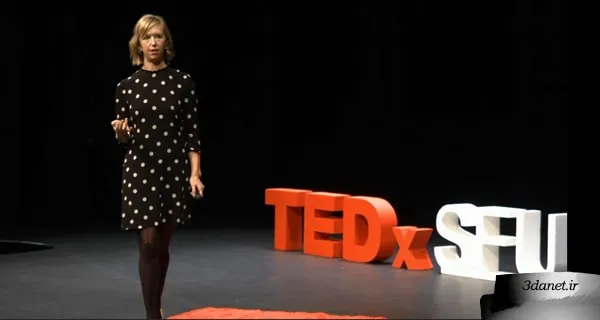
We fall into the trap of love. We are struck, shattered, and stunned. We burn with its passion. Love makes us crazy and sick. Our heart aches, and then it breaks. According to writer Mandy Len Catron, talking about love in this way fundamentally changes our experience of it. In this talk, Catron recounts a different metaphor for love for all those who have felt insane in love, one that might help us find more joy—and less suffering—in it.
.
.
00:12
00:22
Most of us have probably fallen in love several times in our lives. In English, the term "falling in love" is really what we mean in relation to this experience. I don't know about you, but my image of this term is a cartoon image... of a man walking down the sidewalk, and without realizing it, he crosses over an open manhole, and tumbles headfirst into the sewer below. I imagine it this way because "falling" is not "jumping." "Falling" is accidental, uncontrollable. It is something that happens without our consent. And this... this is the main way we talk about the beginning of a new relationship.
01:10
01:30
01:56
01:58
02:15
02:16
You can see it's defined both as "severe suffering" and as "to be very much in love." I tend to associate with the word "smite," which has a familiar context, which is the Old Testament. In the Book of Exodus alone, there are 16 references to this word, which is a word the Bible uses for the vengeance of an angry God.
02:40
02:41
02:47
02:48
02:49
How did it come to this? How did we get to a place where we associate love with severe pain and suffering? And why do we talk about this seemingly good experience as if we are victims? These are difficult questions, but I have theories. To think about this,I want to focus specifically on the "metaphor" that frames love as madness.
03:12
When I first started researching romantic love, I found these metaphors of madness everywhere. The history of Western culture is full of language that equates love with mental illness. And these are just a few examples. William Shakespeare: "Love is merely a madness" from "As You Like It." Friedrich Nietzsche: "There is always some madness in love." "Got me looking, got me hooked, got me lovesick and crazy..."
03:39
03:43
03:46
I first fell in love when I was 20, and it was a relationship full of ups and downs from the very beginning. And for me, the early years were a long road filled with soaring highs and crushing lows. I can recall one particular instance. I was sitting on a bed in a cheap hotel in South America, and I watched the person I loved walk out the door. And it was late, it was nearly midnight, we'd had an argument over dinner, and when we got back to our room, he threw his things into his bag and stormed out. While I don't remember exactly what our argument was about, I remember very clearly how I felt as he was leaving.
04:30
I was 22, it was my first time in a developing country, and I was completely alone... I had a week until my flight home, and I knew the name of the region I was in, and the name of the city I needed to get to for my flight, but I had no idea how to get there. I had no guidebook and very little money, and I didn't speak Spanish.
04:57
05:19
05:21
05:45
06:07
About half an hour later, he came back to our room, and we made up. We spent a happy week together. And then, when I returned home, I thought, "How terrible and how wonderful that was. This must be a real love story." I expected a feeling of madness from my first love, and of course, that's what I got. But being in love with someone like that... having my entire being dependent on his love... was not very good for me or for him.
06:41
But this experience of love is probably not that unusual. Most of us feel a little mad at the beginning of a romantic love. In fact, there is research that proves this is somewhat natural, because, from a neurochemical perspective, romantic love and mental illness are not easily distinguishable. This is true.
07:04
07:17
07:18
07:42
08:05
When I returned from my trip to South America, I spent a lot of time alone in my room, checking my emails, desperately waiting to hear from the person I was in love with. I concluded that if my friends couldn't understand my miserable state, then I didn't need to be friends with them, so I stopped spending time with most of them. And that year was probably the saddest year of my life. But I think I mostly felt that I had to be miserablebecause if I could be miserable then I would prove how much I loved him. And if I could prove that we would end up together.
08:45
08:59
Our experience of love is both cultural and biological. Our biology tells us that love is good by activating these reward circuits in our brain, and it tells us that love is painful when a fight or a breakup occurs, and that neurochemical reward is diminished. And in fact—and you may have heard this— neurochemically speaking, going through a breakup is a lot like quitting cocaine, which I found reassuring.
09:27
09:28
And then our culture uses language to shape and reinforce these ideas about love. In this case, we talk about metaphors of pain and addiction and madness. It's kind of an interesting feedback loop. Love is powerful and sometimes painful, and we express this in words and stories, but then the words and stories prime us to expect love to be powerful and painful.
09:55
10:12
10:15
To reconcile with this, we need to change either this culture or our expectations. Imagine if we were less passive in love. If we were more reckless, more intellectual, and more generous, and instead of falling in love, we stepped into it. I know that's asking a lot, but I'm not the first to suggest this.In their book, "Metaphors We Live By," linguists George Lakoff and Mark Johnson propose a really interesting solution to this dilemma, which is to change our metaphors. They argue that metaphors truly shape the way we experience the world, and that they can even act as a guide for our future actions, like self-fulfilling prophecies.
11:09
Johnson and Lakoff propose a new metaphor for love: love as a collaborative work of art. I really like this way of thinking about love. Linguists talk about metaphors that have entailments, which is essentially a way of considering all the implications or ideas contained within a metaphor. And Johnson and Lakoff talk about everything that is required in the endeavor of a work of art:effort, compromise, patience, and shared goals. These ideas align well with our cultural investment in long-term romantic commitment, but they also work for other types of relationships— short-term, casual, polyamorous, non-monogamous, asexual— because this metaphor brings more complex ideas to the experience of loving someone to the fore.
12:04
12:35
When I was younger, it never occurred to me that I was allowed to expect more from love, that I didn't just have to accept whatever love was offered to me. When Juliet, at fourteen, first sees Romeo— and a fourteen-year-old Juliet cannot feel despair or anger toward someone she met just four days earlier. So what? She wants to die. Right? And to refresh your memory, at this point in the play, Act three of five, Romeo is not dead. He is alive, he is healthy, he's just been banished from the city, I fully understand that 16th-century Verona bears little resemblance to contemporary North America, and yet when I read this play, even at the age of 14, Juliet's suffering was comprehensible to me.
13:33
Framing love as something I create with someone I admire, rather than something that just happens to mewithout my consent or control, is empowering. It is still difficult. Love can still be maddening or destructive on some days, and when I feel truly desperate I have to remind myself: my job in this relationship is to talk with my partner about what we want to build together. Even this is not easy. But it is far better than the other option, which feels more like madness.
14:14
This version of love is not about winning or losing someone's affection and kindness. Instead, it requires you to trust your partner and talk about things when trusting seems difficult, which sounds very simple, but is actually a kind of revolutionary or radical act. This is because you stop thinking about yourself and what you are gaining or losing from this relationship, and you start thinking about what you have to offer. This version of love allows us to say things like, "Hey, we're not very good collaborators. Maybe this isn't for us." Or, "This relationship lasted shorter than I had planned, but it's still kind of beautiful."
15:02
15:13
15:14
.
.
00:12
00:22
Most of us will probably fall in love a few times over the course of our lives, and in the English language, this metaphor, falling, is really the main way that we talk about that experience. I don't know about you, but when I conceptualize this metaphor, what I picture is straight out of a cartoon --like there's a man, he's walking down the sidewalk, without realizing it, he crosses over an open manhole, and he just plummets into the sewer below. And I picture it this way because falling is not jumping. Falling is accidental, it's uncontrollable. It's something that happens to us without our consent. And this -- this is the main way we talk about starting a new relationship.
01:10
01:30
01:55
01:58
02:15
02:16
you will see that it can be defined as both "grievous affliction," and, "to be very much in love." I tend to associate the word "smite" with a very particular context, which is the Old Testament. In the Book of Exodus alone, there are 16 references to smiting, which is the word that the Bible uses for the vengeance of an angry God.
02:39
02:41
02:46
02:47
02:49
So, how did this happen? How have we come to associate love with great pain and suffering? And why do we talk about this ostensibly good experience as if we are victims? These are difficult questions, but I have some theories. And to think this through, I want to focus on one metaphor in particular, which is the idea of love as madness.
03:12
When I first started researching romantic love, I found these madness metaphors everywhere. The history of Western culture is full of language that equates love to mental illness. These are just a few examples. William Shakespeare: "Love is merely a madness," from "As You Like It." Friedrich Nietzsche: "There is always some madness in love." "Got me looking, got me looking so crazy in love -- "
03:39
03:43
03:46
I fell in love for the first time when I was 20, and it was a pretty turbulent relationship right from the start. And it was long distance for the first couple of years, so for me that meant very high highs and very low lows. I can remember one moment in particular. I was sitting on a bed in a hostel in South America, and I was watching the person I love walk out the door. And it was late, it was nearly midnight, we'd gotten into an argument over dinner, and when we got back to our room, he threw his things in the bag and stormed out. While I can no longer remember what that argument was about, I very clearly remember how I felt watching him leave.
04:30
I was 22, it was my first time in the developing world, and I was totally alone. I had another week until my flight home, and I knew the name of the town that I was in, and the name of the city that I needed to get to to fly out, but I had no idea how to get around. I had no guidebook and very little money, and I spoke no Spanish.
04:57
05:19
05:21
Because some part of me wanted to feel miserable in love. And it sounds so strange to me now, but at 22, I longed to have dramatic experiences, and in that moment, I was irrational and furious and devastated, and weirdly enough, I thought that this somehow legitimized the feelings I had for the guy who had just left me.
05:45
06:07
About half an hour later, he came back to our room. We made up. We spent another mostly happy week traveling together. And then, when I got home, I thought, "That was so terrible and so great.This must be a real romance." I expected my first love to feel like madness, and of course, it met that expectation very well. But loving someone like that -- as if my entire well-being depended on him loving me back -- was not very good for me or for him.
06:41
But I suspect this experience of love is not that unusual. Most of us do feel a bit mad in the early stages of romantic love. In fact, there is research to confirm that this is somewhat normal, because, neurochemically speaking, romantic love and mental illness are not that easily distinguished. This is true.
07:04
07:17
07:18
07:42
Researchers believe that the low levels of serotonin is correlated with obsessive thinking about the object of love, which is like this feeling that someone has set up camp in your brain. And most of us feel this way when we first fall in love. But the good news is, it doesn't always last that long -- usually from a few months to a couple of years.
08:05
When I got back from my trip to South America, I spent a lot of time alone in my room, checking my email, desperate to hear from the guy I loved. I decided that if my friends could not understand my grievous affliction, then I did not need their friendship. So I stopped hanging out with most of them.And it was probably the most unhappy year of my life. But I think I felt like it was my job to be miserable, because if I could be miserable, then I would prove how much I loved him. And if I could prove it, then we would have to end up together eventually.
08:45
08:59
Our experiences of love are both biological and cultural. Our biology tells us that love is good by activating these reward circuits in our brain, and it tells us that love is painful when, after a fight or a breakup, that neurochemical reward is withdrawn. And in fact -- and maybe you've heard this --neurochemically speaking, going through a breakup is a lot like going through cocaine withdrawal,which I find reassuring.
09:27
09:28
And then our culture uses language to shape and reinforce these ideas about love. In this case, we're talking about metaphors about pain and addiction and madness. It's kind of an interesting feedback loop. Love is powerful and at times painful, and we express this in our words and stories, but then our words and stories prime us to expect love to be powerful and painful.
09:55
10:12
10:15
To reconcile this, we need to either change our culture or change our expectations. So, imagine if we were all less passive in love. If we were more assertive, more open-minded, more generous and instead of falling in love, we stepped into love. I know that this is asking a lot, but I'm not actually the first person to suggest this. In their book, "Metaphors We Live By," linguists Mark Johnson and George Lakoff suggest a really interesting solution to this dilemma, which is to change our metaphors. They argue that metaphors really do shape the way we experience the world, and that they can even act as a guide for future actions, like self-fulfilling prophecies.
11:09
Johnson and Lakoff suggest a new metaphor for love: love as a collaborative work of art. I really like this way of thinking about love. Linguists talk about metaphors as having entailments, which is essentially a way of considering all the implications of, or ideas contained within, a given metaphor.And Johnson and Lakoff talk about everything that collaborating on a work of art entails: effort, compromise, patience, shared goals. These ideas align nicely with our cultural investment in long-term romantic commitment, but they also work well for other kinds of relationships -- short-term, casual, polyamorous, non-monogamous, asexual -- because this metaphor brings much more complex ideas to the experience of loving someone.
12:04
12:35
When I was younger, it never occurred to me that I was allowed to demand more from love, that I didn't have to just accept whatever love offered. When 14-year-old Juliet first meets -- or, when 14-year-old Juliet cannot be with Romeo, whom she has met four days ago, she does not feel disappointed or angsty. Where is she? She wants to die. Right? And just as a refresher, at this point in the play, act three of five, Romeo is not dead. He's alive, he's healthy, he's just been banished from the city. I understand that 16th-century Verona is unlike contemporary North America, and yet when I first read this play, also at age 14, Juliet's suffering made sense to me.
13:33
Reframing love as something I get to create with someone I admire, rather than something that just happens to me without my control or consent, is empowering. It's still hard. Love still feels totally maddening and crushing some days, and when I feel really frustrated, I have to remind myself: my job in this relationship is to talk to my partner about what I want to make together. This isn't easy, either.But it's just so much better than the alternative, which is that thing that feels like madness.
14:14
This version of love is not about winning or losing someone's affection. Instead, it requires that you trust your partner and talk about things when trusting feels difficult, which sounds so simple, but is actually a kind of revolutionary, radical act. This is because you get to stop thinking about yourselfand what you're gaining or losing in your relationship, and you get to start thinking about what you have to offer. This version of love allows us to say things like, "Hey, we're not very good collaborators. Maybe this isn't for us." Or, "That relationship was shorter than I had planned, but it was still kind of beautiful."
15:02
15:12
15:14
.
.
.
Watch on Aparat (with Persian subtitles)
Watch on TED (with Persian subtitles)
Download Video 73 MB
Download Video 37 MB
Download Video 30 MB
Download Video 15 MB
Download Video 10 MB
Download Persian and English Subtitles
.
.
Mandy Len Catron: A Better Way to Talk About Love
Source: TED
Translated by Leila Ataei
Reviewed by Sadegh Zabihi
.
.



Discussion0 comments
No comments yet; let yours be the first voice.