Philosophy
Morad Farhadpour's Lecture: What Is Philosophy from Lukács's Perspective
In his study of Georg Lukács’s concrete life, Morad Farhadpour identifies the core of his thought as a “romantic anti-capitalism” and a hatred of bourgeois existence—a life Lukács saw as formless and meaningless, a view that persisted even after his turn to Marxism.
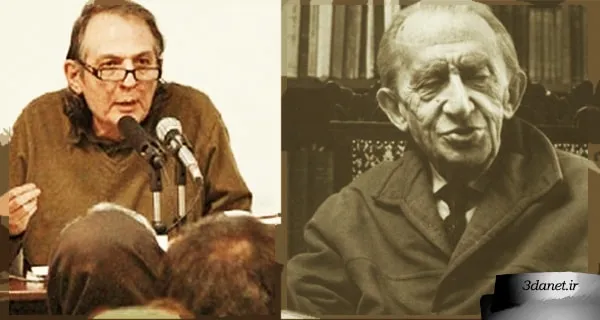
Georg Lukács (1885–1971), the Hungarian philosopher, literary critic, literary historian, and leftist critic, is one of the founders of Western Marxism. Unlike many European leftists, he did not confine himself to theorizing but also maintained a continuous and active presence in the practical arena—and who can deny that being active in the field always carries the risk of being attacked and criticized from all sides, with one’s decisions and actions subjected to harsh and merciless judgments.
According to the analytical-news website Iran Balkan (IRBA), quoting Etemad, he stubbornly insisted on his presence, however, and actively participated at a critical juncture such as the 1956 Hungarian Uprising, to the point where he was imprisoned and bore its consequences. In a talk on “What Is Philosophy?” at Shahid Beheshti University, Morad Farhadpour emphasized this very aspect of Lukács’s concrete life. He said: “Given the swelling and enormous volume of theory that has particularly filled the world these days, the seriousness Lukács sought in tragedy is, as it happens, seen through a kind of political praxis.” A report of this talk follows:
Addressing all aspects of Lukács’s intellectual work is not possible in this short time. Accordingly, I will try to emphasize only one main theme of his thought. He refers to this main theme in his critical 1967 preface to History and Class Consciousness under the title “romantic anti-capitalism.” Under this category, he also attacks his own youthful works, under the famous sentence in an interview where he had said: I would rather live in the worst form of socialism than in the best form of capitalism. This sentence was uttered during the Cold War and may seem propagandistic, but my point is that Lukács said this sincerely in his life and practice as well.
Real Life and Empirical Life If we return to Lukács’s early works, we see that the hatred of bourgeois life and the hatred of capitalism in the period when Lukács was a neo-Kantian thinker manifests itself in his literary discussions. Perhaps the best expression of it, apart from the book The Theory of the Novel itself, is, in a condensed form, the essay “The Metaphysics of Tragedy,” where Lukács posits the duality of real life and empirical life. Real life is, in fact, the main content of tragedy, but he presents empirical life as everyday life in bourgeois society, and the attributes he enumerates for it are: formlessness, meaninglessness, in it nothing ever comes to an end, in it nothing is serious, in it all possibilities exist, in this life instead of the Kierkegaardian “either/or” we are faced with “both/and,” with a hodgepodge of futile and fruitless efforts that are not meant to lead anywhere. Lukács places this type of life in serious opposition to the intensity of tragedy, where, in his own words, naked souls confront naked destiny. Perhaps to examine the phenomenological content of this hatred, we can point to the hatred of stupidity, banality, corruption, decay, inconclusiveness, meaninglessness, the rottenness of everyday life, and so on. Lukács points to this matter long before Heidegger or the French existentialists. From this perspective, perhaps apart from Kierkegaard, to whom he was very drawn, the figure to whom he was very close, especially in his youthful works, is Nietzsche with his theory of European nihilism. It is interesting that Lukács makes no mention of Nietzsche in his youthful works; perhaps this is due to his excessive closeness to him.
Teenage Life But if we want to make the matter more concrete, I think the experience of our own economy, society, and politics over the past two decades clearly demonstrates this very process, especially in relation to middle-class culture. So if we want to provide an objective equivalent for Lukács's hatred, we can point to this situation: something that, on a global scale, has psychologically infantilized all people and turned lives into the lives of teenagers who think only of buying new toys—a kind of striving to realize the so-called American Dream, both inside America and elsewhere. This hatred of bourgeois life is something that stays with Lukács, and we observe it in various periods of his life. For example, it is evident not only in the books Soul and Form and The Theory of the Novel in the early period of his intellectual work, but also after he became a Marxist in 1918—an experience of becoming a Marxist that is, in a sense, comparable to Saint Paul's experience at the gates of Damascus; that is, Lukács transformed from a critic of Bolshevism into a Marxist within a week. But even in this period, we see that in the early years, when he represented a kind of ultra-left Marxism alongside Karl Korsch and the left wing of the Italian Marxists, this critique of bourgeois life is fully apparent, and he presents the very phenomenon of communism and the communist struggle through literary and tragic examples; as it happens, his main concern is moral tragedy rather than the communist struggle. He himself says he faces the paradox that to destroy evil, they themselves must become evil, and must not only sacrifice their own lives but also renounce their own salvation. This main theme, namely romantic anti-capitalism, is also visible in History and Class Consciousness beneath a layer of Fichtean idealism—that is, the romantic fervor and hatred directed at the lukewarm, tepid atmosphere of moderation. Therefore, in reality, this hatred in Lukács, despite all his turns and, in some cases, compromises, is so deep that despite all the criticisms he had of the Stalinist current, he ultimately compromises again and again and submits to the Stalinist situation, because on the one hand he thought that outside the party he would meet a fate like Karl Korsch's, and on the other hand, hatred of bourgeois life is the entirely determining principle of his thought.
The Grand Hotel by the Abyss If we go back and place this hatred in a historical context, we see that the hatred of capitalism is not unique to Lukács, especially in German culture, for the very reasons that figures like Hegel and Marx had pointed out long before—namely, the malformed duality of a nation that had advanced greatly in economy and industry but still lingered in a pre-capitalist era in culture and politics. We witness this atmosphere of romantic anti-capitalism. This matter is so deep-rooted that we observe traces of it years later in thinkers such as Adorno and Horkheimer in their critique of American life. That is, despite the fact that, especially for Adorno, feudalism and aristocracy held no appeal, and he himself was not a person overly mesmerized by myths—for example, Adorno has a fascinating essay on the debunking of the myth of the 1920s—nevertheless, traces of this kind of romantic anti-capitalism can be seen in their works as well. It is for this reason that Adorno allows Lukács to apply his famous description to the Frankfurt School and to Adorno and Horkheimer, that is, to say that the Frankfurt School is the Grand Hotel by the Abyss, meaning people who live in a grand hotel gazing into the nihilistic abyss of capitalism and the decay and ruin of society. Various aspects of this gazing into the abyss, which is one of Nietzsche's fundamental concepts, can be extracted. But since the time of the Hegelians, we have often been dealing with a process in the world whereby the romantic fervor against the status quo ultimately ends in a kind of cultural compromise in the form of a return to the church, especially the Catholic Church, and we witness a kind of taking refuge in traditional and religious Christian society. We even see this in reverse examples, such as Max Scheler. Even if you look closely, its starting point is again based on a cultural understanding of history and a phenomenology of culture—a hierarchy of cultural values at the top of which stand aristocratic values, and at the very bottom, bourgeois values and values related to survival, the continuation of life, and even development and progress. Or the young Heidegger, whose starting point is religious and who initially studies as a theologian. But both of these follow paths that are somewhat similar and somewhat different. Scheler, who completely overturns the hierarchy of values and moves toward a kind of vitalism, placing the vital values he once mocked at the top; Heidegger, it is also clear, moves toward fascism. Of course, bearing in mind that a year after realizing the anti-bourgeois revolution he had awaited would not be delivered by Hitler's government, he, in a sense, separates from the party but retains the core of fascism as a movement out of bourgeois mediocrity and romantic anti-capitalism within himself.
Thus, we observe that various examples of this movement are evident in the German milieu.
But as far as Lukács himself is concerned, regarding the issue of romantic anti-capitalism and his hatred of bourgeois life, my emphasis is on two points. Perhaps we find its best expression in his early works, which continues. The other point is that this issue was by no means a purely theoretical matter for Lukács. In these vacillations and behind this gesture of taking an anti-capitalist stance for peace of conscience, and a form of taking refuge in various types of mysticism—of which we have witnessed many examples in the history of the last 50, 60 years, the most important being Al-e Ahmad—one can clearly discern a kind of bourgeois hypocrisy. This is an attack on the meaningless empirical life at the everyday level accompanied by the enjoyment of its benefits, and is in fact a kind of romantic anti-capitalist gesture. This can even be clearly discerned in Heidegger, who ultimately, despite all the clamor, stayed and after a while became the supreme philosopher in West Germany.
But in Lukács, the presence of this romantic passion in his practical life is precisely what is evident. That is, for him the matter does not end merely with theory. Not only because Lukács chose the Eastern camp and after the war went to the Soviet Union and lived there, and in general, his life, based on his loyalty to the October Revolution and his move toward Leninism after his ultra-left period, essentially begins, and he remained an orthodox Bolshevik until the end of his life—which can also be debated—but the main point, in my view, is that some, like Michael Löwy, say that at the end of his life Lukács, in a theoretical turn, returned to the young Lukács and tried to redeem this Stalinist period of his.
Participation in the Hungarian Revolution Another interesting point that is less often mentioned in books is that Lukács not only participated in the Hungarian Revolution of 1919 and the German Revolution of 1920 and was forced to flee after the defeat of the revolution, but more importantly, he was present in the 1956 Hungarian Uprising, an uprising that was perhaps, after the workers' strikes of 1953 in East Berlin, the most important popular uprising against Stalinism and the repressive system of domination that had become established in the Soviet Union after the October Revolution. That is, after the consolidation of this repressive system, we witness a fundamental upheaval. The 1956 revolution is very similar to the 1968 Czechoslovak revolution and bears no resemblance to America's manufactured velvet revolutions. In fact, it occurs in a period when the two power blocs had reached an understanding and did not interfere in each other's affairs. That is why you see Stalin's support for right-wing governments supported by America, including the Pahlavi regime. Except in some places like the Korean War, which was a kind of proxy conflict between these two powers, in the main parts, these two power blocs had made a deal with each other in the Tehran and Yalta agreements, and a kind of political stability was based on this very matter. It is for this reason that the Hungarian revolution, in fact, arises entirely from within; it cannot even be compared to the Polish revolution because the finger of the Catholic Church and Radio Free Europe is not behind it. It was not in the era of the formation of digital technology and velvet paraphernalia, and we are entirely dealing with a fundamental workers' movement whose leadership is in the hands of the leaders of the Hungarian Communist Party, and both from above and from below, the matter occurs entirely within the experience arising from the October Revolution. With all this, despite all the shouting and talk about development, progress, material welfare, etc., which can be seen in both blocs and which, in my opinion, had nothing to do with equality and freedom and were both based on fear and domination, if we want to split hairs over bourgeois values, it can very easily be shown that, for example, in 1970 the people of Czechoslovakia were not badly off in terms of housing, clothing, health, having a job, and insurance, and even took one trip a year to Bulgaria! Now, it is true that they did not go to New York, but that is the whole story of bourgeois tourism, after all. But in many respects, the situation of the people of Czechoslovakia was much better than that of the people of Spain and Portugal, and even if we want to highlight the materialist aspect of the matter, we must set aside these simplistic propagandas.
The important point is that Lukács participated in the 1956 Hungarian Revolution with all his being and did not hesitate for a moment, and he also paid the price for it, because this revolution, like many other revolutions, was suppressed by force and Russian tanks, and Lukács was also arrested and spent about a year in prison, and his execution was a possibility, and many others were executed, people who were in the cabinet in which Lukács was Minister of Education. After that, he had a long period of house arrest, and it took 10 years before he was allowed to return to a normal state and could teach and become a party member again. Therefore, we see that even if we want to look at him from a romantic perspective, a leap, a boldness, and a choice between this and that also occurred in 1956, and it is not only related to the end of his life, as Löwy says, nor is it merely theoretical.
This practical aspect of Lukács's life is, in my opinion, very important, that is, the unfolding of romantic anti-capitalism and distinguishing Lukács not only from Adorno and the Frankfurt School but much earlier from figures of right-wing populism like Heidegger or even, in a sense, Schiller.
The hope of redemption A final point: Lukács's hatred and steadfastness, and his passage to Marxism, can be observed in the transition from culture and theory to revolution, and thus Lukács, as we have seen, transferred this hatred into his own life, action, and praxis; something that is very rare and scarce these days. But at the same time, when we examine the content of this choice, the two sides of this choice cannot even be formally equated at all. That is, if we speak of resoluteness, Heidegger, unlike Lukács who criticizes this romanticism, talks about it much more; Heidegger constantly speaks of choice accompanied by resoluteness. But the current discussion is whether these two can be unified under an Arendtian concept of totalitarianism and it be said that both dislike bourgeois individualism, human rights, women's rights, and modernity, and both are patriarchal and paternalistic, and both join mass movements. I won't address for now that, in my opinion, in the first few years of the October Revolution, women were much freer than women living in Denmark today. For this reason, I believe, to use Žižek's comparison, that in Russia even the purges were carried out based on trials, extracting confessions, and, so to speak, adopting a posture of rationality and justice. This is a fundamental point. That is, the interrogators and prosecutors of communist Russia insisted on definitely obtaining a confession and staging a show trial. But if we compare this with the idea of imagining that in Nazi Germany they would want to put Jews, or Gypsies, or communists, or their opponents on trial, the absurdity of the notion of a trial in 1936 Germany clearly demonstrates this difference. I will conclude the further explanation of this difference by referring to a sentence by Alberto Toscano. He has written an article about politics in a tragic mode and says that they linked the concept of tragedy, which was our very starting point of discussion, to the experience of Russia after the communist revolution, but they present this tragedy in a way where we only confront the extent and measure of the suffering and pain that resulted, but not the rationality inherent in that historical ambition itself. We confront the depth of the catastrophe, not its hope for redemption; a hope that perhaps Lukács himself, if he had read Kafka more than Thomas Mann, could have redeemed the tragic element of his own thought with that famous sentence where Kafka says there is plenty of hope, but not for us, and show that beyond specific experiences and their failures, and even beyond the complete failure of the entire project as Weber might have predicted and which may fully occur, it is still the right of every rational and holistic-thinking person to prefer this project of redemption over the quagmire that dominates the entire world today.
.
.
Download the audio of the lecture What Is Philosophy from Lukács's Perspective
Download from Server 1 | Download from Server 2
.
.
Report Author: Mohsen Azmoudeh
Lecture by Morad Farhadpour at the Nasser Khosrow Hall, Shahid Beheshti University
On the date of 8 Ordibehesht 1395 on the topic of What Is Philosophy from Lukács's Perspective
.
.

Discussion1 comments
با وجود همه ی احترامی که برای آقای فرهادپور قائلم باید بگویم یکی از بی سر و ته ترین سخنرانی هایی بود که تا حالا شنیده بودم. واقعا چقدر از این سخنرانی درباره ی موضوع آن بود؟