Philosophy
Morteza Mardiha's Lecture: Causality in Everyday Life
Morteza Mardiha sees everyday causality not as a philosophical concern but as a desire for gain, stressing that the complex web of causes cannot be controlled; a report on his lecture about the necessity of accepting the role of luck and chance.
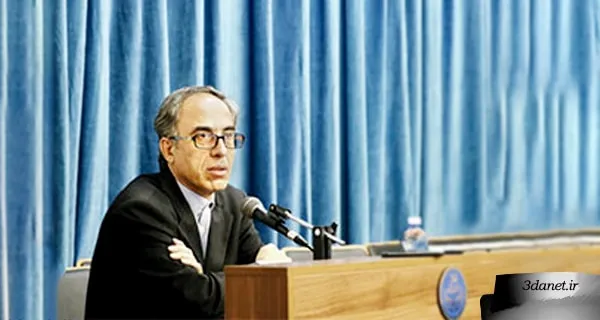
Morteza Mardiha emphasizes that “the last time I gave a lecture in Iran was 10 years ago. During this period, my response to invitations of this kind has usually been negative.” He considers the reason entirely accidental and says, “There was no particular reason, and I thought I’d say yes for a change.” Morteza Mardiha, who years ago wrote a book on the virtue of uncertainty, now says that not only in everyday life but even in the exact sciences there is no escape from luck and chance, and the reason is clear: the complex and intertwined network of causes cannot be enumerated, recognized, and controlled; consequently, the solution is to acknowledge, to some extent, the role of this important and undeniable factor.
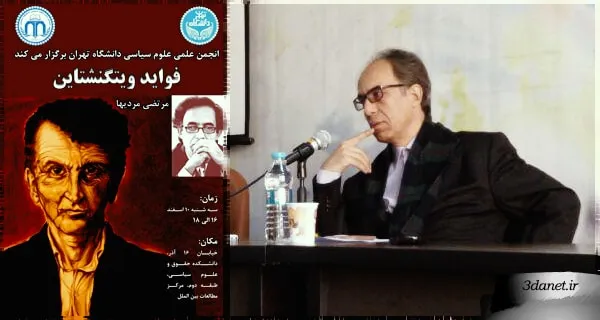
We know Morteza Mardiha, former professor of philosophy at Allameh Tabataba'i University, through the numerous works he has written and translated. In recent years, he has also turned to translations from the tradition of experimental philosophy, although he is better known for the articles and essays he writes on the relationship between philosophy and everyday life. What follows is a report on his lecture at the Faculty of Literature and Humanities of the University of Tehran on causality and everyday life, with the caveat that, due to space constraints, we were obliged to omit many of the examples presented during the discussion and preserve the main structure of the argument:
The subject of causality is perhaps the most important subject that always and everywhere occupies the human mind, though not causality in the sense that philosophers or scientists have spoken of. This mental preoccupation is also not because we have a philosophical or scientific concern in the first place; rather, the constant presence of causality largely stems from our desire. We are not primarily and essentially rational, philosophical beings, but desiring beings, and because we have come to believe in the causal order, we are concerned with causality in order to obtain what we desire and avoid unpleasant things; in desirable matters, we seek to strengthen the cause or causes, and in unpleasant matters, we seek to weaken the cause or causes. This is the main reason for our mind's entanglement with causality.
Causality as Narrated by Philosophers
From the dawn of human thought, this concern followed a somewhat deviant path, meaning that ancient philosophers tried to find a way to use this rule to explain the existence of the world. Later, theologians expanded and developed this issue in line with their own goals. On the margins of these discussions, in theological sects such as the Ash'arites, due to the nature of their views, they presented a specific explanation of causality that was rationally unacceptable and conflicted with the moral responsibility of individuals emphasized by religion. Later, in the modern world, the English philosopher David Hume said something strange about causality that was fascinating, irrefutable, unacceptable, and useless. As a pure empiricist, he said that in the relations between objects, we do not see anything tangible called causality; this statement was correct, but we live with causality, and this statement can be considered like other paradoxes. The important point, however, was the uselessness of Hume's argument, because life is impossible without causality, and it is a useless philosophical reflection. Later, Kant confirmed Hume's statement but said that causality is a category of understanding, meaning that the human mind, when confronted with dough-like reality, understands it in the mold of categories. But for pure empiricists, Kant's statement was a deviation from Hume; they, following Hume, call causality a metaphysical term that lacks any meaning. In their view, to explain the world, there is no need to resort to something that is not graspable; they said that in the world we see a set of recurring regularities, and this suffices. Later, of course, with the emergence of the new human sciences, a greater problem arose: what combination of causality in the natural world and causality arising from human decision and will should we posit regarding humans, and this debate continues to this day. Some in the world of biology and evolutionary psychology almost believe that in the final analysis, there is no difference between living and non-living beings, nor between them and humans. Conversely, others do not accept this idea and emphasize the fundamental difference between humans, as possessors of will, and other beings, as subject to causal necessity.
Causality in Everyday Life
Setting these debates aside, however, causality has preoccupied the human mind for another reason. That reason is that human beings tend to present an image of themselves that is more glorious than what actually exists. For example, a person whose entire life is summed up in satisfying tangible, sensory desires and pleasures finds it hard to accept that all of life is summed up in just that. The same applies to causality, meaning our connection to causality stems from the fact that we are concerned with understanding the world and have assigned a very important place to awareness—a place it does not actually hold. The primary concern of human beings is not awareness at this complex level; rather, even if we seek awareness, we have in mind those kinds of awareness that lead to gaining some benefit. Of course, humans are also curious, but this has nothing to do with everyday life. In everyday life, we seek simple causes that lead to a desired outcome or prevent an unpleasant one.
The Problem of Causality in Everyday Life
But what is the main problem of causality in everyday life? This problem seems self-evident, yet it has never been posed as a problematic. The reason for this is that in the everyday world we are not faced with a single specific cause; rather, in every issue, a network of causes is at work, some of whose components we do not know, and even for those we do know, we sometimes cannot estimate the form and degree of their causal involvement. The third stage, which is more complex, is that in many cases, these elements within the network of causes that exert causality on a given element also interact with one another, and as a result of this interaction, predicting the outcome becomes difficult. Of course, this is not always the case, for otherwise life in the world would be more difficult, both in terms of understanding it and in terms of living in it.
The best example is medical science. Many people say they do not trust doctors, and this is not merely due to an anti-science judgment or populism, but because of numerous instances in which different doctors have stated different causes for a single illness. Certainly, when a person falls ill, there is a cause, but why is there ambiguity and doubt in identifying this cause, and why does a doctor sometimes even require a waiver from the patient? What is the nature of the uncertainty regarding the definitive cause of an illness? This is because usually in such cases, not one cause but a network of causes is at work, a network that is not fully known or under control, and moreover, this network itself is not fully grasped.
The next example relates to economics, which among the human sciences has some claim to being comparable to the exact sciences. On this basis, its explanations should not suffer from the afflictions of unpredictability and inability to explain economic problems, but the reality is something else. That is, economists are still incapable of providing a definitive and indubitable explanation for economic predicaments such as the rise or fall of oil prices or the 2008 economic crisis, although they do offer explanations. The fact that economics has a bit more prestige than other human sciences is because it emphasizes a point that is more important to human beings than other things; an explanation of this point will be provided later.
In social psychology, too, numerous examples of this kind can be offered. For instance, one cannot state definitively that the children of criminal families will suffer the same fate as their parents. But this does not mean rejecting any connection between social harms and their origins, because in the social sciences we deal with probabilities, and it is said, for example, that the probability of a child from a family afflicted by social harm having a fate similar to their parents is higher. In this respect, the modesty of the social sciences is acceptable at an ordinary level. But the reason for this problem in the social sciences is the same: the causal network, both from the active and the receptive aspects, is so complex and multiple that the outcome is, to a large extent, related to chance and probability, and prediction and explanation become difficult.
The same holds true in politics. For instance, many of us have heard that a degree of economic development and the promotion of education are necessary prerequisites for a stable democracy. This claim has both rational and empirical arguments, yet we see stark exceptions like India, where we encounter a stable democracy alongside the worst economic and educational conditions. Of course, that theory explains the majority of cases, and this is what secures the validity of science, but the debate is about causality. Examples of this kind abound in the social sciences. That is, one cannot offer a single, specific cause for a phenomenon, or sometimes causes are inverted. Of course, in many cases this is not so, and we should count ourselves fortunate, because it is difficult even to imagine a world in which no minimal grasp of causes and effects is possible; I do not know whether its realization is possible or not.
Incapable of Grasping the Primary Cause
But in any case, the fact that we are often rendered incapable of understanding, finding, and controlling causes and effects is a very significant problem. Of course, if one cause gains a serious predominance among other causes, the problem is solved to some extent. This, of course, does not mean negating the aforementioned causal network; rather, this cause overcomes them in such a way that those causes almost lose their importance, and our prediction becomes largely correct. Of course, even in these cases, if we trace and examine this dominant cause in a scholarly manner, we will witness the same problem of the causal network and complex causes.
So far, we have said that although the philosophers' dictum—that from the one, only one proceeds (no single cause has two effects)—might be a correct statement, it is not very useful, especially when we have to define what the "one" is. In life, we are faced with complex phenomena, and there is no doubt that these phenomena are composed of multiple factors. These factors, both in the active role (cause) and the receptive role (effect), when combined with one another, form a complex and intertwined network. Besides the quantitative aspect, one must also consider quality (the how), while also taking into account the interactions of these factors with each other. As a result, it seems humans are desperate beings. Here, one might reach strange conclusions and declare that one can never say that one thing is the cause of another! For example, predicting a person's behavior under normal conditions is very difficult. Of course, if that person is in a specific state, for instance, very hungry or thirsty, predicting their behavior becomes simpler, and one can guess they will seek food or water to relieve their hunger and thirst.
In our future world, such one-sidedness of character will likely be avoided, and humans will become reasonable. This makes predicting behaviors both more difficult and easier. It becomes easier in the sense that humans, at least in their actions (and not reactions), behave more according to rules, even amidst complexities; but it becomes more difficult in the sense that a complex human has more numerous wants and desires. For example, in a primitive society, humans are primarily in search of basic needs, and in this respect, their behavior is more predictable than that of modern humans.
The Distinction Between Science and Technology
The dominance of one cause over others was mentioned. This leads us to issue judgments and to abide by those judgments. That is, although upon closer inspection various causes may be involved in the emergence of a phenomenon, our daily lives are such that these subtleties do not pose much of a concern; for this reason, science goes its own way to a great extent. In other words, what we know of precision in the sciences is not very precise. Of course, technology must be distinguished from science. These two relate to each other in a way different from the common perception; that is, it is not the case that a scientific theory is first discovered or presented, and then technology advances based on it. Many technological artifacts have been created without knowledge of scientific foundations, or even based on chance, or as a result of persistence and often-failed trial and error. Therefore, in general, technology is supported by science, but not in the simplistic way imagined; one can even build useful technology with an incorrect theory. In any case, keeping in mind the distinction between science and technology, it must be said that even exact science is only exact to a certain extent, and part of science's claim to precision is promotional. For someone working in physics and chemistry, these sciences are not very precise; black holes are a good example of this point. By studying the primary locus of scientific advances—namely, the scientific articles of scientists and reputable university theses—we find that scientific theories, contrary to perception, are not very precise, and part of this issue relates to causal networks, whose direct effects can be guessed to some small extent.
We Do Not Like the Notion of Chance
It is the same in everyday life. That is, there are numerous instances in daily life that lead us to conclude as if one thing is not the cause of another. Of course, accepting this judgment makes life harder. This is where an element that seems superstitious comes into play. An element that is not desirable to us, and we tend to want the world to be in the grip of our authority. This element is chance. Chance should not be considered in its classical sense, meaning luck or fate, although it may appear similar to them. For example, it is impossible for a person to be inherently unlucky throughout their entire life. Chance is the calculus of probabilities, and the calculus of probabilities has no intrinsic connection to an individual, thing, or phenomenon. Chance in our discussion means probabilities; in other words, chance means that in causal networks where dozens of factors are involved, and we do not know some of them and consequently are unaware of the type and extent of their operation, the outcome is not programmable or predictable. A simple example is a lottery ticket, or the birth of a child with very low intelligence from intelligent parents, or people becoming rich or remaining poor.
Of course, we generally do not like the notion of chance, but there is no escape from coming to terms with it, and this, in my opinion, helps our peace of mind. Certain political tendencies consider this statement harmful, because they believe this talk prevents humans from striving and endeavoring. But a person who strives and does not achieve results in some cases has no other choice. Coming to terms with the element of chance in analyzing issues gives a person peace; of course, like anything else in the world, it can be misused, meaning it can become a tool for shirking work, not being responsible, and not taking ownership of mistakes. But the fact that this element can be misused should not prevent us from using it. Causal networks elude the grasp of our science and authority; for this reason, we cannot strengthen the causes that are desirable to us and control the causes that bring us displeasure. Of course, we can do this regarding some of these causes, and we do, which is why we have more or less turned the world into a place for living based on rules, but I am sure a significant portion belongs to the category that is not within our control or awareness. Therefore, without dividing good luck or bad luck into two attributes or characteristics that we are born with, we must feel that we are in a world where chance plays an important role, albeit in varying concentrations. The fact that every individual's fingerprint is different from others' is due to the intertwined network of involved causes and their almost infinite interactions.
Of course, we usually accept luck when it comes to beauty or even intelligence, but we hardly accept its role in power, physical fitness, or wealth. To a large extent, we are right, because these phenomena differ from one another, and people with different characteristics can acquire different levels of power, physical fitness, or wealth, but the degree of acquisition relates to potentials and that causal network, and for this reason, the role of luck in this area cannot be ignored either. Coming to terms with the element of luck should, of course, guard us against certain pitfalls. It is possible for individuals to attribute their laziness, thoughtlessness, or self-indulgences to luck; this is by no means acceptable. But the opposite also occurs frequently, meaning, for instance, a person might be deeply moral yet be betrayed. Thinking in terms of luck in such cases can bring psychological peace and acceptance of circumstances. Also, as with all matters in the world, there is no tool for finding the golden optimal point for utilizing luck, and one must assess and practice how much responsibility to take for our actions and to what extent to consider events and incidents as intervening factors. A balancing act must be performed in this regard, though we may not always succeed in finding the solution.
Always Looking for Someone to Blame
A final point is that regarding the degree of luck's intervention in the world's events, there is a harsh divide between proponents and opponents of its role. Of course, in the world of media and intellectualism, ignoring the role of luck is more appealing and popular. Humans are also like this individually and psychologically, meaning that when faced with a problem, they look for someone to blame, because human nature is not ready to accept that the element of luck was influential in the occurrence of that problem. Certainly, some miseries in the world have intentional or unintentional culprits, and there is no doubt about this, but the extent of it is a matter of debate. The notion that some social and political currents are fond of promoting—wanting to label every misery as constructed (usually by the government)—is incorrect. I think here, too, as with luck, we must come to terms with the fact that this instinctive trait and primitive characteristic—that every problem befalling a person is the result of an evil entity I must fight—is not a trait of a civilized human being. A civilized person understands that a small portion of the world's miseries is the product of governments, and the evils in the realm of life are far more extensive. A greater part of our miseries stems from the interaction of human relations with one another. Even beyond that, a major part of human miseries arises from the disproportion between a sensitive, delicate, perceptive being like a human and the material world.
Let Us See the Role of Probabilities
Therefore, because we shy away from the reality called the role of luck and chance in causality and in the events of this world, especially everyday events, we tend to explain it specifically in the form of causal events, whereas we must accept that the structure of the world is such that, alongside infinite effort to improve the situation, we must also accept the role of luck and chance and acknowledge its importance in the emergence of differences. Thus, the problem of causality that was not addressed in the world of thought, philosophy, and science was not the issues that philosophers, metaphysicians, and philosophers of science addressed. The problem that affects our lives is the issue of the causal network and our inability to understand it, overcome it, take control of it, and intervene through it in our lives; a life whose main text is desiring, and whose margins are the explanation of the world and causal curiosities. Two things are necessary on this path: first, to recognize the share of luck to a balanced extent (which is not easily achieved), and second, to set aside that political combativeness where we like to attribute every misery to power structures or certain individuals and then fight them, and in this fight, while gaining nothing, we create hardship and bitterness. The notion that everything must be just in this world is false. Of course, those folkloric notions can, like the soul's white blood cells, help reduce the negative role of disappointments, but we need folklore that increases our peace. Therefore, to some extent, these folklores that serve to reduce the pressures of a world disproportionate to human expectations and desires are acceptable, but they should not be given too much weight.



Discussion0 comments
No comments yet; let yours be the first voice.