Psychology
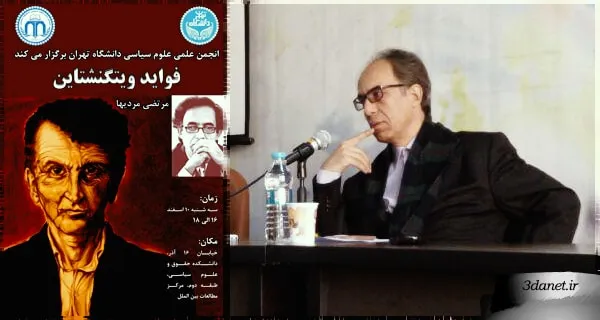
Lecture by Morteza Mardiha at the Panel “Violence: A Review of Steven Pinker’s Views”
Morteza Mardiha described Pinker's book as an encyclopedia that examines the history of violence from mythology to the modern world. In his view, humanity is 'better than before,' and the concentration of power, the rule of law, and production and trade have led to a decline in violence.

The specialized panel “Violence: A Review of Steven Pinker’s Views” was held on Sunday, October 6, 2019, with Dr. Morteza Mardiha (researcher and faculty member at Allameh Tabataba’i University), moderated by Mostafa Asadzadeh, at the Research Institute of Culture, Art and Communication.
At this panel, Mardiha, after some introductory remarks about the book and its author, said: From my perspective, this book is an encyclopedia because it contains a wealth of points, allusions, and discussions that not only acquaint the reader with the subject of violence but also with various issues, including the history of literature, the history of religious and mythological books, and the history of transformations; the history of transformations that culminates in the transformations of the modern world with the components of commerce, economics, invention, and the realization of the political world, which demonstrates the comprehensive scope of this book.
Continuing his introduction of the book’s profile, he added: In this book, after the historical discussions, the author arrives at psychological discussions and performs a psychological dissection of the human being in these two chapters, talking about its constituent elements. He continued: The entirety of the first chapter of this book is a historical examination of the cultural records of the discussion of violence in Greek and Roman myths and the books of Judaism and Christianity—what violence was like among each of them and how it was viewed.
Explaining the subject of chapters two and three of this book, Mardiha acknowledged: This chapter deals with how people behave in the face of violence. Chapter three, which is perhaps the most important, most readable, and most insightful chapter of the book, states what happened in the modern world and why it happened. According to the author’s statements, it is in this era that violence is questioned, doubted, and denied. This chapter is, in fact, a report on the decline of violence throughout history, and to prove his claim, the author cites cases and examples that are very fascinating and readable.
The translator and editor of Steven Pinker’s “The Better Angels of Our Nature,” explaining its first chapter titled “A Foreign Country,” specified: Pinker says in this chapter that our classical culture of humanity (Greek tragedies, Roman literary poems, etc.) was a glorifier of violence. The glorification of violence in support of a culture; the culture of honor, the culture of greatness. The hemistich “One slain of good name is better than a hundred living in disgrace” is itself an example in this regard. In fact, Pinker in this chapter has examined these very roots throughout history, from Homer’s Iliad and Odyssey to the Bible and the Torah.
Regarding the author’s prominent claim in this book, Mardiha remarked: Pinker’s first claim in this book is that if we place history before us, we are in its best part, and his second claim is that the world of the twenty-first century is vastly different from past eras. In chapter two of this book, by bringing a long historical discussion and interesting examples, Pinker shows us what terrible creatures we were in the past and also declares that we do not currently know exactly who we are, but whatever we are, we are “better than before.” In this chapter, by bringing examples of past entertainments (burning cats), executions, murders, and harsh tortures, he has corroborated this claim.
This faculty member of Allameh Tabataba’i University considered chapter three of this book to be an explanatory and elucidating chapter in which the author addresses the reasons for the decline of violence. The removal of lands from the hands of knights, the joining of small territories to one another, and their gradual centralization was the first reason for the decline of violence. The second aspect of this issue was the necessity of formulating laws for these centralized societies and then enforcing them equally for all individuals. These events, which in turn subsequently led to a reduction in the former rivalries between territories, constituted the third dimension of this issue.
Mardiha pointed to another reason for the decline of violence in this book, quoting its author, and considered the removal of land as the central axis of wealth and its replacement with a phenomenon called “production and commerce” as the second reason for the decline of violence, one of the requirements of which was, naturally, the creation of greater security and, consequently, the reduction of violence.
.
.
Audio of this Lecture
Watch the Video on YouTube
Watch the Video on Aparat
.
.
Violence: A Review of Steven Pinker's Views
Report (Text) by: Fariba Rezaei
Lecture Venue: Research Institute of Culture, Art and Communications
Below Valiasr Square, Beginning of Damascus Street, No. 9
September 5, 2019
.
.





Discussion0 comments
No comments yet; let yours be the first voice.