Philosophy
Mostafa Malekian: Death Makes All Things Equal.
Mostafa Malekian sees death as the great equaliser, the phenomenon that erases all differences. The remembrance of death, by creating a sense of shared fate, fosters compassion; and the recollection of impermanence makes sorrow easier to bear and diminishes arrogance.
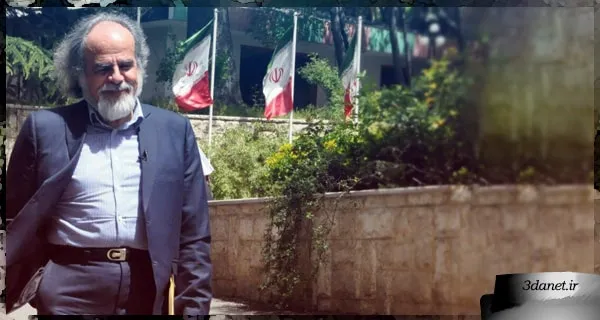
Mostafa Malekian: The remembrance of death teaches us that however unequal we may have been in any respect, in the phenomenon of death we are equal. We differ from one another in every dimension and aspect of life—in terms of “social standing,” “intelligence and dullness,” “beauty and ugliness,” “poverty and wealth,” “rank,” “status,” “popularity,” “fame,” and so on. No phenomenon is as equalizing as death. Death makes all things equal. It renders life like a desert, flat and level as the palm of a hand. If we note that the difference between you and me has two negative effects, the creation of indifference will have two positive ones. When I compare myself with you in any respect, I find myself in one of two states: either I am behind you or the reverse. If I feel I am behind, I fall into “envy,” and if I feel I am ahead, I fall into “vanity,” and both of these are among our spiritual perils—vanity, of course, more so. The reason some scholars of ethics have said, “Do not compare yourself with others,” is precisely this. Of course, one must not make an absolute rule of it. Some Western thinkers also hold this view.
Bertrand Russell, in his book The Conquest of Happiness, emphatically recommends that one of the paths to happiness is that in no respect should one compare oneself with others. But the sacred texts of our religion and creed have not forbidden us from every kind of comparison. For instance, in various expressions it is recommended that in material matters you compare yourself with those below you, and in spiritual matters with those above you.
Now, if we encounter a phenomenon in which we are entirely equal with others, then I feel empathy with you and become tender-hearted toward you. Tender-heartedness arises when we see ourselves as sharing a common aspect with another. As long as we are sitting in a doctor’s waiting room, because we feel we are alike, we show compassion to one another and become tender-hearted. But as soon as we leave the waiting room or forget the other’s illness, we are no longer that way toward each other. The more intensely this “shared fate” is felt, the more intense the compassion. And this rule apparently has no exception. And death has this property: I feel that in this strange and tragic matter I share a bond with you. Every shared matter draws us closer to one another. But if that shared matter belongs to the category of “sorrows,” it is more bonding than if it belongs to the category of “joys.” Julian Huxley, the renowned thinker, used to say: “If one day human beings were to find a drug that is the drug of eternal life and knew that they would no longer pass away, they would destroy themselves with their own hands.” They would develop such savagery toward one another that they would do this. The reason we sometimes have compassion for one another is that there is a shared matter within us. We human beings have commonalities, but none so much as death erases differences.
Another of the effects and properties of the remembrance of death is that death, in truth, reminds us of the impermanence of everything that occurs in life. That is, better than any other phenomenon, it admonishes us that whatever comes to pass is transient and impermanent. The more we acknowledge, in our own lives, the fleetingness, instability, and swift passing of both sorrowful and joyful matters, the more desirable life becomes for us. If we accept that sorrowful matters are not lasting and will pass, bearing them becomes much easier for us. When you impose upon yourself the thought that this sorrowful matter will pass, although the sorrowfulness of that matter does not diminish, at least another sorrow, arising from the permanence of that sorrow, does not arise. When a calamity befalls us, two sorrows seize us: one is the sorrow that naturally arises from that calamity, and another sorrow, from the thought that this calamity (the first sorrow) is lasting. But if we acknowledge to ourselves that this sorrow is not lasting, that itself alleviates the sorrow. The same is true of joy. When a joyful matter comes to us, two things arise: one is the joy arising from the matter itself, and the other is the joy arising from the illusion that this joy-bringing matter is lasting. This second joy is called “baṭar” in Arabic. Baṭar is considered one of the perils of the soul, and it has been said to beware of baṭar, that is, beware of the notion that this joy-bringing matter will remain. The remembrance of death also strips away this second joy in joyful matters from a person.
.
.
Mostafa Malekian, Lectures on an Existential Approach to Nahj al-Balagha
.
.



Discussion0 comments
No comments yet; let yours be the first voice.