Philosophy
Mostafa Malekian's Lecture on the Relationship Between Translation and Thought
Mostafa Malekian explores the relationship between translation and thought from five perspectives—from acquaintance with human achievements to world peace—and outlines three conditions for realising an ideal relationship between the two.
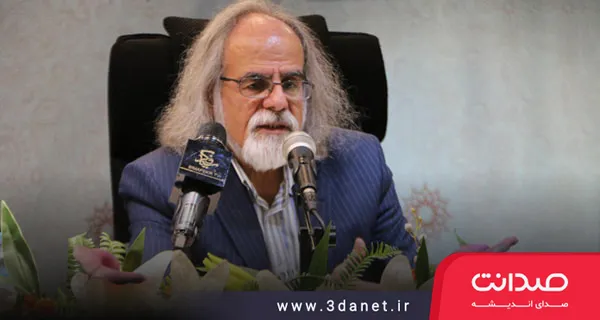
Mostafa Malekian's lecture, titled "The Relationship Between Translation and Thought," has two main parts. In the first part, he explains the connection between translation and thought from five perspectives, and in the second part, he discusses three conditions for realizing the ideal relationship between translation and thought.
Malekian states that translation and thought are interconnected in five respects:
1. Translation provides the grounds for familiarity with the latest achievements of the human sciences and knowledge.
2. By translating the works and ideas of researchers and thinkers worldwide, redundant research in other societies is prevented.
3. Translation supplies the raw material for thinking and reflection.
4. Translation saves society from intellectual and cultural monophony.
5. Through translation, the theory of the unconcealment of truth takes shape in society, and the grounds for lasting global peace are provided.
He then enumerates three conditions for realizing the ideal relationship between translation and thought:
First condition: The characteristics of translated works:
1. Avoiding caricatured translation; that is, translations must be carried out in all domains of the human sciences and knowledge, not only in specific fields.
2. In addition to the major works of thinkers, commentaries, interpretations, and critiques of their ideas must also be translated.
3. The translation of books that simplify the ideas of thinkers.
4. The translation of encyclopedias and descriptive dictionaries.
Second condition: The characteristics of translators:
1. Mastery of the source language and the target language; that is, awareness of the possibilities and potentialities of the source language and the target language.
2. Possessing a work ethic; that is, the translator must produce the best translation they are capable of.
3. Compiling a collection of established terminology in the humanities, with the aim of standardizing the words and terms of various fields.
Third condition: The characteristics of the community of translators:
Due to the lecture time running out, Malekian defers this section to another occasion.
Introduction
I intend to speak about translation from four aspects. But if time does not permit, I may forgo one or two of these aspects. However, I believe that if I succeed in addressing all four aspects, my talk will, on the whole, be less problematic.
The subject of discussion is the relationship between the two processes of translation and thought within a society—what connection and relation these two processes have with one another. Are they compatible or incompatible, or do they have partial compatibility or partial incompatibility? In any case, it is conceivable that we might hold three views regarding the relationship between the process of translation and thought in a society. One is that these two processes have overall compatibility; another is that they have overall incompatibility; and another is that they have partial compatibility and partial incompatibility—that is, they are compatible to some extent and incompatible to some extent. I myself, of course, advocate the view that there is overall compatibility between translation and thought; neither overall incompatibility nor partial compatibility and incompatibility. But in any case, my lecture is unrelated to that stance, and regardless of the position I personally hold, friends can reflect upon and possibly critique the points I will make.
To articulate the relationship between translation and thought, four discussions must be distinguished from one another. First, what connection exists between translation and thought? And second, third, and fourth, if this connection is to be a desirable one, what characteristics must it have? When I said my lecture has four parts, the first part is, in fact, the connection between thought and translation, and the second, third, and fourth parts are the three main conditions for the realization of the ideal and optimal perfection of this connection.
The Relationship Between Translation and Thought, from Five Perspectives
In my view, translation relates to thought in five respects, and all five must be considered. One person may place greater weight on one of these five respects, and another on a different one. I, as I see it, will begin with the least important and move toward those aspects that hold greater significance. Therefore, as I proceed from one to five, the importance will, in my own estimation, increase. However, you may disagree with me on this order of priority.
1. Acquaintance with the Latest Achievements of the Human Sciences and Knowledge
The first point about translation is that it is a process that acquaints our society—and essentially any society—with the latest achievements of the human sciences and knowledge throughout the world. Through translation, we learn where the latest achievements of the human sciences and knowledge stand across the globe, and what the nature, form, and character of these latest achievements are. If the process of translation is halted for any reason, the first loss society incurs is that it is not informed about where humanity has reached so far, throughout the world, regarding a certain subject, a certain issue, or a certain problem—regarding one of these three. Through translation, we learn where the outcome of the work of seven billion human beings on earth stands in addressing a subject, solving an issue, or resolving a problem. This is something very clear. If we stop this process, we have, in fact, deprived ourselves of this advantage. Whether we are dealing with a subject, an issue, or a problem—in any case, in any field, we will be dealing with one of these three, two of these three, or all three of them. This is the first effect of the translation process in a country. The smooth flow of translation in a country means the smooth flow of the latest achievements of the human sciences and knowledge regarding every subject, every issue, and every problem into that country. This is very clear.
2. Preventing Redundant Research
The second connection is that when we become informed of the latest achievements of the human sciences and knowledge, our society makes an enormous saving by not repeating work that has already been done. And the investment we make in addressing subjects, solving issues, and resolving problems is truly an investment that must both be made and be made in a thoroughly economical manner. It is highly illogical, as Europeans say, for us to reinvent the wheel and, regarding work others have done in other countries, in other societies, declare that we want to start from scratch ourselves. No rational person reinvents the wheel. A person uses the invented wheel and, to the extent of their ability, makes this wheel more advanced, more complex, and, in any case, more suitable for their own purpose. But for me to spurn the wheel others have invented and want to reinvent the wheel myself is not the act of any rational person. That is to say, it is absolutely not economical or economic. By saving, I do not mean only financial saving. The lack of human saving is far more damaging than the lack of financial and material saving. But if I know where humanity has reached so far regarding this subject, this issue, and this problem, then, to the extent of my ability, I can advance this addressing, this solving, and this resolving one step, two steps, three steps further. This is an art we must possess; not to say, no, we do not accept what others have done, for one reason or another. Of course, I will speak later about what we should do with what has been translated. But for now, there is no doubt whatsoever that when we become informed of these latest achievements, we make an enormous saving in our own financial and human resources.
If time permitted, I could recount to you numerous instances from my own personal experience teaching at universities since 1986, illustrating how many master's theses, doctoral dissertations, and research projects in various research institutes in our country are undertaken, where if we had simply translated a book or books on the subject, what an immense saving it would have been for our nation's human resources, and of course, our financial and material resources. Therefore, avoiding the duplication of work already done, and merely correcting, advancing, restoring, and repairing what has already been accomplished—this is the second function that translation performs for a country's thought process.
3. Providing the Raw Material for Thought
The third function is that translation provides us with the raw material for thought. We must understand that thinking must be done upon raw material. The saying of our ancients, "without substance, it is unleavened," holds entirely true for thought. You must have information upon which to think. I have said time and again, it is exactly like something needing to enter your stomach and mine so that gastric juices are secreted and digest that thing. If your stomach is completely empty of food, no matter how much this juice is secreted, it accomplishes nothing but damaging the structure and function of the stomach. We must have something in our intellectual and cognitive stomach, then apply a juice to it, and then ponder and think upon it, and find a way to a new place, a new position, a new locus.
We must always have raw materials for thinking. We cannot think in a vacuum. We must know what has been said about this subject, or issue, or problem; then I engage in contemplation, I think. Those who think without raw material are, in the words of the famous English novelist, insane. The difference between the insane and us is that we, the sane, think upon raw materials, while the insane person thinks upon empty space. Agatha Christie, the famous English novelist, says at the end of one of her famous novels, I now understand that the difference between the insane and the sane is that the insane person thinks upon empty space, while the sane person thinks within a filled space. In reality, our thinking often resembles Don Quixote. It is like Don Quixote's combat. Instead of being in battle with a real combatant, he battles with clouds and thinks these clouds are the enemy's armies and that he is achieving conquests. We must know what we want to think about, and this knowing is achieved through translation. Because much of what I must think about, and upon which I must secrete the juices of my intellectual and cognitive stomach, and which I can digest, absorb, and possibly excrete some of its materials—I must first have that food; and translation gives us this food. This was the third function of translation. The further we go, the more important the issue seems to me.
4. Liberating Society from Cultural Monophony
The fourth function of translation is that it saves society from monophony. The greatest calamity for a society is to become monophonic. It does not matter what that voice is. What matters is that it is a single voice. If, in your own terms, by your own diagnosis, you monopolize the best ideology, the best system of thought, the best opinions and views, and do not allow society to be exposed to the breeze of other thoughts, other opinions and views, other ideologies, this monophony harms your society. I have said time and again that just as the ecology of biological environments—that is, plant and animal environments—depends not only on the multiplicity of plants and animals but on the diversity of existing plants and animals, our intellectual ecology also does not depend solely on the multiplicity of opinions and views. Its life depends on the diversity of views. If I uproot a thousand different types of plants, of each of which there are a thousand specimens, and say that instead of the one million trees, saplings, and plants I have uprooted, I will plant one million trees, saplings, and plants of a single type, the multiplicity is still one million, but because its diversity has dropped from a thousand to one, biological ecology tells me that within three years, you will no longer have this plant, you will no longer have this animal. What is important in animal ecology and plant ecology is that not only must there be multiplicity, there must also be diversity, and this is far truer of the human world than of the world of plants and animals. In the human world, and in the world of human culture, it is more important than in other realms and spheres of human life that we deal with diversity. This point is very important. If we say, 'Both from me it grows and I consume it / My palate is sugar, the reed-bed is my sweetness,' the greatest problem we encounter is that after a while, we no longer have anything that grows from us, and we no longer have anything from our own growth that we can consume.
The human world is not this world; the human world is a world of mutual needs. Now, I am not concerned here with the views of sages, mystics, and some of the founders of religions, denominations, and theologians, and the profound discussions they have had on this matter, that the human world is a world of mutual needs. If a human being, individually, or a group of human beings collectively and socially, feels no need for others, this feeling of self-sufficiency is the beginning of their end. That is, they have sounded the death knell for themselves. As long as my real perception is that I need you in the world of thought and culture, my roots are in water, and there is hope that I will survive. From the day I imagine that I, as an individual or as a member of a society, am self-sufficient from other individuals and other societies in the world of thought and culture, I must know that it is the beginning of my end. That is, from then on, I am on a downward slope; sooner or later, this descent of mine will arrive. Regarding the translation movement, many Islamicists and Orientalists emphasize this point that the translation movement, whatever its initial motives—and we are not concerned with motives, with what motive it began—its result was the flourishing of Islamic culture and civilization. And I want to say that in our time, its importance is far greater than it was in that era. For reasons I have stated elsewhere, the translation movement today is far more important for the Islamic world than it was in the second century AH, and fundamentally for all societies, cultures, and civilizations. Why? Because this monophony reduces a society to ashes. A society must not be monophonic. All opinions and views must be presented in this society, and then, in the cultural and argumentative contest they engage in with one another, they must determine which are stronger, which have more weaknesses, which solve more problems, which resolve more difficulties, and which represent the best way of addressing a subject.
Until a battle takes place, everyone can claim to be a champion and a hero; only when a battle occurs, and one is defeated, and the fray becomes a very serious fray, does it become clear who is a hero and who is a paper tiger. We must be ready, and cultivate readiness within ourselves as individuals, to hear all opinions and views, and in this contest of opinions and views with one another, be able to make our own position a more fortified and more defensible position. Only translation eliminates this monophony.
I have said this before, long ago, in another place, that the greatest cultural service to a society is translation, and I say this with all my being. I have also said many times, the greatest cultural service to a society is translating. Translating endows a society with vitality and dynamism. As soon as you close the path of translation, the society loses its vitality, loses its dynamism, because it constantly feeds on itself. And just like worms that fall upon a dead corpse, they feed on each other so much that eventually they have nothing left, then some worms begin to feed on other worms, and so on, until in the end you see that nothing remains. We must not consent to this calamity. We must accept that translation must take place so that this monophony is eliminated; in a plurality of cultural voices, both justice and truth are truly saved. Justice, in the sense of being fair to opinions and views; and truth, because it is in these encounters and clashes that truth is unveiled.
5. The Formation of the Theory of the Non-Obviousness of Truth
The fifth point, and in my opinion the most important of all, is that following the elimination of cultural monophony in a society, a theory becomes established in the minds and souls of all members of that society. And the establishment of this theory in our minds and souls is one and the same as the emergence of a perpetual global peace, in Kant's terms. And that is this: when we see that, regarding every issue, through the removal of this cultural monophony, various solutions have been offered, and when we understand that for solving every problem thousands of solutions have been proposed, and when we understand that for addressing every subject thousands of ways of addressing it have been proposed, a theory takes shape in our minds, and that theory is the theory of the non-obviousness of truth. That is, truth is non-obvious.
Truth is not as obvious as ideological minds imagine. When you see that regarding a single issue, dozens of ways, hundreds of ways have been proposed, and you look at each one and see, at first glance, there is an aspect of reasonableness in this way, and then you look at the second solution and see that it too has an aspect of reasonableness, and the third solution, and so on, you gradually come to the conclusion that truth is not obvious. Truth is something that must be approached bit by bit, step by step, slowly and gradually. And this means that ideological thinking disappears. Ideological thinking is nothing but the combination of two claims. One, that regarding subjects, issues, and problems, there is a single way of addressing, a single solution, and a single way of resolving that is very clear. That this subject must be addressed in this way, this issue must be solved in this way, and this problem must be resolved in this way; each has one solution, one way of resolving, one way of addressing. And that way of addressing, that solution, and that way of resolving is the one that we possess. Imagine if I were ideological and such a thing were established in my mind, that I truly believed that every subject can only be addressed in one way, and that is the way I know, and every issue can only be solved in one way, and that is the way I solve it, and every problem can only be resolved in one way, and that is the way I believe in for resolving that problem. If this becomes established in my mind, with what eyes do I look upon all human beings who disagree with me? With the eyes of those who have opposed the naked truth. Who have opposed the explicit truth. As our ancients said, who have opposed the clear truth (haqq-e sorāh), meaning a truth that is as transparent as crystal.
If I think that you oppose the explicit truth, can I then have a positive emotion towards you? Can a person establish a positive emotional relationship with those they think oppose the explicit, clear, and obvious truth? Can they love them? Can they adore them? Can they have compassion for them? The perpetual peace that Kant dreamed of and wrote a treatise about is realized only and solely through the theory of the non-obviousness of truth.
The theory of the non-obviousness of truth has two very positive effects on the mind and language of every individual and the mind and consciousness of every society. One is that those who disagree with me are not disagreeing with manifest truth. Just as I, who disagree with them, am not disagreeing with manifest truth. They disagree with what I suppose to be true, not with the manifest, clear, obvious, undeniable truth, like the sun at midday; no, they do not disagree with such a truth; they disagree with what I hold to be true. Your view of me, likewise, becomes that I, who disagree with you, am not disagreeing with a truth that is, as the Arabs say, "ka al-shams fi ra'i'at al-nahar"; that is, I am not disagreeing with "the sun right in the middle of the sky," I am disagreeing with something that, in your supposition, is true. So, firstly, I do not look upon you as an antagonist of truth. Because truth, it is now established, does not possess that obviousness. You disagree with something that, in your supposition, is false. And yet, in my supposition, it is true. I, too, am disagreeing with something in you that, in my supposition, is false, although in your supposition it is true. Here, we can love one another. Because I say that what appears true in my supposition is false in his supposition, and what appears false in my supposition appears true in his supposition. It is not that the other person is disagreeing with what is manifestly true. Therefore, its first effect is that I can fully digest and accept your disagreements. Because I say he has not disagreed with "two times two equals four." If someone disagrees with "two times two equals four" and says instead "equals five or three," he has disagreed with manifest truth. But when every issue has so many solutions, and every subject has so many ways of being resolved, and every subject has so many modes of treatment, and each one has a point of strength and each one has a point of weakness. Therefore, all of us can have emotional agreement with one another.
But the theory of the non-obviousness of truth has a second effect. And that is that I understand that you and I, unless we join hands, this matter will not find a final solution. Why? Because in my statement there is a point of strength that is not in your statement. But then, in your statement too, there is a point of strength that is not in my statement. In your statement there is a point of weakness that is not in my statement, but then, in my statement too, there is a point of weakness that is not in your statement. Therefore, the result of this theory of the non-obviousness of truth will be nothing other than collaborative effort. I understand that, so, all of us must join hands. Just like when a group of physicians gather in a medical commission over a patient with a difficult illness and understand that this is a place for cooperation. This is not a place for rivalry. It is not a place for enmity. I have noticed one point about this patient that my other colleague did not notice, and in return, he too has noticed a point that I did not notice. Now, here we understand that we must join hands so that we can cure this patient with the difficult illness.
Lasting global peace, in my opinion, can only emerge with the theory of the non-obviousness of truth. It does not emerge with any slogan, with any regulation, with any directive, with anything. If I only accept that truth is not obvious, I have one conception of the truth, and my other friend has another conception of the truth. And none of us is in a state of disagreeing with a clear, naked truth, such that they would say this person is an antagonist of truth, or an opponent of truth, or, as our ancients said, is stubbornly contradicting the truth. If I consider you to be stubbornly contradicting the truth, then I can no longer love you. Just as if you told me two plus two equals five, and truly insisted upon it, I would either judge you to be insane or judge that you are truly an unlovable human being. Because you have turned your back on such an obvious thing to this degree. When the cultural monophony that I spoke of in the fourth point disappears, in the fifth point I want to say that the theory of the non-obviousness of truth becomes clear.
The theory of the non-obviousness of truth brings us closer together emotionally and sentimentally, and makes us epistemically needful of one another. Epistemically, we are intensely in need of one another; that is, to reach a solution that has none of the weaknesses of any of these solutions and possesses all the strengths of all these solutions, we are in need. And likewise regarding problems, and likewise regarding subjects.
These are five functions of translation for thought. I have said elsewhere, and again you are under no obligation to accept that other statement, I have said elsewhere that the greatest service one can render to a society is cultural service, not even political service, nor economic service. And then append this to the point I just made, and have emphasized elsewhere, that the greatest cultural service, in turn, comes through translation. What I am saying is truly the result of no bias whatsoever. As far as I am aware of myself, there is no bias whatsoever. Through experience, bit by bit, I have realized that if we want our society to be saved, we must first do cultural work, and in cultural work, we must save society from monophony. In the final paragraph of Ibn Arabi's book Fusus al-Hikam, there is an expression where Ibn Arabi, when delivering his final message, says right in the last paragraph: "Brother, let me just tell you one thing, and that is that all human beings who worship God, worship the God of their own conception. No one has ever worshipped the true God. Why? Because they simply cannot conceive of the true God. Everyone worships the God of their own conception." This is said by a mystic like Ibn Arabi. We must bring society to a point where everyone holds such an interpretation.
What can be said about God can also be repeated about all theoretical truths. No one can say, "I am worshipping the true God, and you are worshipping a God you have a conception of." And there is no problem with that. Our capacity does not extend beyond this. Our only error is when we sometimes think that I myself am worshipping the real God, and the rest are worshipping illusory, delusional, imaginary gods. But if I understand that "We have not known You as You truly deserve to be known"—none of us has known You as we ought—and if the Prophet said, "We have not known You as You truly deserve to be known," its meaning is, then which God are we worshipping? God, to the extent that we have knowledge of Him. So, that means each of us is worshipping the God of our own conception. When this point holds true regarding God, it holds even truer regarding theoretical truths; that is, it is true a fortiori that I am committed to what I consider to be the truth. But not to what is the explicit truth, such that if you oppose it, I could say you have opposed the explicit truth.
This, in my opinion, is the only solution. I truly and seriously believe that the dream Kant had in his treatise on perpetual peace—lasting global peace and the solutions he proposed for it—in my view, the only solution is to arrive at the theory of the unconcealment of truth. To arrive at the understanding that every matter has aspects, and every observer has a perspective. The combination of the aspects of a phenomenon and the perspectives of the observers upon that phenomenon creates diversity in the epistemic world. Firstly, there is no phenomenon that has only one aspect, one facet. You can look at this pen from various facets. It has various aspects. The object of knowledge, and the observer looking at this object seeking to gain knowledge of it, has various perspectives. The product of the multiplicity of perspectives that humans have in approaching a phenomenon, multiplied by the aspects that the phenomenon itself possesses, creates an infinite multiplicity.
We, in fact, are under the illusion that every subject has only one direction, one facet, one aspect, and can only be looked at from one perspective. It can be looked at from one perspective, and that perspective is mine. But when we learn in philosophical metaphysics, in ontology, and on the other hand in epistemology, that every observer looks at an object from a perspective, then the meaning is that every observer, from a perspective, is looking at one of the aspects of the known, the object of their knowledge. It is clear that we find an infinite multiplicity. In order to grow, the only thing we must do is not negate those other perspectives, but at the same time, be able to gather the strengths of all these perspectives together as much as possible, and eliminate the negative points and weaknesses of these perspectives.
Now, if you consider these five points regarding translation, it will become clear to you what a great task translation is, and what a great service it is to the thought of a society. And through the change and reform of a society's thinking, the change and reform of society in the direction of well-being or welfare is realized.
Three Conditions for Realizing the Desirable Relationship Between Translation and Thought
For the desirable relationship between translation and thought to be established, and for translation to be able to produce these effects, there are three major conditions. And I wish to present these three major conditions in the second, third, and fourth parts of my talk.
First Condition: Characteristics of the Translated Works
1. Avoiding Caricature Translation
The first point is that what is translated must not present a caricatured picture of world culture. You see, a caricature is a caricature because its parts are disproportionate. In a caricature, two eyes are large and the four limbs are very small, or two ears are very large and two eyes are very tiny. Disproportion turns a portrait into a caricature. If translation is to help the thought of a society, it must not be a caricature. What does that mean? It means it should not be the case that our translators overemphasize certain parts of human achievements and constantly translate from those parts, while numerous and vast sections of human thought are neglected in the process of translation. Translation must be a completely accurate picture, corresponding to reality. That is, if human achievements are this, we must, through translations, present a picture that includes all parts, even if on a smaller scale. Human culture must not be mutilated. Through translation, we can abridge human culture, but we must not mutilate it. In abridgment, we preserve the whole gestalt, the whole composite form, and actually reduce its dimensions. But in mutilation, we take scissors to some pieces of that composite form and throw them out, and in return, we excessively exaggerate, overstate, and magnify the remaining parts. As you young people say, we aggrandize them. This yields a caricatured picture of human achievements.
If in a society you see that in one field, or two or three fields, a great deal of translation is done, and in other fields translation is either not done at all or very little translation is done, then the picture you get of the state of human culture, in general, will be a caricatured picture.
When we say the state of human culture in general, we mean the state of humanity in these seven domains that I will now mention; namely, the domain of logic and mathematics, the domain of philosophy (and all branches of philosophy), the domain of empirical sciences (both natural empirical sciences and human empirical sciences), the domain of history, the domain of mysticism, the domain of religion, and the domain of art and literature. These seven domains, which constitute the totality of human cultural domains—that is, the seven components of human culture are these seven. We must not enlarge parts of them at the expense of other parts, and completely eliminate some parts so that these enlarged ones can continue to maintain their largeness. For this to happen, the suggestions that occur to my deficient intellect—and experts will certainly make corrections and amendments to them—are that the books we translate must not only encompass all domains, but within each domain, the types of books I will mention next must also be present.
The first point is that in each of the domains, we must have a book or books that look from above. Have a bird's-eye view of that domain. That is, books that, without delving into branches and details, provide an overall conception of that domain. This is like when you have a good conception of Tehran when you ride a helicopter and look at Tehran from two kilometers up. Then 200 meters lower, 300 meters lower. Each time you reduce your altitude a bit, some things that were previously within your field of vision go out of your field of vision, but in return, what remains within your field of vision appears clearer and more distinct. We must first have that view from above of the whole of Tehran so that we can later recognize a specific house, a specific alley, or a specific neighborhood and district in Tehran.
Very often our students at universities fail to learn a subject because, instead of the professor first saying, "This semester we are going to address this topic, which is one of the topics within a certain broader subject, and that broader subject is itself one of the topics of an even broader subject," and so on, they simply say, "Open your book, in the name of God, we will begin the discussion." The person has no view from above. Suppose you want to study Islamic philosophy. You start reading with the discussion of "existence and quiddity." Why was the discussion of existence and quiddity even raised? Why should I discuss existence and quiddity at all? If you had a view from above of the whole of human philosophy, including Western philosophy—that is, the philosophy of ancient Greece and Rome, of which Islamic philosophy is a subset—and then, within Islamic philosophy, you took a look at Peripatetic philosophy, a look at Transcendent Philosophy, a look at Sadrian philosophy; then you looked at post-Sadrian philosophy with an even narrower gaze. Post-Sadrian philosophy from the time of Badi' al-Mulk, from the late Qajar period onwards; then, now, you would understand why the late Tabatabai first raised the discussion of existence and quiddity. But if, right at the beginning, we say, "Open Bidayat al-Hikmah," without the late Tabatabai having committed any shortcoming or fault in this regard, this shortcoming and fault is mine as the philosophy teacher, because I do not provide a view from above at all, and then the student wonders, "Sir, what was going on in their minds that their first question was whether existence is mentally constructed or quiddity is mentally constructed, or which one is primary?" This is because this view from above is absent. Similarly, if I open a psychology book and say, "We are going to start with the discussion of habit," the student says, "Why should I start with the discussion of habit?" But if we say what developments psychology has undergone, and in these developments, especially in the last hundred years since the time of James, what form its situation has taken, and then how individual psychology and its divergence from social psychology took place, then, gradually, we understand that it can be said that the first discussion in psychology is such-and-such a topic.
Therefore, the first thing that must be paid attention to in translation is books that serve as the geographical map of that knowledge; that is, they provide a view from above of the whole of that knowledge, even if in a very concise and summarized form, but at least they give an idea of why these issues are addressed in this field and why they should be the subject of discussion. In other words, such a geography is indispensable for us to form a correct conception of the whole subject.
2. Translation of books that explain, interpret, and critique the thoughts of thinkers
The second point is that, regarding thinkers, we must pay attention that the works of a thinker must be translated. There is no doubt about this. After those geographical-map books, this second category of books is what must be translated in every field; the works of a thinker must, of course, be translated. For example, the works of Kant, the works of Descartes, the works of any thinker, philosopher, mystic, any other sage, any other theologian, psychologist, sociologist, and so on. These are, in fact, the works of the thinkers themselves, which we usually refer to as handbooks. These must be translated. Handbooks are works that are original; a thinker presents their latest achievements regarding a subject, issue, or problem in a handbook.
But the works of a thinker alone are not sufficient for understanding that thinker. Therefore, we must turn to a third category of works; and that is the works written about a thinker. You cannot understand Kant's Critique of Pure Reason, except in very exceptional cases and even then only if you possess a certain genius, without the commentaries of the commentators. Yes, there have been exceptional cases throughout history where someone has learned the works of a thinker by themselves, without any teacher, in a self-taught and automatic manner, but we do not learn without the works that explain and interpret that thinker. Therefore, this point is also important: regarding every thinker, besides their handbooks, the books they themselves have written, we must also definitely translate the explanations and interpretations that have been written for their books. I will speak later about what is meant by explanation and interpretation.
The fourth category consists of books written in criticism of that thinker. If these books that critique a thinker are not translated, we will imagine that thinker to be an undisputed champion of human culture, someone beyond whom no one has been able to speak. As if they were the Seal of the Thinkers, the Seal of the Philosophers. When we publish critical books about any thinker—whether those critiques emphasize their strengths or their weaknesses—we finally understand that person's weight among their peers, their contemporaries. Therefore, critical books about a thinker must also be translated, not just books that explicate and interpret their works and ideas.
3. Translation of Books that Simplify the Ideas of Thinkers
Another category of books that must be published are those that simplify a thinker, what is very common in today's world, known as Simplification. It means that if, for any reason—and there are many—you cannot understand everything a thinker has said, with all its terminology, its jargon, its specific language, I come and clarify it for you in a language without that jargon, without that terminology.
Simplification prevents society from falling prey to something called cultural lag. I do not wish to speak at length about cultural lag now; that sometimes our society suffers from cultural lag. Cultural lag means that a very, very tiny percentage of a country knows a thinker, and the rest do not know that thinker at all. Whereas a society without cultural lag is like a well-set preserve, where gradually, the lower you go, the thicker it becomes, and the higher you go, the thinner it becomes. Societies afflicted by cultural lag are like preserves cooked by an amateur. When an amateur makes preserves, the bottom of the jar is very firm, and the rest is watery and loose. There is no gradual transition from thin to thick from top to bottom, or from thick to thin from bottom to top. Cultural lag damages a society. In a society, if something is worth knowing, everyone should know it, but to the extent their capabilities allow. And so, in the West, they cannot say, 'Sir, because you do not understand Shakespeare's language, have nothing to do with Shakespeare at all.' That is why they simplify Shakespeare's works and say it is a pity for someone not to know Shakespeare, it is a shame not to know him.
Therefore, they create different simplifications for various levels, whether age groups, educational levels, or levels of thinking ability. We are not like this. Pay attention: if you ask any young boy in Iran to name one of your country's luminaries, he will surely say, for example, Avicenna, or Al-Biruni, or Al-Farabi. But do even one in a thousand of us, one in a thousand of this eighty-million-strong society, know the slightest thing about Avicenna? We have only heard Avicenna's name. If Avicenna had something to say, it is a shame for society to remain unaware of what Avicenna said for his society. Therefore, another task we must undertake in the works we translate from the West—or from anywhere in the world, it makes no difference, though our focus is mostly on the West—is that we must also observe this simplification in translations. Works intended for different levels, whether by age, education, or thinking ability, must also be translated.
4. Translation of Encyclopedias and Descriptive Dictionaries for the Translation Process
There is another section of books that must be brought into translation, and that is encyclopedias and descriptive dictionaries. In the humanities, despite our relatively abundant translation efforts, we do not have even a handful of dictionaries and encyclopedias of the humanities. And this causes certain damages, which I will address more in the next part of my talk.
The Difference Between Explication, Interpretation, and Critique
I said that we must have books on the exposition, interpretation, and critique of every thinker. Exposition, interpretation, and critique are relatively ambiguous terms in our culture. I would like to make a brief reference to books of exposition, interpretation, and critique.
We can do three types of work regarding any thinker. One is to report their views; another is to analyze them; and the third is to critique them. There is no time now to explain the differences between these three tasks and the complexities each entails, but the books we today call “exposition and interpretation” are a combination of reporting and analysis, and the books we today call “critique” are a combination of analysis and criticism. This point must be noted. We can do three things with a thinker’s views. One is to report their views in a completely systematic manner, another is to analyze their views, and the third is to critique them. Usually today, the first and second are combined—that is, reporting and analysis—and this is called exposition and interpretation. And the second and third are combined—that is, analysis and critique—and this is called criticism. But these are three things. They are three domains, and each must be given its full due separately.
The Second Condition: The Qualities of Translators
Apart from the fact that books must have the diversity I mentioned, the second condition for a translation to be successful is that our translators must also possess several qualities. There are many books and articles on the qualities of translators, and you have surely read them—books and articles about what qualities a translator should have. Therefore, I will only make a brief reference.
1. Mastery of the Source and Target Languages
The first quality everyone mentions is that the translator must know the source language well and know the target language well. This has become very clichéd. Of course, they must know the source language and must know the target language. But the point is that knowing the source and target languages does not mean that if I am an English translator, I know English and I know Persian. That is not what it means. It is obvious that every translator knows the target language well, because it is their own language. But why do we so often say that some translators seem not to know their target language either? You say it is their mother tongue. Because learning the target language is different from being able to go and buy a kilo of cheese using the Persian language. Learning the target language means: do I know what the potentialities of this language are? This is important. Otherwise, if it were like that gentleman who said his marriage matter was settled, because the proposal he had made was fifty percent settled and fifty percent remained for the bride’s family to give a positive answer—if it were like that, we would have to say every translator has fifty percent of their translation work resolved, because fifty percent of it is their own mother tongue; no, when it is said that many translators do not know their mother tongue, it does not mean they do not speak their mother tongue. It means they do not know the potentialities of this language. They do not know what can be done with this language, beyond conversation and ordinary living. The same point applies to the source language as well, meaning the translator must also know the potentialities of the English language, which is the source language. These points have usually been made by everyone, and I do not wish to dwell on them.
2. Work Ethic
The second point is that the translator must have a strong work conscience. With many of the translations that exist in our country today, knowing the translator as one does, one realizes that the translator could have produced a better translation than this. The problem was not a lack of knowledge; the problem is a lack of work conscience. For you to do any task well—not just translation—these three conditions must be present. Either you must believe in a watchful, witnessing God who is a critic, all-seeing, fair, just, and meticulous to the utmost degree, and say, 'Because God is watching my work and cannot be deceived, and in the words of Ali ibn Abi Talib, He is an all-seeing critic, meticulous to the utmost degree, while being fair and just at the same time; therefore He is strict, and I must do my work well so that I can present it before that God.' Or, if one does not believe in God, they must have a living and awake moral conscience that says, 'I do not believe in God, but I cannot come to terms with my own conscience. My conscience does not snore. It has not yet fallen asleep. It is still alive and awake, and if I do a hasty, careless job, it will torment me so much that it will make me weary of life. And so that this awake and living conscience of mine does not torment me, I must do the work well.' If your conscience has fallen asleep, and our conscience has fallen asleep, and my conscience has also fallen asleep, then at the very least, one must fear disgrace before the people.
In our country, even if we disregard the first and second, this third one must ultimately play a role. But when is disgrace before the people effective? When we have criticism. Journals that genuinely critique translated works, not just scratch each other's backs. For instance, I learn that a friend has translated a book; without having even read the translation, I write a report about it saying this translator's work is unprecedented. On the other hand, when I find out a rival or an adversary has translated a book, without having yet seen the translation at all, I say, 'Yes, sir, a translation has recently come onto the market that would make even a dead man laugh.' In reality, a mafia of criticism exists in our country. There is no criticism. Someone who, fairly, without knowing the translator, without any like or dislike, justly places the translation and the original text side by side, and sees how strong the translator's work is and how weak. If the market for translation criticism is not alive and vibrant in this way, then because some of our translators do not believe in God, and among those who do not believe in God, some do not have a living conscience, and only disgrace before the people might chasten them a little, they become complacent. They say this third observer is not like the other two observers, and therefore, what happens is what one sees in these translations and is truly astonished by. One says, even the typist themselves could have told the translator that such a thing cannot exist. Sometimes, seeing translations, I say, I have nothing to do with the publisher, nothing to do with the translator, nothing to do with its editor; when the typist was typing, they should have turned around and said, 'What kind of sentence is this that I am typing? This sentence has no meaning at all.' I think this condition is important: that the translator's work conscience be alive, be awake, whether they believe in God or not, and this conscience is important.
3. Compiling a collection of established terminology in the humanities
Another point concerning translators is that we will get nowhere until, in the world of translating the humanities, we become like the basic sciences. In the basic sciences—that is, in mathematics, physics, chemistry, and biology, and to some extent in economics and to a lesser extent in psychology—each term has only one equivalent. For example, one translator does not render Force in physics as نیرو, another as قوه, another as کارمایه, and yet another as something else. Force in every physics book is translated as نیرو. An inclined plane is not called a sloping surface in one place and a downward-facing surface in another; they do not say these things; everywhere they say inclined plane. In mathematics, logic, the natural empirical sciences—physics, chemistry, and biology—and in the human empirical sciences only in economics and to a lesser extent in psychology, we have a set of established terminology. But in the other humanities we do not have established terminology, and the reader of my work does not understand that this “آشفتگی” I speak of is the same thing another translator called “هاویه,” the same thing another translator called “کِیاس (Chaos),” the same thing another translator called “آشوبناکی اولیه,” and the same thing another translator called “عالم آبگوشتی.” Are these one thing, or two, or three? Because we still do not translate philosophical chaos uniformly in our works from the Greek language.
Translations must gradually arrive at a stabilized language. That is, philosophical terms must also become established; there is no doubt that when Kant uses subjective and objective, for instance, they have two different meanings from when Hegel uses them, and therefore they cannot be translated in the same way, but at least subjective and objective should be translated one way in all of Hegel’s works, and subjective and objective should be translated one way in all of Kant’s works. So that we understand we are reading about a subject that we also read about in another book. This truly does not exist in our country, and it seems that, contrary to the fact that using a set of terminology is a value in the sciences I mentioned, in the humanities translators consider it a value to say, “No, I do not accept that equivalent; I coin my own equivalents.” This produces nothing but linguistic confusion. We must practice a kind of scientific submission and accept that this term is indeed an established term for this concept and always use it. I have never seen a mathematician or a physicist say, “I will use another word instead of vector.” Everyone says, “If we want our speech to be correct, we must say vector.” But in the humanities, I have very often seen a translator say, “Sir, I do not like this; I consider it wrong.” On what grounds do you consider it wrong? These are not arguments at all. I believe this is also important regarding translation.
4. Learning from Other Translators
The final point concerning translators is that translators should welcome learning from one another. We must not think that being indebted to others is bad. When you do not want to be indebted to others, then the result of your work turns out weak. You recall that famous saying of Newton’s, who said, “I have not done anything important; I stood on the shoulders of giants.” If a giant is three meters tall, even a five-centimeter mouse sitting on it sees more than the giant. Why? Because that giant sees a height of three meters, and this mouse sitting on its shoulder sees a height of three meters and five centimeters. What is wrong with my benefiting from others? Let alone the fact that I am not even a giant myself; even if I were a giant, it would be good to have a mouse on my shoulder. But I happen not to be a giant either. We do not see this. In the humanities, translators do not want to yield to one another. “Whoever flees the king’s taxes / Will become the burden-bearer of a desert ghoul.” You do not want to pay tribute to your fellow translators by saying, “I learned this from him, and this from him, and this from him,” and your translation turns out the way it has turned out.
Third Condition: The Community of Translators
The third point I wanted to make concerns the community of translators. So far, I have spoken about the individual characteristics of translators. Regarding the community of translators, I wanted to make five points, but time is up and they must be discussed on another occasion.
.
.
Audio of Mostafa Malekian's Lecture Titled The Relationship Between Translation and Thought
Iran Newspaper's Report on This Lecture
Watch the Lecture Video on Aparat
.
.
Institute for Humanities and Cultural Studies
Session on "Translation and Thought" | Wednesday, January 24, 2018
Text Source: Rouhollah Soleimanpour's Telegram Channel https://t.me/soleimanipur
.
.

Discussion0 comments
No comments yet; let yours be the first voice.