Sociology
National Identity and the Cyrus Narrative
Cyrus the Great is a focal point of Iranian identity-seeking discourses, entangled with historical data and mythological interpretations. Five questions about him, approached scientifically, reveal the intellectual struggles at play.
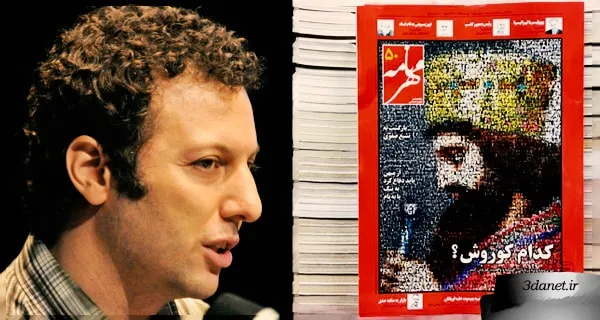

Sherwin Vakili
AuthorCyrus can be considered one of the crucial focal points of the identity-seeking discourses of Iranians today. Cyrus is a historical figure who is regarded as the founder of the country of Iran, the establisher of the largest state of the ancient world, and the ideal exemplar for just kingship among Iranians, Greeks, Hebrews, and Romans. Nevertheless, he is also a mythological figure, and the number and influence of the narratives and stories attributed to him, along with the embellishments that have accrued to his biography over the course of history, demand a detailed discussion. That is, in the Cyrus narrative, we see a remarkable accumulation of historical data combined with an accretion of mythological interpretations. It is for this reason that in recent years, Iranians, in search of their identity, have returned to him time and again, and anti-Iranian forces have also made vilifying and destroying him their primary objective.
Preamble
Cyrus can be considered one of the crucial focal points of the identity-seeking discourses of Iranians today. Cyrus is a historical figure who is regarded as the founder of the country of Iran, the establisher of the largest state of the ancient world, and the ideal exemplar for just kingship among Iranians, Greeks, Hebrews, and Romans. Nevertheless, he is also a mythological figure, and the number and influence of the narratives and stories attributed to him, along with the embellishments that have accrued to his biography over the course of history, demand a detailed discussion. That is, in the Cyrus narrative, we see a remarkable accumulation of historical data combined with an accretion of mythological interpretations. It is for this reason that in recent years, Iranians, in search of their identity, have returned to him time and again, and anti-Iranian forces have also made vilifying and destroying him their primary objective. In this article, I will examine five key questions about Cyrus. Propositions that are constantly repeated in today's identity-seeking discourses (whether positive, nationalist, and constructive, or negative, ethnocentric, and destructive). Propositions about which the speakers' stances have remained as unspoken and hidden presuppositions, fueling the dominance of an ideological and irrational perspective. It is obvious that my intention in enumerating these points is also to express my personal stance on them. That is, the aim of this article is to understand the key points of contention and conflict among today's intellectual currents over Cyrus, and to propose a suggestion for answering the questions arising from them.
Before entering the discussion, a broad theoretical stance that lies beyond the Cyrus debate must first be clearly and explicitly stated. Today, when the subject of history and historical figures arises, two broad approaches can generally be distinguished in opposition to one another. One approach considers history to be an unreliable, fabricated, counterfeit, incorrect, and arbitrary narrative. The other regards history as a branch of formal knowledge and considers it a disciplinary construct for formulating concepts, examining documents, and extracting truths.
The first approach highlights the connection between historians and institutions of power and the distortions that have occurred in history books, and on that basis, expels the entirety of history from the realm of formal sciences and knowledge. The second emphasizes the precise and clear methodology of modern historians and considers history a science on par with other human sciences. The first approach is popular with political parties, while the second is more often found in universities. Political activists and ideological spokespersons benefit from the first, while serious thinkers and devotees of ancient documents and the works of the past spend their lives in the domain of the second. The first approach is popular among postmodern writers, Marxists, adherents of the Frankfurt School, and deconstructionists, and is considered unscientific, irrational, and politicized by the second camp. The second approach has attracted the main body of classical scientists and reputable academic authorities and dominates university chairs. It is this second approach that provides grand theories and systematic paradigms for understanding the world and extracts technical and applied sciences from them. The achievement of the second approach is what was long called bourgeois science by proponents of the first approach.
Before entering the discussion, I must first clarify my position in this arena. I view history through the paradigm of complex systems theory. I have in mind a formulation of this theory that has been published over the past years in numerous books and articles, and has accomplished the configuration of the concepts of “self” and “institution” through an interdisciplinary approach. From this angle, the boundaries between the various branches of science are an artificial and institutional matter, dating back to the organization of the European scientific community in the eighteenth and nineteenth centuries, and they create no epistemological necessity for today’s researchers. According to this theoretical paradigm, which has been gradually becoming global and pervasive over the past two decades, a kind of methodological unity governs the entire sphere of knowledge. That is, we have a grand, overarching system of cognition that attends to data in a methodical, orderly, and reasoned manner, produces verifiable propositions based on them, and, through the construction of theories, frameworks, and theoretical paradigms, provides us with a reliable picture of existence.
This scientific picture of the world has not the slightest trace of certainty. That is, all of its propositions can be subjected to critique and re-examination. The postmodern critique and its insistence that science is not a definitive and certain matter, and that it changes shape under the influence of institutional powers and historical currents, is of course correct. That is, there is no doubt that all discourses and all cognitive elements are constructed and reconstructed within an orbit of power. But this statement points to something obvious and tautological. Because cognition is fundamentally like this, and apart from the realm of religious faith or artistic taste, which have a non-cognitive nature, no trace of certainty can be found elsewhere. Nevertheless, the non-definitive nature of the picture produced by formal, interdisciplinary knowledge, or its connection to power, does not mean it is unreliable or ineffective. Knowledge is decisive, though it lacks certainty, and it is rational, though its openness to critique may at any moment lead to new formulations of rationality.
The result is that, between the two aforementioned camps, I am clearly and explicitly an advocate of the second camp and consider history an inseparable part of knowledge. That is, I view history with a systemic and interdisciplinary approach and believe that all meaningful historical propositions, like propositions arising from other branches of knowledge, refer to verifiable, clear, and specific matters about which we may have sufficient or insufficient data and may or may not be able to answer the related questions. But ultimately, there is always the chance to gather more data, refine the research method, and consequently pose and solve new puzzles. That is, history is a science like other sciences, which of course has its own specific methodological characteristics, but this does not diminish its validity, verifiability, or clarity.
Most of those who insist excessively on the uncertainty of the sciences do so in pursuit of defending or promoting an irrational or quasi-rational viewpoint, which lacks sufficient coherence and validity to grapple explicitly and forcefully with formal knowledge, and therefore uses declaring it baseless as a trick to establish its own foundation. Almost all the renowned spokespersons who, over the past century, have complained about the uncertainty of science or cast doubt on the validity of methodical, formal knowledge under the pretext of its susceptibility to political power and historical context, have been, explicitly or implicitly, proponents of a political theory and ideology that could not withstand rational critique and favored a kind of despotism in the sphere of thought. The first step in a rational and free understanding of history is to free oneself from the sorcery of these eulogists of the irrational, and to accept that our methodical, reason-based modern knowledge, with all its flaws—which must also be scrutinized rigorously—is the most valid and reassuring method available for the critical understanding of the world.
With this methodological preamble, we can turn to the discussion of Cyrus and the key propositions concerning him, without being explicit. It is clear that, given the author's position, the discussion of Cyrus is situated within the geography of a scholarly problem, not as a discursive element in a political polemic. The difference is that Cyrus, in the first sense, refers to a clear, specific, verifiable, and robust concept that is formulated and understood by reference to a wealth of historical sources and archaeological data, and bears no relation to an arbitrary and fluid concept fabricated extemporaneously in minds and deployed to resolve political conflicts.
First question: Is there a way to identify the historical Cyrus as he truly was?
Almost everyone whose volume of study on Cyrus or any other historical figure exceeds a certain threshold will inevitably conclude that the question of historical figures who died centuries ago remains an objective and empirical one, which specifies known and definite documents, evidence, and data for its answer. Cyrus the Great of the Achaemenids lived twenty-six centuries before us. To grasp the magnitude of this historical distance, it suffices to note that it was only some five hundred and twenty-odd years ago that the people of the Old World first became aware of the existence of the American continent, and very ancient events such as the founding of the city of Rome, the construction of the surviving wall of the Temple of Jerusalem, and the emergence of scripts like Sanskrit and Latin all date to years after the era of Cyrus's life.
Despite this vast historical gulf that yawns between us and Cyrus, we still possess abundant and robust documents about him that make it possible to draw a precise portrait of him. Sources contemporary with Cyrus, compiled during his own reign and that of his direct descendants, comprise a collection of tablets, royal inscriptions, annals, sacred texts, and histories written in Akkadian, Elamite, Hebrew, Greek, Egyptian, and Old Persian. Beyond these contemporary texts, we also have a wealth of historical texts and later narratives written during the dynasties succeeding the Achaemenids or in lands other than Iran. Some of these texts, compiled in the Roman Empire, are so ancient that their distance from us amounts to two thousand years. Aside from these written sources, which provide a relatively precise and clear picture of Cyrus, we also possess a mass of archaeological data encompassing a wide range of sources. From the remnants of architectural and urban elements to objects demonstrating the advancement of technology and the artistic taste of the people, and from data concerning demographic and ethnological fluctuations to evidence indicating ecological transformations, we have abundant and solid documentation that helps us reconstruct the era of Cyrus and the context of his emergence and impact.
Thus, it is clear that when we speak of Cyrus, our discussion concerns a historical figure about whom a wealth of written and non-written documents and evidence, both contemporary and non-contemporary, is available. Cyrus was the third Persian king of Anshan, who ascended the throne in 559-560 BCE and died in 530 BCE. He divided his thirty-year reign into two parts: he spent fifteen years in the middle of this period at war, and devoted roughly the first ten years and the last eight years to organizing his realm, refraining from further conquest. His portrait in various histories shows remarkable convergence and is entirely consistent with the archaeological evidence. That is, friend and foe, insider and outsider, have given the same account of him, and the objective evidence confirms it. Those who, with political aims, construct an imaginary image of Cyrus and engage in baseless condemnation or praise of him are simply viewing the subject from a position of ignorance, revealing their disregard for and ignorance of historical sources and documents, which, in the camps of Iran-haters and ethnic nationalists, sometimes verges on concealment and deceit.
Second question: What is Cyrus's place in world history?
Based on the data we have, it can be confidently claimed that Cyrus marks a significant point of rupture in world history. It should be noted that history is fundamentally a combination of continuous processes and a chain of observable ruptures. That is, when we speak of the science of history, we are essentially referring to a systematic and rational method aimed at examining continuities and evaluating ruptures. In this sense, we sometimes see an accumulation of ruptures in a particular historical cross-section that indicates a historical turn and a systemic transition from one stage to another. These grand transitions are often linked to ecological transformations and climatic changes, and their emergence is rarely a sociological or human matter. The first historical instance we know of such transformative human factors relates to Cyrus, who, moreover, represents the most important and greatest human-driven historical transition until two and a half millennia later and the advent of the modern age. That is, the age of Cyrus marks a great historical turn whose triggering factor, according to evidence, can be considered human and related to a figure named Cyrus.
To judge in this regard, we must first see what the accumulated ruptures in the era of Cyrus are and what connection they establish with his historical role. In summary, it can be said that six major ruptures in macro-sociological variables can be identified in the age of Cyrus:
First: Technological rupture; the era of Cyrus is accompanied by the sudden development of iron technology, the spread of the iron plow, deep plowing of the soil, and the significant expansion of agriculture. Iron technology, in the fifty-year period encompassing the lives of Cyrus and Cambyses and the beginning of the reign of Darius the Great, underwent an incredible geographical expansion that must be compared with the centuries before it, and not the preceding decades. This very matter led to the spread of the metal plow in agriculture, which is far more efficient than the old stone and wooden plows and completely eradicates weeds in the fields. This method, called deep plowing, was considered a revolution in agriculture and suddenly multiplied the yield of the land several times over, and this itself fueled a population explosion in agricultural centers. That is, the era of Cyrus's life was accompanied by the consolidation and expansion of iron technology and the advancement of agriculture, whose dispersion and pervasiveness in the vast geographical realm of the Achaemenids was undoubtedly the result of the emergence of the historical figure of Cyrus.
Second: Rupture in warfare; it is a continuation of that same technological transition. Fundamentally, it must be kept in mind that the cutting edge of technological evolution in history relates to military technology. In the era of Cyrus, we suddenly encounter a new method in warfare that had no precedent before. Part of this technical modernization (for example, the spread of iron armor, or covering horses with armor, or the use of the iron sword) is a direct continuation of the technological revolution we mentioned. Another part of it has a mechanical aspect, an example of which is the invention of the catapult and military projectiles, which represents a leap compared to older methods. It suffices to review the historical reports of the lightning victories of the Persian army in confronting other peoples and compare its technological patterns with the warfare methods of the Assyrians, who had until then devised the most advanced war machine. The widespread use of cavalry, the classification of troops based on weapon type, the establishment of engineering units in armies and the building of roads and bridges by commanders, and the organization of the army based on decimal units are all innovations that were carried out during the time of Cyrus himself.
Third: cognitive rupture; the era of Cyrus and his immediate successors coincided with a dazzling and brilliant leap in the configuration of knowledge. Astronomical knowledge was suddenly rearranged during this period and became tied to a mathematical and trigonometric system; the two planets Jupiter and Saturn were observed for the first time in the era of Cyrus or his son Cambyses, and as I have described in the book The Mythology of the Night Sky, the ancient framework of the calendar that has endured to this day, based on the twelve signs, four seasons, and the solar year, took shape in that era and its encoding was institutionalized. Transformation in architecture, a turn in sciences such as medicine and botany, and the emergence of grand rational systems for understanding the cosmos appear for the first time in historical documents at this very time. Although the first signs of a systematic philosophical system can be found in the Gathas of Zoroaster (for further explanation on this, see the book Zand-e Gahan), the widespread adoption of philosophical thought was a direct consequence of Cyrus's policy and the state he founded. As I have discussed in detail in the book History of Ionian Reason, Democritus, Pythagoras, Parmenides, Heraclitus, Thales, and the other pre-Socratic philosophers were clearly influenced by Persian thought and politics. Plato, Buddha, and Mahavira, who formulated some of the most enduring and influential religio-philosophical systems, were thinking on the margins of the Achaemenid state and under the visible shadow of a dominant culture whose point of reference was Cyrus and the state he bequeathed.
Fourth: the spread of literacy; the pre-Cyrus era is a time when the use of script and writing was confined to very limited domains, and a very small part of the urban population who held religious and bureaucratic roles had access to the skill of reading and writing. For this reason, the total number of literate languages was very small, and the volume of texts written per unit of time was also very low. After the age of Cyrus, we encounter an explosion in literacy. The Achaemenids, apart from the innovations they made in producing the Old Persian script, adopted the Aramaic alphabetic script that had become prevalent in the Assyrian court and, from the era of Artaxerxes onward, turned it into the chancery script. As a result, the alphabetic script spread throughout the lands, and by the end of the Achaemenid era, almost all the widely used languages of the vast Achaemenid realm had become literate with a derivative of this script. The Kharosthi and Brahmi scripts for Indian languages, the Imperial Aramaic and Old Persian scripts for the official court languages, and the Demotic script for the Egyptian language are examples of these innovations. After the age of Cyrus, we encounter a stunning expansion of literacy in urban centers, and the writing of legal and economic documents, the recording of the minutiae of daily life, and diverse texts proliferate remarkably, in a way that was unprecedented before that time.
Fifth: transformation in religion; the age of Cyrus is a point that marks a significant turn in the history of religions. Before this era, religions were all polytheistic, ritual-centered, and non-philosophical. The only sign of monotheism in the pre-Cyrus era relates to the courtly and political religion of the Egyptian Akhenaten, which became extinct immediately after this pharaoh's death. Apart from this, we only have the Zoroastrian religion, which was both monotheistic and, unlike the Egyptian cult of Aten, had a philosophical structure, and was also successful and endured, making possible the formation of the software of the Achaemenid state. After the era of Cyrus, the philosophical model prevailing in the Zoroastrian religion and its basic concepts (the one, all-powerful, ethical God, Ahriman, the survival of everyone's soul, free will, the co-nature of man and God, the distinction between the material and spiritual worlds, resurrection, heaven and hell) were borrowed by other religions, and within a century after Cyrus, five major religions (Buddhism, Jainism, the Pythagorean-Platonic, Judaism, and Egyptian Henotheism) evolved or were formulated in a new form, and this is a process that has determined the history of religions to this day. All of these religions had a systematic and coherent conceptual structure, offered specific philosophical content and a worldview to their followers, had complex, trans-local social organization independent of place, and quickly took on a literate form, and in this respect were completely different from the religions of the pre-Cyrus era.
Sixth: a rupture in the economic system; Cyrus inaugurates an era characterized by the complex organization of labor, the spread of numerical calculation in large-scale investments, and, most importantly, the emergence of money. The economic prosperity of the Persian state must be understood in light of the profound rearrangement and sudden evolution of monetary systems, something unprecedented before Cyrus. The use of the royal treasury as a standard monetary reserve, the equalization of units and measures, along with road-building and the expansion of trade, created a major and significant transformation in the economy, backed by Cyrus's main achievement—the establishment of a unified Iranian state—and itself made possible, to some extent, on this same basis. Cyrus marks an important point in history where barter economy transforms into symbolic monetary economy.
The result is that if we wish to identify a single period in pre-modern world history as the point of concentration for major ruptures and seek the greatest and most far-reaching transitions, we undoubtedly arrive at the era of Cyrus. The pre-Cyrus and post-Cyrus ages were entirely different in terms of religion, economy, warfare, politics, law, technology, literacy, and cognitive systems, and in no other era until the modern age do we witness such a sweeping historical turn. Regarding this historical transition, which distinguishes the so-called early agricultural age from intensive agriculture, or early urbanization from advanced urbanization, we have a famous founding figure: Cyrus. That is, if we look at the historical evidence and maintain scientific objectivity, we can easily judge Cyrus's place in world history and identify and evaluate the transformations that occurred during his time and largely due to his presence. Such an evaluation shows that Cyrus was a highly influential figure situated at a crucial juncture of history, whose actions made possible a momentous and fateful turn in human history.
Third question: What is Cyrus's significance in the history of Iran?
Apart from his importance in world history, Cyrus is naturally also important and decisive in the history of Iran. Cyrus's significance in the course of the evolution of the geographical realm of Iranzamin (the Iranian lands) goes back to three fundamental areas. Most importantly, Cyrus is the founder of the country of Iran. That is, he is the one who, for the first time, establishes a single state over the entire spatial realm of Iranzamin and devises the mechanisms of Iranshahri politics.
The second important characteristic of Cyrus is that he lays the foundation for the Iranian civilizational order and the specific Iranian cultural fabric. These days, the propaganda of public media is so mixed with error or deception that it has completely concealed the truth that Iranian civilization, throughout its very long history, has been very, very calm, stable, and free from violence compared to other contemporary civilizations. We have numerous Iranian dynasties (Parthian, Sasanian, Seljuk, Safavid) that ruled over the entirety of Iranzamin for four or five centuries, whereas the duration of Chinese and Roman dynasties—the only states comparable to Iran—was usually less than a century and rarely reached two hundred years. The number of civil wars, violent unrest, massacres, as well as attacks on neighboring lands and encroachments upon other geographical territories in the history of Iranzamin is very, very small, and unlike Roman and ancient Egyptian civilizations, we see no sign of armies whose economy was based on plunder in Iranzamin. This freedom from violence and political stability is the achievement of the Iranshahri political theory founded by Cyrus, which takes commercial prosperity and the security of economic exchange as the main basis of wealth. In this sense, the second significance of Cyrus lies in the fact that he formulated and established the main index of Iranian civilization, which is mercantile and peace-seeking commerce.
The third important characteristic of Cyrus is that he established a particular form of civic ethics in the Iranian lands, the very form that his descendants strove to consolidate for two hundred years after him, and to which all successful Iranian dynasties and states thereafter returned. Cyrus is unique and exceptional in that, for centuries after the extinction of the Achaemenid dynasty, he was praised in the sources of peoples he had once defeated and subjugated, and his name entered all the religious books of his era as a sacred figure. The image of Cyrus as an ideal king that endured in very distant lands for thousands of years after his death possesses a degree of historical reality, and this goes back to his novel way of looking at political power and managing the consent of subjects within his model of governance.
This method of statecraft, which was entirely new and whose founder must undoubtedly be considered Cyrus, is what Darius the Great and the kings after him formulated in Old Persian inscriptions in the form of land, people, and happiness. This interpretation—that God created this earth (land), created people upon it, and created happiness for the people—shows a new way of looking at humanity and its connection to social institutions, which has been the key to the stability of Iranian states and social systems, while also giving them an ethical nature. That is, it placed concepts such as charisma (farr) and justice, which have an ethical nature, at the heart of the political theory of Iranshahr. It is for this reason that if we trace the reference point for ethics and wisdom among the kings of the ancient world, we ultimately arrive at Cyrus. The Achaemenid emperors were all his heirs, and the Parthians and Sasanians explicitly referred to him and his era, and the rulers of the Islamic period did the same by considering the Khosrows as a reference, mediated through the Sasanians.
Fourth question: How should the ethical judgment of Cyrus be, and what are the criteria for issuing a verdict in this regard?
Cyrus is a historical figure, and by relying on existing documents and evidence, one can draw a relatively accurate picture of his character and measure and evaluate his traces in history and his impacts. It is obvious that the image of Cyrus, like the image of any other historical figure, must be observed and evaluated in a scientific and objective context, and both that image and this evaluation change with the discovery of new evidence. This means that repeating the praises that earlier historians made of Cyrus may be documented and true, but it is not analytical, scientific, or critical, and is of no use to us today. Just as inverting historical testimonies and deeming them false, in the absence of stronger evidence or an alternative theory, appears simplistic and unwise. In today's conditions, we need a theoretical apparatus that evaluates the benefits and harms of the actions of historical figures with clear and verifiable indicators, and only with this criterion can a contemporary and effective interpretation of the character of a historical figure like Cyrus be obtained.
I view social systems and history from within the paradigm of complex systems theory, and this is currently the most up-to-date and seemingly most effective scientific method for the interdisciplinary analysis of complex social matters. Within this paradigm, I have formulated a perspective that, due to the centrality of the role of time in it, is called "Zurvan Theory." In this apparatus, the concept of the human being is formulated at four descriptive levels: biological, psychological, social, and cultural (meta), and at each level, a basic system (body, personality system, social institution, and cultural ethos) is defined, which has a fundamental variable at the center of its dynamics and behavioral choices. These variables are, respectively, survival, pleasure, power, and meaning (qalbam). Thus, in our theoretical model, there is an internal, objective, and evolutionary goal in human systems, which is "qalbam" (the acronym of those four variables). Based on these central variables, which are interlocked in a complex manner, one can both reconstruct ethics in a naturalized context and arrive at a precise and clear redefinition of historical benefit and harm.
On this basis, when it comes to judging a historical figure, one must examine the objective and tangible impact of that figure on increasing or decreasing the heart. On this basis, one can judge Genghis Khan, Mao, and Stalin as having had a harmful and damaging (or in moral terms, “bad”) presence in the history of their countries and the world, because they unleashed slaughter on a scale of millions, caused suffering, torment, and a diminishment of people’s pleasure and happiness, weakened the power of social systems through political repression, and, through their efforts to eradicate resistant cultures, dried up meaning. In the same way, one can also look at the achievements of Cyrus and assess whether his presence on the stage of history increased or decreased the power, pleasure, survival, and meaning of people in his own era and afterward.
If we look at historical sources, archaeological evidence, and everything considered a historical document, we find a clear and explicit convergence regarding Cyrus. This means that based on these data, we can judge him with certainty. Based on the available data, one can say with certainty that his presence led to the development and flourishing of the economy and prosperity, population growth, the astonishing development of meaning systems (religions, sciences, arts), and the satisfaction (happiness) of his subjects.
Fifth question: What connection does Cyrus find with today’s Iranian identity?
What prompted the writing of these lines are the discussions arising from the gathering of people at Pasargadae on the seventh of Aban this year. The seventh of Aban is, with a good degree of certainty, the day Cyrus entered Babylon without a fight and conquered the last remaining pre-Cyrus state in the Iranian realm. Thus, this day can be considered, with good historical accuracy, the founding date of the country of Iran. If we wish to provide a scientific analysis of the event before us, we must first have a clear and transparent picture of the incident itself.
The event of the seventh of Aban this year should not be considered a unique incident isolated from other events. The truth is that for about ten years, people have been gathering at Pasargadae on the anniversary of the conquest of Babylon. Before addressing this ten-year trend, one must bear in mind that the authority of Pasargadae and Cyrus does not pertain to the contemporary era and the current century. It is enough to go back in history to see that Persepolis and the remnants of the Achaemenids have been a source of authority and inspiration throughout Iranian history, and both kings and ordinary people have defined their identity based on it. That free-thinking and tolerant King Abu Ishaq, who ruled in Shiraz during Hafez’s time and, in the words of Lisan al-Ghayb, “shone brightly but his reign was short-lived,” built a dome and structure in Shiraz in imitation of the ancient kings, which to some extent demonstrates his reference point for a tolerant and kind political morality. Similarly, when during the reign of Mohammad Shah Qajar a decree was issued for courtiers to trim their beards and shorten the length of their long robes, Mohammad Shah pointed out that this was the very attire and appearance of the Iranians’ ancestors and referred to the reliefs of Persepolis. From the works of Mirza Aqa Khan Kermani in the Naser al-Din Shah era to the odes of Malek al-Sho’ara Bahar in the Constitutional era, the Achaemenids, and especially Cyrus, by specific name and repute, have held fame and credibility as the historical founding reference of Iran and the symbol of Iranshahri glory, and the dichotomy of Persepolis and Pasargadae has always been the geographical focal point of this historical identity. Therefore, the opinions expressed by those who consider Iranians’ familiarity with Cyrus to be a recent phenomenon or attribute the prominence of Cyrus’s image to the Pahlavi era either stem from their ignorance and historical illiteracy or, unfortunately, bear a mark of deceit.
With this preamble, the fact that for about ten years people have been gathering at Pasargadae on the seventh of Aban is neither unprecedented nor astonishing; it is the continuation of a long-standing historical current that goes back to the authority of the Achaemenids and, in particular, the public's growing familiarity with the academic history of Cyrus. That the seventh of Aban has gained prominence in this context is, of course, significant. For this date is a specialized, academic matter, derived from the collation of ancient inscriptions, and lies entirely outside the popular narratives about Cyrus. That is, the gathering of people on the seventh of Aban is a sign of general attention to a specialized historical element. It should also be borne in mind that the first gatherings on the seventh of Aban took place in the mid-1380s [2000s], following the impoundment of the Sivand Dam, as a civic protest against its destructive effect on Pasargadae. In other words, we are dealing here with a collective movement that is neither vulgar nor plebeian; one end of it is connected to a historical and specialized truth (the significance of the seventh of Aban) and the other end to an ecological and geological point (the effect of a dam's impoundment on a historical monument). It is obvious that those who show sensitivity in this regard and gather in a relatively remote place like Pasargadae must, at least initially, possess a high level of civic awareness and considerable knowledge about their collective action, and this is evident from the subject of their protest and their manner of reacting to it.
Over the past ten years, the gatherings of people at Pasargadae have been held regularly on the seventh of Aban each year. Last year, the number of attendees at this event reached fifteen thousand, which was remarkable. This year, according to some estimates, the number of attendees at this location was between one hundred and two hundred thousand, a highly unusual and staggering figure. Especially since this year (partly in reaction to last year's gathering), the operation of recreational tours to this destination was canceled by the authorities, and restrictions were imposed on the event.
Therefore, when we speak of the event of the seventh of Aban, we must first understand its temporal and spatial context and bear in mind that we are not dealing with a merry gathering of a group of young people (in, say, Ab-o-Atash Park). This event is the continuation of a social current that has persisted in this very form and shape for at least a decade, and its structure and format show that the upper-middle cultural class of society is its backbone. For elements such as the date of the seventh of Aban, or protesting the impoundment of a dam, or sensitivity about the preservation of historical monuments, are not the concerns of the illiterate masses or the common people.
But regarding this year's event on the seventh of Aban, there are several salient points. One is the role of social networks, especially Telegram, in the spontaneous organization of this movement. Apparently, no organization or leader was at the center of organizing this movement, and everything took shape spontaneously, demonstrating the function of new media and social networks riding on citizens' mobile phones. Secondly, given the ban on travel agencies organizing programs, the transportation arrangements for this enormous crowd were similarly local, spontaneous, and network-based. A matter that ultimately led to a massive traffic jam on the road to Pasargadae.
Thirdly, on this day, certain things happened and certain things did not happen, both of which were interesting. What occurred was the calm and joyful presence of the people around the Pasargadae monument, and activities such as speeches and poetry readings that separate groups were conducting for themselves there. Some ethnic groups (Kurds, Azeris, Arabs, Bakhtiaris, Baloch) had come in their ethnic attire, and some performed their local dances right there. The collective behavior of this entire crowd was centered on singing anthems, clapping, and chanting slogans. Contrary to what was reported in biased media, the slogans did not have insulting content and mostly emphasized the expression of the attendees' national self-image.
What should have happened, but did not, is violence. Such a large gathering, situated in a relatively remote location beyond the oversight of urban control systems, represents a form of the shapeless mass that classically turns to violence. The fact that throughout this crowd—thousands of people from various ethnicities and religions—no conflict or strife occurred, and everyone carried out their intended program together with kindness, reconciliation, and empathy, indicates that the shared national identity still performs its ancient and valuable function of bridging ethnic, religious, and linguistic differences in the land of Iran.
One of the points that must be considered when understanding the event of the Seventh of Aban is the interpretations that followed it. Three groups adopted a negative stance toward it after the program was carried out. One was certain religious-state leaders who considered such a gathering threatening, and their anti-Cyrus discourse could fuel the unnecessary politicization of the atmosphere and deprive the political system of the blessings of national unity. The second was ethnicist groups, who were obviously angered by the ceremony due to their anti-Iranian orientation and their fear of a national identity that dissolves ethnic hatred within itself. The third was neo-Marxist spokespersons who believe in a form of global and transnational citizenship, which is often paradoxically combined with a sub-national ethnic identity-seeking. The discourses of each of these three groups are noteworthy and analyzable.
To what extent these three aforementioned discourses, which overlapped and intersected in many places, were indifferent to the event itself and the objectivity of what actually happened, and what the scope of attention and depth of historical knowledge current in these discourses were, deserves further attention and examination. Furthermore, the neglect of these spokespersons regarding the consequences of their words and their ignorance of what calamity the absence of national discourse and collective solidarity would bring upon people in today's fragile and war-torn Middle East can serve as a lesson and a warning.
What should be considered alongside the pathology of these discourses is the manner in which this event was mediatized. It is very interesting that media outlets such as the BBC and Voice of America, in complete convergence with some official media inside Iran, covered only marginal and irrelevant parts of this program and tried to present an aggressive, violent, and xenophobic interpretation of the national discourse circulating around Pasargadae. The repeated broadcasting of the image of seven or eight people prostrating before Pasargadae, or the emphasis on the slogan "...we do not worship Arabs" and interpreting it as racial hatred, lies in direct continuation of the ethnicist-anti-Iranian discourse and deserves further analysis. That is, one must ask how the poetry reading, dancing, and speeches of a gathering of tens of thousands, and the singing and kind, harmless slogans of a crowd of a hundred thousand, did not receive as much attention in the media as the unusual behavior of seven or eight people or the sloganeering of fifty or sixty people, and similarly did not become the subject of judgment for the aforementioned discourses.
Some of those who have spoken about the event of the Seventh of Aban in recent days have considered it a novel, strange occurrence and the establishment of a new collective discourse. It suffices to look at the available evidence and data to realize that this perception is incorrect. This year's event of the Seventh of Aban is a link in a chain that connects the Seventh of Aban of last year and the year before to the Seventh of Aban of next year. In the same way, the national discourse that motivated the massive crowd that carried out this civic movement is a flower in the great tapestry of movements that are the expression of this people's national identity, and it should be viewed as such. Commenting on things without sufficient knowledge about them, judging events before looking at them carefully and clearly, and speaking before seeing are ailments from which everyone deserves to be freed.
.
.
National Identity and the Cyrus Narrative
Author: Shervin Vakili
Mehrnameh, Year Seven, Issue 50, January 2017
.
.



Discussion3 comments
واقعا جالبه. قبلا تصورمان این بود که مثلا دین یهودی یا ...، جهان بینی اش(بهشت و دوزخ و...) رو از وحی و انبیا اخذ کرده اما اقای وکیلی متنبه مان کرد که نه خیر؛ اینها حاصل جهان بینی ایرانی-زرتشتی و 30 صفحه گاتهای منسوب به زرتشت است. و متنبه مان کرد که دستاورهای تاریخ بشر به پیش و پس از کوروش تقسیم می شود! جالبه نویسنده می گوید باید در برخورد با قضیه کوروش وتاریخنگاری پیرامون اش، پیش فرضها را کنار گذاشت. اما خودشان دقیقا با عینک ایرانشهری تاریخ را تفسیر می کند!
پوپولیسم ناب... سطحی،غیر علمی و عوام پرور. اگر فکر می کنید در کوتاه مدت به نفع ایجاد آلترناتیو در ایران تمام می شود بدانید بااین شیوه سطحی و تدلیس آمیز در دراز مدت طبقه الیت و دانشگاهی را از دست خواهید داد ودرنهایت یک دور باطل دیگر...
واقعا خوشحالم افرادی مث آقای وکیلی عزیز اینقدر موی شکافانه و با دقت این تاریخ کهن و غنی رو به ملت بزرگ ایران میشناسانند و تاریخ غنی ایران کهن رو یادآور میشن.