Sociology
Racism in Iranian Culture: A Panel with Zibakalam, Vakili, and Haqshenas
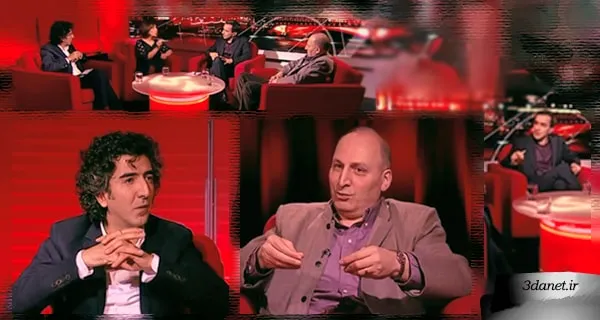
Sadegh Zibakalam claimed at a gathering that Iranians are racist; Mohammad-Javad Haghshenas and Shervin Vakili challenged this view by defining racism scientifically and drawing on religious and literary tradition. Read the report of the Zurvan Society roundtable.
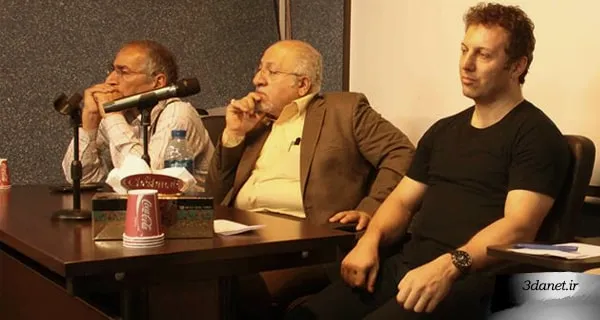
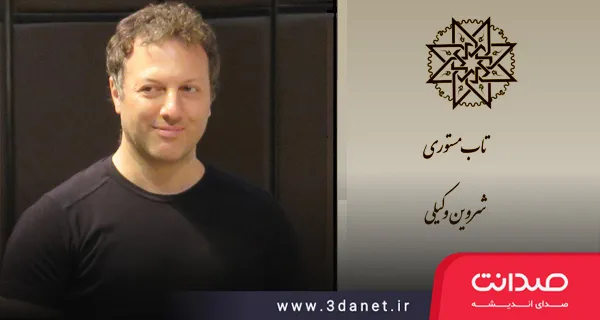
In this session, Sadegh Zibakalam spoke on “Tracing the Roots of Racism Among Iranians,” Mohammad Javad Haqshenas on “The Model of the Perfect Iranian Human from Rumi’s Perspective,” and Shervin Vakili on “The Genealogy of the Absence of Racism in Iran.”
.
.
Report by Asr-e Iran on the Session:
Zibakalam’s Belief in Iranian Racism Under Scrutiny / Full Report of a Roundtable
Asr-e Iran – Last Friday, the Zurvan Association held the session “Racism in Iranian Culture” with a critical look at Sadegh Zibakalam’s views at the Baharan Institute.
The report of this event, however, was published incompletely in some newspapers and media outlets, sometimes only quoting the words of this political science professor and not all the critics.
Asr-e Iran publishes the full report of this program, provided to us by the Zurvan Association, with minor edits:
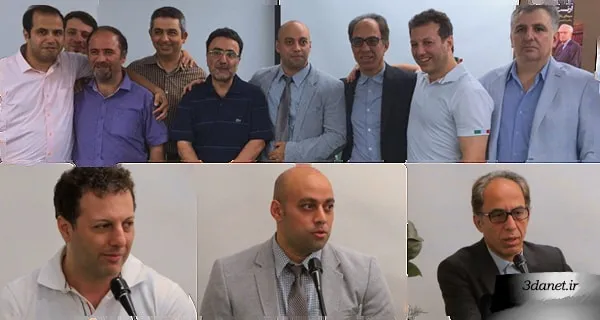
On the evening of Friday, the 23rd of Mordad, the Zurvan Thought Circle session was held in the hall of the Baharan Cultural Institute. This program was part of the series of sessions by the Zurvan Association’s Thought Working Group, which has now been held regularly on a monthly basis for over five years, with each session discussing a topic related to Iranian identity and civilization in the presence of professors and experts.
The speakers at this session were: Dr. Sadegh Zibakalam, Dr. Mohammad Javad Haqshenas, Dr. Shervin Vakili, and Dr. Zagros Zand. The topic was the discussion of racism within the sphere of Iranian civilization, which was mostly dedicated to evaluating and critiquing the successive statements by Dr. Zibakalam, who over the past years has repeatedly deemed the Iranian people racist.
The session began with a speech by Dr. Zibakalam, professor of political science. He started his talk by emphasizing that he usually sees no need to prepare himself for a speech, but this time, contrary to his usual practice, he had organized and written down his remarks.
His speech had three parts. First, he clarified that what he meant by racism was precisely Racism, and he spoke in condemnation of this trait and its pathological nature.
He then enumerated a set of evidence that, in his view, indicated the racism of Iranians—both rulers and people—in the periods before and after the Islamic Revolution.
This evidence included: self-centeredness and Iranians’ belief that they are an important people with global value; national self-confidence and considering themselves the center of the world; insistence on having a glorious and ancient civilization and that the world’s people are indebted to Iranians for parts of it; a tendency to show off and display their power and importance in the eyes of others; a state program for developing military power; and insistence that the country’s development projects are significant at the Middle Eastern or even global level and are among the best.
Another part of his speech concerned the behaviors of the masses, centered on the idea that Iranians mistreat Afghan immigrants; hate Arabs; insist on the destruction of Israel in their state slogans; and do not look favorably upon foreigners. In conclusion, he considered all these cases as signs and consequences of racism and postponed the final part of his speech, which was about the roots of this racism, to another time.
The second speaker was Dr. Mohammad Javad Haqshenas, a professor of international relations, who focused his remarks on critiquing Zibakalam's claims. He first provided the definition of racism from scholarly sources: "The belief in the divine or genetic superiority of one race over other races and the right to exploit other races as humanity's destiny, in such a way that this race is granted an inherent right to exploit other races in any manner it sees fit."
Then, citing the words of Rumi and illustrating the Perfect Human from his language, along with hadiths and verses, he demonstrated that the classical religious and literary tradition of Iranians does not recognize racial distinctions and that no trace of racism is found in the Iranian worldview.
He then addressed the cases raised by Dr. Zibakalam and showed that the three million Afghan migrants who came at the beginning of the revolution, and the five hundred thousand Iranians of Arab origin who came from Iraq to Iran before the revolution, and their rapid and unreserved absorption into Iranian society, along with the high financial turnover flowing within this migrant group, indicate Iranian hospitality and the absence of discrimination against others—something that cannot be compared to the limited instances of Iranians or others migrating to European countries.
Referring to his work experience at the Civil Registration Office, he pointed out that many Iranians lack birth certificates, and also mentioned the statistic of 11 million Iranians who do not have insurance booklets, emphasizing: The lack of access to healthcare facilities is more or less the same for Iranian nationals and foreign migrants, and if there is poverty and deficiency in this regard, it affects everyone, and no specific ethnicity or group has been discriminated against in this area.
Dr. Haqshenas, also referring to his Afghan students, deemed the rumor of a ban on education for foreign nationals, especially Afghans, entirely false and, citing the Leader's message, added that the path to education has also been opened for the children of undocumented Afghan refugees.
He considered it incorrect to generalize the improper behavior of some of the country's bureaucrats, such as the governors of Isfahan and Mazandaran, in dealing with Afghan asylum seekers to the entire populace, and added: Even those behaviors cannot be labeled as racist, as racism has a precise and specific definition in the social sciences.
The third speech was delivered by Dr. Zagros Zand, a Shahnameh scholar. He referred to the text of the Shahnameh as an indicator for evaluating the presence or absence of racism in the Iranian realm.
At the beginning of his talk, while expressing surprise that he had expected Dr. Zibakalam to base his previous claim on field research and not merely suffice with examples, Zand said: If Iranians were racist, this characteristic would have to be institutionalized in Iranian culture and would also have to be manifested in the Shahnameh, because the Shahnameh represents all the dispositions, temperaments, and tents of Iranians from the age of myth to Sasanian history, and is also an epic and highly Iran-centric text, so it could be the best place for our racist characteristic to be manifested.
Epic texts, including the Shahnameh, due to their focus on the concepts of war, bravery, and lineage, and their theme of national pride, are in almost all civilizations interwoven with racist or ethnocentric references and allusions.
The fourth speech was delivered by Dr. Shervin Vakili, a sociologist and mythologist. He began the discussion by pointing out that there seems to be an ambiguity and confusion in Mr. Zibakalam's discourse that has fueled the debate and questions.
His discussion had three parts: first, he defined racism and said: Racism is a clear and well-established keyword in the social sciences and is composed of a belief, a historical evolution, a society-oriented network, and a spectrum of behaviors; the belief that the human species is biologically divided into different races and that these races possess different moral and rational capacities.
Such an idea is the basis of racism, a belief that is rejected today. Based on this belief, skin color is the most important factor in determining race, and a set of legal rules, discriminatory behaviors, and social boundaries separate the races from one another and give the white race superiority over people of color.
Vakili also concisely reviewed the evolutionary history of this concept and showed that the concept of race and racism emerged in the sixteenth century following the discovery of the New World in Latin Europe (Spain and Portugal), took on an established formulation in the seventeenth and eighteenth centuries with England's entry onto the scene and the spread of the slave trade in the Anglo-Saxon realm, and metamorphosed into a scientific theory in the nineteenth century in Germany and England, being particularly influenced by Darwin's views.
From Shervin Vakili's perspective, the concept of race is fundamentally a constructed and power-driven matter and a discursive product designed for the domination of Europeans over other peoples of the world. It constituted the central core of European ideology in the age of colonialism and justified slavery and the massacre of indigenous peoples.
He pointed out that rudimentary and scattered traces of racism can be found in ancient slave-holding civilizations, especially the Egyptians, but the concept of race and racism in its modern sense is a European, recent matter dependent on slavery and colonialism, which has a specific definition.
The second part of his speech was dedicated to critiquing Dr. Zibakalam's views, and he explicitly stated: fundamentally, what Dr. Zibakalam speaks of has nothing to do with racism.
He points to scattered matters, all of which have a psychological and not a social nature, and none of them establish a connection with racism. Some of these traits, such as pride, self-superiority, and showing off, are undesirable, while others, such as historical self-awareness, a desire for greatness, self-confidence, and having magnanimity and a healthy nationalistic identity, are quite desirable and valuable.
Therefore, the question of why Dr. Zibakalam uses a clear and unambiguous term from sociology to refer to a range of scattered and unrelated matters is open to question.
The third part of Shervin Vakili's speech concerned the genealogy of Dr. Zibakalam's discourse. He said: The concept of racism is a kind of stigma, an unpleasant and insulting label that has been attributed over the past decades by Iran-haters to supporters of Iran's national identity. A national identity for which no trace of racism can be found, neither in past documents and records nor in the current behavior of Iranians.
The important point is that the Iran-haters who have used such a label have often been attached to clearly racist ethnocentric ideologies (such as Pan-Turkist and Pan-Arabist attitudes), and in this way, they have both been projecting their own characteristic and seeking to muddy the conceptual space of their own baseless claims.
He added: The word race and racism has a precise and clear definition, which Dr. Zibakalam uses incorrectly and apparently unaware of its primary function, and this usage is unfortunately aligned with the fabrications of ethnocentrists and Iran-haters. Dr. Vakili concluded his speech by summarizing that Iranians have not been, are not, and let us hope they will not become, racist.
The second half of the program was dedicated to discussion and exchange of views between the speakers and the attendees. First, Salar Seifoddini, a journalist, reviewed Dr. Zibakalam's discourse in some of his notes and interviews.
After him, Ehsan Hooshmand, an expert on ethnic issues, spoke, and his opinion was that using the term racism without regard to its scientific context and the consensus that exists about its meaning is a sign of the absence of a scientific and academic framework.
Hooshmand emphasized that data and documentation do not confirm Mr. Zibakalam's claims and are inconsistent with them, and he asked him to provide scientific and credible evidence and data in support of his claim.
Finally, Dr. Mehdi Pournamdar, psychologist and political activist, emphasized that Mr. Zibakalam's use of the word racism seems to refer to a psychological matter, and therefore it would be better to express it with more precise words in this context.
In response to his critics, Zibakalam essentially reiterated his initial remarks, saying that no one in history has considered themselves a racist, and a precise, scientific definition of the word is useless because no one will fit into it, and no one considers themselves a racist.
He then stressed again: what else can one call the behaviors he mentioned regarding Iranians but racism?
Vakili, however, emphasized that the precise, scientific concept of racism happens to be both comprehensive and exclusive. That is, it has a clear and precise definition and also has clear and specific indicators that include some in this category and exclude others from it.
He reiterated that racism, clearly and explicitly everywhere in the world, consists of discrimination and oppression based on the belief in differences between races and the superiority of the white race over races of color. This interpretation, contrary to Dr. Zibakalam's statement, is accepted by the racists themselves, and on this basis, they call themselves racist.
He also mentioned Wilhelm Marr, the early 19th-century German writer, who, in his book attacking the Jews, used the term racism for the first time in its modern sense and, contrary to Zibakalam's claim, called himself a racist.
He also pointed out that there is no doubt, at least on this point, that Afghan brothers and Iranians are of the same race, and in the midst of a discussion on racism, citing the relationship between these two countries, which have recently been separated and have people of the same language, appearance, and lineage, seems somewhat surprising.
.
.
Shargh Newspaper's report on the panel:
Examined in a panel with Zibakalam and Haqshenas
Are Iranians Racist or Not?
Shargh, Ali Ayoubi: The Baharan Institute held a panel yesterday on “Racism in Iranian Culture.” At the event, which drew a large audience despite the intense summer heat of Mordad, Sadegh Zibakalam and Mohammad-Javad Haqshenas shared their views. Sadegh Zibakalam began the session by posing the question, “Are we Iranians racist or not?” and said: “My answer is yes. I have observed several traits and concluded that we are racist. First, we see ourselves as superior to others—a structure that our official system adopts and a formal aspect that prevails among the people demonstrates this. Also, hatred toward other ethnicities and nationalities, the most prominent of which is the hatred we harbor for Arabs and Afghans. Another trait is the significant place we assign to Iran in history and the skeptical view we hold toward other countries.” He added: “For example, the Shah’s view of Iran and the world showed that he saw himself above others and always spoke of an ‘independent national policy,’ a policy exclusive to Iran’s imperial regime. This policy later evolved, and from the late 1960s it was called ‘Iran’s pursuit of the Great Civilization.’ The government’s rhetoric was also that Iran is the gateway to the East. This rhetoric existed among politicians like Hoveyda and the speaker of parliament at the time, and it was a racist outlook.” Zibakalam continued: “These words may seem laughable, but in the final years of the Pahlavi regime, the Shah himself, the prime minister, and newspaper editorials all claimed that we should offer the model we used for Iran’s growth and development to other countries, and even implement it for them so they too could become great and industrialized like Iran.” Pointing out that “although no military threat endangered Iran, Iran moved toward militarization,” he said: “I believe the Shah’s subconscious desire was to make Iran great, and he spoke of Iran’s global standing. It wasn’t just an insistence on militarism; when you read the speeches of officials at that time, you see they considered themselves so capable that, for instance, under the pretext of fighting Marxists, they attacked Dhofar to say, ‘Take Iran seriously.’ This was while, fundamentally in the 1970s, the people were not interested in such talk. Even during the victory of the revolution, we saw these words being ridiculed, and people chanted, ‘Gateway to civilization, through the massacre of the people.’” The university professor added: “Calling our own nation ‘great’ and so on… in my opinion, all of this stems from racism. Another form of it is when a bridge or street is built, it is said that this bridge or street is the largest in the Middle East or first in the world.” Sadegh Zibakalam said: “Even the head of the reformist government, in the year he declared the ‘Dialogue Among Civilizations,’ said in his speech: ‘Humanity is indebted to the civilization of Islamic Iran.’ If the Shah, or Saddam, or Hitler said this, it wouldn’t matter, but for me, this statement from him is unacceptable, and I consider it to be fed by that same grandiosity. Or the ‘Iranian-Islamic model of progress’—no other country makes such a claim. Or the ‘indigenization of science,’ or the number of our articles in the world, or boasting about our advances in nuclear and nano-space technology—all of this comes from the same self-aggrandizement. Or the registration of Iran’s heritage sites with UNESCO, which happens once or twice a week, but if the municipality demolishes that same building and builds a tower in its place, no one gets upset.” He added: “Our main problem is the need to be seen. If the advisor to the governor of some country praises us, we magnify it; this is to satisfy our grandiose desires. Or we become so self-important that Ahmadinejad declares at the UN that the world has reached a dead end and speaks of global management. Or, for example, when we win in sports competitions, we loudly proclaim that the world has knelt before us.” Posing the question of why we are so insistent on flaunting this Iran and this Iranian sentiment, he said: “I see this insistence and its underlying motive as stemming from our sense of being greater than others, which means racism.” Pointing out that “a sense of superiority is the starting point of racism,” he said: “In conclusion, I must say that throughout history, all racists have justified themselves and not accepted it. If we want to view self-aggrandizement as a good and positive trait, all racists are exonerated. In that case, Trump, the anti-Arab Zionist movements, and Saddam are not racists either. Zibakalam concluded: “When an Afghan who has lived in Iran for 20 years can easily be abandoned at the Iranian border, but an Iranian who goes to the French border, though they might sew their lips shut at first, is later considered a citizen and protected by law, yet in Iran no one asks the governor of Isfahan or Mashhad why Afghans are not allowed into the mountains or parks.” We must not mistake the problems of administrative bureaucracy for racism Mohammad-Javad Haqshenas, as the next speaker at the session, said: “Some time ago I read a piece by Zibakalam in the ‘Shargh’ newspaper that was written about racism. I was sorry that such things were said, which could have bad consequences for the country internationally.” Posing the question, “With what aims has this self-flagellation been placed on Zibakalam’s agenda?” he added: “The definition of racism in his literature is not precise; it is an interpretation he holds and equates with racism. For example, he says our behavior towards Afghans is condemnable, but the behavior of Westerners towards us is of a different kind. The behavior of Westerners towards Iranians is not so good either, to the extent that it has caused protests in camps and led them to sew their lips shut. His comparison in this regard is neither correct nor realistic.” Haqshenas said: “One of our problems is managerial issues; for instance, in Isfahan and Mashhad, Afghans were not allowed to go to recreational centers. This cannot be attributed to all Iranians and used to label Iranians as racist. For example, he says Afghans cannot open bank accounts or do not have the right to teach; whereas this is not the case at all. The previous government had ordered that undocumented Afghans do not have the right to education, a problem that was resolved by the Leader’s directive.” Pointing out that “his words could have adverse and irreparable legal consequences for the country,” he said: “Mr. Zibakalam says Afghans do not have insurance; well, 11 million Iranians also lack insurance. We must not be more royalist than the king and mistake Iran’s bureaucratic administrative problems for signs of racism.” The political activist concluded: “In Islam, the criterion for superiority is only piety, knowledge, and a record of jihad. There is no place for racism in our religious beliefs, and the Prophet made use of individuals like Bilal or Salman the Persian.” At this session, Dr. Zagros Zand, a Shahnameh scholar, and Dr. Shervin Vakili, a “genealogist,” also expressed their views on racism.
Shargh Newspaper | 23 July 2016
PDF file of this page from Shargh Newspaper
.
.
Dr. Shervin Vakili's note about the panel on his Facebook:
On the Racism Conversation
Last Friday, as is our monthly custom, we held the session of the Zorvan Association's Thought Circle, which, with the support of the Khorshid Organization and the assistance and kindness of the Baharan Institute, was held in the institute's hall. The place of all friends in the spiritual realm was empty, though on the material plane it was not possible to keep their places empty. The reason was that nearly one hundred and fifty people attended this session, and not only was the large hall of the Baharan Institute completely full, but some friends were forced to stand in the corridors and courtyard. The session was dedicated to a discussion of Iranian racism. The main proponent of attaching this attribute to that subject was Dr. Sadegh Zibakalam, and Dr. Mohammad Haqshenas, Dr. Zagros Zand, and I were critiquing this position. The session's moderator was my friend and brother, Engineer Alireza Afshari, and among the guests, Mr. Salar Seifoddini, Professor Ehsan Houshmand, and Dr. Mehdi Pournamdar made statements during the Q&A session. The session began with several surprises. First of all, a group of friends who apparently have a bias towards nationalism and do not appreciate my openness to hearing opposing views and my readiness to discuss and rethink everything, began to express opposition. Opposition to why Dr. Zibakalam was chosen for the discussion, opposition to why we agreed to talk about racism, and opposition to, fundamentally, why? The peak of these oppositions was a strange and bizarre statement that the esteemed Dr. Houshang Tale issued about me. A statement so astonishing and unreasonable that I am waiting—and it would be better if!—for him to publish a fitting apology and explanation about it. In any case, these oppositions were completely unwarranted; we, and I, will discuss any topic we wish with whomever we wish, and if someone opposes a discussion about a topic with someone, they can simply not discuss it with them in that context. But with whom we discuss what matter is naturally our own business. Of course, I should also mention that the reason for the displeasure of these extremist Iran-lovers was that the networks of ethnic nationalists and Pan-Turk and Pan-Arab separatists had greatly welcomed this session. The basis of their happiness was that nationalist theorists had finally agreed to enter into a discussion about racism. I, of course, did not quite understand the reason for their happiness and these others' displeasure, because I think any topic can be discussed and debated, and I consider believing in taboos and red lines in thought to be a kind of illness and anemia in the world of thought. I also hope their support for Dr. Zibakalam has nothing to do with the man himself, but in any case, such support existed, and I, of course, understood the reason for it! Meanwhile, I also understand very well why, now after the session's end, the nationalist friends are happy and the Iran-haters are angry. Because since yesterday, those same networks and spokespeople of Iran-hatred (fortunately exempting Dr. Haqshenas and my dear Dr. Zand) have been busy insulting me with remarkable intensity. (Interestingly, a selection of these curses and abuses is sent to me every morning by a certain good soul (M.M., may God heal him!), so from this sacred podium, I thank him for his constant presence among the Iran-haters and his diligence in reporting these insults!) And as for the session itself, it had several interesting points. One was that the program was scheduled to be held at four in the afternoon, and all our advertisements said the same. But a manipulated version of our advertisement was published through Dr. Zibakalam's channel, and this "mistake" caused several dozen unfamiliar guests to arrive an hour early and occupy the majority of the seats. In such a way that we were embarrassed before the cultured and esteemed friends who had been members of the Zorvan Thought Circle for the past five years and, because they knew the session's start time, were forced to stand. Those dear early-arriving guests, of course, did not waste the seats they had occupied and were full of vitality and energy. Because with remarkable activity, they applauded after the sentences of one of the speakers, and towards the end, when the theoretical discussion of the debate was more or less finished, they proclaimed some soothing sentences about themselves. The second striking point in the discussion was that, according to the customary rule of the Zorvan Association, the conversation proceeded with politeness and respect, and apart from the brothers' constant applause, which sometimes wasted time, no disturbance occurred in the session.
The parties to the discussion treated one another with courtesy and respect, and apart from one or two remarks by the guests that resembled a personal attack on Dr. Zibakalam, and one insulting remark by Dr. Zibakalam directed at the opposing speakers, no other unpleasant words were exchanged, and even these two instances were immediately cut short and given no chance to continue. The third point was that, in my view, it settled the question of Iranian racism decisively and clearly. I have been present at many discussion sessions and have crossed swords with many renowned professors and masters. But this one was special in that the two sides of the debate differed markedly in terms of the logical flow of speech, the strength of reasoning, evidence and documentation, and the clarity of concepts. That is, I think anyone who listens to the audio file of the discussions will judge decisively and firmly that something called racism has not existed and does not exist among Iranians, and that what we hear here and there is mostly a political discourse produced by Iran-haters and occasionally (presumably by mistake) reflected in the speech of respected professors like Dr. Zibakalam. But listen to the aftershocks of the session. We, who were the organizers ourselves and had the audio and video files and photos at our disposal, needed a full day of continuous work to extract the data and compile a correct and accurate report worthy of publication, and this was while the organizing group consisted of nearly ten people, all of whom were above the societal average in terms of erudition and managerial ability, and four of them were each directors of highly active cultural organizations. For this reason, when we saw that the Shargh newspaper had published a report about it on Saturday morning—less than twelve hours after the program—we were astonished. The content of the report bewildered us even more. The author was an unknown person whose identity no one could trace for us, and his report was a strange and bizarre text whose distortions seemed almost laughable. The names of the Zorvan Association and the Khorshid Institute had been completely removed. The speakers, too, had been reduced to just Dr. Zibakalam and Dr. Haqshenas, and since my name could not be made to disappear entirely, it appeared in one sentence toward the end, and that too where they had introduced me as a “genealogist.” Imagine that: “genealogist”! The text, aside from numerous editorial errors, included only the esteemed remarks of Dr. Zibakalam and marginal parts of Dr. Haqshenas’s speech, and the rest had essentially been consigned to oblivion. And of course, I believe that the esteemed Dr. Zibakalam was unaware of these goings-on and played no role in these matters, and how good it would be if, to emphasize this point, he were to declare on his channel that this report is false and also provide the address of my channel so that everyone can access the original exchanged remarks. But the rule is that truth shatters falsehood. Consequently, fortunately, the Shargh newspaper quickly realized that the news it had printed was fabricated, apologized, and will publish the correct version of the session report that we will send them. Also, other reports of the affair will be published in other newspapers whose reporters I know and who, unlike the presumably pseudonymous author of the Shargh piece (in any case, for the sake of complete disgrace, let me say his name was Ali Ayoubi!), possess the two qualities of professional integrity and truthfulness. I have also published the audio files of the session on my channel today. Friends who are interested in the discussion should obtain and listen to them, ignore other versions that may have been truncated and manipulated by Iran-haters, and be diligent in disseminating the original remarks, for evidence shows that purveyors of falsehood, due to the greater simplicity of their work, are a few steps ahead of the advocates of truth among the masses, but they are always struggling with shortness of breath and ultimately fall behind..
.
Audio of the panel "Racism in Iranian Culture":
Speech by Sadegh Zibakalam
Speech by Mohammad-Javad Haqshenas
Speech by Zagros Zand
Speech by Shervin Vakili
Speech by Salar Seifoddini
Q&A 1
Q&A 2
.
.
Panel on Racism in Iranian Culture
With the presence of Sadegh Zibakalam, Mohammad-Javad Haqshenas, and Shervin Vakili
Zurvan Association | 22 July 2016
.
.

Discussion2 comments
وای خیلی خوبه ساییتون
مطلب بسیار خوبی بود.ممنون