Political Science
Book Launch for Ernst Nolte: Morteza Mardiha, Mehdi Tadini, and Shervin Vakili
The ideas of Ernst Nolte, a thinker little known in Iran, were examined at the launch event for his book. By posing the question 'What is fascism?' and engaging in a theoretical confrontation with Habermas, Nolte offers a distinctive reading of history and Marxism.
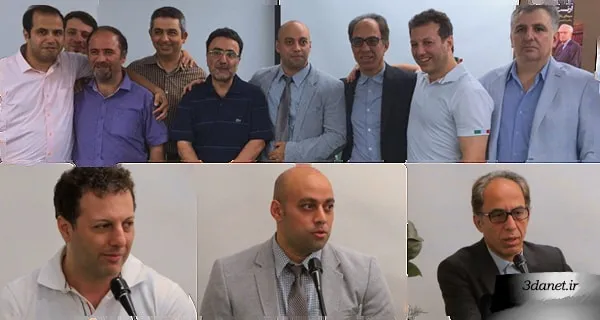
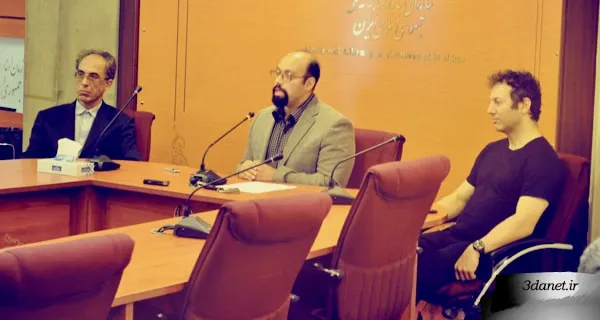
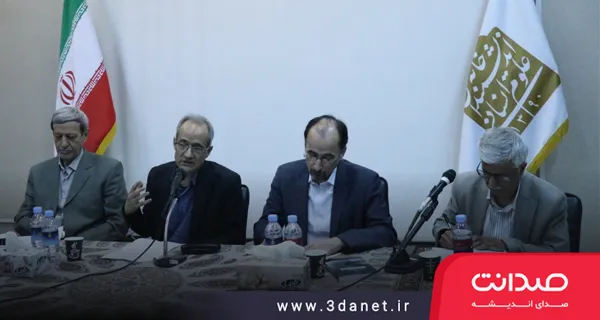
According to the cultural event reporter, at this session Morteza Mardiha, a researcher in the philosophy of science and culture, and Morteza Shervin Vakili, a sociologist and director of the Historical Sociology Group of the Iranian Sociological Association, spoke about the book and the ideas of Ernst Nolte. Mojtaba Golestani, an author and philosophy researcher, also hosted the event.
Mehdi Tadini is an Iranian scholar of fascism
At the beginning of the ceremony, Mojtaba Golestani spoke about Mehdi Tadini's activities in translation and authorship and called him a "scholar of fascism." Tadini has previously translated a book by Ernst Nolte titled "Fascist Movements" and other books by researchers in this field.
Regarding the interpretation of the word "history-thinker," Golestani said: Since the late eighteenth century in German thought, writing history is no longer, in the Aristotelian sense, merely narrating details; rather, historiography is the philosophical understanding of ideas that have dominated history, or one could say ideas that have been historicized. What the interpretation of the word "history-thinker" signifies is that Nolte, before being a conventional historian in the field of history, is a philosopher who has engaged in philosophical reflection on history and fascism, his specialty.
Heidegger is a philosophical joke
Morteza Mardiha, a philosophy researcher, was the first speaker and discussed different attitudes toward philosophy and science. Mardiha divided thinkers in the humanities into two groups and said: The first group are those who believe that the function of science is cognition, and we have no obligation in confronting the truth that science presents to us. For example, if a scientist is to predict an earthquake, they do not change their prediction out of fear. The other group, however, are those who believe we need a science that, in the humanities, helps us with improvement and betterment through changes in the world.
Mardiha stated that in a part of this book, the proximity of Nolte's ideas to Heidegger becomes clear. He called Heidegger's philosophy a joke and said: I understand nothing of Heidegger, nor of phenomenology. The only thing I understand from Heidegger is that he wanted to cast aside the entire history of science and philosophy at once and tried to express something completely different. This, in my opinion, is merely a joke that is not even funny, but tragic.
Nolte is a thinker who has remained unknown in Iran
Morteza Shervin Vakili then spoke about why one should read Ernst Nolte's book. At the beginning of his talk, referring to several Hollywood films in which the "German matter" is always considered a negative symbol, he discussed the negative portrayal of Germany in the Western world even 70 years after World War II and said: Here the problem is no longer Nazism; here the problem is Germany itself. We (Iranians) have a similar situation to the Germans, with the difference that we are historically more stable, but we have been attacked in the same way and false memories are created about us. Our history is intertwined with fabricated sins. We have trouble remembering ourselves. Similar disputes in Europe are about Germany, and Nolte is an important figure in this regard.
Regarding Nolte's obscurity in Iran, Vakili said: Nolte is unknown in Iran, while his counterparts like Habermas are sanctified in Iran and their works are numerous. In the field of historical thought, Nolte and Habermas are not at all on the same level. That is to say, Nolte is a serious thinker in the field of history. In terms of the philosophy of history, and also in terms of the science of history itself, they are not comparable to Habermas at all. Anyone who has read the debates between these two or their works, can arrive at this judgment.
Regarding the importance of Nolte's work, he stated: Nolte is important because he raises several questions. First, "What is fascism?" The first third of the twentieth century was entangled with fascism, and the peak of European wars is tied to fascism, and almost all researchers who have worked on this subject acknowledge that the first half of the twentieth century also saw the development of veins and roots of fascism.
He continued: "In our time, and even right now in Iran, the word fascism is used as a political insult. Anyone who dislikes someone else calls them a fascist. Nolte was the first to pose the question of what fascism means, and he has provided the most convincing answer to date. His answer is the most coherent theoretical apparatus for explaining fascism and the most reliable collection of witnesses and objective historical data for describing fascism. In this respect, Nolte is important and his work must be paid attention to.
The second thing that, in Vakili's opinion, we can learn from reading Nolte's books concerns his interpretation of Marxism. He stated on this matter:One of the discussions that Nolte raises in his book about Marxism is analyzing the reactions of Marx and Engels to their contemporary and earlier thinkers. For example, Lenin believed that Marxism was composed of three elements: English liberal economics, French politics (the French Revolution), and German philosophy (Hegelian German philosophy). Nolte showed that Marx also drew upon Romantic thought, and Marx's tendencies are, in reactionary terms, anti-French Revolution and anti-Industrial Revolution. This is highly worthy of analysis.
Furthermore, Nolte's view of the Industrial Revolution is important in Vakili's opinion. Vakili said on this matter: Nolte proposes a historical perspective based on phenomenology, according to which all these events are a reaction against the Industrial Revolution, and astonishingly, he provides striking and serious evidence that this reaction is reactionary.
This is the best book written about Nolte in Germany
Mehdi Tadini spoke about his collaboration with the author of this book and its German publisher. Tadini said on this matter: Mr. Siegfried Gerlich, the author of this book, helped me wherever I encountered a problem in translating the text. He also wrote an introduction for this translation and welcomed the publication of this book in Iran.
He continued: When I approached the publisher to obtain permission to publish this translation, I was very surprised by their treatment. Until then, I had never been treated so humanely. In response to the publishing rights fee, he told me he expected nothing and even expressed his willingness for the translation royalties to be paid to the translator instead of the original publisher of the book.
Tadini also spoke about his connection with Nolte: It was very gratifying for Nolte that his works have an audience in Iran and his books are being published. Nolte helped me understand his own ideas. I asked him questions many times, and he guided me.
The translator expressed astonishment that Nolte is unknown in Iran, stating: The greatest theoretical dispute of the twentieth century took place between Nolte and Habermas. One side of the dispute, Habermas, we not only know well, but we are enamored with him and borrow extensively from his works. Yet we have not even heard the name of Nolte, who stands on the other side of this dispute. It was astonishing to me how unbalanced we are in transmitting Western thought. This was the reason I translated Nolte's book.
Tadini also announced the forthcoming publication of another book by Nolte from Qoqnoos Publishing, and remarked that the best book written about Nolte in Germany is this very one by Siegfried Gerlich, which reviews and critiques all of Nolte's works from beginning to end.
.
.
Audio of the Book Launch for "Ernst Nolte" (includes all lectures) 1:31
Audio of Morteza Mardiha's Lecture at the Book Launch for "Ernst Nolte" 0:29
Audio of Mehdi Tadini's Lecture at the Book Launch for "Ernst Nolte" 0:20
Audio of Shervin Vakili's Lecture at the Book Launch for "Ernst Nolte" 0:24
.
.
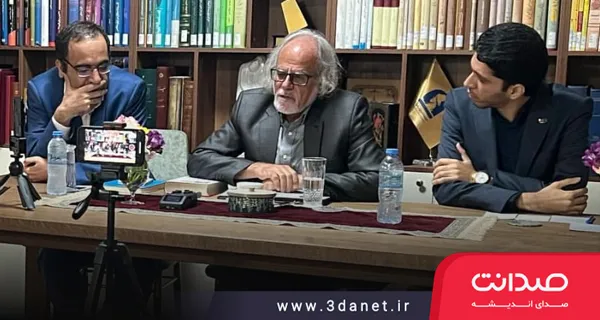
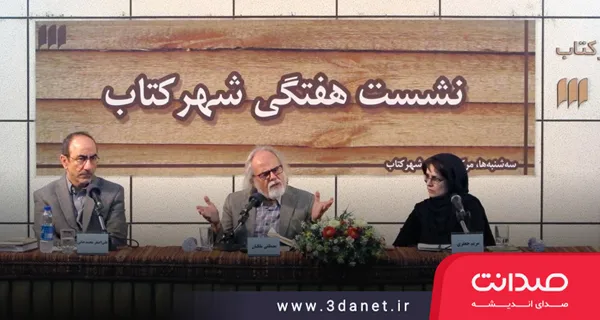
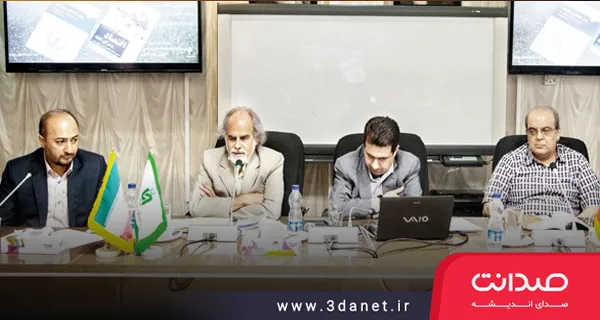
The book launch for "Nolte: Portrait of a Historical Thinker" was held on Tuesday, the third of Mordad, with the presence of Morteza Mardiha, Shervin Vakili, Mojtaba Golestani, and Mehdi Tadini, the translator of the work, at Nashr-e Sales.
.
.

Discussion0 comments
No comments yet; let yours be the first voice.