Audio of the Farhang Debate, Featuring Ramin Jahanbegloo
Jahanbegloo, Kian, and Alizadeh debate the meaning of culture and democracy. Jahanbegloo sees intellectual reform as more important than political action, Kian emphasizes lived experience, and Alizadeh challenges the priority of cultural work.
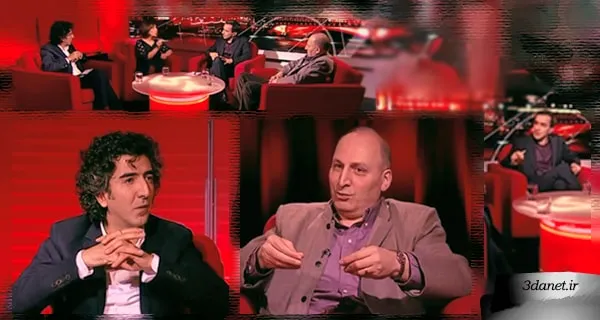
What is culture? What place does culture have in the struggle for democracy? To what extent is a cultural approach to political issues problem-solving?
What is culture? What place does culture have in the struggle for democracy? To what extent is a cultural approach to political issues problem-solving?
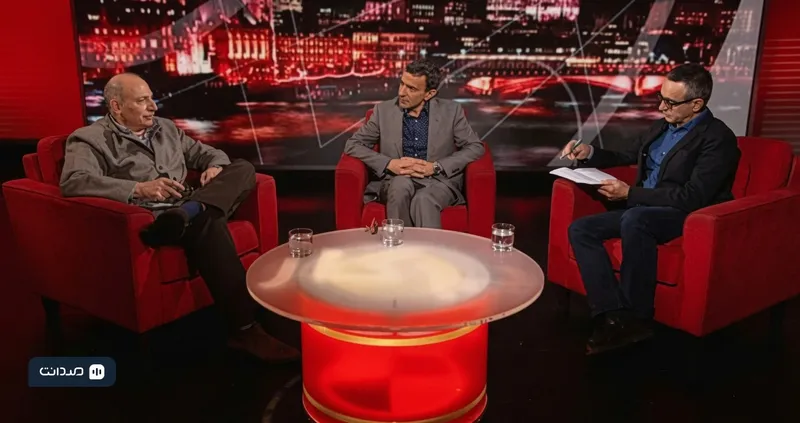
Present in this conversation are Mr. Ramin Jahanbegloo, professor of political philosophy in Toronto, Ms. Azadeh Kian, professor of sociology at the University of Paris, and Mr. Ali Alizadeh, political analyst and professor. Mr. Jahanbegloo is best known for his cultural approach, and during the program he will explain what he means by a cultural approach. Ms. Kian, as a professor of sociology, in fact pays more attention to lived experience or the everyday life of people than to culture, and considers it worthy of attention and study. Mr. Alizadeh, however, is suspicious of the cultural approach.
Ramin Jahanbegloo: I think we can talk about the concept of culture in two ways. First, we call culture the set of values, standards, norms, cognitions, and human knowledge that gives meaning to human life (individually or socially) and allows humanity to transition from a natural state to a social state. But in the second sense, we recognize culture as an acquired matter and not as a natural one. Therefore, when we say someone is cultured, we mean someone who possesses growth, maturity, and learning. Culture, naturally, in various human societies and throughout history, has been accompanied by this intellectual growth and maturity, and it allows human beings to establish their relationship in three ways: first with themselves (gaining awareness), then with the other, and finally with the surrounding world. Without culture, we cannot give meaning to the world around us or to ourselves. And now, to explain the cultural approach I mentioned. Here (by cultural approach), I mean culture in the second sense, that is, the issue of intellectual growth, the issue of intellectual fulfillment, and how a society or the individuals of a society can advance themselves to a higher level of social responsibility, social thought, and openness to the surrounding world. In my belief, intellectual reform and the project of Enlightenment in Iran are far more important than political action and ideological thinking, and this is what I consider the cultural approach.
Kian: In sociology, when we speak of culture, one of its meanings is, in fact, those things that are common among the individuals of a social group, which could be a society or a specific social group. Culture, in my opinion, is very closely related to activity, and the meaning I have of culture is more associated with activity and experience. I use activity in a very broad sense, and in this regard, I have a problem with the definition given by Mr. Jahanbegloo, because I believe this definition of culture belongs to the Enlightenment era, meaning that thought and culture are created somewhere by intellectuals and then either spread or do not spread at the level of society. Whereas, in my opinion, all individuals participate in culture-making, and besides, I do not think one can speak of a transcendent culture or an irreversible culture. I do not have a linear view of history and, consequently, of culture at all, and in fact, I do not rank them. But I think that as a specific social group from within which I myself speak, and individuals speak from within specific positions, I hold a set of values for myself that another person may not believe in.
Alizadeh: First, culture exists and is not an imaginary concept; it is a suitable tool for understanding social, political, and historical issues. Second, I have no problem whatsoever with culture itself or with doing cultural work. Those who built schools, universities, and cultivated culture, or those who in the 1980s translated a book with a thousand hardships, went to the Ministry of Culture and Islamic Guidance, and published it—there is not a shred of doubt about the value of the work of people like Mokhtari and Pouyandeh. The knot I have is about prioritizing cultural work over other spheres, such as political work and so on. With this in mind, what I mean by political work is not at the macro level (changing the constitution, etc.). Rather, I consider any collective effort to self-organize our issues to be political work. Third, I want to say that there is a common element among our Enlightenment intellectuals, even the secular ones, and those Islamists who were victorious in the 1979 revolution. Both point to the possibility of cultural engineering from above. Haddad Adel used the term "cultural engineering" a while ago; Mr. Khamenei constantly speaks of the matter of culture and the necessity of confronting cultural invasion. And this shows that for them, too, culture is a solid thing that can seemingly be constructed from above, and this is not much different from our secular intellectuals. They also think that society's culture can be changed. Let me divide it into three parts: from the person who sits in a taxi and expresses their discomfort with the issues of daily life, saying we cannot move forward until the culture changes, to the Islamist forces and the opposition, in my view, both hold a modern and neo-fascist view of culture.
.
Program Guests: Ramin Jahanbegloo, Ali Alizadeh, and Azadeh Kian Pargar Program | Bahman 1393
.

Discussion0 comments
No comments yet; let yours be the first voice.