Sociology
Eighth Session of 'The Problem of Culture' with Mostafa Malekian and Hassan Mohaddesi
At the eighth session of the Problem of Culture series, Mostafa Malekian, emphasizing the primacy of culture, traced the roots of problems not to the economy or government but to inner beliefs and desires, while Hassan Mohaddesi identified the gap between ideal and actual culture as society's central challenge.
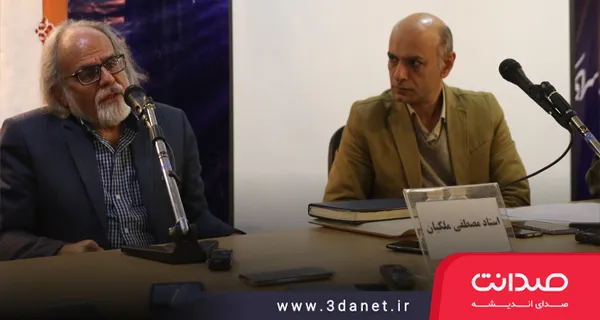
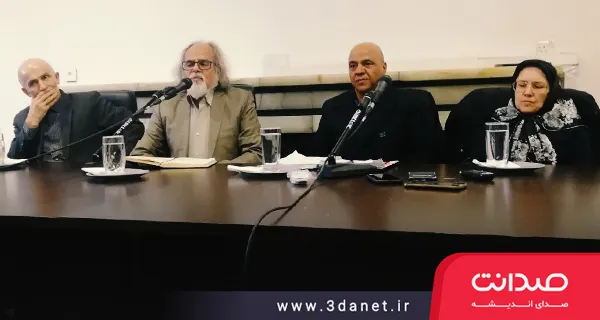
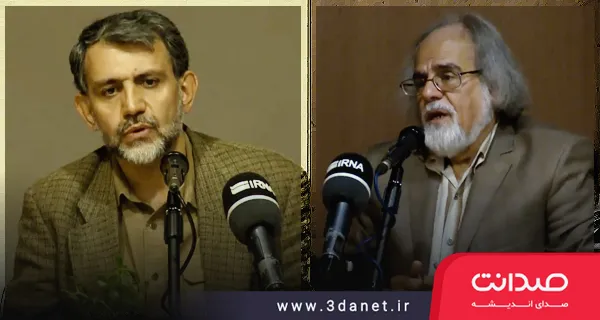
The session on 'The Problem of Culture in the Present Age' was held with the presence of Mostafa Malekian, researcher, author, and translator of philosophy, and Hassan Mohaddesi, faculty member of the Sociology Department at the Islamic Azad University, Central Tehran Branch, at the Book House Institute's Saray-e Ketab.
In this session, Malekian devoted his remarks to the subject of the flaws and virtues of culture, stating: Culture is composed of numerous terms and concepts in the field of social sciences, and many books have been written and read about it in European languages. In Persian, one of the useful books on this subject has been written by Dariush Ashouri, which presents nearly 300 definitions of culture.
Noting that these definitions, whether opposing or agreeing, can be examined within three concepts, he added: The broadest meaning chosen for culture and its equivalent is that anything not belonging to nature belongs to culture. In other words, if something is made by nature, it is a natural phenomenon, and if it is made by humans, it is a cultural phenomenon. From this perspective, language, script, government, roads, etc., are cultural phenomena, and in this sense, the difference between culture and nature lies in the intervention of human knowledge and will in the emergence of that phenomenon.
This researcher in the field of philosophy also divided culture in this sense into two parts, saying: In this same sense, what is made by our hands either has a physical embodiment externally, or its embodiment is not seen.
Continuing his speech, Malekian divided culture into two parts: civilization and culture (in the sense of society and culture), and continued: In this division, we observe three cultures, each leading to a narrower circle. In other words, in the first circle, existence is divided into nature and culture; in the next circle, culture is divided into civilization and culture; and in the third circle, culture is divided into society and culture. My intention in this lecture regarding the primacy of culture is its third meaning, meaning that when I speak of the primacy of culture, I am not speaking of government or economics.
This philosophy professor considered the primacy of culture in this sense to be opposed to the views of socialists and liberals, explaining: Socialists consider economics to be the greatest problem, the sole cause, and the cause of all causes of problems. On the other hand, liberals consider political government to be the greatest problem, the sole cause, and the cause of all causes of problems. However, since I believe in the primacy of culture in the third sense, I consider culture to be the greatest problem, the sole cause, and the cause of all causes of problems.
This researcher of moral philosophy further stated that the internal matters related to culture comprise three categories, adding: The internal matters of culture include 'beliefs,' 'feelings, emotions, and affects,' and 'desires.' Every human being carries a set of beliefs, feelings, emotions, affects, and desires that differ from other types of humans. To reform society from this perspective and to reform culture, we must reform beliefs, feelings, emotions, affects, and desires.
Regarding the reform of beliefs, he said: Reforming beliefs means replacing false beliefs with true ones, because a false belief is corrupt and a true belief is righteous. On the other hand, reforming feelings, emotions, and affects means replacing 'appropriate' feelings, emotions, and affects with 'inappropriate' ones. Accordingly, appropriate feelings, emotions, and affects are based on true beliefs and practical utility.
According to Malekian, reforming the desires of culture also means replacing unreasonable desires with reasonable ones. In this approach, a reasonable desire is one that does not conflict with any of the laws governing the mind, body, psyche, and human relationships.
Emphasizing that human beings must delve into their inner selves and discard false beliefs, inappropriate feelings, emotions, and affects, and unreasonable desires, he reminded: Otherwise, if political systems and governments are repeatedly destroyed through coups, rebellions, revolutions, etc., this same culture with these same rulers will be re-established in society. Because as long as we have not changed and discarded our inner selves, from whichever ruler comes to power, we will create a former regime and then seek to overthrow that former regime with our own hands, and this vicious cycle continues. Any path other than this is a dead end.
In another part of his talk, Malekian identified the greatest cultural problems of Iranians—from among the 22 cultural issues he had previously named—as three main problems, and said: Our first cultural problem is “ta‘abbud” (uncritical deference), meaning that we accept the word of someone or some people without reason, whereas the ethics of belief says that whenever someone demands your acceptance, you should demand a reason. This is how clerics, intellectuals, academics, mystics, philosophers, and others tell us things without reason, and we accept them. Our second cultural problem is that we imagine society will be reformed without our own action, and we are always waiting for a leader or a guide to change our lives, as if, like in ancient Greek plays, there is a divine crane that will suddenly turn all wretchedness and misery into goodness and virtue, and bring everyone to account for their evil deeds.
The philosophy professor identified the third cultural problem of Iranians as the avoidance of scientific rationality, and explained: As long as we avoid the path of scientific rationality, our society will not improve.
Hassan Mohaddesi, continuing the session, noted that he has taught and researched in the field of sociology for over 18 years, identified our cultural problem as the gap between ideal culture and real culture, and devoted his talk to this subject.
Pointing out that in the social sciences, culture stands in opposition to nature and encompasses the acquisitions of humans in social society that influence their behavior, he said: Culture has different levels; at the macro level, it includes the values, behavioral patterns, and religion governing society; at the meso level, culture means the cultural elements that govern organizations, groups, etc., and define our way of life; but at the most micro level, culture refers to the cultural elements that govern human relations and define our emotions, behavior, mode of action, and lived experience.
The sociologist, referring to a quote from Ali Shariati to the effect that ideology replaces instinct, said: Here, I want to substitute culture for instinct. The question here is, if culture replaces instinct, can it postpone or suppress our needs?
He continued: The main problem of our society, which is the gap between real and ideal culture, stems from the fact that in our society, the patterns, behavioral methods, and beliefs specific to an ideal society are in our minds, but in practice, what we live by, believe in, and act upon is another culture that has a glaring distance from the ideal culture. This is why I always tell students that if you want to judge Iranians, do not base it on what they say, but look at how they act.
Mohaddesi added: In this society, with this upbringing, the language that is used is one of lies and hypocrisy, and unfortunately, all of us have experienced and recognize some form of this gap.
While criticizing those who attribute the root of this gap inherently to the Iranian person, he said: It is as if a different Iranian person must be created, one not governed by these stereotypical beliefs. The fundamental root of the gap between our real and ideal culture is that the cultural and behavioral patterns governing our society are fundamentally in contradiction with the innate cultural elements of the Iranian person, and they generally suppress or ignore them. The macro-culture imposes characteristics on us that the existing religion also plays a role in consolidating, while these elements are against our very being.
The sociologist, emphasizing that micro-culture in Iranian society is anti-macro-culture, referred to his experiences in the sociology of the family and added: We have always remained silent about the sexual needs of adolescents and youth, and we do not think about it, while the Iranian person suffers sexual deprivation in the early years of puberty, carries this sexual deprivation after marriage, and this deprivation continues until the end of their life. Now, our macro-culture, based on morality, religion, and repressive custom, wants this being to be subjugated.
Mohaddesi, stating that the Iranian person is a person with a subjugated body and a mind that must be brought into subjugation, said: In other words, the Iranian person must submit to subjugation and, in fact, suppress and ignore their own natural desires and needs, because these desires and needs are contrary to the macro-culture and the meso-culture. It is for this reason that nothing remains of the dignity and honor of the Iranian person as a result of self-abasement, and this person must expend all their energy on struggling with themselves to overcome their existential conflicts.
He emphasized: Unfortunately, the Iranian person is under the domination of a morality that only presents sagacious and mythical figures as models for them, and for this reason, they are forced to suppress their natural desires and needs.
In the concluding discussions of his speech, this sociologist, stressing that we must confront the culture of subjugation, the subjugated body, and the subjugated mind, and challenge the cultural heritage of the past, said: We cannot change ourselves because our macro-culture has drawn us into subjugation; therefore, we must begin our work by criticizing the culture of subjugation, and our youth must change their behavioral models and reject this culture.
Mohaddesi emphasized: A self-determining human being must be born; a human being for whom love, sexuality, etc., are not taboo, and who can decide on their own desires and needs.
.
.
Audio of the Eighth Session of 'The Problem of Culture'
.
.
The Problem of Culture Session
With the presence of Mostafa Malekian, researcher, author, and translator of philosophy, and Hassan Mohaddesi, faculty member of the Sociology Department at the Islamic Azad University, Central Tehran Branch. Panel Director: Dr. Nezam Bahrami Komil
At the Book House Institute's Book Hall
Monday, February 3, 2020
Report source: Public Relations of the Book House Institute
Organizers:
Office of Strategic Studies and Planning (Ministry of Culture and Islamic Guidance)
Hall of the People of the Pen
Book House
.
.

Discussion1 comments
اینقدر سطح بحث دکتر محدثی بالا بود که نویسنده هم در چند جا دچار غلط املایی شده !