Religion
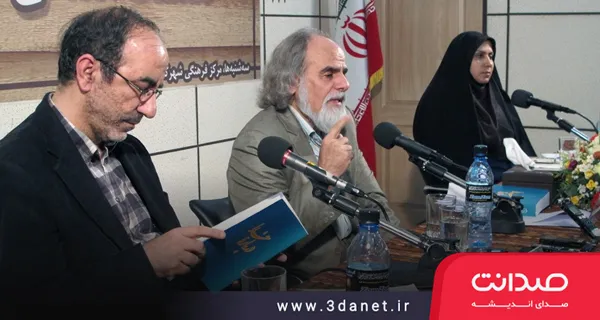
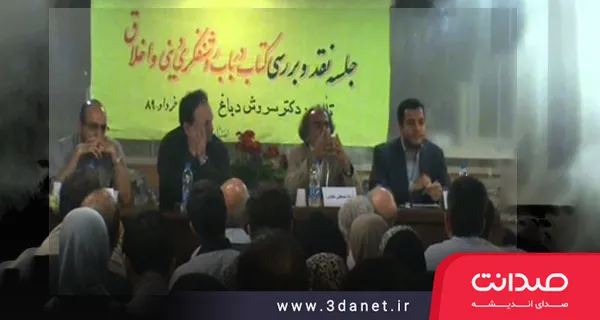
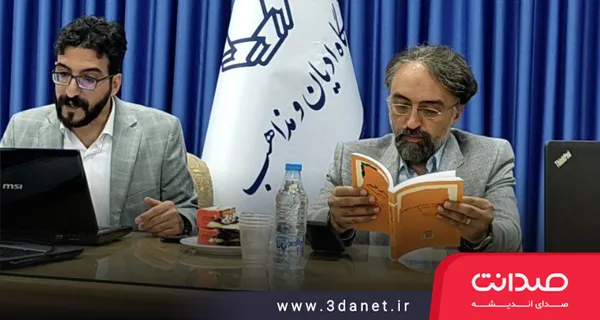
Book Review Session on the Proslogion with Mostafa Malekian and Susan Shariati
In his examination of Anselm's Proslogion, Malekian, while categorising proofs for God's existence, stressed that sacred texts cannot be disregarded. Studying medieval Christian theology is a way to reduce religious rigidity, and in theology, the latest achievements are not the greatest.
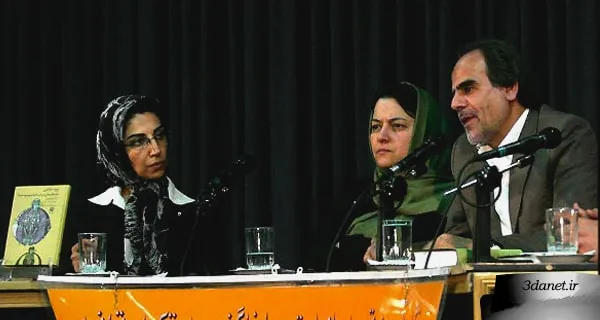
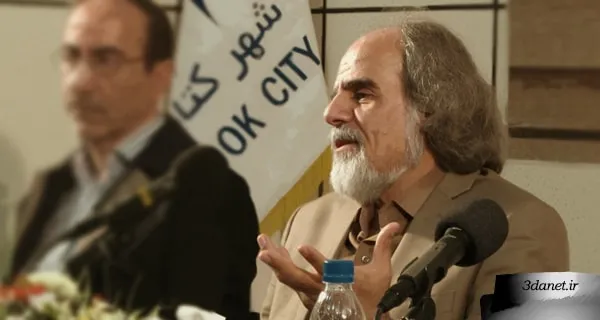
At a ceremony held at the Artists' House, organized by Qasideh Sara Publications for the release of the book Proslogion, Professor Mostafa Malekian, a contemporary scholar and researcher of religion, spoke about the significance of Saint Anselm's work, saying: We can never disregard what the founders of religions and denominations have said in sacred religious texts.
Professor Malekian began his talk by referring to the geography of the discussions in Saint Anselm's book "Proslogion" and categorized the ways of proving God's existence from the perspective of theology into three types, saying: Some existing arguments are cause-centered, some are effect-centered, and some are concept-centered.
In the first category, God's existence is proven solely by assuming a being in the world without even knowing a single one of its attributes; in Muslim culture, these arguments are called the Proof of the Righteous (Siddiqin). The second category of arguments proves God with two presuppositions: that a being exists in the world and that this being is an effect; such is Aristotle's argument for proving God's existence. Anselm's argument for proving God is of the kind that proceeds from the definition of God's existence to proving His instance, and its originator in the West is Saint Anselm, who employed it in his book "Proslogion" and called it the ontological argument; some also believe that in Muslim culture, a similar version exists with al-Farabi.
Anselm says that from the definition of God—that is, the greatest conceivable being—one arrives at His existence. This has had many proponents and opponents from that time until now.
This book pertains to the Christian theology of the Middle Ages.
Some might ask: Why engage with theology in the empirical age? And specifically Christian theology, and moreover medieval rather than modern Christianity?
From an academic perspective, the answer is that theology is something worth knowing and it is necessary to engage with it, but from the perspective of someone whose concern is solving their own problems in life, the answer is of a different kind.
First, the explanation and interpretation of the sentences found in the sacred scriptures; second, the arrangement and systematization of these books; third, the explication of sentences and the reason for stating a sentence in the sacred texts—that is, why this sentence was said, why it was said to these particular addressees, why it was said to these addressees with a specific intent; the fourth task is reasoning in favor of these propositions, and the fifth task is defending the propositions.
Every theologian performs several of these five tasks, and "Proslogion" is also a book in the field of theology, meaning it is concerned with sacred texts. Sacred texts, regardless of their devotional aspect, contain great and undeniable truths; that is, the roots of many existential human problems have been explored in these texts, and in this respect, the work of a theologian, since it is concerned with a sacred religious text, is important. In other words, we can never disregard what the founders of religions and denominations have said in sacred religious texts.
No human being who values their existential needs can disregard sacred texts. These texts require the kind of wise attention that Simone Weil spoke of.
The Reason for Engaging with Christian Theology
Firstly, the similarities in Christian theological works prevent religious and denominational narcissism among us.
Secondly, in the works and texts of other religions, there are numerous errors and contradictions. On the other hand, as Simone Weil stated, the comparison between a religion to which we are committed and a religion to which we are not committed and which we study is never fair and is made with presuppositions. Therefore, by considering those errors, we become aware of the possible contradictions in the religion to which we are committed, which causes religious dogmatism and rigidity to disappear.
But the third reason is that, due to the many commonalities among religions and denominations, we can benefit from the arguments and experiences of the adherents of other religions to defend our own religion and denomination.
The Reason for Choosing the Medieval Period for Theology
Unlike the natural empirical sciences (such as physics, chemistry, and biology) and the human empirical sciences (such as sociology, psychology, and economics), where the latest achievements must be accorded great importance, in theology, philosophy, mysticism, art, and literature the latest achievements are certainly not the best achievements.
The Characteristic of Theology, Philosophy, Mysticism, Art, and Literature
In these latter sciences, what is abandoned is not due to refutation but due to our turning away. For although a carriage is added to the train of these sciences, a carriage is always also neglected and left behind, and for this reason in these domains there is always turning away, but we cannot have a demonstrative refutation. Hence, for the reasons above, one can always engage with a work from past periods in the field of theology.
.
.
PDF Full Report of the Monthly Philosophy Book from the Session Reviewing and Critiquing the Proslogion Mostafa Malekian, Susan Shariati, Afsaneh Nejati | First Year, Azar 1386, Issue 3
Download from Server One | Download from Server Two
.
.

Discussion0 comments
No comments yet; let yours be the first voice.