Religion
A Critical Discussion of Soroush Dabbagh's On Religious Intellectualism and Ethics
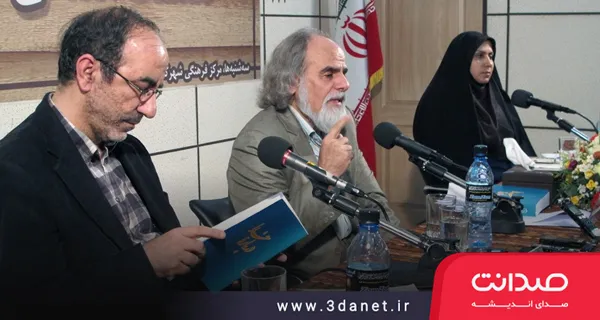
In his critique of the book On Religious Intellectualism and Ethics, Mostafa Malekian distinguishes the religious intellectual from the secular one: the former draws on religious sources to transform inner convictions while respecting the boundary between religious and non-religious action.
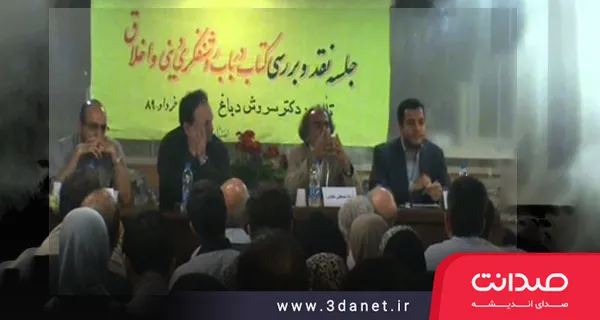
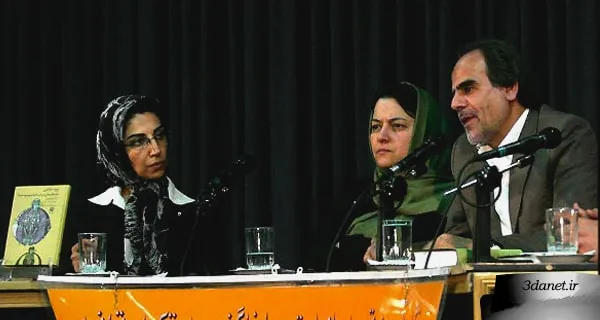
A critical review session of the book On Religious Intellectualism and Ethics by Soroush Dabbagh
With the presence of Mostafa Malekian, Soroush Dabbagh, Mohammad Mansour Hashemi, and Saeed Hajjarian
Ma'rifat va Pajouhesh Institute | 16 June 2010
.
A brief summary of Mostafa Malekian's speech (What is the business of the religious intellectual / What is the preoccupation of the religious intellectual / What void has the religious intellectual come to fill?) in the critique and review of the book The Relation of Religious Intellectualism and Ethics
One of the very important points in dealing with abstract concepts such as the concept of religious intellectualism is that we cannot point to an instance of the term and concept we have in mind and provide a kind of ostensive definition. I will mention a point that, before Searle, had received less attention. It was Searle who, in his book Speech Acts, drew attention to the fact that we understand the meaning of a word in language through a kind of linguistic intuition / linguistic disposition / linguistic taste. I want to use his point and say here what "religious intellectual" conveys to the mind and language of us Persian speakers: The religious intellectual: 1_ Deals with the social matter. 2_ Must, as a rule, deal with the mind or the interiority of our human existence. 3_ Is concerned with both the inner change of themselves and the inner change of the citizens of their society, but in my view, there are two traditions of intellectualism in the West, in one of which the former takes precedence and in the other, the latter. In my view, in the Western intellectual tradition, that part of the intellectual tradition that traces its lineage to the German Enlightenment, to the Enlightenment of Kant and Hilbert. Kant, in that famous essay, said that a person is enlightened—we later call them an intellectual—who casts light upon the realms of their own existence, distinguishes the wheat from the chaff within themselves, what part of what they think is defensible and what part is not, and so on. The enlightener in the German tradition is someone who is doing a kind of spring cleaning within themselves. In the West, there is also a tradition tracing its lineage to France, which goes back to the early twentieth century and to the activities Émile Zola undertook, and here, changing the interiority of others is more important, that is, making public opinion aware that many of the things they accept, they believe through indoctrination, fashion, dogmatic adherence, and so on. These were more concerned with changing the interiority of others. 4_ Whatever the intellectual does, they must do something such that their religiousness makes a difference from their non-religiousness, meaning they must do something such that if the same task is carried out through a religious path, it differs from a task carried out through a non-religious path. 5_ From this, I draw another conclusion: "religious"—in religious intellectualism—is a restrictive adjective, not an explanatory adjective. That is, it does not mean to say that every intellectual is religious; it means to say that we have an intellectual who is religious and an intellectual who is non-religious. If this statement is correct, then we must say that the religious intellectual does a task in a particular way that secular intellectuals do not do it in that way. 6_ Is the task the religious intellectual performs a theoretical task or a practical task? In my view, as long as intellectuals deal with our inner realms, they are doing a theoretical task, and when they deal with our outer realms, there they are doing a practical task. [A few points] The practical failure of intellectuals can be a sign of the theoretical failure of intellectuals as well—not necessarily, but it can be. Therefore, one must note that there were governments that wanted to change people in a particular way but could not. Here, one should not say, "Woe betide those people"; one should say, "Woe betide you who failed in the realm of practice." The religious and non-religious intellectual, in that they are an intellectual, is not a specialist in any science, nor is a technocrat, nor is a politician. It seems to me that there is a task in society whose performance is lacking, and these three (the academic, the technocrat, the politician) do not do it, and that task is that the cause of your theoretical issues and your practical problems lies within yourself. Now, the religious intellectual does this task in a particular way. The religious intellectual says, firstly, much of what must change within you are your religious feelings, emotions, desires, and beliefs that must change. A second aspect is also that for improving your feelings, beliefs, and desires, you can draw upon religious sources.
.
.
Links to the critical review session of the book On Religious Intellectualism and Ethics by Soroush Dabbagh:
Download Session Audio | Listen on SoundCloud
.
.

Discussion0 comments
No comments yet; let yours be the first voice.