Political Science
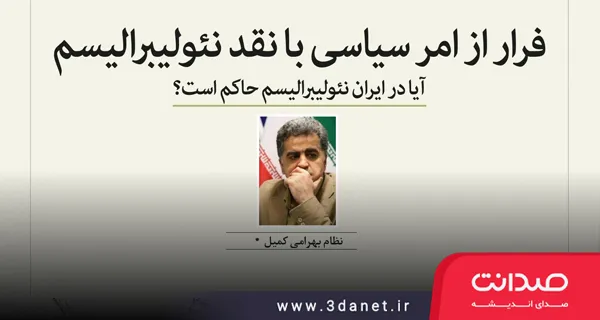
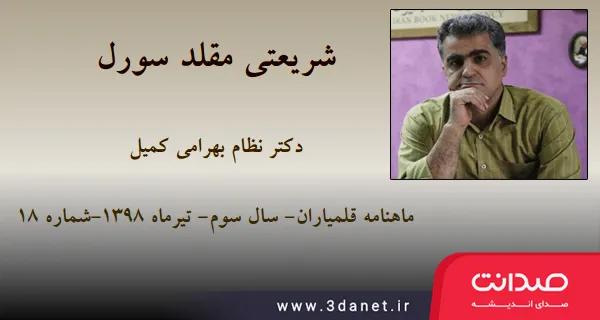
“Neoliberalism in Iran: From Reality to Fantasy” by Nizam Bahrami Komil
Attributing neoliberalism to Iran is an unwarranted reduction to the economic dimension, for liberalism is meaningless without political freedoms and the separation of religion from politics. Bahram Komeil argues that the political system's domination over society and the economy precludes such a description.

The Article “Neoliberalism in Iran: From Reality to Fantasy”
Nizam Bahrami Komil
The book “Culture, Society, and Autonomy” – First Edition 2019 – Pages 77 to 94
Liberalism is a school of thought that emphasizes the individual and their freedoms, promoting values such as humanism, individualism, rationalism and autonomy, pluralism, tolerance, and political, cultural, economic, and civil liberties and rights. In this vein, liberals in practice, and for the realization of liberalism, have pursued mechanisms such as the separation of powers, universal suffrage, democracy, free media and parties, the separation of religion from politics, limiting state power, a free economy, private property, and so on. Among the most important standard-bearers of liberalism, one can mention Descartes, Bacon, Hobbes, Jean-Jacques Rousseau, Voltaire, Montesquieu, John Locke, Immanuel Kant, Jeremy Bentham, John Stuart Mill, Adam Smith, Abraham Lincoln, Thomas Jefferson, Alexis de Tocqueville, Isaiah Berlin, Ralf Dahrendorf, Karl Popper, Raymond Aron, Hayek, and Rawls. Thomas Paine, a pioneer of liberalism in England, believed that the legitimacy of government must be based on the consent of the citizens, obtained through regular democratic elections.
Although liberals value the freedom of individuals and defend it against encroachment and restrictions by the state, they simultaneously consider the human rights of individuals and do not allow human dignity to be trampled by other powers. For this reason, they fight against all forms of discrimination rooted in ideology, religion, state, nationality, ethnicity, race, wealth, and so on.
In Iran, thinkers inclined toward the left present a caricatured image of liberalism and neoliberalism based on the following fallacies:
1. Reducing liberalism and even neoliberalism to its economic dimension:
In Iran, under the influence of leftist propaganda, liberalism has been reduced to its economic dimension, and even then, to the most right-wing interpretations of this dimension. If we claim that a country's system is liberalist or neoliberalist, we must demonstrate this claim in the political, social, and cultural dimensions in addition to the economic one. The question then arises: is the state of political and civil rights and freedoms in Iran similar to that in liberal societies? Are the rights of men and women, Muslims and non-Muslims, and individual and social freedoms defined in Iran as they are in liberal and neoliberal countries? Has the Iranian government, like the most recognized liberal countries, accepted the separation of religion from politics as a self-evident principle?
Perhaps in response, it might be said: we are talking about the economic system governing Iran and consider it a liberalist system, and at this stage, we are not concerned with analyzing the political or legal system. In response, it must be said: due to the complete dominance of the political system over the economic sphere, such a separation is not even logically sound in theoretical and conceptual terms. In Iran's history, the economic system has always been a parasite and residue of the political system. Therefore, those who use the concept of liberalism or neoliberalism to describe Iranian society must, in addition to the economic sphere, also provide the necessary documentation in the political and social spheres.
Here, we must also critique some right-wing Iranian liberals who seek to reform the state of society without considering the political situation and solely by prescribing certain economic reforms. The programs and proposals of such individuals will not lead to major, structural reforms. This is not a claim or a prediction; at least in Iran, the opportunity arose to see with our own eyes what a catastrophe implementing economic reforms without considering its political requirements would bring for the people and national interests.
We saw how economic adjustment and privatization policies endangered the interests of the majority of the people in the areas of education, health, and employment. The pursuit of and insistence on free-market and privatization policies in a country that lacked the necessary political and social foundations led to plunder and widespread corruption. The same affliction that prevailed in Russia for a short period after the collapse of the Soviet Union, during Yeltsin's presidency, has now held sway in our country for thirty years. In a country where a culture of despotism, plunder, and cronyism has a historical precedent and is, in a sense, institutionalized, and, more importantly, where enormous oil revenues also exist, it is naive to pin our hopes on mere economic reforms and speak of the experiences of South Korea and Singapore. In his book The Road to Serfdom, Friedrich Hayek claims that reliance on the free market prevents state totalitarianism. Now, one must ask the promoters of Hayek's ideas in Iran: Has privatization and the implementation of economic adjustment policies, with their enormous costs, come any closer to such a goal? The realization of adjustment and privatization policies reduced the state's responsibility, but had no effect on its power, and, more importantly, made corruption and plunder more widespread.
2. Forgetting the Place of the Political in Liberal and Neoliberal Systems:
In liberalism, the political is subordinated to the social (society). This characteristic has two fundamental consequences: first, it is the will of the people and democracy that determines the direction society takes. That is, even if money and the media manipulate and steer public opinion, it is the people who convey their desires, priorities, and interests to the state, not the state dictating to them. Therefore, the more the people's will is marginalized in a country, the further that country has distanced itself from liberalism. The second consequence of the social's dominance over the political is that politics becomes a specialized activity whose domain is limited and defined, and it cannot dominate society and the public sphere. In other words, politics has absolutely no business with the totality of human life (the private sector and civil society) and is not permitted to evaluate, guide, or control this sphere based on ideological doctrines. "Thus, although society delegates certain tasks to the political apparatus, the role of the political apparatus is that of a manager, not a master. We say manager, because the society in question is one that exists with its values and structures, not raw material to be handed over to political experiments." (Burdeau, 1383: 155)
In Iran, in the domestic sphere, due to the dominance of the political over the social, the speech and actions of individuals in society quickly become politicized and even take on a national security dimension. Furthermore, a necessary condition for many political and social activities is adherence to ideological principles and values. This condition is essential not only for candidacy in high-ranking political posts but even for recruitment into ordinary jobs within government agencies. In liberal and neoliberal countries, is belief in and commitment to ideological and religious principles a requirement for employing government employees, university professors, and the country's teachers?
In the foreign sphere and international relations, the Islamic Republic's performance over the past forty years shows no sign of the dominance of liberalism or neoliberalism. If Iran were a neoliberal society, no one would have been permitted to scale the walls of the US, British, and Canadian embassies. Guaranteeing the security of stable investment and adopting an open-door policy are characteristics of a liberal and neoliberal system; however, in Iran, due to the predominance of the political over the economic and social, such conditions have not yet been created.
3. Equating the Reduction of State Responsibilities with the Reduction of State Power:
Economic liberalism and neoliberalism mean reducing the power, authority, and responsibility of the state in society; in other words, freeing individuals and society from the domination of the state. A fundamental principle of economic liberalism is to leave the people's work to the people and the economy's work to the market. The liberalism of the second half of the 19th century, especially in England and influenced by the ideas of Herbert Spencer and Adam Smith, sought to shrink the power and authority of the state; but from the 1930s to the 1970s, under the influence of the Great Depression of 1929–1932 and the threat of the spread of communism, and citing the theories of John Maynard Keynes, liberal governments leaned toward supporting the public sector against private sector decisions and implementing welfare state policies to protect the general freedom of the people against the freedom of a specific group. From the early 1970s onward, neoliberals, citing the views of Hayek and Friedman, demanded an increase in state responsibility not for the benefit of the people, but for the benefit of the private sector and the market. This pendulum swing of increasing or decreasing state presence in the redistribution of wealth and resources, to the benefit of the majority of the people or a specific group (such as what neoliberal systems do in support of the wealthy), has been ongoing for two centuries. The important point is that during this period, the decrease or increase in state responsibility has not led to the state's domination over society; whereas in a country like Iran, regardless of whether some liberal and neoliberal economic programs are implemented or not, the state still dominates society and individuals. Therefore, contrary to the opinion of David Harvey and the Iranian leftists who follow him, placing Pinochet's regime in Chile or post-war Iran alongside Thatcher's England or Reagan and Bush's America is nothing more than a fallacy.
Act One
I leaf through pre-revolution intellectual magazines; they are full of articles criticizing colonialism, capitalism, and imperialism. I review the pre-revolution atmosphere in other documentaries; if I were to summarize it in one sentence, it would be: "Death to world-devouring imperialism; greetings to the worker." I look at the atmosphere and events of the first two years of the revolution in the central regions; although "Death to capitalism and imperialism" still has the upper hand, "being Islamic or not" is rapidly becoming the main discussion and demand of society. As a result, instead of the bourgeois-proletariat cleavage, the oppressors-oppressed cleavage is being activated. In the same way, the ruling revolutionaries gradually replace the social-liberal cleavage with the religious-liberal and secular cleavage. In border regions like Azerbaijan, Kurdistan, Khuzestan, and the Turkmen Sahra, slogans centered on identity and ethnicity spread rapidly and ultimately lead to independence-seeking movements and consequently bloody conflicts. Poor "freedom" is not the dominant discourse, neither in the center nor at the periphery.
I look at intellectual magazines and new social networks; a group, following the past, is still busy attacking capitalism and neoliberalism. The ethnicists are also still active, and of course, their insistence on their demands has led to the formation of an opposing army of Iran-shahris, who see their mission as defending national identity and past glory. Other groups, by raising issues such as feminism, postmodernism, post-colonialism, and justice-seeking, are trying to carve out a space for themselves. The importance of freedom remains what it was; once again, freedom is not the primary priority of thinkers.
Setting aside other topics, I will focus on the debate unfolding between proponents and opponents of capitalism, liberalism, and neoliberalism. Critics, drawing on the theories of thinkers such as Gramsci, Marcuse, Habermas, David Harvey, and Karl Polanyi, critique neoliberalism, while another group, invoking the theories of Popper, Hayek, Friedman, Rothbard, and Nozick, defends it. The sociologist Yousefali Abazari has leveled criticisms against global neoliberalism and its Iranian defenders and promoters, such as the economists Masoud Nili, Mousa Ghaninejad, and Mohammad Tabibian, viewing the economic policies of the post-war era as concrete instances of promoting liberalism and neoliberalism in Iran. In contrast, Ghaninejad and his like-minded colleagues defend this school of thought, championing the idea of the free market, privatization, and downsizing the state, both theoretically and in the country's macro-level policymaking and planning. What has been lost in the midst of this is whether the primary priority and the main issue of the country is the realization or non-realization of neoliberalism. In Iran, is the principal battle one between neoliberalism and anti-neoliberalism? Or does the main battle lie elsewhere, and until that conflict is resolved, other issues will be addressed only incompletely and superficially?
Of course, engaging with the subject of neoliberalism, and speaking in opposition to or in favor of it, like any other theoretical subject, can be enlightening and beneficial. But the question is, if this subject becomes the primary priority of intellectual discourse in the country, what consequences will it have for society? The critique that follows is a critique of the importance and primacy accorded to this subject, and in no way implies that the subject is unimportant or should be boycotted.
In the book A Typology of Iranian Intellectuals, in my critique of the religious intellectualism current that turns the "religious"–"non-religious" divide into society's primary priority, I have written: "The main contradiction and divide in the realm of politics is the divide between 'democracy and libertarianism' and 'despotism and totalitarianism,' and dragging other social and cultural divides into the political sphere weakens the front of democracy and libertarianism. This, of course, does not mean covering up or ignoring gender, ethnic, and ideological injustices; but one must be careful that the root of discrimination between man and woman, Kurd and Turk and Fars and Baluch, Muslim and non-Muslim, bourgeoisie and proletariat, religious and secular, turbaned and non-turbaned, and so on, lies in the very existence of despotism." (Bahrami Komil, 1393: 345) Some thinkers have rightly pointed to this. For example, in an interview Sadegh Zibakalam gave to the news site Fararu on October 2, 2017, he correctly notes that the demand for democracy must replace reformism. He says: "For some time now, I have been trying to use 'democracy-seeking' instead of 'reformism.' This change in terminology must take place. We must see whether individuals are democracy-seekers or not. This is how we should make democracy-seeking the criterion, to say how much Moderation and Development, the Executives of Construction, the Militant Clergy Association, etc., are democracy-seekers. Democracy-seeking has a clearer meaning and concept; we must replace reformism with it."
Of course, besides the divide between freedom and despotism, which has been the country's most important issue from the Constitutional era to the present, there are other contradictions and divides that can be addressed; but if any one of them becomes the main issue and subject of society, the result will be nothing but the attrition of social forces and the diversion of public opinion. In this regard, reviewing a portion of Parviz Piran's interview with Jürgen Habermas is highly instructive. Piran is one of those left-leaning sociology professors who has not for a moment neglected the critique of capitalism, the bourgeoisie, America, and globalization, and has always critiqued them in his classes and writings; Habermas is also a second-generation thinker of the Frankfurt School, to whom many Iranian critics of capitalism and neoliberalism are indebted.
Piran: Since September 11th, in the West, especially in the United States, all democratic principles have been suspended. Now they can arrest people without a specific charge, hold them for as long as they want, wiretap phones, invade the private sphere, and do whatever they please. Does this transformation not bring about a change within your theoretical framework, which generally occurs within a discourse dependent on and reliant upon democracy?
Habermas: Dear Professor, please look at the situation of the place where you and I are talking. Are you in a position to criticize the specific conditions in America after September 11 without criticizing the not only similar but far worse conditions that prevail in your own country?
Piran: I criticize such tendencies wherever they are in the world, and I have done so for the past 20 years, and perhaps I have sometimes paid heavy costs for it.
Habermas: I regard your courage with respect and I believe it, but this discussion of ours will be made available to the public; if I do not refer to the comparison I presented, I have not explained the conditions to them. I am a critic of American policy. We are now discussing America's reaction to terrorism, which no one can accept on any value-based grounds and justify terrorism. In Europe and in America, I have criticized some of America's reactions and the policies of its government, but in Tehran I cannot do this. I apologize (Pol-e Firooz journal, quoting Bahrami Komil, 1380: 105). Habermas's response shows how much importance he attaches to the temporal and spatial conditions in which the dialogue takes place.
Now the question is whether the defenders and critics of capitalism, liberalism, and neoliberalism are aware of the conditions of the society in which they find themselves and have observed it in choosing topics and raising issues? The battle over the advantages and disadvantages of neoliberalism might be a real, important, and useful battle in social-democratic Sweden and Denmark or liberal-democratic England and America, and among the left and right parties of Western countries; but fundamentally, to what extent is raising this issue in our countries real and useful? Prioritizing this issue in countries whose systems are capitalist or neoliberal is correct; but is such a system dominant in our society? When one speaks of the Iranian government, is the first and most important image that comes to mind its being capitalist and neoliberal?
In the past, especially in the 1960s and 1970s; Iranian leftist intellectuals placed all the countries of the world into two blocs: "socialist" and "capitalist." For example, on the American continent; Cuba was socialist and the rest of the countries on this continent were all capitalist. This approach is followed today by domestic neo-Marxists; and since Iran is not a socialist country, it must therefore be neoliberal. Truly, if we gave a research grant to a hundred Western thinkers and political science specialists to research the structure of the Iranian government for a year and then define it; how many of them would, in the first step, call our country neoliberal alongside Thatcher's England, Macron's France, and Bush's or Trump's America?
Abazari and the Iranian left, citing policies such as Article 44 of the Constitution and structural adjustment policies, especially in the areas of labor law as well as public health and education, consider almost all governments after the Imam's death—that is, the Hashemi, Khatami, Ahmadinejad, and Rouhani governments—to be agents of capitalism and neoliberalism in Iran. The opposing group opposes this claim, citing that all these governments have been the largest employer in society and that, for example, the volume of subsidies they have paid and the number of employees they have had is unmatched by any liberal government. Ghaninejad constantly speaks in the ears of statesmen and thinkers about the necessity of shrinking the government, privatization, joining global trade, honoring the employer, and non-intervention in the market, while Abazari, addressing intellectuals and the masses, sees the theories of people like Ghaninejad and the programs of presidents and their ministers as the dominance of neoliberalism and senses danger. What is lost in this debate is: what kind of government and situation are we afflicted with that one wants to make it neoliberal and the other wants to prevent this?
In other words, to what extent does applying the label neoliberalism to the existing political system help us identify it? Neither the social-democratic welfare state that Ghaninejad opposes, nor the neoliberalism that Abazari criticizes, holds sway in Iran. If such systems were ever to take shape in Iran, and politicians and parties representing such ideas were to compete for control of the state, we would very much need the likes of Abazari and Ghaninejad to show us the benefits and harms of each. In other words, the Iranian state after the 1979 revolution can be called an Islamic Republic, a religious state, a rentier petro-state, ideological state capitalism, authoritarian, a quasi-modern state, a modern fiefdom, mercantilist (the union of political and commercial power), and so on, but it certainly cannot be considered a leftist government in the sense of a welfare state or social democracy, nor a rightist one in the liberal or neoliberal sense. More important dimensions and characteristics must first be identified, and until those dimensions are clarified, the interpretation and analysis of a few economic programs and measures will be misleading.
If the political system of Iran is to be compared to Thatcher's Britain and Reagan's or Trump's America based on a few economic measures and policies of post-war governments, why not compare it to Pinochet's Chile, pre-World War II Japan, or Mussolini's Italy? If the Iranian system is to be considered socialist, and implicitly compared to Sweden and Denmark, based on a few governmental economic measures and policies such as subsidy distribution, coupons, universal health insurance booklets, and free public education, why shouldn't it be compared to Stalin's Soviet Union, North Korea, and Venezuela? It seems both camps have been unable to define the nature of Iran's political system, or have consciously set it aside and contented themselves with analyzing only certain policies and actions of the executive branch.
Such analyses, at best and most accurately, are analyses of governments whose heads have all more or less seen their role as that of a quartermaster, and to this same extent, they have been able to bring the political system closer to, or distance it from, neoliberalism, socialism, and populism.
As Daron Acemoglu has shown in his book Why Nations Fail, the most important reason for the poverty of nations is that their economic and political institutions are extractive, and the people have no real, deep participation in these institutions. If the grounds for people's participation and exercise of power in the realms of "economy" and "politics" are not provided, poverty and corruption will engulf the entire society. Unfortunately, Iranian intellectuals have linked the issue of poverty and corruption, more than anything else, to the type of capitalist or socialist political system. Leftist thinkers see all of society's problems as arising from the capitalist system and neoliberal economy, while rightist thinkers consider state ownership and economy to be the greatest cause of society's poverty and corruption. Both views are correct if they have accepted political freedoms and democracy as a prerequisite, and both views are wrong if they think freedom and democracy will come later. In other words, in a situation where there is no freedom and democracy, if Ghaninejad's wishes were realized, we would ultimately have a government like that of Augusto Pinochet in Chile, and if Abazari's wishes were realized, we would see the Venezuela of Chávez and Nicolás Maduro.
Act Two
This was the umpteenth time in recent years that I was listening to statements that fiercely attacked the West, liberalism, neoliberalism, America, England, Bush, Trump, globalization, and the policies of the World Bank. Views that considered all the poverty, corruption, discrimination, loss of identity, consumerism, sexism, violence, environmental pollution, addiction, and psychological anxiety of Western society to be the result of capitalist, liberal, and neoliberal policies in these countries.
This time we heard these words from the mouth of a novice faculty member in the sociology department at Allameh Tabataba'i University, or perhaps an ambitious young faculty member in political science at the University of Tehran, who, with revolutionary fervor and a critical, intellectual, and of course courageous pose, attacked neoliberalism and America. All the world's problems, from the hole in the ozone layer to changes in marital patterns, were the consequences of neoliberalism. For these esteemed professors, from the Wall Street movement and the prisons of Guantanamo and Abu Ghraib to the homelessness of Black people in Detroit, it was blood dripping from the claws of Western neoliberalism. The professor rarely referred to Iranian society, and if he did digress, it was for a laugh and to relieve fatigue. In any case, his stature was probably such that addressing topics less than America, neoliberalism, Trump, Bill Gates, and the World Bank was beneath his dignity. In the professor's view, all phenomena in Iran, from the formation of mafia gangs in university entrance exam tutoring institutes to the booming market for celebrities in cyberspace and the three-tiered graves in Behesht-e Zahra cemetery, are all the work of neoliberalism.
It is neoliberalism that turns young people's heads toward football and replaces traditional music with Los Angeles pop music. Of course, the esteemed professor knew his job well and did not refer to issues like the mandatory hijab debate and billion-dollar embezzlements in his own country. He probably believed these domestic issues were mere trifles, and one should be thinking about why neoliberalism has enslaved women worldwide to market advertising and Hollywood cinema, turning their bodies into objects, and where the mistakes of the World Bank and Nobel laureates lie. What a certain Friday prayer leader said from the pulpit or what people like Khavari did is not important; we critique nothing less than the words of Hayek and Chomsky and the actions of Trump and Bill Gates.
I had seen this situation in the statements of professors and students in other humanities disciplines as well. For example, some professors and students of international relations in Iran constantly talk about America's mistaken policies in Cuba, Libya, North Korea, and other parts of the world, but they cannot critique and examine their own country's foreign policy. Similarly, professors and researchers in communication sciences are more interested in criticizing the actions of the Jewish media mogul Murdoch and the infidel BBC news agency than in criticizing their own country's national broadcasting (IRIB). The question is whether this society's capital and resources are spent so that experts can see and point out the mistakes and deficiencies in other countries of the world, or whether the people of Iran have pinned their hopes on state-employed professors and experts to take a step toward solving their problems? If the Americans and the British are heading for destruction and hell, is it our officials' duty to save them? How many European professors, students, politicians, and preachers are seeking to articulate and solve the economic problems and social harms of our country, such that the entire thought and concern of a group of our experts has become articulating and solving their problems?
Act Three
The year is 2005, and it is the day of the selection interview for faculty positions at Payame Noor University. The interviewer asks: "Given that your field is political sociology, do you think a party system and political parties are necessary for our country?" With a modernist approach and considering the views of Durkheim and Parsons, I answer: "A party system and political parties are tools of political development, and without the existence of parties, genuine public participation in politics is impossible. A plurality of parties increases the likelihood of the voices of more individuals and groups being heard, and so-called general will being realized. Furthermore, different parties can critique and check each other. Provided, of course, that these parties have social roots, not like these four gangs we have in our country that have no clear goals or plans for running the country and just mushroom a few months before the elections."
The next person enters the interview room; the interviewer poses the same question and this time, based on a neo-Marxist approach, receives the following answer: “The party system and the existence of parties is a mechanism that liberal and capitalist systems have created to keep the people entertained. The main job of parties is to lead people into the illusion that they determine the goals, values, policies, and macro-structures of society; whereas they are the playthings of cartels, trusts, and the owners of capital. People in Western countries think that their vote determines the course of their country, while their value system and, consequently, their vote is fabricated by a media system that is owned and controlled by the capitalist and neoliberal system…”
At this stage, the interviewer, now elated and wanting to prove to the job applicant that his own knowledge and information are no less, and that it is the hand of fate that has made him a selection officer, says to him: “Like Murdoch, the Zionist media mogul”; and our esteemed professor, beside himself with joy and feeling triumphant for having left the selector awaiting confirmation, says with a scholarly gesture: “Yes, exactly like Murdoch, who owns media outlets like Fox News and the New York Post.”
In all likelihood, my guess about the professor’s answers must be correct; because if he, like me, had answered the selection expert’s questions from a liberal (and not neo-Marxist) approach, he would now be sitting next to me, listening to the bold words of another professor criticizing liberalism and the West. Esteemed professor; the critical and intellectual gesture is fine; but please do not consider yourself braver than others. You have been approved to write for thirty years in criticism and condemnation of neoliberalism and the global system of domination, or at most to tear up your writings upon seeing the suffering of students in Sistan; well done.
Behind the Curtain
David Harvey, in his book A Brief History of Neoliberalism, levels three fundamental critiques at neoliberalism. First, he considers neoliberalism an attempt to revive a specific class power on a global scale. Second, he sees neoliberalism as having internal economic and political contradictions, pointing, for example, to the contradiction between the merits of competition and the empowerment of monopolies. But the third category of Harvey’s criticisms has attracted the most attention from Iranian critics.
In this section, Harvey addresses the destructive consequences of implementing neoliberal policies. In his view, uneven development, the transfer of assets from the public domain into the pockets of the wealthy, the creation of debt for developing countries, environmental destruction, the state shirking its public duties, especially in the areas of health and education, and most importantly, commodification and the destruction of human values, are part of the consequences of realizing neoliberal policies (Harvey 1386 [2007]). Harvey believes that China, under the banner of Deng Xiaoping, entered the path of neoliberalism in 1978. The experiences of Chile, South Korea, Taiwan, and Singapore showed the Chinese Communist Party that there is no contradiction between authoritarianism and neoliberalism; thus, the Communist Party, possessing a vast pool of cheap labor, was able to open the door for Japanese, Korean, and later American companies and investors to enter China. Also, by implementing a privatization program and transferring state-owned companies to senior party members, it enriched those who already held power (Harvey 1386 [2007]). The weakness of Harvey’s analysis becomes clear right here: does calling both China and America neoliberal and placing these two countries side by side help in understanding the realities and phenomena of these two countries? Are the structure, the function of political parties, and the mode of governance in these two countries so similar that they can be placed together? Are civil rights, minority freedoms, media freedom, and civil society similar in these two countries just because they are both neoliberal?
Another important question is whether the struggle against neoliberalism in these two countries leads to a common goal. Perhaps the struggle against neoliberalism in the United States and England may contribute to the expansion of social justice in these societies; but would the struggle against neoliberalism in China and Russia mean anything other than reviving and returning to the era of Mao and Stalin? Regarding Iranian society as well, the primary and foremost question is not why, after the Imam's passing, neoliberal policies have engulfed the country; rather, the main and important question is why, out of the two groups of so-called neoliberal countries, with the United States and England at one end and China and Russia at the other, Iran has been an ally of the second group since the beginning of the revolution?
Harvey has recently warned about the inappropriate use of the word neoliberalism, especially for advancing third-group critiques. When Eskilon Rizager asks him: "Don't you think we talk too much about neoliberalism and too little about capitalism? When should we use neoliberalism and when capitalism? Furthermore, what are the consequences of conflating the two?" Harvey responds: "At present, the fundamental problems are so deep that we will get nowhere without a very powerful anti-capitalist movement. Therefore, I want to use anti-capitalist terms instead of anti-neoliberal terms. I think the danger is that when people speak of the struggle against neoliberalism, it seems as if capitalism, in any form, has lost its relevance. A large part of the opposition to neoliberalism is incapable of addressing the major issues related to endless compound growth, such as environmental, political, and economic issues. So my preference is to speak of the struggle against capitalism rather than the struggle against neoliberalism." (Conversation with David Harvey - n.d.) Therefore, Iranian thinkers who are upset with the government's educational, health, environmental, and welfare policies and rightly criticize adjustment and privatization policies do not need to use the code words of liberalism and neoliberalism to critique the country's corrupt and discriminatory health and educational system. Over one hundred and fifty years ago, Karl Marx said in the Communist Manifesto: "…The bourgeoisie has torn away from the family its sentimental veil, and has reduced the family relation to a mere money relation." Marx said everything he had to say without the inappropriate use of terms like liberalism; but it is unclear why domestic Marxists, who say nothing more than Marx, insist on using these concepts.
A final point: every critic and intellectual must specify which political ideologies, and more importantly and objectively, which contemporary political systems in the world their thoughts and ideas are close to. If an intellectual does not specify which contemporary society their thought is closer to, they are a charlatan for whom gaining prominence matters more than the cost of their opinions for society. Someone who has not yet sorted things out with themselves and does not know what they are after is not fit to prescribe for others.
Commentators who believe every country in the world—from Chile, Russia, and India to South Korea, the United States, Brazil, England, Japan, and Sweden—is in the grip of neoliberalism, which country do they consider free from neoliberalism? Critics who see neoliberalism as the final stage of capitalism (and who, of course, previously considered casino capitalism, finance capitalism, commercial capitalism, fascism, and imperialism the final stage of capitalism)—have they not grown weary of making these promises? Thinkers who say that liberalism, capitalism, and the free market, in all their manifestations, have failed in the world's countries, and that even social democracies are going nowhere and have fallen captive to neoliberalism—what path do they propose? If they are seeking a new path never before experienced in the world, they are certainly chasing a mirage in their minds that will bring nothing but misery. Such were the words spoken by Hitler and Mussolini in the twentieth century, and by ISIS and others in the twenty-first, and we have seen the results. Those who say, "I see all forms of democracy realized in the world—from direct and indirect to organized and council-based—as deficient, and we want to invent a new democracy that will leave everyone speechless," and name it people's democracy, workers' democracy, mystical democracy, Islamic democracy, human democracy, radical democracy, Iranian democracy, and so on—rest assured, they have nothing to offer but misery for the people of their country. Such claims may bring an individual fame, but this fame comes at the cost of delaying the achievement of those very same, albeit imperfect, existing democracies. An intellectual who says Iran should not pursue Western modernity but must find its own civilizational path, become the history-maker of the region, and whose intellectual project is to bring Iran to the pinnacle of world history—if they would only look at their country's experience over the past century, they would no longer make such baseless statements.
Of course, a few centuries ago, envisioning an ideal society was a common practice that had its functions; but in the twenty-first century, with the experiences of the last two hundred years, drawing up utopias has become increasingly irrational and unnecessary. What needed to be said has been said, and even experienced; now it is time to choose. Even if a new path is to open up for humanity, one more efficient and evolved than all existing experiences, this new path will blossom from advanced societies. Historical experience proves the claim that no backward society or country has ever been able to prescribe a formula for societies more advanced than itself. Therefore, it is better to stop the grandiloquence and not seek idealistic, alchemical paths; the way is the same one we started on during the Constitutional era and failed to continue.
.
.
References:
1- Burdeau, Georges (2004) Liberalism - Translated by Abdolvahab Ahmadi - Ney Publishing, Second Edition
2- Bahrami Komil, Nizam (2002) Dialogue in the Thought of Jürgen Habermas - National Studies Quarterly, No. 13, Fall 2002
3- Bahrami Komil, Nizam (2014) Typology of Iranian Intellectuals - Kavir Publications
4- Harvey, David (2007) A Brief History of Neoliberalism - Translated by Mahmoud Abdollahzadeh, Akhtaran Publishing
5- Risager, Skirlon (n.d.) Interview with David Harvey - Neoliberalism is a Political Project - Translated by Nima Isapour
6- Sadegh Zibakalam in an interview with Fararu: Democracy-seeking must replace reformism
.
.
PDF file of the article "Neoliberalism in Iran: From Reality to Fantasy"
.
.

Discussion0 comments
No comments yet; let yours be the first voice.