Religion
On the Book “Theology in the Context of Science” by John Polkinghorne
In his book Theology in the Context of Science, John Polkinghorne seeks to show how theological thought must reconsider reality in light of scientific developments. He makes possible an interaction between science and theology in humanity's shared search for truth.
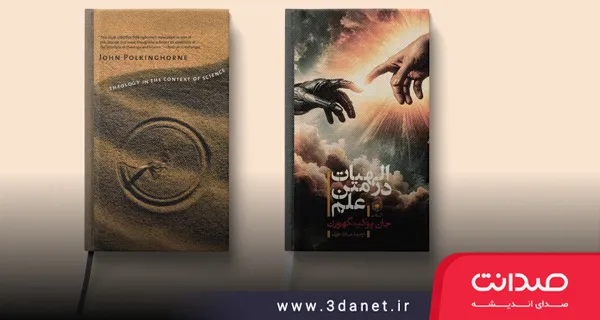
On the Book “Theology in the Context of Science” by John Polkinghorne
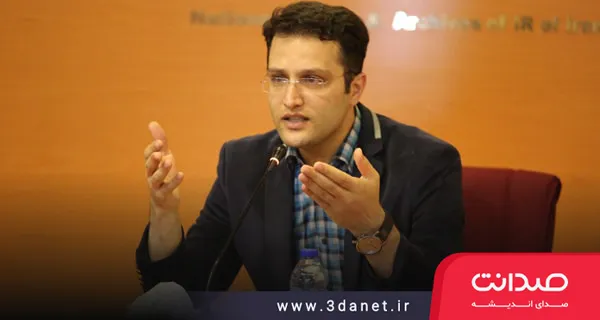
Milad Nouri (Translator of the Book)
John Polkinghorne (1930-2021) was an English physicist and priest whose intellectual life was, above all, devoted to the discussion of the reconciliation of science and religion. He studied mathematics and physics at Trinity College, Cambridge; he then taught mathematical physics, first at the University of Edinburgh and then at Cambridge. He received his second doctorate in 1974 in elementary particle physics and, while introducing a mathematical model for calculating the paths of quantum particles, became a Fellow of the Royal Society. Nevertheless, a few years later, to everyone's astonishment, he resigned from his professorship and studied theology, in which he was also successful, so much so that in 1986 he was appointed President and Chaplain of Trinity Hall, in 1989 he became President of Queens' College, Cambridge, and finally retired from there in 1996. Polkinghorne also played a significant role in the founding of the “Society of Ordained Scientists” and the “International Society for Science and Religion.” Most of his writings are devoted to the discussion of the relationship between science and theology; for example, The Way the World Is, The Faith of a Physicist, Faith, Science and Understanding, The God of Hope and the End of the World, A Christian Engagement with Reality, Quantum Physics and Theology, Science and Religion in Quest of Truth are among the works he has written in this field. In 1997, for his outstanding services to science, theology, and ethics, Polkinghorne was knighted by Elizabeth II, and in 2002 he was awarded the Templeton Prize for his research on spiritual realities.
Among his works, one that has now been translated into Persian by this writer is Theology in the Context of Science. This book, dedicated to Arthur Peacocke, was published in 2009, and most of its content was presented at the University of Victoria in 2008. Polkinghorne begins his book with a discussion of what “contextual theology” is and claims that the experiences and challenges arising in a specific context, such as natural science, can pave the way for new methods of theological thought, thereby leading not only to new perspectives but also to new attitudes. Thus, Polkinghorne considers the discussion of the relationship between science and religion as a form of contextual theology and seeks to show what theological thought in the context of science should fundamentally be like. Of course, theological thought has always been formed in a specific context and has necessarily been expressed from a particular horizon of vision; just as the deism and atheism of the nineteenth century also emerged in the context of the mechanical thought of Newton and other physicists of that era. But now such thought has been completely overturned; the relationalism of relativistic physics and the indeterminism of quantum physics have replaced the clear and deterministic Newtonian world and have depicted a completely different world. Hence, theological thought is also compelled to look at reality anew in the context of these views.
In this way, Polkinghorne seeks to consider how scientific discourse changed in light of twentieth-century developments and to examine its consequences for a theology developed in the context of science. In his view, in the absence of the definite and determinate objectivity claimed by quantum physicists, one can no longer speak of any single, universal epistemology. Theology, like science, has its own particular method and harmonizes the logic of discovery with the nature of the subject under investigation. Although in both science and theology, experience and interpretation combine to make possible the attainment of the best explanation, the nature of experience in these two domains is different, and the modes of interpretation vary according to the subjects of research. For example, concerning issues of moral values, one can only speak on the basis of “what ought to happen,” whereas science arranges its arguments not on the basis of what ought to happen, but on the basis of what does happen. This clearly shows that there is a difference between the theological view of moral values and the scientific view of them, without either negating the other. Likewise, concerning issues related to human nature, the nature of the world, humanity’s relationship to truth, the nature of consciousness, and the end and destiny of humankind, one can speak of the differences between science and theology without denying one in favor of the other. It is natural that scientific questions must have scientific answers, but there are many other questions which, although their posing is necessary and meaningful, lie outside the boundaries that science has set for itself.
The book Theology in the Context of Science addresses the issue of how scientific insight can clarify theological discourse; or how theological thought can, without surrendering all matters to scientific thought, still rely on the insights derived from it and, on that basis, enrich itself. It is clear, of course, that most scientists are suspicious of religious beliefs, because they think these beliefs are founded on unquestioning submission to an indisputable authority. In contrast, Polkinghorne wants to show how one can have motivations for religious beliefs that begin with the examination of evidence and move toward the attainment of understanding; much like what is observable in the context of science. It is essential that theology continues to possess its capacity to appeal to the unique significance of revelatory events and divine self-manifestation, and to defend their specific nature against the naturalistic accounts of reductionist science. Perhaps only with such an approach can the ultimate futility of death, both for individual human beings and for the world itself, be avoided. Theology is capable of speaking of hope for a destiny beyond death, because it can appeal to the eternal faithfulness of God beyond the present transience [of the world]; whereas science is incapable of speaking about such a hope, whether for or against it. Thus, theology, while trusting science regarding the hows of the world, will continue to speak in its own particular way about humanity and its final end. Therefore, both science and theology share in the great human quest for attaining truth and understanding, which is what makes their fruitful interaction possible.





Discussion0 comments
No comments yet; let yours be the first voice.