اندیشهفلسفهخردگفتگوحکمتمعناپرسشفرهنگ
Religion
Modern Physics and Divine Agency: A Conversation with John Polkinghorne
John Polkinghorne, a physicist who turned to theology, discusses reconciling quantum physics with Christian belief. Using a 'bottom-up thinking' approach and distinguishing his view from process theology, he explains divine agency and God's relationship to the world.

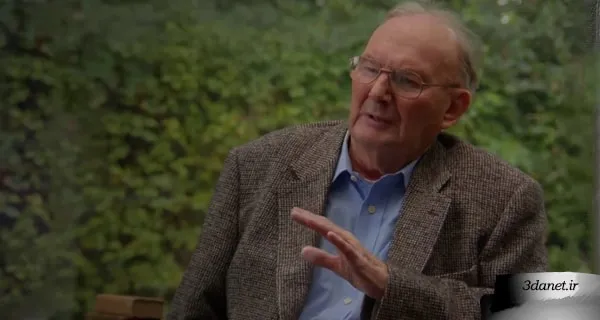
The New York Times recently reported that 40 percent of American scientists believe in a personal God and worship that God. One British scientist who believes in God is John Polkinghorne. He has been a professor of mathematical physics at the University of Cambridge for 25 years; his area of expertise is elementary particle physics, and he was elected a Fellow of the Royal Society in 1974. However, just five years later, in 1979, Polkinghorne made a major change in his career path. He left his lucrative teaching activities and became a student again, applying to study theology. Through publishing numerous books and articles on science and religion, Polkinghorne became one of the world's leading thinkers striving to synchronize and connect the complexities of quantum physics with the mysteries inherent in Christian belief. The following interview was conducted at the General Theological Seminary in New York City, where Professor Polkinghorne was invited as a guest speaker in the spring of 1997. This Q&A is an effort to explore and clarify some of the issues present in the science/theology discourse.
Professor Polkinghorne, as a professor of mathematical physics at the University of Cambridge, you made significant contributions to the advancement of elementary particle physics. Then, in 1979, you resigned from your position to train for ordination in the Church of England. Could you explain this change?
I greatly enjoyed my activities in the field of science. I did not leave the realm of science because I had lost my fascination with it, but rather I felt that after about 25 years, I had made my contribution to its advancement. My work was mostly in mathematics and the field of mathematical physics, where one can probably do one's best work before the age of 55. Passing that age, I thought to myself that I wanted to do something else. Since Christian belief has always played a central role in my life, testing my expertise in this area seemed like a good idea for shaping my secondary career path.
You also spent some time in the church, is that correct?
Yes, I was a priest for five years. I was an assistant curate in a large church in Bristol and a vicar in a village in Kent.
After that, you were brought back into the academic environment with your appointment as President of Queens' College, Cambridge. Your background in science is your point of advantage in theology, a method you yourself have defined as "bottom-up thinking." Please explain this phrase and why adherence to this method is essential for advancing theology?
Thinkers who follow the bottom-up method try to begin their work by learning from experience. They then move from these experiences toward understanding and awareness. They do not start their work by considering predetermined general principles whose correctness they deem highly probable; rather, they simply hope to discover what the truth is. If scientific experience has taught us one thing, it is that the world is very strange and surprising. The many scientific revolutions have certainly demonstrated this. If this is true in our encounter with the physical world, it is certainly even more likely to be true in our encounter with God.
In the April 1997 issue of Theology Today, you were referred to as a process theologian, but you have clearly stated that this is not the case. What are the fundamental differences between your method of thought and process theology?
I think there are two main differences: the first difference concerns the metaphysical dimension of process thought, which expresses Whitehead's event-oriented view and conception of reality, the idea that the most fundamental basis for measuring everything is the event or occurrence. This is a very specific "point-linear" way of thinking, which from my perspective is not an adequate description of the physical processes present in contemporary science. It is true that there are discontinuities in quantum theory, for example where measurements begin; but most of the time there is in fact a continuous process and progression underway. Therefore, as our understanding of the world's processes increases, the metaphysics proposed by Whitehead does not seem suited to physics. The second difference is in the theological aspect. God from the perspective of process thought is more of a persuasive God, that is, one who shares in everything that happens, but in reality plays no role in the occurrence of any event; this God simply tries to lure the world and draw it in a particular direction. And I think that this argumentation is not a powerful image for relating God to created reality, or for making God the ground of hope, or for defining God as the Father of our Lord Jesus Christ and the one who raised him from the dead.
So why are you sometimes mistakenly considered a process thinker?
Because I consciously accept some of the ideas put forward in process theology, but I think that (these are not necessarily) tied to all the details of process thought, yet they are very illuminating and useful. Whitehead stood firmly against the idea of considering God as a cosmic ruler who plays a role in all events. In my belief, God has allowed the world to be left to itself, but not to the point of becoming merely a persuasive God. The image of God as something (defined) between the God who controls everything and the God who persuades the world's processes is an idea worth working on. I share this goal with process theologians, but my method of reaching this goal is different. Another idea that is very useful from my perspective is the idea that God is seriously engaged with the world throughout time. We consider both a temporal and an atemporal aspect for God. Therefore, God is involved in the world's processes and is not separate from it. From my perspective, this thinking is very useful; like many other theologians in the twentieth century who did not define themselves as process thinkers, I find this thinking very useful.
Owen Thomas has defined you as a process thinker because of your idea of "dual-aspect monism." Can you briefly explain this idea?
"Dual-aspect monism" is an attempt to confront the perennial and unresolved problem of how the mind relates to matter. This view differs from classical dualism, which says there are two kinds of substance in the world: mind and physical matter. The problem with that theory was explaining how these two relate to each other. I am certain that we are not made solely of physical matter, and I am also certain that reality is something more than just ideas. None of the classical solutions seemed to align with our experiences. The theory of dual-aspect monism tries to take both our mental experiences and our physical, material experiences seriously. This theory states that both of these are deeply related to and complement each other, and that there is only one nature or substance in the world. The theory of dual-aspect monism seeks to avoid devaluing or making either of these two aspects secondary. Sometimes this view may appear to be merely a complex form of materialism, but in my opinion it is not, because it does not look at the mind as a secondary phenomenon that emerges after the primary phenomenon—namely, matter.
You have also expressed great appreciation and esteem for what Teilhard de Chardin accomplished during his lifetime, yet you see your own views as differing from his. Could you elaborate on this difference?
Yes. Let me say first that I admire de Chardin as a holistic figure who tried to hold his religious experience and science together, but the details of how he did this are not akin to the way I would do it. I think it is very important to distinguish between Christianity's definition of the Creator and creation. Of course, we do not want the very distant God defined in classical theology, a definition that presents Him as too superior, transcendent, and all-encompassing to be comprehensible. We need a consistent balance between mental comprehensiveness and supernatural transcendence and superiority in defining God, but I think distinguishing between the Creator and creation remains vital for two reasons. One reason is that if we do not consider this difference, the problem of defining the existence of evil and God's relationship to evil will deepen. And second, a God who is too involved in creation cannot be the basis for hope in a destiny other than death, both for creatures and for the whole of creation. In my belief, God created this world, this creation, so that something other than God Himself would exist, and He allowed it to be on its own. But the Eastern churches have always maintained the belief that Christ's creation was for the purpose of sharing in the life and breath of God, meaning a life of divine essence with humanity. Even now, this world contains sacraments and signs of God's new creation, which is the redemption of this world after its death. In my belief, this new creation and world is an entirely sacred and religious world, filled with the presence of God. That is why, at that time, that world can rightly be defined as a pantheistic world. Therefore, I (unlike de Chardin) see the realization of this as a final destiny in the afterlife and not as a reality existing in the present.
Let us shift the topic of discussion toward cosmology. In the literature, especially in the writings of authors such as Thomas Torrance, much attention has been paid to the astonishing revolution occurring in human awareness and understanding, the transition from Newtonian cosmology to Einsteinian cosmology. What are the fundamental issues that have caused the shift from the dualistic thinking of Descartes and Newton toward our current understanding of reality as a unified definition?
I think three important things have happened. The first event is certainly linked to Einstein's formulation of relativity, which is the recognition of the relativistic nature of reality. Newton's conception of the universe was a closed container in which small, independent particles were moving and suddenly collided with one another. This view has been replaced by a unified and singular understanding, stemming from Einstein's general theory of relativity, which says that space, time, and matter are all interconnected, so by this definition the universe is relativistic. This is a very important development... Then a second revolution occurred. The discovery of quantum theory, which brought about changes in our thinking about the world. Primarily, it made us realize that the world, contrary to what we thought, is not purposeful and mechanical; and in physical processes, probability is also at play. And of course, it must be said that quantum theory itself has its own relativistic characteristics. Whenever two quantum entities interact, they acquire a wondrous and non-rational power to influence one another, regardless of how far apart we separate them. Quantum theory also tells us that the world is not merely objective; rather, it is a more complex mechanism than that. In some aspects, its nature is hidden from us, yet at the same time it possesses a structure that we are capable of understanding. The third change that has occurred in our conception of the physical world relates to everyday physical processes - the theory defined as chaos theory tells us that the emergence of inherently unpredictable and non-mechanical behavior is one of the characteristics of this world, visible not only in quantum physics and the atomic roots of matter, but also in everyday processes. In the physical world, there are manifestations of both order and disorder, and this means that the behavior of this system depends on a contradictory combination of order and disorder—the world, as people sometimes say, is "at the edge of chaos"—in the middle of two worlds; one with a completely deterministic and unchangeable framework, which is tedious and futile because nothing can truly change in it, and the other a completely random world, which is again fruitless due to its total randomness. Something in between, at the point of balance between a degree of order and a degree of probability and uncertainty, is what makes this world fruitful.
Magnificent! Is this term dependent on probability and certainty?
Certainly. Another way of expressing it is to describe the world as a reality that is growing and expanding due to the interaction between probability and certainty. Probability does not mean chance and meaningless events. Probability is a mechanism that brings about creativity and the emergence of new things. On the other hand, if these (seemingly probabilistic) new things were not situated within a certain degree of lawful order, they would easily perish.
And both of these are primary necessities for creation. Yes. They are necessary both for the beginning and throughout creation. Evolution certainly did not only occur in life on Earth; it has occurred in the entire universe. In any case, the universe needed 10 billion years of evolution just for life to be possible within it; the evolution of stars and the growth and emergence of new chemical elements in the burning cores of stars were essential prerequisites for the genesis of life. The laws we know as the laws of nature must have been finely tuned for this life to be possible. The physical nature of this world must have been such that it made possible ten billion years of prior evolution to form the raw materials for life. Without that, there would have been no raw materials to make life on Earth possible.
I want to quote a passage written by Thomas Torrance in his book Theology and Reconciliation concerning the transition from Newtonian epistemology to the epistemology of the present day: A serious problem we face today is the time lag between the beginning of the revolution in the foundations of thought and the completion of the reconstruction of methods of thinking and living. This transitional period is full of confused ideas, paranoid anxieties, hybrid solutions, and regressive tendencies. (270-271) Torrance says that "we are having trouble making this transition and passage because we remain tied to the sciences of the 18th and 19th centuries." Do you have any idea about how to move past this confusion?
Tom Torrance is a distinguished theologian who, throughout his life, sought insights from science to apply to his theological thinking. I think the quote you read from him is entirely correct. Most people have a very outdated conception of what science tells us about the world. They look at this world through the lens of a clockwork, deterministic universe; Laplace, at the end of the eighteenth century, spoke of such a world and has a famous, now-outdated saying that a demon knows what is happening, can predict what will occur in the future, and can uncover the entire past. This was certainly the dominant idea about physical processes in that era, but it is no longer the case. The world is more open, contains more possibilities, is more complex than this, and has more flexibility than people of the 18th and 19th centuries understood. Unfortunately, this view has not penetrated deeply into theological thought. People, especially theologians, must try to familiarize themselves more with scientific ideas. It is true that science is technical and specialized in many aspects, but there are also very good books that try to express the conceptual structures of the sciences in a way. Such as Paul Davies' book Superforce and his book About Time, as well as James Gleick's book Chaos, and my own book The Quantum World.
In connection with this subject, in your book Reason and Reality, you quoted the physicist Bernard d'Espagnat, who believed philosophy must learn from science, especially from physics, saying: "We may imagine that to reach the truth we only need to propose clever ideas, but this is incorrect. Because the hope that present-day humanity can have completely correct definitions of reality, time, and causality is an illusory thought if the roots of these definitions are not grounded in the masterful, extraordinary statements consistent with the realities currently available to humanity." Theologians face a great problem because they try to speak about God. Since God is the foundation of everything, it can be understood that any human search into reality is grist for the mill of theology. Certainly, no theologian can know everything. On the other hand, the nature of the physical world and the history of the physical world are important factors. Those theologians who intend to deal seriously with the doctrine of creation must pay more attention to the background of science. Currently, the predominant theological thinking focuses heavily on human centrality. Of course, no one denies the importance of humanity in this view, but the timeframe theologians think about is only a few thousand years of human culture and civilization, instead of the fifteen-billion-year history of the universe. And the scale at which they think is also limited. When they say "the world," they usually mean planet Earth and not the one hundred thousand million observable galaxies in the cosmos. They need to broaden their intellectual horizons.
One example of someone deeply committed to the scientific revolution of Einstein and quantum physics is Michael Polanyi, the philosopher and chemist. What do you think is the most appealing aspect of his approach?
What attracts me most about Polanyi is that he defines himself as a post-liberal. Probably today we could use the term postmodern for this concept. From his perspective, the grand Cartesian philosophy, which contains clear and distinct ideas and whose foundation is correct knowledge immune to doubt, is unattainable. But at the same time, he does not move towards a relativistic theory that says you have your views and I have mine. He seeks a middle way between these two, a path on which his scientific experience greatly assists him, and he realizes that there is a certain amount of uncertainty and instability in human knowledge as well. He emphasizes that perception requires commitment to a particular kind of outlook and viewpoint; a person's view must be open to revision, but at the same time, it is through our commitment that we can acquire the power of perception that enables us to gain knowledge of the physical world. He wrote his important book, Personal Knowledge, to show how one can commit to a specific viewpoint while simultaneously considering the possibility that this viewpoint might be wrong. I believe this description is easily recognizable in the realm of science. I also agree with the point that the realm of science operates very successfully, and this success encourages me to affirm the correctness of Polanyi's view. And if this view holds true in our investigations of the physical world, I believe it is a kind of encouragement and incentive to extend this view to other forms of human inquiry and exploration, such as theology, where in these areas, too, we must commit ourselves to a particular viewpoint on an even wider scale, yet at the same time know that our ideas are only partially appropriate and correct. Polanyi's view is a very useful method for guiding us in determining our intellectual path between the thinking that says you can prove everything with a logical method and the thinking that says there is no truth to be found or knowledge to be attained.
His special position, due to his scientific background, seems very useful for advancing theology in the era we call the postmodern period. Yes, it seems so. His ideas are a detailed method of what we call "critical realism," both in relation to the realm of science and in relation to theology. If you think about this subject, you will see that Rahner's Rule, which says "The economic Trinity is the immanent Trinity," is a theological realist statement that says what we know about God is not misleading. In other words, the economic Trinity is the essential Trinity; what we know about God is a reliable guide to understanding the divine nature.
You have said, "Einstein, rather than being the first modern scientist, is the last traditional scientist." What do you mean by this statement?
Of course, Einstein was a very great scientist, and I hold immense respect for him and greatly admire his findings. But he had a strong commitment to the view of the physical world being objective. He wanted the physical world to be picturable and purposeful, and the reason for these desires, I think, was that he believed these characteristics guarantee the reality of the physical world. Like all other scientists, Einstein believed with great passion in the reality of the physical world, and was certain that we can learn something about the nature and character of this world through our scientific research. I agree with him on this view, but I think this does not mean we must strictly limit ourselves to an objective vision of the physical world. In my belief, quantum theory (a theory that Einstein hated and never fully accepted) clearly shows us that the world has a more complex subtlety and hiddenness than we thought. In any case, all of us who work in the field of quantum physics believe in the reality of the quantum world and the reality of quantum entities such as protons and electrons. The main reason for this belief of ours is not due to their objectivity in the classical definition of science, because they are not objective at all, but rather because the assumption of their existence enables us, to a great extent, to understand physical experiences. Therefore, the guarantee of reality is its intelligibility, not its objectivity. This view has been advanced very strongly and persuasively by Bernard Lonergan.
Is it possible to say a few words about Paul Dirac and his findings on the positron (anti-electron) and the expansion of quantum physics?
I learned what I know about quantum physics from Paul Dirac; he is one of the principal founders of this subject. He had both an extraordinary mental capacity and an abundant humility. Dirac succeeded in leaving very influential findings in this field with the help of very beautiful equations, but he never emphasized his role in these successes or put his name on these findings. One of the captivating attractions of the physical world is that it always seems possible to describe its fundamental structures beautifully through mathematics. For me, this point hints at the existence of a (great) thought and mind behind this universal structure, and that our mind is also somehow harmonized and tuned with that mind. Dirac is one of the greatest thinkers in physics of the twentieth century. He was never a traditionally religious figure. He was even opposed to religion in his youth, but his understanding of this subject changed, although he never fully accepted religion in his life. He was once asked what the foundation of his beliefs was, and Dirac turned to a blackboard and wrote, "The equations of physics can be beautifully expressed with mathematics." The tireless pursuit of mathematical beauty led to his important findings. He discovered antimatter and realized how quantum mechanics and relativity could be placed alongside one another.
Dr. Polkinghorne, you have very often expressed your interest in a specific phrase, namely "Epistemology models ontology." Could you also say a few words about this?
I first used this phrase myself, and my wife had heard me say it so often that she gave me a shirt with the phrase printed on it. For me, this phrase is an epitome of a realist view of the scope of science, or even defines the broader human quest for reality: it says that what we know is a reliable guide to what is the case. The world does not deceive us. I reject the Kantian separation between phenomena (things as we know them) and noumena (things as they are in themselves). The overall impact of scientific experience is to encourage the belief that we are gaining genuine reality through integrative understanding. Of course, we use maps rather than a complete account of the world; there is always more to learn. My catchphrase is simply a way of expressing the truth that we are not misled in our encounter with reality. Reality as it manifests itself to us, as we know it, is a reliable guide to understanding the full nature of reality. The ideas arise from my experience as a scientist, but I think these ideas are written into God's creation; for God, this world is not a deceiving demon, contrary to Descartes' view. It is faith in God that allows epistemology to be a kind of ontology.
Do various epistemologies relate to realism? It would probably be helpful if you could explain the relationship between consonance and assimilation.
I have a firm belief in the unity of knowledge. There is only one real world, one world that we experience and seek to describe. Of course, there are different levels and various layers of reality; we may encounter a particular event in different ways. We can describe that event in purely physical terms, or describe it as giving rise to beauty, or define it as a moment of moral choice; it might be a moment of our encounter with God. These are different layers of reality. But they all fit together somewhere. I want to place them together in a way that preserves the various characteristics of all the layers I experience, while also maintaining the truth that experience is of a single reality. I want a consonant relationship. For example, a consonant relationship between science and theology. Science cannot tell theology how to formulate the doctrine of creation, but you cannot offer a doctrine of creation without taking into account the age of the universe and the evolutionary character of cosmic history. I also think we must always maintain necessary distinctions—the religious doctrine of creation is different from scientific cosmology, and we must resist the attempt that scientists sometimes make to assimilate theological views to scientific views. There is a distinction here that must be preserved.
Can a scientist pray?
Well, that very much depends on what you mean by praying. I think scientists are often engaged in praying without knowing it. A common experience in scientific work is a wonderful sense of the beauty and fruitfulness of the world. In truth, this is a kind of implicit prayer and praise of the Creator, but certainly many of my scientific friends do not see it that way. I think the key point in this question, from the perspective of petitionary prayer, is: can we ask God for something? In my belief, just as our picture of the physical world has become an open picture with many possibilities, great subtlety, and high flexibility, it has caused us to begin to view the physical world in a way that we, as its inhabitants, can understand it, because we know we have the power to effect change in the world; therefore, the world is open to our action and changes. In my opinion, in the same way, change by God is also possible. In other words, what we understand as scientific processes has not ruled out God's interaction with this world.
In one of your writings, you used a curious phrase, "logic aided by liturgy." What do you mean by this?
It is a transformed version of a phrase by David Park. He was talking about how science understands the world and pointed out that to accurately grasp the patterns and structures of the world, science needs the aid of nature's hints. The true patterns of the world are often far more fascinating than what we initially imagine. David calls this logic aided by nature. And it seemed to me that many theological thinkers similarly use a "logic aided by liturgy": I think one of the most fundamental religious experiences is the experience of worship. I am not a person of countless, deeply religious or profoundly mystical experiences. But I do have a kind of personal program of daily worship and devotion. In fact, my spiritual life is defined by things like daily work as a priest, and the Eucharist in church. I think it is these experiences that help us think about God.
In closing, do you have any thoughts on the future of the discourse between science and theology?
What I would like to say is that this discourse will continue. The most debated topic at present is (the mode of) divine agency, and this itself is a sign that we are drawing closer to a full engagement between science and theology. We are not just talking about creation and natural theology (though these are important topics within this discussion); these two fields of thought are likely grappling with each other on more fundamental questions, and this struggle will continue and expand. Accordingly, I think the scope of the discussion must also broaden. We need more theologians to participate in this conversation; we also need a wider range of scientists. Much effort in this field has been made by physicists; we need more biologists in this area. And beyond all this, we need more human knowledge. My colleague at the University of Cambridge, Fraser Watts, the Starbridge Lecturer in Theology and Natural Science, has taken the first step in the field of science and theology discourse in Britain. His scientific background is in psychology, and I am sure that very important results will come from this initiative.
Professor Polkinghorne, thank you very much for the time you set aside for this interview.
Thank you. I enjoyed this conversation very much.
.
.
PDF file of this text
.
.
Modern Physics and Divine Agency
A Conversation with John Polkinghorne
Lyndon F. Harris
Translated by Seyed Amirreza Mazari
Source: Ettelaat-e Hekmat va Marefat Monthly
.


Discussion2 comments
و از اینجا نیز معلوم میشود که پیشرفت علم ، نشانه های توحید را در افق های جدیدی آشکار میسازد.جهان دقیق و قانونمند است. به راستی چرا چنین است؟
نکات جالبی در سخنان این فیزیکدان آمده است.به ویژه دو جمله زیر ، قابل توجه است: «تضمین واقعیت قابل فهم بودن آن است نه عینی بودن آن» همیشه میتوان ساختارهای بنیادین طبیعت فیزیکی را از طریق ریاضیات به زیبایی تشریح کرد.این نکته اشاره ای به یک خلاقیت عظیم است(که عالم را اینچنین قانونمند میسازد).