Philosophy
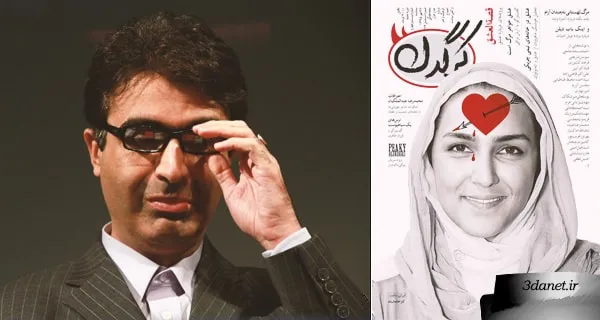
Arash Naraghi and Nehzat Farnoodi in Conversation with Taboo
Does romantic love expand the horizon of being or lead to pathological dependency? A conversation between Arash Naraghi and Nahzat Farnoudi on the philosophical definition of 'becoming we', the biological foundations of love, and the necessity of teaching the art of loving in today's world.

Is romantic love, specifically between a man and a woman, something beyond sexual attraction and sex? Is a relationship between two “bodies” without the involvement of love less valuable than one between loving bodies? Do women and men differ in their pursuit of sex and love?
If the answers to these questions matter to you too, join the discussion in this week’s Taboo with Arash Naraghi, professor of philosophy at Moravian College in Pennsylvania, and psychologist Nehzat Farnoodi.
Mr. Naraghi, let’s begin the discussion with you. In your view, what is the closest definition we can offer of the romantic experience in today’s world, to the human being of today?
Arash Naraghi: We can call romantic experiences interpersonal experiences in which individuals construct a shared identity with one another. That is, in addition to the independent individual identities they previously had, when they come together a new entity emerges from the intermingling of these two individuals’ personal identities. Although its identity remains related to the individual identities of those forming the relationship, it gradually acquires a different identity and character, which we sometimes define as “we.” And this “we” gradually finds social expression. These individuals are seen together more often, a shared home, shared children, and the like emerge in relation to them.
Mr. Naraghi, what one can infer from your definition is becoming one and that very “becoming we,” both in its social expression and in the interpersonal experience. From this point, I’d like to ask Ms. Farnoodi, as a psychologist, what is your view of this “becoming we and becoming one”? Might you have a different definition of love from a psychological perspective?
Nehzat Farnoodi is a clinical psychologist, university professor, and a member of the American Psychological Association. Nehzat Farnoodi: The group known as the “Boston Group” used a term called “Experience of usness,” which I have translated as “تجربه مایی” [the experience of we-ness]. A special type of neural connection creates the “experience of we-ness,” which increases our happiness and reduces our sadness.
Dopamine, this energizing and euphoric substance, whose substitute form is the cocaine that people consume, increases in this joyful state and along with it releases a chemical molecule called acetylcholine, a chemical substance like acetylcholine that is also found in chocolate, which is why people exchange chocolates on Valentine’s Day.
This [process] is a biochemistry of sorrow-relief. These two cause serotonin to rise, and serotonin is the optimism-inducing chemical molecule. That is why a lover is kind to everyone, sees everything as good, is hopeful about everything, and in short, as the late Hayedeh said, “The day I fall in love, the world takes on a different color for me.”
Very well. Ms. Farnoodi referred to the euphoria of emerging from loneliness, or sorrow-relief, or optimism in a person who falls in love. Does all of this mean that a human being is not sufficient unto themselves? That is, does a person constantly seek to find something outside themselves? In today’s world, where there is so much talk of individuality, isn’t this thirst for love and the effort to extend one’s own self a kind of contradiction?
Naraghi: Yes. Perhaps the most important phenomenological feature of this phenomenon is that you feel your life’s happiness or failure is, to a large extent, contingent upon the happiness or failure of another person. This experience has two consequences, one positive and one negative; the positive experience is what you alluded to: in a sense, romantic experiences broaden the horizon of our existence, and it is in this respect that you feel love blows fresh air into your cells.
But at the same time, these romantic experiences are accompanied by risks. Precisely because your being, your joy and sorrow, your happiness and failure become contingent upon another, you become deeply vulnerable. However, one should not overlook the fact that through romantic experiences, we gain greater insight and awareness into ourselves.
With all these points you’ve raised, the question arises for me: should we then encourage people to fall in love? Because, after all, the experience of love is an opening of oneself to an unknown fate, and in many romantic relationships that we can cite as concrete examples in the world around us, this openness has placed people in a state of emotional insecurity.
The true art of loving is not seduction, but cherishing. That is, the art of learning how to honor the heart we have now captured and what etiquette we must observe in the exchange of this heart. Arash Naraghi Naraghi: Many of the romantic experiences we witness in the lives around us are pathological experiences of love. Healthy love has at least two important characteristics: one is that it is mutual, and the other is that it is symmetrical.
Otherwise, it will become a pathological dependency that can be harmful to both parties in the relationship. Because the necessary equality for a healthy and flourishing romantic relationship does not exist between men and women, romantic relationships can become factors that contribute to the subordination of women in modern society.
I would like to ask Ms. Farnoodi to rejoin the discussion. Mr. Naraghi spoke about pathological loves. Love, in any case, can be a liberating experience or a form of captivity. If we are to explain that healthy love is a love that is liberating rather than enslaving, then my question would be: why do we see that liberating aspect of love less often?
Farnoodi: The heart is not born with us. The physical heart is born with us, but the heart-as-soul has a birth, an infancy, a health, and a sickness. The human heart or psyche is something that, in the child's interaction with its environment and an experience of the other, is as if born, or that independent psychic entity is brought into existence, which becomes a person's wealth, or our heart's piggy bank.
The experience of healthy love is certainly the province of the healthy human being. Let me give you some good news; contrary to what we feel, that loves have become very temporary, individuation coupled with empathy is currently being taught from the kindergarten level. We see that the level of emotional intelligence, which determines the fate of human relationships, is on the rise.
Therefore, I am more hopeful that we will be able to have healthier loves in the future. But for your generation and those before you, my genuine suggestion is that every person, when they want to enter a relationship, should first enter a therapeutic relationship and come to know themselves in the best possible way.
I want to ask this in a different way. Suppose this emotional education is taught to people from childhood, but our era is nonetheless an era of diversity, plurality, and acceleration. I want to know, in such times, is love still attainable? What is love's relationship with its own era and time?
Naraghi: Love is a kind of experiential practice and must be learned. Every individual must acquire certain knowledge and skills, and one must know that the experience of loving has different stages. The initial part, for which we have often received more or less adequate training, is the seduction phase; that is, we learn how to present attractions of ourselves to captivate the other, and we more or less learn this art of hunting another's heart.
Sex without love is like eating at fast-food restaurants; you have no choice and you go to a place knowing its food is of poor quality and knowing it might even make you sick, but you eat it for now because you are hungry. Just like using a "Sex Toy." Nehzat Farnoodi But we forget that the true art of loving is not seduction, but cherishing. That is, the art of learning how to honor the heart we have now captured and what etiquette we must observe in the exchange of this heart.
The best place where a person's level of maturity in romantic relationships can be discerned is in moments of separation; that is, when individuals conclude that this experience will bear no fruit for them and now wish to part ways. In these situations, it seems to me that we have received absolutely insufficient training and do not know that separating, and the etiquette of separation, is part of the etiquette of love.
Regarding your next question, I will only say briefly: there are several problems in the modern world that have plunged love into crisis. One problem stems from the fact that in the modern world we place great emphasis on individualism, and this, incidentally, works in favor of love—that is, healthy romantic experiences occur between equal persons, not between people who are vastly distant from one another. But the emphasis on individualism also, in fact, creates a kind of separation between people, making it difficult to build bridges between them.
On the one hand, love is our desire to draw close to the other; on the other hand, in order to preserve the health of this love, you must know that beyond a certain point you must also maintain your distance from the other. That is, healthy love is the point of equilibrium between love and respect; drawing close to the other while simultaneously preserving distance from the other. This is something that modern individualism has, in some respects, facilitated, and in some respects, rendered difficult.
Since we cannot speak of love without speaking of sexual relations and sex, I would like to ask Ms. Farnoodi to what extent you see the two as close, connected, and even as each other's foreground and background? There is a view that perhaps without love, sexual relations are something base, and the virtue we see in love is absent from such relations. What is your opinion on this matter?
Farnoodi: When two people find a special fit with one another, four motivational systems in the brain are activated. First, the hormonal system, [following which] a specific wanting system [occurs]—that is, you become fixated on that specific person and you want only that individual.
The sexual experience itself can provide profoundly liberating moments for the individual, create creativity, alleviate a large portion of our anxieties, and in many cases, it is entirely possible that the variety of sexual experiences may activate some of our emotional mechanisms and some of our creativity. Therefore, I have no a priori reason against sexual relations devoid of love. Arash Naraghi The next system is the oxytocin system, where attachment arises, and the fourth system is the dopamine system, through which alone you find tranquility. If these four systems are active between two partners, stable relationships usually emerge. But if only the first system is set in motion and the second system also comes into being, but the other two systems do not function, these purely sexual pairings, once they lose their novelty, are typically followed by psychological and emotional demands, and if there is any deficiency there, it marks the beginning of relational hostilities and, so to speak, getting stuck in relationships that start well and end badly.
I did not understand, ultimately, do you ascribe any virtue whatsoever to sexual relations without love?
Farnoodi: Sexual relations without love are like eating at fast-food restaurants, where you have no choice and you go to a place knowing its food is of poor quality and knowing it might even make you sick, but you eat it for now because you are hungry. Just like using a "Sex Toy."
Mr. Naraghi, what is your specific view on this same subject?
Naraghi: Perhaps my position on that other aspect differs from Ms. Farnoodi's. It seems to me that sexual relations and pleasures devoid of love can also play entirely constructive and flourishing roles in our lives. The very fact that two human beings discover each other's bodies, the very fact that in contact with their bodies they experience—albeit fleeting—layers of each other's emotions.
The sexual experience itself can provide profoundly liberating moments for the individual, create creativity, alleviate a large portion of our anxieties, and in many cases, it is entirely possible that the variety of sexual experiences may activate some of our emotional mechanisms and some of our creativity. Therefore, I have no a priori reason against sexual relations devoid of love.
In general, when women enter into a sexual relationship with someone, they usually seek to make that relationship permanent and look for an outcome beyond sex and being abandoned, whereas this is not the case for men. Nehzat Farnoodi Although I agree with Dr. Farnoodi that when romantic experiences come into play, the quality of these physical relations becomes much deeper, at the same time, it seems to me that we must also recognize sexual relations purely for sensory and bodily pleasures; it has been an important part of our lives as human beings.
Farnoodi: I think the differences between men and women became evident right here.
Naraghi: I am not sure that is the case, of course. I do not agree with this so-called classification that gentlemen say "No sex, no love" and ladies say "No love, no sex." As it happens, we are increasingly seeing this openness to sexual pleasures growing among the younger generation of our women, so I am not sure how much the gender distinction holds up in this regard.
Farnoodi: You are right that sex-seeking detached from love is on the rise among young women, and as it happens, it seems they are also having frustrating experiences. Now, perhaps the culture is still changing, or in transition, but in general, when women enter into a sexual relationship with someone, they usually seek to make that relationship permanent and look for an outcome beyond sex and being abandoned, and for men [this is not the case]. That is, men are very eager and keen on No committed sex and especially like to satisfy their desire for variety.
Interestingly, research shows that women's desire for variety takes the form of Chain monogamy, meaning they demand chains of committed relationships, even short-term ones, while men can easily be involved in several simultaneous relationships.
Mr. Naraghi, do you accept such a difference? There are many women in today's world who are experiencing this very uncommitted relationship and say this is what we want, but Ms. Farnoodi said that for this very reason they become disappointed. Do you think such a form of relationship, which is somewhat removed from the love we talked about, can be frustrating for human beings, and more frustrating for women?
Naraghi: Many of these distinctions are cultural. If we raise our daughters in a certain way over time—right now our women have a problem with their bodies. Our cultured women have a problem with their menstruation. A cultured, educated woman speaks about menstruation with discomfort.
Descriptively, this is how it is, but prescriptively, this sexual freedom should not be only for men; that is, women should also know that if they decide they wish to have independent sexual experiences, they have the same right as men, and they should not feel shame or frustration from these experiences.
But in practice, within a patriarchal power structure, it is obvious that if a woman enters into these relations, she will be met with a thousand and one bad names, a thousand and one pressures from family and the workplace will arise, and it is obvious she will face frustration; it is obvious that these pressures will create a feeling of despair in her.
Part of this feeling of despair, of course, goes back to the fact that if someone builds the structure of their life solely on sexual and physical pleasures—whether man or woman—they may, at some points, encounter more fundamental questions and more fundamental voids in their life, experiencing a kind of general despair.
Ms. Farnoodi, this view that Mr. Naraghi presented is interesting to me in that he sees the pressures and definitions within the structure of society, not in the identity structure and existential form of woman. What is your response to this issue?
Women should also know that if they decide they wish to have independent sexual experiences, they have the same right as men, and they should not feel shame or frustration from these experiences. Arash Naraghi Farnoodi: I agree with the issue that culture shapes and directs many of our behaviors, but regarding the differences in the anatomy of the male and female brain, I must say there are some fundamental differences because the amount and ratio of oxytocin (the bonding and attachment hormone) in the female brain and the male brain are very different.
Meaning what is different? Meaning men need sex more?
Some differences are fundamental because the level and ratio of oxytocin (the attachment and bonding hormone) in the female brain and the male brain are very different. Nehzat Farnoodi Oxytocin is the hormone of connection and bonding, which is higher in women's brains and is stimulated more during intercourse. For this reason, intercourse in women increases the desire for attachment, union, and making the relationship lasting, but in men, especially in alpha men, in men whose testosterone levels are much higher, oxytocin levels are low. Therefore, after sex, a woman wants to be with that man more, while a man may not have such a desire.
I want to know, if hormones determine everything, how much of a role do we play in that "becoming" we talked about at the beginning of the program? If hormones determine that women become attached in their relationship with a woman or a man—it makes no difference—but this does not happen for men, then where is the human element in decision-making and opening oneself to love?
Naraghi: Look, the fact that our behaviors have biological or neurological roots does not mean that we do not act freely in performing these behaviors. Our voluntary behaviors, in an important sense, consist of behaviors that we perform, but if we are asked why we did them, we can more or less justify them, provide reasons to explain them.
In the presence of the other person, you see a companion. Someone beside whom the tedium of your life is more dispelled. Their good company softens the harshness of daily life. Now, if you take midlife love as a model for understanding the concept of love, then, on the contrary, union leads to the deepening of romantic experiences. Arash Naraghi What happens in your brain may set a limit to the scope of your free will, but it does not mean it negates your free will. Moreover, it is entirely possible to believe that some of our mental states also result from biological and neurological interactions in the brain.
In any case, we have reasons to say this relationship is bidirectional. In any case, I do not believe these reductionist positions—which are, of course, common among neurologists—are defensible either scientifically or philosophically.
Now that the discussion has reached this point, I wouldn't mind asking you this question, Mr. Naraghi: Can love fade under the influence of attainment and union? In our romantic literature, a kind of separation model dominates. I want to know, after union, can that burning passion of love be preserved, or is it the inevitable fate of love to disappear after union?
Naraghi: Consider a teenager—a newly matured youth who falls in love with the neighbor's daughter. It's a tumult of hormones, a maddening passion and excitement, and a lot of risky behaviors. You see, in our literature, love is usually tragic; look at Romeo and Juliet, look at Layla and Majnun.
The truth, however, is that the best romantic experiences are had by people from middle age onwards. That is, a large part of the sexual hormonal fervor and excitement has subsided, and individuals no longer see their sexual partner merely as an attractive object for their sexual desires. In the presence of the other person, you see a companion. Someone beside whom the tedium of your life is more dispelled. Their good company softens the harshness of daily life. Now, if you take midlife love as a model for understanding the concept of love, then, on the contrary, union leads to the deepening of romantic experiences.
Well, it's a very fascinating discussion that we could have continued with more questions if we had the time. Thanks to Mr. Arash Naraghi and Ms. Nehzat Farnoodi for joining us on this episode of Taboo.
.
.
Audio of this conversation
.
.
Arash Naraghi and Nehzat Farnoodi in Conversation with Taboo
.
.



Discussion1 comments
درود مطلب عنوان شده بسيار بازتابش تفكرات افرادي با نيم كره ى چپ مغزى فعال و غالب مشاهده مى شود / در حاليكه بعد معنايي و محتوايي آن. در سايه از نظر پنهان مانده : ?در حقيقت مسير وصال در چهار مرحله "جسماني "و "ذهن جسماني "و "ذهن روحاني" و "روحاني" طي طريق مى كند و افراد در سطوح فركانس هاي مكمل. در اصل ابتدا در كشش معنايي هم قرار مى گيرند / اگر تنها در بعد صورت و قواعد علمى متمركز شويم اين بسان صحيح است كه كشش اقايان به بلوغ و تنوع "جسماني " و "ذهني جسماني " بيشتر است ( كثرت در صورت و وحدت در معنا )و اما و اما و اما در بعد ريشه ايي تر و معنايي تر اين موضوع حالت جبرانى و معكوس دارد و زنان بيشتر مجذوب بلوغ و جذابيت هاي " ذهني روحاني" و "روحاني" هستند (كثرت در معنا و وحدت در صورت) بنابرين هر دو پروسه ي تكاملي خويش را از يك بعد به بعد ديگر تا مرحله تكميلي "ما شدن " دارند كه هر دو بعد يا هر دو وجه قضيه به بيان (وحدت در صورت و وحدت در كثرت )را شامل مى شود . و شايد بتوان در مراحل زيرين اين روند افراد هم راستا با طريقت تفرد خويش با زوجى هم قرين جسمي ذهني و بسيار كم تر روحي شوند و رشد "ما شدن " را در كنار هم. تجربه و تكميل كنند اما تا غايت وحدت كامل "هم بعد صورت هم بعد ذهن و هم روح "اين عطش براي جستجو. هم در مرد هم در زن به قوت خود باقي است / باشد كه جوينگان حقيقت دريابند / با تشكر سوزان شمس https://telegram.me/SusanShams