Religion
On the Decisive and the Ambiguous in the Qur'an
Verse 7 of Surah Al Imran distinguishes between the decisive (muhkam) and allegorical (mutashabih) verses, holding that the decisive verses are the Mother of the Book (Umm al-Kitab) from which the allegorical ones derive. Ta'wil means uncovering the reason behind the verses; knowledge of it belongs solely to God and those firmly grounded in knowledge, who believe in all of it.
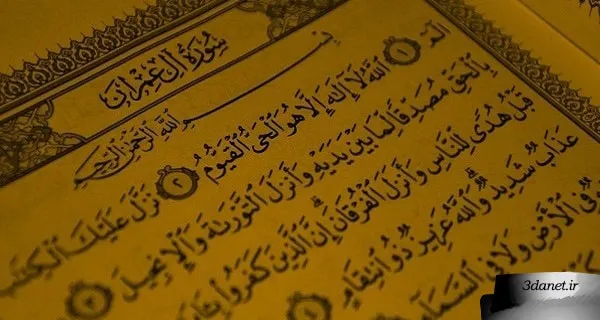
For years I have been pondering, studying, and discussing verse 7 of Sūrat Āl ʿImrān, and now I wish to share the fruit of my reflections with esteemed readers. This verse presents two very important challenges: first, what is meant by the Decisive (muḥkam) and the Ambiguous (mutashābih) in the Qur'an, and what are the distinguishing features of the Decisive verses from the Ambiguous ones? The second challenge concerns whether only God knows the interpretation (taʾwīl) of the Ambiguous verses, or whether those firmly grounded in knowledge are also capable of this. To answer these two questions, I will examine verse 7 of Sūrat Āl ʿImrān step by step.
«هُوَ الَّذِى أَنزَلَ عَلَيْكَ الْكِتَابَ», He it is who has sent down to you the Book. Two points must be noted here: first, this verse begins by describing "Allah," and then the subject of the Decisive and the Ambiguous is introduced. The second point is that in this verse, the Prophet is the primary addressee. We must bear in mind that the Qur'an's addresses, in gradations, encompass all its audiences, from the Prophet to the believers, to humankind, to opponents and antagonists, and so on. This is because, firstly, the position of any person in terms of their benefit from divine guidance is not fixed and may ascend or decline; secondly, the categorization of addressees is not absolute—for instance, one who is a believer does not necessarily possess absolute faith, but rather in some matters falls under the category of "believer," and in others perhaps under "polytheist" or "disbeliever"; thirdly, some Qur'anic addresses do not require categorizing addressees from the perspective of faith, but categorize them from a social, cultural, familial, or other perspective; fourthly, verses have both direct and indirect addressees, meaning that some are considered indirect addressees of a verse due to their connection with the direct addressee or due to the subject of the verse. For example, when the Prophet is addressed, his followers are also addressed in gradations because they follow him, and the opponents of the Prophet may also be included among the indirect addressees of the verse because the consequences of the Prophet and his followers' adherence to divine guidance also affect the conditions of their lives; fifthly, some Qur'anic addresses, due to the depth of concepts and complexity of speech, initially pertain to a specific audience and then, through them, their audience becomes general, degree by degree. With these explanations, it must be said: although the primary addressee of verse 7 of Āl ʿImrān is the Prophet, in gradations, other believers in the Divine Book, and even the general public, are also encompassed by it, and the Book is sent down to them through the Prophet.
Now, considering the explanations given and the two points I mentioned at the beginning of the discussion (first, that this verse begins by describing "Allah," and then the subject of the Decisive and the Ambiguous is introduced, and second, that in this verse the Prophet is the primary addressee), we should expect that understanding this verse is not so simple and requires its own particular scrutiny so that we can grasp the coherent connection of the verse's contents.
«مِنْهُ ءَايَاتٌ مُّحْكَمَاتٌ هُنَّ أُمُّ الْكِتَابِ وَأُخَرُ مُتَشَابِهَاتٌ», a part of the Book consists of Decisive verses, which are the Mother of the Book, and another part consists of Ambiguous verses. Here, the distinguishing feature of the Decisive and Ambiguous verses is expressed in the Decisive verses being the "Mother of the Book." Let us note that the language of the Qur'an is, in one respect, the language of attributes; that is, when the Qur'an says the Decisive verses are the "Mother" of the Book, to identify the Decisive verses and distinguish them from the Ambiguous verses, we must see which verses possess the attribute of motherhood and generativity in relation to other verses. According to the explicit text of the verse, the Ambiguous verses are generated by the Decisive verses—what does this mean? It means that the Decisive verses are those that pertain to worldview and express the principles of guidance, and the Ambiguous verses, which arise from the Decisive ones, naturally express instances of these principles. The application of the terms "Decisive" and "Ambiguous" to these two groups of verses precisely indicates this claim, because "Decisive" signifies absolute judgment, meaning its recognition is without doubt, whereas "Ambiguous" signifies the possibility of raising doubt. The examination of the next phrase will make this matter clearer:
«فَأَمَّا الَّذِينَ فِى قُلُوبِهِمْ زَيْغٌ فَيَتَّبِعُونَ مَا تَشَابَهَ مِنْه ابْتِغَآءَ الْفِتْنَةِ وَابْتِغَآءَ تَأْوِيلِهِ»، As for those in whose hearts is deviation, they follow that which is ambiguous therein, seeking discord and seeking its interpretation. To grasp the concept of "that which is ambiguous therein," let us consider verse 70 of Surah Al-Baqarah: «قَالُوا ادْعُ لَنَا رَبَّكَ يُبَيِّن لَّنَا مَا هِيَ إِنَّ الْبَقَرَ تَشَابَهَ عَلَيْنَا», (O Moses) ask your Lord for us to make clear to us which cow it is, for to us the cows are ambiguous, and we cannot distinguish it. Based on this verse, "they follow that which is ambiguous therein" means pursuing ambiguities. Therefore, the ambiguous verses of the Qur'an are those in which doubts can be raised, whereas the decisive verses are not such.
However, a necessary clarification is that the term "verse" (āyah) in the Qur'an is not limited to the verses of its text; rather, "āyah" applies to all the signs that God places before human sight, understanding, and experience for their guidance. This is whether these signs are in the horizons and within themselves or in the text of the Qur'an. Regarding the Qur'anic text, one must also note that the distinction between verses does not necessarily correspond to the verse numbering. For instance, a particular Qur'anic verse may, in reality, itself be several verses, meaning several "signs," each sign indicating one of the truths of existence. Therefore, the separation of decisive verses from ambiguous ones should not be carried out according to the numbered verses in the Qur'anic text—which is also not possible—but must be based on the phrases of the Qur'an, which are smaller units than the numbered verses. In addition to this, we must be careful that the opening phrase of the verse speaks of the sending down of "the Book" (al-Kitāb), not merely the revelation of the Qur'an. "Al-Kitāb" fundamentally refers to the totality of the systems and laws of existence, and everything decreed for it, of which the Qur'an is a textual expression for the guidance of humanity. Thus, for separating the decisive verses from the ambiguous ones, one should not merely seek to separate them within the Qur'anic text, but beyond that, must consider all of God's "signs."
With all these explanations, it can be said that the decisive verses express principles such as monotheism, the resurrection, prophethood, and the divine attributes and names, etc., while the ambiguous verses are instances of these principles. For example, Noah, Abraham, Moses, Jesus, and the Prophet of Islam are instances of the principle of prophethood, or the divine rulings contained in the Qur'an are instances of justice, wisdom, divine knowledge, etc., because they arise from these principles.
«وَمَا يَعْلَمُ تَأْوِيلَهُۥٓ إِلَّا اللَّهُ وَالرَّاسِخُونَ فِى الْعِلْمِ يَقُولُونَ ءَامَنَّا بِهِ كُلٌّ مِّنْ عِندِ رَبِّنَا», And none knows its interpretation except God and those firmly grounded in knowledge; they say, "We believe in it; all of it is from our Lord." "Interpretation" (ta'wīl) means "to return something to its origin," and its meaning here is finding the existential philosophy and the reason for the verses of the Book. If humanity wishes to achieve this important matter, the condition is being firmly grounded in divine knowledge so that one can interpret the ambiguous verses, which require interpretation, based on the decisive verses. It is for this reason that those firmly grounded in knowledge say, "We believe in it; all of it is from our Lord," we believe in the Book, all of it is from our Lord, while those in whose hearts is deviation and who do not wish to fully submit to divine guidance, engage in interpreting the ambiguous verses without making the decisive ones their foundation, and consequently raise doubts, becoming stalled in the matter of guidance or even going astray. They do not consider the Qur'an a coherent whole, and do not grasp the relationship between the decisive and ambiguous verses. But the meaning of the statement of those firmly grounded in knowledge is that since both the decisive and the ambiguous are from our Lord, we must understand and interpret the ambiguous based on the decisive.
An example for further clarity: The principle of prophethood is a decisive sign, and the principle of procreation from a father and mother is also a decisive sign. However, the prophethood of Jesus is an ambiguous sign, because due to the doubt raised about his birth, many considered him the son of God and deviated from divine guidance.
But regarding the fact that pausing at "and those firmly grounded..." is not permissible, and that both God and those firmly grounded in knowledge know the interpretation of the verses, one must pay attention to these verses:
— “O you who have believed, obey Allah and obey the Messenger and those in authority among you. And if you disagree over anything, refer it to Allah and the Messenger, if you should believe in Allah and the Last Day. That is the best [way] and best in result (aḥsanu taʾwīlan).” (Al-Nisa 59). It says if you dispute over something, refer it to Allah and the Messenger… this is better for you and “best in result,” meaning the best method of attaining the truth. Thus, human beings who grasp divine guidance can attain the taʾwīl of the verses.
— “And give full measure when you measure, and weigh with an even balance. That is the best [way] and best in result (aḥsanu taʾwīlan).” (Al-Isra 35). Fulfilling the measure and the balance is “best in result,” meaning the best method of attaining justice and realizing rights.
— “Do they await except its taʾwīl? The Day its taʾwīl comes, those who had forgotten it before will say, ‘The messengers of our Lord had come with the truth, so are there [now] any intercessors to intercede for us or could we be sent back to do other than we used to do?’ They will have lost themselves, and lost from them is what they used to invent.” (Al-Aʿraf 53). Ultimately, its taʾwīl will arrive, and those who forgot the call of the prophets will become aware of it. (Note that these verses are not confined to the other world; they also encompass the present world.)
— “Rather, they have denied that which they encompass not in knowledge and whose taʾwīl has not yet come to them. Thus did those before them deny. Then observe how was the end of the wrongdoers.” (Yunus 39). It says they denied it because they did not encompass it in knowledge (they were not firmly grounded in knowledge) and its taʾwīl had not yet come to them, but it will ultimately come.
— “And thus will your Lord choose you and teach you of the taʾwīl of narratives (aḥādīth) and complete His favor upon you.” (Yusuf 6). Joseph learns the taʾwīl of narratives, and favor is completed upon him. (The taʾwīl of aḥādīth is not dream interpretation, for in the Qurʾan, “ruʾyā” means dreaming (verses 5 and 43 of Yusuf), and for dreaming, “taʿbīr” is also used (Yusuf 43). Of course, a dream also has a taʾwīl, especially when it comes to pass (Yusuf 100). The taʾwīl of aḥādīth is the understanding of the causes of phenomena.)
— “He said, ‘This is the parting between me and you. I will inform you of the taʾwīl of that over which you were unable to have patience.’” (Al-Kahf 78). Moses becomes aware of the taʾwīl of what he had not been patient about.
In addition to these verses, careful attention to verse 7 of Surah Al Imran itself indicates that those firmly grounded in knowledge can also know the taʾwīl of the verses. Between “Allah” and “those firmly grounded in knowledge (al-rāsikhūna fī al-ʿilm),” there is a “wāw” (and); if a pause were intended, to avoid ambiguity, the “wāw” should not have been there, and there would have been no problem. Even to avoid this ambiguity, the verb “yaqūlūna” (they say) could have been placed before “al-rāsikhūna fī al-ʿilm.” The next point is the semantic weight of “al-rāsikhūna fī al-ʿilm” itself. First, it uses the root “ʿilm” (and no one knows – wa mā yaʿlamu), then it says “firmly grounded in knowledge (ʿilm).” Well, if it wanted to say that no one knows except God, logically it should have used an expression other than “firmly grounded in knowledge,” for example, “ulū al-albāb” (those of understanding), which also appears at the end of the verse (and none will be reminded except those of understanding – wa mā yadhdhakkaru illā ulū al-albāb). Being firmly grounded in knowledge here means being firmly grounded in divine knowledge, not other sciences, and if those firmly grounded in divine knowledge also do not know the taʾwīl of the verses, then what kind of guidance is this from the Lord!
The subject of this article is among the complex categories of the Qurʾan. I hope that in this limited space, I have explained my understanding of this verse in an acceptable manner, and that the evidence and arguments presented have been sufficient.
.
.
On the Decisive and the Ambiguous in the Qur'an
Nima Haghpour — 24 September 2016
nima.haghpoor@gmail.com
.
.



Discussion4 comments
پاسخ به یک پرسش: با استناد به آیات مندرج در قرآن کریم، آیا ملاک و معیار مشخصی (بر اساس رجوع به آیات قرآن) برای تمیز دادن آیات محکم از متشابه و اساسا تعریف واضح و روشن در این خصوص وجود دارد؟ حق پور : با هر آیهای که مواجه میشویم، باید بیاندیشیم که آیا در مقام بیان اصول جهان بینی است یا مصادیق و امور مستمر واقع. اگر در مقام بیان اصول جهان بینی باشد، مانند توحید، معاد، نبوت و ...، از آیات محکمات است و اگر به مصادیق و امور مستمر واقع بپردازد، مانند قصص انبیاء، احکام، و ...، از آیات متشابهات است. البته در مقاله «پیرامون محکم و متشابه در قرآن» توضیح دادهام که آیات محکمات و متشهابهات منحصر در آیات قرآن نیست، چرا که مفهوم «الکتاب» در آیه 7 آل عمران، ضمن دربرگیری آیات قرآن، فراتر از آن میباشد. به طور کلی، هر آیهای از قرآن، که بتوان آن را منتج از اصول ارائه شده در آیات دیگر دانست، از متشابهات است، چرا که «ام الکتاب» همان اصول جهان بینی و راهنما است. علاوه بر آیه 7 آلعمران، دو آیه اصلی دیگری در خصوص محکم و متشابه وجود دارد، که با دقت در آنها مدعای بالا اثبات میگردد: «كِتَابٌ أُحْكِمَتْ آيَاتُهُ ثُمَّ فُصِّلَتْ مِن لَّدُنْ حَكِيمٍ خَبِيرٍ»(هود 1)، کتابی که محکم شد نشانههایش، سپس از جانب حکیمی آگاه از هم گشوده شد. این آیه دقیقاً معنای مدعایی بنده درباره آیه 7 آل عمران را تأیید می کند، چرا که اولاً در اینجا «کتابٌ» نکره است، بدین معنا که بخشی از «الکتاب» است، ثانیاً؛ این بخش، محکم است، یعنی داوری در خصوص آن بیشبهه است. ثالثاً؛ میگوید «ثم فصلت»، یعنی آیات محکم که همان «ام الکتاب» است، توسط حضرت باری، تفصیل داده شد و تفصیل اصول هم چیزی جز بیان مصادیق آن اصول در عالم واقع نیست که درباره آنها میتوان شبهاتی را مطرح کرد، و از این جهت به آنها آیات متشابهات میگویند. «اللَّهُ نَزَّلَ أَحْسَنَ الْحَدِيثِ كِتَابًا مُّتَشَابِهًا مَّثَانِيَ ...»(زمر 23)، «حدیث»؛ بیان امور است در عالم واقع، یعنی آنچه به وقوع پیوسته است چرا که از ریشه «حدث» به معنای «حادث شد»، «واقع شد»، میباشد. «کتاباً» نکره است به معنای اینکه بخشی از «الکتاب» است. حال آیه میگوید؛ خدا فرو فرستاد بهترین حدیث را که کتابی است متشابه دو وجهی که وجه ظاهر آن بیان مصداق و امر واقع است، و وجه باطن آن، بیان اصولی است که در آن مصداق و امر واقع، مستتر است. بنابراین این مدعا که آیات متشابهات، آیاتی هستند که در آنها مصادیق و امور واقع برآمده از اصول جهان بینی (محکمات) بیان شده است، اثبات میگردد.
چرا در این آیه منظور از علم تنها علم الهی است ، در صورتی که طبق آیه هیچ مدعایی بر این سخن نیست؟
سلام. چون علم با ال آمده و معرفه است. و نیز اینکه موضوع قرآن علم هدایت است و نه دیگر علوم.
نظر غالب اينستكه اين واو عطف نيست بلكه واو استيناف است، از آيات ديگر علم تاويل انبياء وامامان فهميده مى شود