Religion
Pain and Suffering as the Price of Living for God
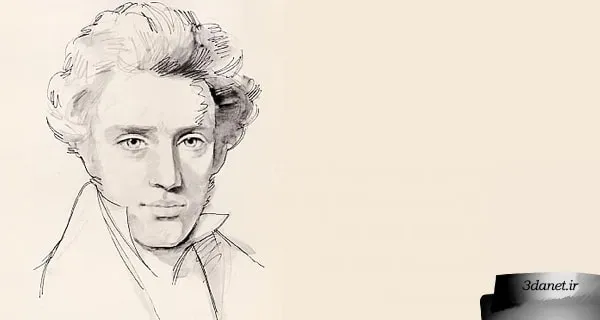
Francis of Assisi saw pain and suffering as the essence of piety and the sole path to God, spending his life consumed by the divine fire. Søren Kierkegaard understood living in the religious sphere as a passage beyond reason and ethics toward absolute love and a one-on-one relationship with God.
God is a fire. He burns, and we burn with Him.
This is the image that Francis, or Francesco, of Assisi—the most famous Italian saint and founder of the Franciscan order in the eleventh century AD—held of God, and according to this image, his entire life was spent in absolute pain and suffering. Pain and suffering that he not only did not consider a reprehensible, immoral, and inhuman matter, but regarded as the essence of true religiosity and the sole path to reaching God. Francis of Assisi, through an existential and subjective approach, arrives at a painful understanding of Christ, and by imitating the pains and sufferings of Christ, he strives to live neither for himself nor for others, but solely for God.
Pain and Suffering as the Price of Living for God:
God is a fire. He burns, and we burn with Him.
This is the image that Francis, or Francesco, of Assisi—the most famous Italian saint and founder of the Franciscan order in the eleventh century AD—held of God, and according to this image, his entire life was spent in absolute pain and suffering. Pain and suffering that he not only did not consider a reprehensible, immoral, and inhuman matter, but regarded as the essence of true religiosity and the sole path to reaching God. Francis of Assisi, through an existential and subjective approach, arrives at a painful understanding of Christ, and by imitating the pains and sufferings of Christ, he strives to live neither for himself nor for others, but solely for God.
According to history, Francesco was born to an Italian father and a French mother, and until the age of twenty, his main occupation was earning ever-increasing income in his father's drapery trade, while his nights passed delicately in debauchery and revelry. All of Francesco's fellow citizens, especially the women, acknowledged that in their entire homeland, no beautiful young man with bright eyes, broad shoulders, and hands as white as a girl's could be found, whose pleasant voice one could enjoy on any pretext and whom one could devour with a glance. His father's wealth and these physical attributes, which existence had freely bestowed upon Francesco, equipped him to hold celebrations and gambling sessions and to set ablaze whatever he possessed. Life for Francesco was entirely this, and he took his pleasure as much as he could and made it dance however he wished. But suddenly, in this ecstatic and intoxicated struggle of life, a single word infected Francesco with a fever: ((change)). A call from God reached his soul and turned his entire being upside down. In this encounter, Francesco saw a face of God of which he had never before had an image. A face more beautiful than the visages carved on wood in churches and far purer than the faces painters had crafted: the unadorned face of the destitute, the fools, and the needy. After hearing the call of Truth, Francesco's destiny changed; he found a lofty ideal, turned to it with his whole being, and rejoiced in it. This ideal of Francesco's warned him away from carnal temptations and, in obedience to God, compelled him to compassion for humankind, animals, and objects. He became the companion of swallows and the interlocutor of wolves, joined the assembly of stones, and sat in conversation with trees. Francesco's strange state and unusual actions caused his separation from natural and social life, but Francesco found all these considerations worthless in comparison to God and occupied himself with nothing other than God. The chroniclers of the history of Christian orders have described Francesco's life after this exceptional and liminal experience as accompanied by countless hardships and sufferings such as: absolute poverty, disregard for social standing, abandonment of city and homeland, home and family, hunger, illness, and grueling acts of worship. Setting aside these astonishing events of Francesco's life, which have been depicted in the works of impassioned novelists like Nikos Kazantzakis, one thing draws the attention of the author of this text: the self-willed pain and suffering that Francesco imposes upon himself to reach God. He who previously lived only for himself, and whose life's governing principle was pleasure, after this tremendous event, in the pure existential states of his being, immerses himself in silence, solitude, and darkness, suffers, and seeks his spiritual wayfaring and stepping onto the roofs of heaven through pain and suffering. The state of this saint is so painful that few can be found who, after encountering this type of God-seeking life, do not ask themselves: why must one act so harshly and gruelingly to reach God? Why must we forget that we are human beings with characteristics like reason and abilities like pleasure and desire? How can one ignore these God-given blessings, damage one's own dignity, and consider the path to God to lie in traversing absolute poverty? Not to be ashamed of begging, and to give body and psyche no opportunity to enjoy drinks and foods—with what justification can this suffering be considered a bridge to reaching God?
The issue can perhaps be better understood from the perspective of the 18th-century Christian mystic-thinker Søren Kierkegaard. The approach this existential thinker offers for such behaviors is noteworthy. In his view, what causes these irrational and rigoristic actions is living in the religious sphere, a place where, by passing through the first two spheres—the aesthetic and the ethical—one transcends oneself and others and "experiences living for God." Kierkegaard's understanding of the religious sphere, derived from his immersion in Christian texts, is based on this triad:
1: The irrationality of religion.
2: The believer passes beyond the universal to have a one-to-one relationship with God.
3: The believer may, by God's will, perform an unethical act to prove their faith.
As is clear, the characteristics of the religious sphere are incompatible with a natural way of living and ethical thinking. But for Kierkegaard, it is a necessary condition for living with God. According to him, to live in the religious sphere, one must put God before all others; in this sphere, one has an absolute duty to God. Kierkegaard took quite seriously fragments of the story of Abraham and Isaac, and the following passage from the Gospel of Luke:
In verse twenty-six of the fourteenth chapter of the Gospel of Luke, as everyone knows, there is a startling teaching about the absolute duty to God: "If anyone comes to me and does not hate father and mother, wife and children, brothers and sisters—yes, even their own life—such a person cannot be my disciple."
This is a hard saying, and who can bear to hear it? It is enough to realize that if this passage is to have any meaning, it must be understood purely literally. God is one who demands absolute love. This absolute love is an experience that a true religious person undergoes, and it is clearly neither compatible with reason nor comprehensible. Kierkegaard's works show that he considered the religious sphere the highest stage of life, and in his own living, he spoke much of entering this sphere. After April 1848, when he underwent a religious experience and, in an exceptional state like Francis, encountered God, "his whole nature was changed." Henceforth, he declares that "the whole of human existence stands in opposition to God," and arrives at a conception of religiosity that is unbalanced and suited only to saints and sworn misanthropes. From this point on, Kierkegaard's suffering begins; he was no longer capable of leading an ordinary life, and it was around this time that he felt drawn toward a life beyond ordinary life, though he did not know exactly what this higher life was, he only knew that he wanted to dedicate his life to God. It was due to this feeling that he compelled himself to sacrifice everything. The first and most important sacrifice was Regine Olsen, the beautiful seventeen-year-old girl whom he deeply loved. A flame had kindled within Kierkegaard that both scorched Regine, breaking off the engagement with her, and caused him to spend the rest of his life in isolation and solitude. It is from this point on that Kierkegaard enters the third sphere of life, imposing excruciating pain and suffering upon himself. He could have married Regine, followed his father's wish to become a pastor, and lived out his life slowly and steadily. But he could not; he had heard the voice of Truth and had been invited to God's burning fire, and had no choice but to sacrifice his entire self. This way of living was not merely a personal choice for Kierkegaard but also a critique he had of the teachings of the Church, a Church that said: merely professing belief in God is sufficient. But Kierkegaard believed that belief in God is not only not that simple, but is the most difficult task in this world. Yet at the same time, we all potentially have the ability to become true believers, and this difficult effort is worth the trouble. Kazantzakis, in his novel God's Pauper, beautifully depicts this critique of the Church by Kierkegaard in the scene of Francis's encounter with the magnificent feast the Church had organized. "The wandering and wayward Francis one day arrives at the famous fortress of Montefeltro, where, amidst the height of revelry and prosperity, a ceremony was being held for the bishop to confer the title of knight upon the son of the local lord and to bless his weapons. Francis bursts into the midst of the feast uninvited, disheveled and wild-looking, and adjures the bishop by the love of Christ to allow him to speak. The bishop, with a contemptuous look, grants permission with the sentence: 'Be brief, for the tables are ready.' Francis, to begin his sermon, picks up the bishop's words and says: 'In heaven, too, the tables have been spread. Yes, my brothers and sisters, the tables are ready and the day of final judgment is near, so we have little time, but even in this short time, we can save our souls. We can still go to heaven and sit at the eternal divine table, but the means of going to heaven are not precious weapons and golden spurs, or silken veils, and feasts and laughter and comfort and luxury. O my dear ones, the path that leads to God is hard and difficult, and it consists of nothing but struggle and sweat and blood.'"
Kierkegaard did not locate truth in religiosity itself but in the relation that the individual establishes with religion. He said that becoming religious requires entering into a one-to-one relationship with God, and no one else can help in establishing such a relationship. Participating in communal worship does not automatically make a person religious. Rather, what brings about religiousness is the individual’s personal experience of a rite—an inward connection, an inner journey that possesses an infinite pull.
Kierkegaard’s sympathy with this mode of religiosity, which stems from his “subjective thinking,” contains something he calls “passion”—something he deems necessary for belief in God. The third sphere of life, in Kierkegaard’s view, is a passionate devotion to God, the very devotion evident in the states of Francis of Assisi. It compels us to imagine what Kierkegaard felt when he spoke of the religious sphere and depicted the ideal hero of this sphere, the “knight of faith”—the supreme exemplar of a religious person—in the story of Abraham and Isaac.
“Abraham and Isaac walked in silence toward Moriah for three days; there was no haste in this agonizing trial. What was passing through Abraham’s heart? An old man who had spent his entire life waiting for the child God had promised him, a child he loved more than his own soul, and now he had to sacrifice this child with his own hands.” Kierkegaard asked: How many people has this story kept awake, as it ought to have done? Instead of giving full weight to the burden—that terrible burden—of Abraham’s readiness to sacrifice his son, people try to sum up the story of Abraham and Isaac with generalities. Abraham had heard God’s voice; therefore, he was prepared to sacrifice not only Isaac but also himself and ethics. For Kierkegaard, Abraham is the greatest knight of faith in all of history precisely because, after hearing the call of Truth, he lived for God and burned in the shadow of love for God.
The justification for the opening question—why pain and suffering are the bridge to God—lies, for Kierkegaard, in the passion that the true religious person acquires by entering the third sphere of life. In this sphere, the individual confronts God not with others but alone, one-to-one. God, that absolute love, seizes the individual’s entire being, leaving no room for him to take pleasure in this existence. In this state, where the whole inner self is filled with longing and rapture for God, the individual inevitably becomes, first, indifferent and, second, careless toward the outer world. As Arthur Schopenhauer put it: The more a person has within himself, the less he demands from without, and the less others can offer him. In the novel The Wayward Saint, Léon—the character who bears the task of introducing Francis and accompanies him through all events—constantly murmurs one thing to himself: How can Francis endure such pain and suffering? Is he not human? Does cold and heat not penetrate him? Does he not feel pain? With what audacity does he kiss the sores of lepers? With what justification does he dance like a clown in the squares and ask people to throw stones at him instead of sweets? No matter what he asks, Francis gives one answer: “This is what God wants of me.” Love! Love! Love! And to console Léon, he says: “What importance do these little misfortunes we endure on the path of love for God have?”
Francis of Assisi, who sacrifices everything for his belief, is, in Kierkegaard’s view, a true religious person who lives by love. After hearing the call of Truth, he sees himself in the abyss of the body and its pleasures, and therefore considers the only way out to be “deeply and sincerely wanting.” Thus, he turns to another way of living—a way of life that Kierkegaard contrasts with the aesthetic mode, namely the religious mode, over which love holds sway. Here is the absolute domain of “subjectivity,” and “choosing oneself” is the most important task of the individual who lives in this way. The aim of such a becoming is self-creation, whereas in the aesthetic mode the individual accepts himself as he is. This mode, though painful, is consciousness-raising and effective. As Miguel de Unamuno said: “Suffering is the path of consciousness, and living beings attain self-consciousness through suffering, for to attain consciousness of oneself, to acquire a ‘personality,’ is to know oneself and to feel oneself distinct from others, and this feeling of separation is accompanied by a violent shock and the endurance of a more or less heavy suffering.”
Francis and Kierkegaard are kindred spirits in their proximity to one another; both find something and live by it. Francis pays the heaviest costs for the choice of sublimation, which in Kierkegaard's language is "living for God." Companionship with absolute poverty, boundless unwanting, whispering in solitude and silence—this is true religiosity, which in Kierkegaard's view is a "face-to-face encounter with God." Both are perpetually seeking to sacrifice and lose, for they know that living for God is not only devoid of leisure and comfort, but is indeed a trial by fire.
If we set aside spiritual inspirations and religious beliefs, the heroic journey of the Italian saint Francis of Assisi is a captivating story of the formation of an idealistic and transformative character who, by entering the realm of absolute love, presents another kind of human being before our eyes, and thus possesses great retellability. The repeated narration of this story and its depiction through painting, architecture, literature, and cinema is not without merit. In this writing, we have tried, without partisan attention, to describe the reason for the states of the Italian saint Francis of Assisi with regard to the psychological explanation of the Danish philosopher and theologian Søren Kierkegaard.
Endnotes
God's Pauper: St. Francis of Assisi, Nikos Kazantzakis, translated by Monir Jazni, Amirkabir Publications, 2008, p. 22
The Most Exalted Friend: Christian Bobin, translated by Pirouz Sayar, Tarh-e No Publications, 2005, p. 20
Ibid., p. 20
Kierkegaard's Philosophy, Susan Leigh Anderson, translated by Khashayar Deyhimi, Tarh-e No Publications, 2008, p. 102
Ibid., p. 104
Kierkegaard in 90 Minutes, Paul Strathern, translated by Ali Javadzadeh, Markaz Publications, 1999, p. 52
Kierkegaard's Philosophy, Susan Leigh Anderson, translated by Khashayar Deyhimi, Tarh-e No Publications, 2008, p. 62
God's Pauper: St. Francis of Assisi, Nikos Kazantzakis, translated by Monir Jazni, Amirkabir Publications, 2008, p. 262
Kierkegaard's Philosophy, Susan Leigh Anderson, translated by Khashayar Deyhimi, Tarh-e No Publications, 2008, pp. 62 and 63
Ibid., pp. 114 and 116
On the Wisdom of Life, Arthur Schopenhauer, translated by Mohammad Mobasheri, Niloufar Publications, 2014, p. 41
God's Pauper: St. Francis of Assisi, Nikos Kazantzakis, translated by Monir Jazni, Amirkabir Publications, 2008, p. 95
Kierkegaard in 90 Minutes, Paul Strathern, translated by Ali Javadzadeh, Markaz Publications, 2008, p. 36
The Tragic Sense of Life, Miguel de Unamuno, translated by Baha'oddin Khorramshahi, Nahid Publications, 2004, p. 193
.
.
Pain and Suffering as the Price of Living for God
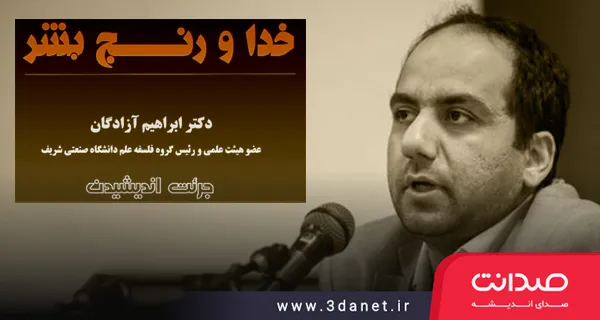
Author: Saeed Houshyar
.
.

Discussion1 comments
مطالب فوق از دو لحاظ مردود است: اول- ریاضت را به معنای عبادت گرفته ، در حالیکه ریاضت غلط وعبادت درست است. دوم- بدون شناخت خالق میخواهد از اطاعت او سخن بگوید و این به بیراهه رفتن است. شرح تو حید و خداشناسی را باید از قرآن همراه با کلام معصومین (ع) بیاموزیم.