Political Science
The Cure for Inefficacy in Iran
Inefficiency in Iran is a predicament that cannot be cured by operational measures alone, because within the vicious cycle of inefficiency, every effort proves futile. Overcoming this problem requires inner transformation, a shift in outlook, and the embrace of responsibility.
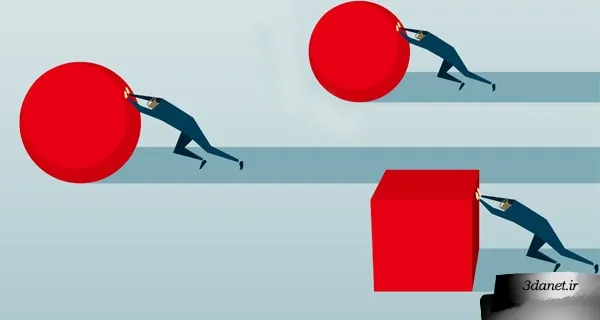
The Cure for Inefficacy in Iran 1
To tell the lost, “You go well,” is sheer oppression and a mighty wrong. How well spoke that seller of remedies: “You need healing, drink the bitter draught.” (Sa‘di, upon him be mercy)
Many experts and thinkers have pointed to the existence of the “problem of inefficacy in Iran” and stressed its importance. For instance, Renani (2006) states:
“Despite the fact that during the post-revolution era, nearly 600 billion dollars in foreign exchange revenues from oil sales have been injected into Iran’s economy, there is still no evidence showing that Iran’s economy and society have seriously entered the development process. Not only do the development indices published annually by the United Nations for the world’s countries confirm such an inference, but the repeated failures in economic policies, along with the persistence of chronic problems (such as unemployment, inflation, the continuous decline in the value of the national currency, the decline in national productivity, the spread of administrative inefficiencies, etc.), also corroborate it.”
Fazeli (2017) considers the “accumulation of inefficacy” to be one of the main factors behind the street protests in recent years and explains:
“All indicators show that we have been highly inefficacious, from water, the environment, and dust storms, to the state of transportation, the economy, and so on.”
Sari‘ al-Qalam (2014) also introduces “inefficacy” as the most important and the “essential core” of the country’s set of issues and problems 2 .
“Inefficacy”: A Problem Without an Operational Solution!
For solving any problem (whether at the individual or societal level), there is a solution or solutions 3 , and by recognizing and acting upon those solutions, the problem in question is resolved. However, regarding the problem of inefficacy, the matter is somewhat different.
Since the system of existence is created and sustained based on laws and relationships (divine traditions, cause-and-effect relationships), every problem is the result of certain causes and factors. Therefore, in order to solve any problem, one must first recognize the causes and factors in question and then take actions so that, as a result of those actions, the causes and factors behind the emergence of the problem are eliminated and the problem ultimately disappears. However, if an individual or a society suffers from the problem of inefficacy (the ineffectiveness of actions), any action taken to recognize or solve this problem will also be inefficacious. In other words, the nature of inefficacy is such that it can be likened to a vicious cycle, an inescapable black hole, or a problem without a solution. The problem of inefficacy is like the hypothetical illness of “non-response to medication,” where any medicine used to treat it becomes subject to “non-response” and proves futile. Of course, one cannot conclude from the above that inefficacy is an “incurable pain,” because not every cure begins with an “operational solution” or “action and practice” 4 . Curing some pains and solving some problems, before engaging in action and practice, requires certain inner transformations; transformations such as a shift in insight, a change in approach, or the like.
The Cure for Inefficacy Requires an Inner Transformation
Inefficacy is among those problems whose resolution, before addressing an operational solution, requires the occurrence of a fundamental inner transformation 5 . In this section, the “inner transformation” in question is described from 3 different perspectives, which are: success literature, development literature, and mystical-Islamic literature.
1- The Transformation of an “Ineffective” Individual into an “Effective” Human Being from the Perspective of Success Literature
Covey 6, one of the well-known experts in success literature, considers the first of the 7 main habits of highly effective people to be proactivity and believes that transforming from a non-proactive person into a proactive person requires “drinking the bitter draught”:
“If you have gathered countless reasons for years as to why you are miserable—especially if you have held a person, persons, or circumstances outside yourself responsible or accountable for this misery—being proactive is by no means easy. You must swallow the bitter medicine. But the moment you swallow it, you attain an exhilarating liberation you have never tasted before” (Covey, 2004: 61).
What Covey means by “drinking the bitter medicine” is that the unsuccessful individual must accept that the primary cause of their misery has been their own choices. In other words, to convince themselves that they themselves chose to be miserable; it is only after drinking this bitter medicine that they will gain the ability to “choose not to be miserable”:
“If a person cannot honestly say, ‘What I am today is because of my choices yesterday,’ they also cannot say, ‘And now I choose otherwise’” (ibid.: 59).
2- The First Step for Backward Societies to Become Advanced Societies, from the Perspective of Development Literature
Stiglitz 7—Nobel laureate in economics and a prominent theorist in development literature—while explaining the situation we refer to as “becoming knowledge-based,” elaborates on the miraculous growth of East Asian countries and explains:
“Their miraculous growth was largely due to ‘closing the knowledge gap,’ which means ‘the gap between more developed and less developed countries in terms of knowledge of how to 8’” (Stiglitz, 1999: 211).
And then he adds:
“Of course, something more than mere knowledge was achieved, which was ‘a change in the way of thinking.’ Explaining this change is difficult: first, facing and coping with change. In other words, accepting the reality that the issue of ‘poverty’—which had afflicted them for centuries—was neither inevitable nor necessary ...” (ibid.: 211 and 212).
He goes on to speak of a shift in perspective; a shift in perspective from:
“an attitude supporting a closed society that knows the truth, toward an open (free) society that knows it does not know the truth” (ibid.: 227).
Therefore, Stiglitz also emphasizes the same point that Covey raised from the perspective of success literature. Meaning that the precondition for the transformation of East Asian societies was that they first accept that the main cause of their issues and problems (such as poverty) was their own decisions and performance. Without accepting this bitter reality, the need and thirst for knowing do not become relevant, and thus the possibility of becoming knowledge-based does not exist, because “knowledge” begins from the point where the individual or society, firstly, accepts “having a problem,” secondly, “their own central role in the emergence of problems,” and thirdly, their deficiency in terms of “acceptable theoretical mastery over their issues and problems,” and therefore, in order to correct their problem-causing performance—which requires gaining theoretical mastery over the issues—engages in learning, acquiring science, and increasing knowledge. Otherwise, that is, if an individual or society, before accepting that firstly, they have issues and problems, secondly, their issues and problems are serious, thirdly, the main cause of the emergence of their issues and problems has been their own inappropriate performance, and fourthly, they do not have acceptable theoretical mastery over the nature of their issues and problems (have not recognized the variables influencing their issues and problems and have not understood the nature of the relationship between them), proceeds to expand science and knowledge, since they have expanded it before feeling a real need for knowledge, the quantities they increase will mostly be manifestations of “rent-based pseudo-knowledge 9,” and the apparent growth achieved will merely be in line with insisting and persisting on this ignorant belief that “We are very knowledgeable!”.
3- The Precondition for Beginning the Spiritual Journey, from the Perspective of Islamic-Mystical Literature
In Islamic-mystical literature, progress is referred to by the concept of “wayfaring” (sayr wa sulūk), the goal of which is nearness and attainment to the Almighty Truth. In most of the classifications that mystics (authorities in the field of mysticism) have presented of the stages of wayfaring, the very first stage is designated as “yaqẓa”—meaning awakening, waking up—or “tawba” (repentance) (Vakili and Hadian Rastani, 2008; Mesbah Yazdi, 2011; Javadi Amoli, 2012).
What the mystics have pointed to using the terms “yaqẓa” or “tawba” is the very transformation that is the prerequisite for beginning the wayfaring, and if the wayfarer engages in other stages (various forms of worship and ascetic practices) before attaining it, their deeds and devotions will be ineffectual and will be nothing more than a pretense.
The Requirement for Exiting the State of “Inefficacy” and Entering the State of “Efficacy”
What is referred to in success literature by the phrase “drinking the bitter medicine,” in development literature by the phrase “a change in the way of thinking,” and in Islamic-mystical literature by the terms “yaqẓa” or “tawba” can be considered an explanation of “a specific transformation” from different points of view. In other words, regardless of the goal for which an individual or society wishes to exit the state of “inefficacy” and become “efficacious,” it is necessary first to experience a fundamental inner transformation—whether the ultimate goal is transcendence, the maximum enjoyment of worldly life, the colonization of others, or any other goal. This transformation consists in, firstly, relinquishing “self-righteousness” or “self-absolutism,” confronting one’s own reality, and opening one’s eyes to the distance that exists between oneself and the desired situation and others; and secondly, accepting that the main cause of this distance has been oneself, because previously, instead of spending one’s resources on recognizing and treating one’s problems, one surrendered oneself to the course of events and devoted all one’s effort to justifying matters, insisting on one’s own superiority, and persisting in blaming others. It is only after the emergence of this transformation that the “resolve to reform” and “action to solve problems and improve conditions” become relevant, because only in this state will the individual or society in question, instead of striving to “make conditions appear desirable” or “make oneself appear right and identify others as guilty,” truly seek to understand the issues and endeavor to improve the situation.
In hope of an efficacious society. .
.
References:
Stiglitz, Joseph. 2017. Appropriate Public Policy for a Knowledge-Based Economy. [Translated by Farshad Momeni and Vahid Ehsani]. Quarterly Journal of Strategic Studies of Public Policy, 7(2), 209-235.
Javadi Amoli, Abdollah. 2012. Ethics Lesson Session (11/08/1391). Isra Information Base. Available at here
Renani, Mohsen. 2006. Transition from the Third Transition: A Precondition for Development in Today’s Iran. Farhang-e Andisheh Magazine. No. 19 Also available at Dr. Renani’s website
Sariolghalam (2014) “What is the Country’s Most Important Problem?”. Niloufar Cultural Site.
Fazeli, Mohammad. 2017. Speech at the Scientific Conference “Examining the Political, Social and Economic Dimensions of the January 2018 Unrest,” House of Humanities Thinkers, 24 January 2018, available at here
Covey, Stephen. 2004. The Seven Habits of Highly Effective People. [Translated by Giti Khoshdel]. 13th Edition. Tehran: Peykan Publishing.
Mesbah Yazdi, Mohammad Taqi. 2011. In Search of Islamic Mysticism. [Compiled by Mohammad Mehdi Naderi Qomi]. Qom: Imam Khomeini Educational and Research Institute Publications.
Vakili, Hadi and Hadian Rastani, Elahe. 2008. Stages of Mystical Wayfaring from the Perspective of Imam Khomeini. Matin Research Journal. No. 41. 127–148.
.
.
1- The content of the present text, with slight modifications, is taken from the concluding section of the author's doctoral dissertation. The details of the dissertation in question are as follows:
Ehsani, Vahid, Azami, Mousa, Najafi, Seyyed Mohammad-Bagher, and Soheili, Faramarz. 2015. Challenges of Rural and Agricultural Development Research and Strategies for Improving Their Effectiveness. Doctoral Dissertation in Agricultural Development, Bu-Ali Sina University.
2- Of course, a segment of society, contrary to this view, believes that Iran's overall performance has been good and defensible, and that those who emphasize weaknesses and flaws are either biased or influenced by the toxic atmosphere of prejudiced media. They consider the majority of issues and problems to be the result of interference and obstruction by domestic and foreign ill-wishers. With respect for the aforementioned view, and for the sake of brevity, the present writing is composed from the perspective described at the beginning of the text.
3- Except for death (if we consider death a problem).
4- Regarding the excessive emphasis prevalent in the country on




Discussion5 comments
سلام و عرض ادب میکنم. نوشتهای در سایت عدم خشونت در همین باره گذاشتهشده، که نویسندهی ارجمند و خوانندگان محترم را فروتنانه به خواندن آن دعوت میکنم: توسعه در ایران، شدنی یا ناشدنی؟! https://ghkeshani.com/developmentiniran/
سلام و درود، با سپاس، مطلب شما را خوانده و استفاده کردم. ارادتمند
سلام تبریک به دکتر احسانی عزیز به خاطر ذهن بازی که دارند. چرا که به سمائلی که خیلی وقت گریبانگیر جامعه ایرانی است از زاویه ای نو نگاه می کنند، زاویه ای که چه بسا تا به حال کسی یا به آن فکر نکرده و یا اگر اندیشیده جرات نوشتن در مورد آن را نداشته است.
سلام و درود بر ابوالفضل عزیز، شما محبّت داری، نظر لظف شماست. البته در تعریف و تمجید مبالغه کرده ای. اگر عرائض من «نو» هم محسوب شوند، صرفاً از جنبۀ «نحوۀ طرح موضوع» است، وگر نه موضوع اصلی مطالبم را از آثار بزرگان وام میگریم و اتّفاقا معمولا به آثار مورد نظر استناد هم می کنم (ارجاع می دهم).
ممنون لذت بردم و یاد گرفتم.