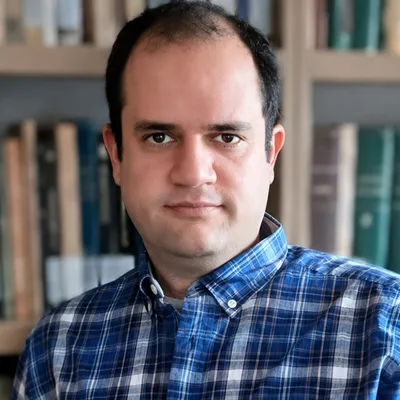
Iranian thinker
Behnam Abutorabian
Behnam AbutorabianArchitecture, Cultural Studies, and Research on the History of TehranIranianb. 1983
A city is not merely a collection of buildings; it is a living memory of the relationship between human beings, history, and land.

Life and Thought
Behnam Abutorabian is an Iranian architect, writer, and researcher specializing in Iranian culture and the history of Tehran. Since 2009, he has collaborated with Mohammad Beheshti on research into Iranian culture and on developing the series Where Is Iran, Who Is Iranian?, while also conducting independent research on the history and heritage of Tehran.
Behnam Abutorabian was born in Tehran on 9 March 1983 and pursued his education in architecture through the master’s level. While studying, he gained professional architectural experience at Naghsh-e Jahan–Pars Consulting Engineers and Shirdel & Associates. His work gradually expanded from professional architectural practice to research on the history, culture, and urban heritage of Iran, especially Tehran.
In 2008, he began serious and professional research on Tehran, part of which was published in the Tales of Tehran series. His book Gozar-e Ilchi: The Site of Griboyedov’s Murder in Old Tehran is among his works on Tehran’s history. Another independent work, From Tehran to St Petersburg and from St Petersburg to Tehran, explores the historical connections between Tehran and Russia in the context of Qajar-era events.
Abutorabian began his research collaboration with Mohammad Beheshti in 2009. One of its most significant outcomes is the series Where Is Iran, Who Is Iranian?, which examines Iranian culture, the relationship between society and land, and the formation of knowledge and historical identity among Iranians. In this project, he worked with Mohammad Beheshti and Elnaz Najjar Najafi in developing and articulating its discussions.
Another collaborative work with Mohammad Beheshti and Elnaz Najjar Najafi is the book Sheikh Baha’i and the Pearl Cannon. A central feature of Abutorabian’s research is his attention to Iranian culture through historical, architectural, and urban instances—an approach that links the study of cities and buildings to questions of identity, historical memory, and Iranians’ relationship with their land.