Iranian thinker
Ebrahim Towfigh
Ebrahim TowfighHistorical SociologyIranian
Life and Thought
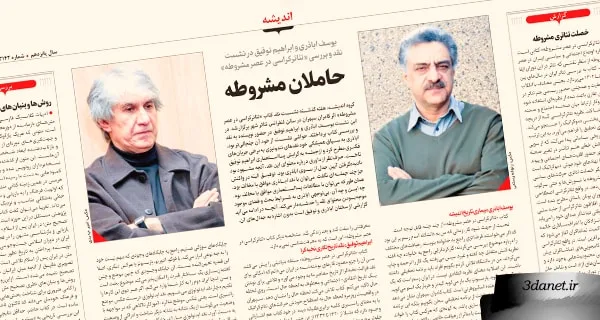
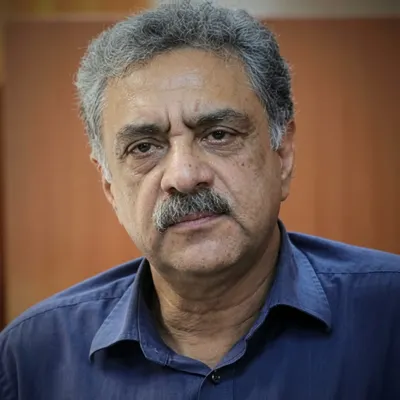
Ebrahim Towfigh, born 1959 in Abadan, is an Iranian sociologist and translator. He earned his PhD in sociology from Goethe University Frankfurt and is best known for his research in historical sociology, the sociology of science, and critiques of dominant narratives of modernity in Iran. Central to his thought is a critique of 'transition theory' and an emphasis on the necessity of a historical and critical understanding of the present condition of Iranian society.
Ebrahim Towfigh was born in 1959 in Abadan. He went to Germany to study sociology and received his PhD in sociology from Goethe University Frankfurt. After returning to Iran, he taught at the Faculty of Social Sciences at Allameh Tabataba'i University and became known in Iranian social science circles as a researcher in the fields of historical sociology and the sociology of science.
Towfigh's works primarily address the problem of the modern state, the knowledge system, the history of the humanities in Iran, and critiques of dominant narratives of the transformation of Iranian society. His works include the German-language book Modernization and Postcolonial Domination in Iran, as well as On the Knowledge System, Reordering the Empire, The Emergence of the Genre of Character Traits in Iran, The Problem of Science and Human Science in the Naseri-era Dar ul-Funun, and Provincializing the Constitution. He has also translated Reinhard Schulze's A Modern History of the Islamic World into Persian.
One of the most important axes of Towfigh's thought is his critique of 'transition theory'—a theory that consistently describes Iranian society as being in a state of passage from tradition to modernity. He believes this framework suspends the present of society and limits the possibility of a critical genealogy of the contemporary situation. In contrast, Towfigh emphasizes a historical, situated, and critical understanding of the formation of the state, knowledge, and society in Iran.
In Towfigh's view, sociology without historicity cannot be sociology, because sociology must explain the process of 'becoming.' For this reason, his work is significant for readers interested in critical social sciences, the history of modern institutions, the sociology of science, and the re-reading of common concepts about contemporary Iran.
Sedanet articles about Ebrahim Towfigh