Foreign thinker
Émile Zola
Émile ZolaNovel writing and the theory of naturalismFrench1840–1902
Truth is on the march, and nothing will stop it.


Life and Thought
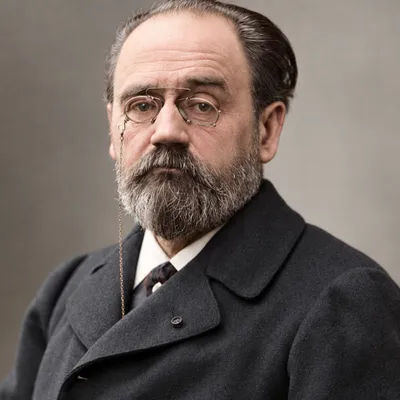
Émile Zola (1840–1902) was a French novelist, critic, and journalist, and the founder and leading figure of literary naturalism, whose twenty-volume Rougon-Macquart cycle brought a scientific, social lens to the role of heredity and environment in human fate. With his open letter "J'Accuse…!" in defense of Alfred Dreyfus, he became one of the symbols of the intellectual's social responsibility.
Émile Zola was born on April 2, 1840, in Paris, and spent his childhood in Aix-en-Provence, where he formed a close friendship with the future painter Paul Cézanne. After a period of hardship in Paris, he first worked at the Hachette publishing house before gradually turning to writing and journalism.
Influenced by the scientific ideas of his era, particularly theories of heredity and the physiologist Claude Bernard's treatise, Zola developed a literary method called "naturalism," which sought to apply the scientific, observational method to the depiction of society. His major achievement is the twenty-volume Rougon-Macquart cycle (1871–1893), which traces several generations of a family through France's Second Empire; notable works in the series include Germinal, Nana, and L'Assommoir.
In 1898, Zola shook French society by publishing the open letter "J'Accuse…!" in defense of the falsely accused Jewish officer Alfred Dreyfus, an act that forced him into a brief exile in England. This made him one of the earliest and most prominent examples of the writer's and intellectual's social commitment in modern history.
He died on September 29, 1902, in Paris, apparently from asphyxiation caused by a faulty chimney flue; some have suggested this death resulted from a deliberate, vengeful act by his opponents, though this theory has never been conclusively proven.