Foreign thinker
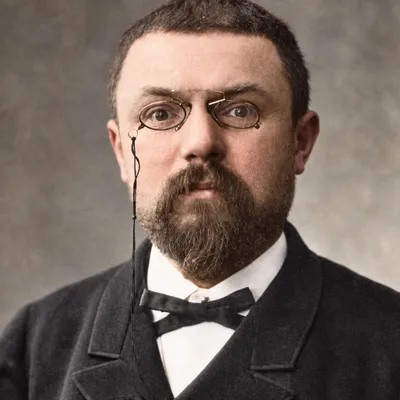
Henri Poincaré
Henri PoincaréMathematics, theoretical physics, and philosophy of scienceFrench1854–1912
"Science is built of facts, the way a house is built of stones; but an accumulation of facts is no more a science than a heap of stones is a house."
In their times
Open in the Timeline of Thought


Life and Thought
Henri Poincaré was a French mathematician, theoretical physicist, and philosopher of science, regarded as one of the founders of chaos theory through his work on the three-body problem and celestial mechanics, as well as a pioneer of algebraic topology. He was also one of the most influential philosophers of science at the turn of the twentieth century, articulating "conventionalism" in works such as "Science and Hypothesis."
Henri Poincaré was born on April 29, 1854, in Nancy, France. He studied at his hometown lycée before entering the École Polytechnique in Paris and continuing his engineering education at the École des Mines. He worked briefly as a mining engineer before turning to mathematical research, receiving his doctorate in 1879. From 1881 he taught mathematics, analytical mechanics, and theoretical astronomy at the Sorbonne, a position he held for the rest of his life.
Poincaré is often regarded as one of the last mathematical "universalists," having made foundational contributions across a broad range of mathematics, theoretical physics, and philosophy of science. His research on the three-body problem in celestial mechanics, for which he won King Oscar II of Sweden's prize in 1889, revealed that such systems could exhibit extreme sensitivity to initial conditions — an insight later recognized as the foundation of chaos theory. Through his work "Analysis Situs," he was also a founder of algebraic topology, and a conjecture bearing his name about three-dimensional spaces remained one of mathematics' major open problems for decades.
In theoretical physics, around 1905 Poincaré arrived, independently of Albert Einstein, at results concerning relativity and Lorentz transformations, and the mathematical structure of special relativity's symmetry group bears his name — the Poincaré group. He also wrote on the simultaneity of events and the conventional nature of certain physical concepts.
Alongside his scientific work, Poincaré wrote philosophy-of-science books for a general readership that remain classics of the field: "Science and Hypothesis" (1902), "The Value of Science" (1905), and "Science and Method" (1908). In these works he articulated a position known as conventionalism: certain foundational scientific principles, such as the axioms of geometry, are in his view neither empirical statements nor absolute a priori truths, but conventions chosen for their usefulness and simplicity. He also disputed the logicist account of the foundations of mathematics put forward by Bertrand Russell.
Poincaré was a member of the French Academy of Sciences and one of the few scientists elected to all five sections of the Institut de France. He died in Paris on July 17, 1912, following complications from surgery.