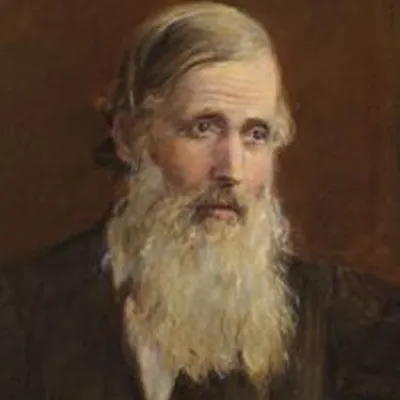
Foreign thinker
Henry Sidgwick
Henry SidgwickMoral Philosophy and Political EconomyBritish
The point of view of any one individual has no inherent superiority over that of any other, unless there is a rational reason for distinguishing between them.
Life and Thought
Henry Sidgwick was a philosopher, economist, and distinguished professor at the University of Cambridge during the Victorian era. He is recognized as one of the most important figures in 19th-century moral philosophy for his methodical and analytical formulation of Utilitarianism and his classic work, The Methods of Ethics.
Henry Sidgwick (1838–1900) was an English philosopher and economist, and the Knightbridge Professor of Moral Philosophy at the University of Cambridge. He matured intellectually within the context of the Victorian era and, in addition to his extensive scholarly activities, was a pioneer of social movements, particularly advocating for women's higher education, and was among the founders of Newnham College, Cambridge.
Sidgwick's unparalleled masterpiece is The Methods of Ethics (1874), which George Edward Moore and John Rawls considered the finest analytical work in the field of moral philosophy in the English language. In this work, Sidgwick examines three principal methods of ethical reasoning: rational egoism, intuitionism, and universal utilitarianism. He sought to establish a rational consistency between moral intuitions and the utilitarianism of Jeremy Bentham and John Stuart Mill, but ultimately acknowledged the 'dualism of practical reason' (the irresolvable conflict between rational self-interest and universal good).
Beyond ethics, Sidgwick also wrote influential works on political economy and political philosophy, including The Principles of Political Economy and The Elements of Politics. His rigorous, critical, and non-dogmatic method of analyzing ethical propositions paved the way for the formation of analytic moral philosophy in the 20th century.




.webp)