Foreign thinker
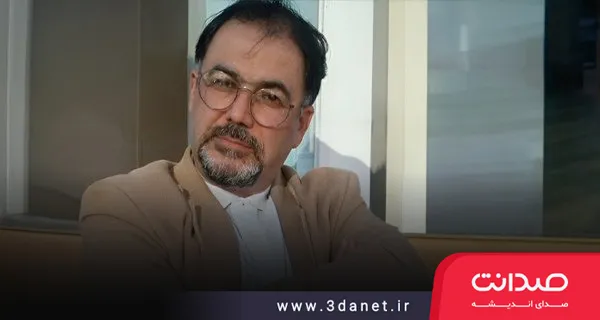
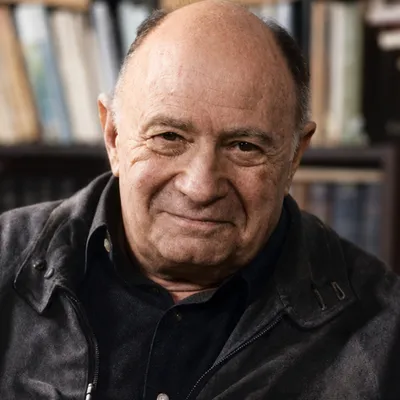
Jacques Ellul
Jacques EllulSociology of Technology and Political TheologyFrench
Life and Thought
Jacques Ellul was a French sociologist, political thinker, Protestant theologian, and law professor. He is best known for his critique of the technological society, his analysis of propaganda, and his defense of human freedom against the domination of modern mechanisms. Books such as The Technological Society and Propaganda are among his influential works for understanding the relationship between technology, power, and modern humanity.
Jacques Ellul was born in 1912 in Bordeaux, France, and died in 1994. He taught law and the history of institutions at the University of Bordeaux, but the scope of his work encompassed sociology, political philosophy, Christian theology, and the critique of modern civilization. Ellul was also active in the French Resistance during World War II, and after the war, he became one of the foremost critics of technology, the modern state, and the propagandistic mechanisms of industrial society.
The central axis of Ellul's thought is the concept of 'technique'; a term that, for him, is not limited to technical tools but refers to the logic of efficiency, calculation, organization, and control in all spheres of social life. In his book The Technological Society, he argues that modern society is governed less by human values than by the domination of technical imperatives and the necessities of efficiency.
In his book Propaganda, Ellul also demonstrates that political and social propaganda in the new world is not merely a tool of totalitarian governments but operates within the heart of democratic societies, through the media, education, public opinion, and everyday life. He viewed propaganda as a mechanism that integrates modern humanity into the existing technical and political order.
Alongside his sociological works, Ellul also produced significant theological writings, striving to examine power, violence, the state, and freedom from a critical Christian perspective. His importance for today's reader lies in the fact that he formulated many contemporary questions about technology, media, propaganda, consumption, bureaucracy, and individual freedom long before these discussions became widespread.