Iranian thinker
Javad Alavi Borujerdi
Javad Alavi BorujerdiShi‘i Jurisprudence and Principles of JurisprudenceIranian
Life and Thought
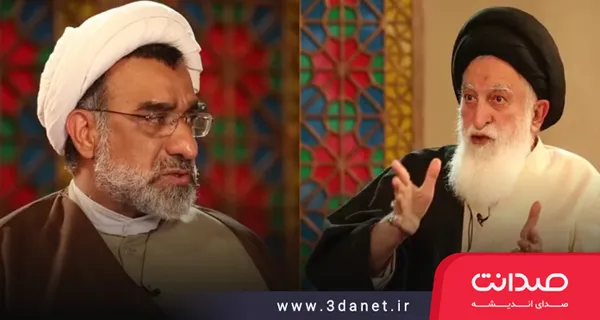
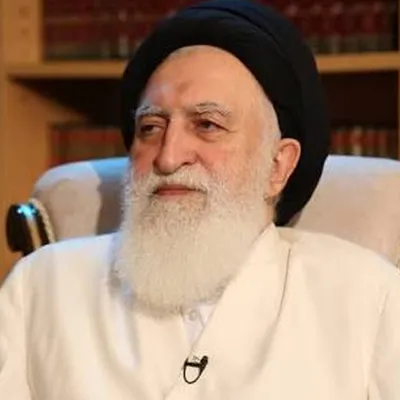
Seyyed Javad Alavi Boroujerdi is a Shi‘i jurist, a teacher at the Qom Seminary, and one of the contemporary maraji‘ of Iran. He is the maternal grandson of Seyyed Hossein Boroujerdi and has put forward critical and reformist views within the framework of the Shi‘i jurisprudential tradition on jurisprudential and usuli topics and the seminary's relationship with new social and legal issues.
Seyyed Mohammad-Javad Alavi Tabatabai Boroujerdi, known as Seyyed Javad Alavi Boroujerdi, was born on April 15, 1951, in Qom. His father was Seyyed Mohammad-Hossein Alavi, a student and son-in-law of Seyyed Hossein Boroujerdi, and his mother was Agha Sakineh, the daughter of Seyyed Hossein Boroujerdi. He began his preliminary education in Qom and, after completing part of his secondary education in Tehran, simultaneously studied religious sciences at the Abdolhossein Bazaar Seminary.
Alavi Boroujerdi returned to Qom in 1969 to continue his seminary studies and studied under teachers such as Hossein Vahid Khorasani and Seyyed Mohammad Rouhani. He began teaching advanced usul (kharij) in 1991 and advanced fiqh (kharij) in 1996, becoming recognized as a teacher of fiqh and usul in the Qom Seminary. In 2018, with the publication of his Resaleh Towzih al-Masael, he formally announced his marja‘iyya.
In Alavi Boroujerdi's works and lectures, attention to the role of reason in jurisprudential inference and the necessity of precise subject-identification in new issues is prominent. On topics such as banking, economics, human rights, minority rights, and the seminary's relationship with modern society, he has emphasized rational understanding and accurate knowledge of contemporary realities. From his perspective, the seminary, when confronting newly arising issues, must correctly understand the nature of the subject before issuing a ruling.
Alavi Boroujerdi is also considered a defender of the seminary's independence from state budgets and interventions and has warned about the widening gap between the marja‘iyya and the people. In his analysis of the historical role of the Shi‘i marja‘iyya, he points to examples such as the Constitutional Movement and believes that the marja‘iyya can be effective when it preserves its social capital and independence.
Among his works are "The Role and Place of Reason in Inference," "The Rule of No Hardship (La Haraj)," "Hajj Rituals," and "Theoretical Foundations of Rapprochement from the Viewpoint of Seyyed Hossein Boroujerdi." A significant part of his works also consists of the transcribed lectures (taqrirat) of the fiqh, usul, and philosophy classes of teachers such as Vahid Khorasani, Seyyed Mohammad Rouhani, Seyyed Mohammad-Reza Golpayegani, Morteza Haeri, Mirza Javad Tabrizi, and Abdollah Javadi Amoli.