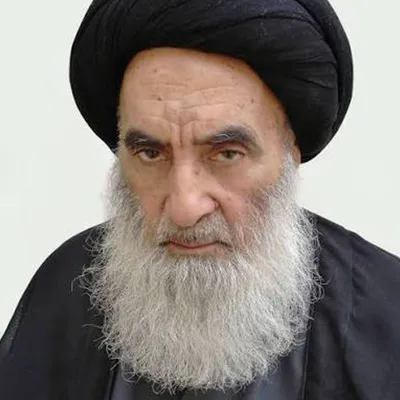
Iranian thinker
Ali al-Sistani
Ali al-SistaniIslamic jurisprudence, legal theory, and Shia religious authorityIranianb. 1930
In their times
Open in the Timeline of ThoughtLife and Thought
Sayyid Ali al-Husseini al-Sistani is a marja' (source of emulation) for Shia Muslims and the leading scholar of the Najaf seminary in Iraq. Born in Mashhad and a prominent student of Grand Ayatollah Abu al-Qasim al-Khoei, he attained the status of marja' after his teacher's death in 1992 and is known as a leading representative of Najaf's "quietist" tradition of limited clerical involvement in politics.
Sayyid Ali al-Husseini al-Sistani was born on the ninth of Rabi al-Awwal 1349 AH (August 4, 1930) in the city of Mashhad, into a family of religious scholars. His father, Sayyid Muhammad-Baqir, and his grandfather, Sayyid Ali al-Sistani, were both recognized scholars in the seminaries of Najaf, Qom, and Mashhad. Sistani began his religious education in Mashhad as a child and continued it in Qom under Ayatollah Borujerdi. In the early 1950s, he moved to the Najaf seminary in Iraq for advanced studies and has resided there ever since.
In Najaf, Sistani was a leading student of Grand Ayatollah Sayyid Abu al-Qasim al-Khoei, one of the major Shia authorities of the twentieth century, and reached the rank of mujtahid in 1960. Following al-Khoei's death in 1992, and after the relatively swift passing of several other senior clerics including Ayatollah Abd al-A'la al-Sabziwari, Sistani was gradually recognized within seminary circles and among followers as a marja' of emulation, a position he has held ever since as the leading figure of the Najaf seminary.
Unlike the theory of "wilayat al-faqih" (guardianship of the jurist) established by Ayatollah Khomeini in Iran, which calls for direct clerical involvement in political governance, Sistani is generally identified with the "quietist" tradition of limited clerical intervention in day-to-day state affairs — an approach generally seen as continuing the intellectual line of earlier Najaf marjas such as al-Khoei. Nonetheless, at key historical junctures, particularly after the fall of the Ba'athist government in 2003, he has intervened in Iraqi political developments through fatwas and statements, including his support for free elections after 2003 and his 2014 fatwa declaring a "sufficient obligation" (wajib kifa'i) of jihad against the group known as ISIS, which led to the formation of the Popular Mobilization Forces.
Sistani has been listed among the most influential figures in the Islamic world in publications such as "The Muslim 500" and was named among Time magazine's 100 most influential people in 2004 and 2005. His office in Najaf supports an extensive network of followers, seminary students, and representatives across Iraq, Iran, and other countries.