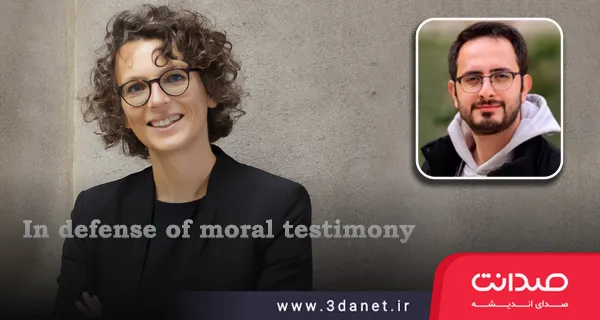
Foreign thinker
Paulina Sliwa
Paulina SliwaMoral Philosophy, Epistemology, and Philosophy of MindPolish
Life and Thought
Paulina Sliwa is a contemporary philosopher and professor of philosophy at the University of Cambridge, whose research focuses primarily on moral philosophy, epistemology, philosophy of mind, and moral psychology. She has conducted research particularly on moral knowledge, testimony, responsibility, and how we understand the thoughts and motivations of others.
Paulina Sliwa is a contemporary philosopher and professor of philosophy at the University of Cambridge. Her research encompasses several related areas of contemporary analytic philosophy, including moral philosophy, epistemology, philosophy of mind, and moral psychology. A significant part of her work is devoted to questions about moral knowledge, testimony, and how we understand the minds and motivations of others.
Sliwa pursued her academic studies in philosophy at the University of Cambridge and Princeton University, receiving her PhD from Princeton. Before joining the University of Cambridge, she held an academic position at University College London (UCL). Her research has been published in specialist philosophy journals and has examined topics such as moral testimony, moral knowledge, blame, responsibility, and understanding others.
One of the prominent axes of Sliwa's research is the relationship between epistemology and ethics. In this area, the question of how humans can know moral truths and what place should be accorded to the testimony of others in acquiring moral knowledge is of particular importance. Her research on testimony also fits within the broader context of social epistemology, a field that studies humans' epistemic dependence on the speech, reports, and expertise of others.
Another part of Sliwa's work concerns understanding other minds and moral psychology. In this research, she addresses issues such as knowing the reasons, motivations, and attitudes of persons and the connection of such knowledge to moral judgment and responsibility. Thus, her works lie at the intersection of epistemology, ethics, and philosophy of mind and are part of contemporary debates in analytic philosophy about knowledge and human action.