Philosophy
Translation of Paulina Sliwa's “In Defense of Moral Testimony” by Omid Keshmiri
Moral testimony does not deserve its current disrepute, and relying on the moral beliefs of others is no more problematic than relying on non-moral beliefs. Paulina Sliwa traces the difficulties of particular cases to ignorance or hidden motives, not to the principle of deferring to testimony itself.
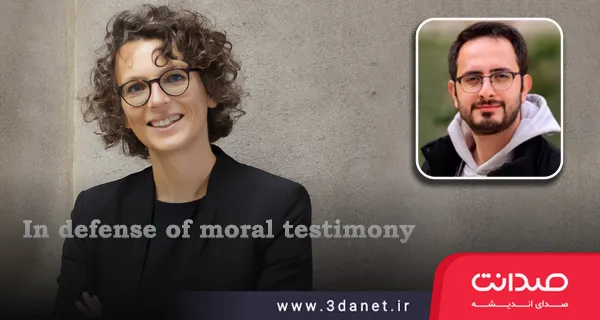
In Defense of Moral Testimony
Paulina Sliwa[1]
Translator: Omid Keshmiri
About the Author:
Paulina A. Sliwa is a professor at the University of Cambridge. She works extensively in the fields of moral philosophy, the epistemology of testimony, moral psychology and religion, and the philosophy of mind, and has numerous publications on these subjects. In the present article, she addresses the possibility of acquiring moral knowledge through testimony, the role of moral knowledge in praise and blame, the relationship between moral understanding and moral knowledge, and the nature of moral advice.
Download the PDF file of the article In Defense of Moral Testimony in the original language
Download the PDF file of the translation of the article In Defense of Moral Testimony in Persian
In recent [philosophical] debates, moral testimony has little credibility.[2] The prevailing view is that while testimony is a suitable source for non-moral beliefs, basing moral beliefs on it is not without problems. This article argues that moral testimony does not deserve this bad reputation, and that moral testimony is in no way more problematic than non-moral testimony.[3]
Some hold that there is an intuitive problem with deferring to others in one's moral beliefs: as if there is something valuable in arriving at moral beliefs by oneself. Hills, for example, argues:
Once you are a mature adult with the ability to think about moral issues on your own]...[ you have strong reasons to do so, and consequently, refusing to do so is unacceptable.[4]
Although children may need moral education and therefore must accept what their parents say about what is right or wrong, it seems that as adults we should not rely on others for our moral beliefs. The concern about moral testimony is supported by examples such as the following:
Vegetarianism: Eleanor has always enjoyed eating meat but has recently realized that eating meat faces certain moral challenges. However, instead of reflecting further on these problems, she talks to a friend who tells her that eating meat is wrong. Eleanor knows that her friend is usually trustworthy and reliable. For this reason, she trusts her and accepts that eating meat is wrong.[5]
There seems to be something wrong with Eleanor's behavior. We can also imagine more complex cases:
The Suit: Sam is standing on the shore of a lake and sees a child drowning. He believes that saving the child is a good thing, but doing so would ruin his expensive new suit. He cannot decide what to do, and there is no one else at the lake. So he decides to call a friend whom he considers reliable. His friend tells him he should save the child's life, and Sam trusts him and saves the child's life.
Why are these examples so troubling? Some believe that what makes these cases peculiar is that they are instances of moral testimony. They argue that if Eleanor had asked her friend non-moral questions, there would be no problem at all. Therefore, we must conclude that there is a problem in principle with moral testimony. Specifically, what makes these examples troubling is a principle like this:
Testimony Forbidden: relying on testimony in moral beliefs is not permitted for the mature moral agent, even if the mature person considers that source reliable and trustworthy.
If a principle such as “Testimony Forbidden” is correct, it will have consequences in both moral epistemology and metaethics. Some take the asymmetry between moral and non-moral testimony as a reason that what matters in moral epistemology is not moral knowledge[6] but moral understanding.[7][8] Others hold that the asymmetry between moral and non-moral testimony has broad implications for metaethics. In particular, they argue that if moral testimony turns out to be problematic, this can be used as an argument against moral realism[9] and in support of non-cognitivist approaches to ethics.[10]
Beyond all this, when we deal with the deep and obscure facts of the empirical world, we defer to others, others who are in a better position than us to discover these truths. In such cases, even an unconsidered and complete deference to the opinion of experts seems correct. If, by analogy, there exists a realm of deep and obscure moral facts, it is a natural expectation that some of us—namely, specialists in [the field of] ethics—are in a better position than others to discover these facts. Therefore, moral deference should not seem stranger to us than deference in the domain of scientific or geographical matters.[11],[12]
Given the views of moral realists who believe that moral facts are no different from non-moral facts, the burden of proof is on them to provide an explanation for any epistemic asymmetry.[13]
The aim of this paper is to show that there is, in principle, nothing wrong with moral testimony; in fact, moral testimony is no more problematic than non-moral testimony. My strategy is this: in the first section, I will present an argument for the falsity of the Testimony Forbidden principle, and then in the second section, I will defend this argument against a critique. In the third section, I will revisit the aforementioned examples that gave rise to concerns about moral testimony and better demonstrate their flaws. I will show that in such cases, the problem is not the agent’s reliance on the testifier’s testimony, but rather moral ignorance, the controversial nature [of the subject], or hidden motives are what cause the problem. Finally, I will examine two arguments that have been put forward to explain and defend the “Testimony Forbidden” principle. According to the first explanation, moral testimony is epistemically problematic because it does not give us moral knowledge. According to the second explanation, moral testimony is defective because it is incompatible with valuable moral agency. I will argue that neither of these attempts succeeds, and therefore there is no difference between moral and non-moral testimony.
The Argument from Moral Advice
The scenarios at the beginning of the discussion that supported the Testimony Forbidden principle are highly atypical. What was inferred from those examples was that moral testimony is a strange, peculiar, and unusual phenomenon. Yet relying on others in our moral beliefs is a commonplace phenomenon. This is something we all do by requesting and receiving moral advice, and we have good reasons for it. To obtain a better picture of the role of moral testimony, more examples must be examined. In this section, I will explore concrete cases where individuals rely on moral advice. I will argue that these cases are intuitively unproblematic and that agents’ reliance on moral advice is a desirable thing. Indeed, I will argue that relying on moral advice is no different from moral testimony, and therefore any general principle such as Testimony Forbidden must be false. I want to begin with relatively ordinary cases of moral advice.
Wedding: Tom and Sarah are planning their wedding, and both of their families have offered to contribute financially. Sarah’s family, who have fewer assets than Tom’s family, offered a specific amount that covers less than half of the costs. Now, the couple is confused about whether they are permitted to ask Tom’s family (who have more assets) for additional help. Their concern is that requesting a greater contribution from the parents of one family might not be fair. They finally decide to discuss the matter with a friend whose judgment they trust.
Journey: Anna is a journalist who is about to travel to a dangerous, war-torn region to prepare a report. She must inform her family about her trip, but she really does not know what to tell them. If she tells them why and exactly where she is going, they will be extremely worried. On the other hand, she is concerned that by evading their questions, she will inevitably end up lying. She is in great turmoil and cannot decide what the right thing to do is, and ultimately decides to seek help from a friend whose judgment she trusts.
Friends: Susan’s friends are making nasty jokes about the new girl in class. She is worried that her friends might go too far and cause the girl distress and harassment. But when she spoke to her friends, they insisted that what they were doing was just a simple joke. Susan does not know what to do. If her friends are bullying, she should intervene. But they are her friends, and she does not want to cause trouble for them. Moreover, she is not entirely sure that what they are doing constitutes bullying. She ultimately decides to seek advice from one of her friends.
Intuitively, there is no troubling problem in these examples. In all of them, the person’s reliance on their friend’s judgments and consulting with them seems like a good thing. One might have the concern that in such cases, the person is not really relying on another’s moral judgment. After all, “fairness,” “lying,” and “bullying” are thick terms, so there might be a worry that when agents request moral advice, they are not actually seeking moral information at all. It should be noted that not all moral consultations seem to genuinely involve a request for moral information. When the couple asks their friend, “Is it right to ask Tom’s family for a greater contribution?” their concern might be how Tom’s family will react to this proposal. They might not be so worried about whether their request of Tom’s family is fair, but rather about whether Tom’s family will see the proposal as fair; and in this case, they are not relying on their friend’s moral judgment, but on their psychological insight. Now suppose their friend tells them: “Don’t do it. Tom’s family will be upset,” and they accept that they should not do it. They might only be relying on their friend regarding the belief about whether Tom’s family will be upset by this proposal, and then use this non-moral finding to issue their own moral verdict.
In any case, it seems clear that not all requests for moral advice are really requests for psychological information in the guise of a request for moral testimony. In some cases we are in doubt about the right action, but not because we lack non-moral information, but because we are uncertain about the moral status of the action or situation. In this regard, we can imagine that Tom and Sarah have a good idea of how Tom's parents will react to their request and know that Tom's parents would be happier with more involvement. Yet, they still doubt whether their request is fair. Similarly, Anna may know that if she remains silent about the nature of her trip, her family will be very upset, and if they discover the truth, they will accuse her of lying. Nevertheless, she may doubt whether those accusations are justified, because she is not sure whether what she intends to do really counts as lying. Finally, Susan may be aware of the psychological effects her friends' behavior has on that classmate, but she doubts whether their behavior really constitutes bullying, as distinct from mere teasing. Thus, when we accept someone's moral advice, we are in fact relying on their moral judgment, and in the cases examined, relying [on others] seems to be a good thing.
Why can seeking moral advice from someone be good? In relying on another person's moral judgment, we acknowledge that the person is in a better epistemic position than us regarding the moral judgment in question, and we can have perfectly good reasons for doing so. Why should we consider another person to be in a better position for moral judgment? There are at least two good reasons for doing this. First, we may worry that our [moral] judgments are influenced by bias or personal desire. The second reason is that we may believe the other person is better than us at certain moral judgments.
Concerns about bias are an important motivation for seeking moral advice. Understanding what the right thing to do is often requires us to adopt an impartial perspective on our actions and to suspend irrelevant factors in our moral reasoning; but this is not an easy task. It is difficult to know whether, in a given situation, one's reasoning is influenced by morally irrelevant criteria. Even when we suspect our reasoning is affected by biases, it is difficult to know the extent of this influence, so even if we realize our reasoning is biased, we may still not be in a position to correct it. In such situations, we must rely on moral advice. We must rely on the judgment of a person who is not subject to the biases we suffer from. Thus, in the Friends case, Susan may worry that her judgment about the girl being harassed is unreliable because her friends are involved in the matter. Apart from this, we rarely judge our friends decisively and are more inclined to make excuses for their behavior. But merely knowing this is unlikely to help her act better. In fact, if she tries to correct for this bias, she might err on the side of excessive caution and overreact to harmless jokes. Therefore, seeking advice is the best thing she can do.
Similarly, in the Wedding case, Tom and Sarah may worry that their interests are influencing their judgment about the fairness of asking Tom’s family to contribute more. After all, if the total contributions from their parents do not cover the wedding expenses, they will have to either pay the remainder out of their (empty) pockets or make changes to their plans to reduce some costs. Thus, the notion that asking Tom’s parents for a larger contribution is fair would be to their advantage. Moral judgments often require us to set aside our own interests and preferences or to [re]evaluate reasons that favor us in light of the interests and concerns of others. In such cases, we seek moral advice because we do not trust our own moral judgment. The reason we consider another person to be in a better epistemic position is that our personal interests are unique to us, and in this respect, others are not influenced by this distorting factor [in their decisions].
Of course, we do not seek moral advice solely because we think our moral judgment might be mistaken. We might rely on someone’s moral advice because we believe they possess better moral discernment. We might hold the view that another person has better insight than us regarding a moral norm, because understanding whether a moral norm should be applied in a situation is a skill. A skill that is not merely theoretical knowledge but also involves practical knowledge. Practical knowledge has various levels and degrees: for example, some people are better than others at discerning whether a situation is unjust. They have a higher skill in grasping distinctions and can recognize situations that are not obvious to others.[14] To understand what I have in mind, consider the following example of social norms:
Impoliteness: Anna tries to observe the social norm of politeness and is highly sensitive to adhering to this norm, but sometimes she cannot tell whether the tone of her speech, behavior, or an email she is writing is impolite. She worries about this because she does not like to be impolite. For this reason, whenever she is uncertain, she relies on her friend’s judgment.
It is no surprise how Anna concludes that her friend has better judgment regarding impoliteness compared to herself. The issue is not that Anna is unfamiliar with the concept of “impoliteness,” but rather that her capacity for discernment is less than her friend’s, and her friend has greater insight in this area. While the tone of two emails does not seem particularly different to Anna, to her friend, one of them is clearly more polite. The reason for this is not simply that her friend makes better psychological judgments and assessments. After all, whether an email is polite or not is not just a matter of whether a [particular] recipient feels offended reading it; rather, the question is whether, if a typical person felt offended reading that email, their feeling would be appropriate and reasonable. For this reason, Anna relies on her friend whenever she feels the need for better discernment skills. She trusts her friend’s judgments about the impolite tone of emails, even if she did not previously have such a perception of her own tone. This predicament of Anna’s does not seem uncommon. It is clear that some people are better than others at applying social norms; therefore, it is plausible that something similar holds true for moral norms. Just as Anna can believe that her friend is in a better epistemic position regarding the assessment of impoliteness, we too can sometimes believe that another person has better judgment in applying a moral norm [to a specific situation].
What makes someone more adept and proficient regarding a moral norm? If, for example, recognizing the injustice of a situation is a practical ability and knowledge, then practice and experience become relevant. Perhaps learning how to apply a moral concept is very much like learning how to read a medical X-ray. You must have seen various examples of it to recognize the white spots and patterns that indicate disease, and the more experience you have, the better you can identify misleading cases. Similarly, to learn the skill of distinguishing situations in which someone has been treated fairly from those in which they have been treated unfairly, you must have encountered such cases.
The fact that we have different backgrounds means that some of us have more experience than others in applying specific moral concepts and making particular moral distinctions. Someone who grew up with many siblings probably has better insight into considerations of fairness compared to someone who was an only child. A student from a minority group is likely more sensitive regarding whether a remark is racist compared to their white peers. Therefore, even if their white friends believe that racism is wrong, they might still defer to the minority student's judgment to determine whether a particular joke is racist or merely unpleasant. Similarly, a man who is himself opposed to sexism[15] can ask his female friend's opinion about whether a statement is sexist.[16] Of course, it is not simply the case that anyone with more background regarding a moral norm necessarily has more skill. The mere fact that someone grew up in a large family does not guarantee they have better judgment about fairness, just as being a woman does not guarantee that one is a good judge of sexism, and a statement might not be sexist, yet she might interpret it as sexist. Nevertheless, it still seems plausible that certain backgrounds make a person more reliable in applying some specific moral norms.
If some moral distinctions are indeed a matter of practical knowledge[17], this gives us an additional reason to seek moral advice, and to get moral advice from someone we consider better than ourselves at discerning the matter. This not only helps us do the right thing, but can also improve our own ability to discern. If you are learning how to read a medical X-ray, it is better to consult a supervisor with more experience than you in cases where you are unsure. Similarly, Anna can develop a better personal skill and ability in recognizing rudeness by referring to her friend's opinions, and trusting a female friend's judgments about sexist remarks can lead to acquiring the personal skill of understanding such distinctions.
I have argued that moral testimony is a good thing for two reasons: it is morally good because it helps us do the right thing in cases where we might have erred without using moral testimony, and it is epistemically good because it allows us to take advantage of our friends who are in a better epistemic position to make distinctions and reach correct moral conclusions. In short, we seek and rely on moral testimony because, in many respects, we are creatures prone to error and distraction, susceptible to biases, with limited ability to discern in some domains, and moreover, we are aware of all these shortcomings. Moral testimony allows us, despite all these limitations, to do the right thing by drawing on the cognitive resources of our fellow human beings.
توجه داشته باشید که ما دقیقاً به همین دلایل به مشورتهای نااخلاقی تکیه میکنیم. تصور کنید که یک پزشک برای کمک گرفتن در تشخیص بیماری بر اساس عکس پزشکی تهیهشده با اشعۀ ایکس از همکار خود مشورت بخواهد. ممکن است به خاطر سوگیری درخواست کمک کند به خاطر که بیمار دوست او است و او نگران است که این [تعلّقِ] دوستی بر داوری او تأثیر بگذارد، چراکه بسیار مشتاق و امیدوار است دوستش سالم باشد. یا ممکن است نگران این باشد که تجربۀ کافی برای تفسیر درست نتایج را نداشته باشد، چراکه تجربۀ زیادی در مشاهدۀ این نوع خاص از تصاویر نداشته است یا ممکن است فکر کند بیش از حد کار کرده و کمخوابی دارد و به همین دلیل آنچنان به قضاوتهای پزشکی خود اعتماد ندارد. این پزشک در اتخاذ مشورت پزشکی از همکار خود، بر گواهی تکیه کرده است. او باوری را بر مبنای گفته همکارش میپذیرد، چراکه همکارش را قابل اعتمادتر از خودش میداند. بر همین سبیل، موارد مشورت اخلاقی که پیشتر از آن بحث کردم، مصداق گواهی اخلاقاند، [توضیح اینکه] هنگامی که از کسی مشورت اخلاقی میگیرید، غالباً یک باور اخلاقی را بر مبنای گفتۀ آنها میپذیرید. (من در بخش بعدی بیشتر از این ادعا دفاع خواهم کرد). واضح به نظر میرسد که پزشک در گرفتن مشورت پزشکی هیچ کار نادرستی انجام نداده است. به نحوی مشابه واضح به نظر میرسد که در موقعیتهایی که در بالا توصیف کردم، هیچ اشکالی در کسب مشورت اخلاقی از دوستتان وجود ندارد. اما اگر هیچ اشکالی در گرفتن مشورت اخلاقی وجود ندارد و تفاوتی میان گرفتن مشورت اخلاقی با پذیرش گواهی اخلاقی وجود نداشته باشد، پس [اصل] گواهی ممنوع میبایست نادرست باشد و هیچ اشکالی ندارد که در باور اخلاقی خود به دیگران تکیه کنید.
آیا مشورت اخلاقی همان گواهی اخلاقی است؟
من استدلال کردهام که موارد زیادی از گواهیهای اخلاقی در قالب مشورت اخلاقیاند و اشکالی در مشورتهای اخلاقی وجود ندارد. بنابراین [اصل] گواهی ممنوع باید غلط باشد: مشکل عامی درباره گواهی اخلاقی وجود ندارد، همانطور که در خصوص گواهی نااخلاقی نیز چنین مشکلی وجود ندارد. در این بخش به یک انتقاد به استدلالم پاسخ میدهم. به گفته هیلز، گواهی اخلاقی و مشورت اخلاقی از یکدیگر متمایز و به شکل معناداری متفاوتاند؛ بنابراین این واقعیت که مشورت اخلاقی اشکالی وجود ندارد موجب نمیشود که گواهی اخلاقی نیز همینطور باشد.
طبق گفته هیلز، چه تفاوتی میان گواهی اخلاقی و مشورت اخلاقی وجود دارد؟ او استدلال میکند هنگام پذیرش یک گواهی اخلاقی وضع و حال گواهی اخلاقی با مشورت اخلاقی متفاوت است:
... شما به سادگی هرچه میشنوید باور میکنید شما تلاش نمیکنید دلایلی را که به سود p هست گردآوری کنید و خودتان به نتیجه برسید؛ یا برای فراهم کردن تبیینهایی به سود گزارههای اخلاقی پذیرفتهشدهتان تلاشی نمیکنید. شما به سادگی به چیزی که به شما گفته میشود باور میآورید.
مطابق نظر هیلز، به محض اینکه متوجه شدید گویندهای قابل اعتماد است،
... بدون این که داوری خود درباره آن موضوع خاص را به کار ببندید، به سادگی به سخنان او اعتماد میکنید. در این حالت، [به جای این که به قضاوت خودتان اتّکا کنید] به قضاوت دیگران تکیه میکنید.
در مقابل، در پذیرش توصیۀ اخلاقی، شما «به چیزی که به شما گفته شده است باور نمیآورید.» بلکه:
[گواهی] را در معرض تیغ تیز نقادی قرار میدهید و بنابر شایستگی آن تصمیم میگیرید که آن را بپذیرید یا خیر. شما آنچه را دیگران به شما گفتهاند به عنوان راهنمایی برای تأملات خودتان در نظر میگیرید.[18]
اما این تفکیک میان گواهی اخلاقی و مشورت اخلاقی قابلقبول نیست و نمیتواند موارد مشکلدار را از غیرمشکلدار متمایز کند. برای مثال مواردی از گواهی اخلاقی وجود دارند که مشکلدار نیستند، اما جزء مواردی نیستند که گواهی را صرفاً نوعی راهنما برای تأملات شخصی میدانند. من در بالا چندین مثال از این قبیل موارد آوردم. در این نمونهها عاملانْ به مشورت اخلاقی اعتماد میکنند، چراکه میخواهند کار درست را انجام دهند، اما دربارۀ قابل اعتماد بودن استدلال خود نگران هستند یا این که تصور میکنند در آن موارد شخص دیگری نسبت به آنها قضاوتهای اخلاقی بهتری دارد. در هر دو مورد گواهی نقش بسیار اساسیتری از صرف «راهنمای تأمل» بازی میکند؛ با این حال به نظر نمیرسد عامل در اتکا به آن گواهی هیچ کار اشتباهی انجام داده باشد. اگر عاملان بررسی انتقادی بیشتری کنند بهتر است؟ خیر. در واقع به نظر میرسد که در چنین مواردی، بررسی مجدد بعد از دریافت گواهی، ممکن است دقیقاً همان کاری باشد که نباید انجام داد. از این گذشته اگر عامل نگران این باشد که داوری اخلاقیاش سوگیرانه باشد، هیچ تضمینی وجود ندارد که بررسی بیشتر او سوگیرانه نباشد یا بیشتر تحت تأثیر دلایل خودپسندانهاش قرار نگیرد. و همین که شروع به تأمل دوباره میکند، راه را برای تسلیم شدن در برابر فریب و دلیلتراشی برای کنار گذاشتن گواهی باز میکند. در این موقعیتها تأمل مجدد تنها میتواند موجب افتادن در ورطۀ ضعف اراده باشد.[19] در خصوص مواردی که عامل در طلب مشورت اخلاقی است، به این دلیل که فکر میکند دوستش در این مورد تشخیص اخلاقی بهتری دارد چه میتوان گفت؟ در این موارد نیز واضح نیست که چرا باید به دنبال بررسی نقادانه بود. زیرا روشن نیست بررسی انتقادی چه کمکی میتواند بکند. مشورت اخلاقی دقیقاً به همین دلیل بسیار مفید است که میتواند وسیلهای برای پایان دادن به تأملات شخصی در این باره باشد که چه چیزی درست است.
بنابراین موارد زیادی از مشورت اخلاقی وجود دارند که در آنها گواهی اخلاقی صرفاً راهنمایی برای تأملات خود شخص نیست، و با وجود این، شخص] در اتکا به چنین مشورتهایی[ هیچ کار اشتباهی انجام نمیدهد. از سوی دیگر گواهی اخلاقی و نیز گواهی نااخلاقی، اغلب تأمل انتقادی بیشتری نسبت به آنچه هیلز پیشنهاد میدهد دارند. در واقع ممکن است تکیه بر گواهی بدون تأمل مجدد، از حیث معرفتشناسانه عقلانی نباشد. برای دیدن چرایی آن بررسی نمونهای افراطی و خارج از حوزه اخلاق مفید است. فرض کنید من به پزشکی مراجعه میکنم که در زمینۀ یافتن راهی برای درمان سردردم او را فردی موثق و قابل اعتماد میدانم. پزشک به من میگوید سردرد من با خوردن یک قاشق مرباخوری سیانور قابل درمان است. حال حتی اگر تا قبل از گواهی، آن پزشک را قابل اعتماد و موثق میدانستم، اگر «صرفاً به چیزی که میگوید باور بیاورم» از حیث معرفتشناسانه، کاری نامعقول کردهام (و به احتمال زیاد کشته خواهم شد). علت این نامعقول بودن این است که گواهی قابل اعتماد به طور کلی تنها بخشی از دلیلی است که من در اختیار دارم. در این مثال من شواهد دیگری در خصوص سردرد و تأثیرات احتمالی سیانور دارم. چیزی که لازم است انجام دهم این است که دلایل گواهیبنیان را در برابر تمام دلایل دیگری که دارم و گواهیبنیان نیستند سبک سنگین کنم. این امر مستلزم بررسی متأملانه نسبت به خودِ گواهی است. حتی در این موارد که گواهیِ گوینده تنها دلیلی است که درباره مسئلهای دارم، عقلانیت معرفتشناختی همچنان مستلزم این است که به قابل قبول بودن آنچه به من گفته میشود فکر کنم. از این گذشته حتی کسی که معمولاً قابل اعتماد و موثق است ممکن است در آن موقعیت خاص خسته باشد، قرص مصرف کرده باشد یا شوخی کرده باشد. پرسیدن اینکه «چه چیزی باعث شد به این نظر برسی؟» راهی است آسان برای بررسی این که آیا گوینده واقعاً به این مشکل فکر کرده است؟ آیا واقعاً به عمق مسئله پی برده است؟ آیا به درستی متوجه مسئله شما شده است؟ از سوی دیگر چنین سؤالی راهی است برای کنار زدن این احتمالاتی مثل اینکه او فقط بخواهد از دستمان خلاص شود، در حال شوخی کردن با ما باشد، یا مست باشد. به همین دلیل است که اغلب به سادگی و بدون پرسش به حرفی که به ما گفته میشود باور نمیآوریم و سناریوهایی که در آن عامل [اخلاقی] چنین پرسشهایی را مطرح نمیکند شهوداً مشکلدار به نظر میرسند.[20]
The attempt to distinguish advice from testimony on the grounds that one involves critical reflection and the other does not is mistaken, both in moral and non-moral cases. Testimony is sometimes accompanied by a considerable amount of scrutiny, as when you convince yourself that the doctor really knows what they are doing when they prescribe cyanide for your headache. In some cases, seeking advice rarely occurs] and we turn to testimony instead[, such as when you do not trust your own judgment on a particular matter. And there are many cases that fall in between, depending on whether your request for a recommendation is because you want to end your deliberations and reach a definite conclusion, or because you need help thinking further about the issue, and also on how much help you need. Moral advice and moral testimony are not fundamentally different. Rather, moral advice is simply a subset of moral testimony; moral testimony is testimony about certain practical questions: questions about whether we should do such-and-such? Is doing it a good thing for us? Or what is a good way to do something? Since many moral questions are practical questions, [that is,] questions about what we should do, most moral testimony will take the form of moral advice.[21]
Ignorance, Disagreement, Hidden Motives
I have argued that there are plenty of unproblematic instances of moral testimony, so we must reject the no-testimony principle. But what about the initial examples like Suit and Vegetarian that seemed to reinforce the no-testimony principle? I agree that these cases are problematic. However, in this section I will argue that the reason they are problematic is not that there is something wrong with moral testimony in principle. I will distinguish three things that can go wrong when a person needs testimony. I will argue that these factors can explain our inner unease regarding the problematic scenarios. But these factors do not indicate anything problematic about moral testimony itself. In particular, I will argue that these factors can make instances of non-moral testimony problematic as well.
Moral Ignorance
Generally, we seek moral advice because we do not know what the right thing to do is. Testimony is primarily a way of sharing information and dispelling ignorance. The request for moral testimony is itself evidence of the agent's moral ignorance. Moral ignorance is a complex thing: there are many reasons that can cause a person to err in finding the right action. I will argue that it is this moral ignorance that drives our intuitions and inner unease in some of the more worrying cases of moral testimony. What engages our intuitions in these cases is not that the agent remedies their moral ignorance by relying on testimony, but rather that they are morally ignorant in the first place. Some instances of moral ignorance are problematic in themselves. But I will argue that once we realize it is the ignorance that is problematic, we will see that not only is there nothing wrong with remedying ignorance through testimony, but on the contrary, in some of the most problematic cases of moral ignorance, turning to testimony is precisely what the person should do. Recall one of the initial examples:
Suit: Sam is standing on the shore of a lake and sees a child drowning. He believes that saving the child is a good thing, but doing so will ruin his expensive new suit. He cannot decide what to do, and there is no one else by the lake. So he decides to call a friend whom he considers trustworthy. His friend tells him that he should save the child's life, and Sam trusts him and saves the child's life.
This request for testimony is not merely unusual; it seems utterly bizarre. That Sam cannot figure out that saving a child's life is more important than the cost of an expensive suit indicates a major flaw in him. Consider another example:
Isaac, who is an extremist, wants to kill Tamara because he is angry with her. But he is not sure whether this is morally permissible. He decides to ask his rabbi what he should do. The rabbi tells him that he should not kill Tamara, and Ron accepts this.
Here, too, the fact that one should not kill someone merely out of anger is a clear moral truth and does not require complex moral analysis. Ignorance of such basic moral truths indicates a serious flaw in the individual's moral sensitivity [to moral reasons]. This is despite the fact that these individuals are not all that bad. They are not sociopaths[22] who have no moral concerns whatsoever. They have the motivation to do the right thing; they are just very poor at figuring out what is right. But this deficiency in these individuals cannot justify their wrongful behavior. They are worried about making the wrong decision, and that is why they seek moral advice.
What is troubling about these cases is the agents' ignorance of basic moral truths. But have they also committed a further error in relying on moral testimony for their beliefs? Such an assumption is by no means plausible. On the one hand, it is not clear what the better alternative is. After all, leaving them to their own devices would likely lead them to incorrect conclusions and cause them to commit serious moral errors. Therefore, relying on testimony is precisely what they should do. We might worry that someone who lacks the ability to grasp moral truths might be bad at discerning who is trustworthy in their moral judgments. But even if they are not very good at discerning the trustworthiness of others' judgments, they can still rely on testimony, because almost anyone is in a better position than they are to make moral judgments. Their situation is like that of someone who suffers from severe color blindness and therefore must rely on others for correct judgments about colors. Although such a person is not good at assessing the trustworthiness of others regarding color judgments, their reliance on testimony is unproblematic; because presumably, anyone's color vision is better than theirs.
I have argued that what makes some of these acute cases of testimony problematic is not the testimony itself, but the ignorance that prompts the request for testimony. And it seems that this problematic ignorance is neither a characteristic of moral testimony nor a characteristic of moral ignorance. Non-moral ignorance can also be problematic, and when it is, it makes some cases of non-moral testimony seem intuitively problematic. Consider the following example:
Mark, who is a misogynist, believes that women are less intelligent than men. He encounters many instances of conclusive evidence that this is not the case. For example, there are many intelligent women in his university classes, the top student of their academic program is a woman, and so on. The conclusive evidence cannot convince him that his view about women is incorrect, but it somewhat undermines his confidence, and he decides to seek advice from his (male) friend, whom he considers reliable and trustworthy. Mark's friend tells him that women are not less intelligent than men, and Mark believes this statement.
Or this case:
Susan doubts that sensory experience is a reliable source of belief. She decides to ask a friend whose judgment she trusts about this. Her friend tells her that sensory experience is a reliable [source], and Susan believes her.
These cases seem odd. It is not as though there is a general principle that prevents one from asking how women perform on IQ tests. But in this example, Mark should not be pursuing such a question. Because he is a misogynist, he does not know that women are in no way inferior to men in intelligence. So although his doubt concerns an empirical claim, his ignorance is problematic. If he were not trapped in the cage of his misogyny, the facts would be immediately apparent to him. His misogyny has made him insensitive to evidence. Susan's case also seems very strange: it is odd that a sane person would genuinely doubt whether her sensory perception is a reliable source for her beliefs. Susan has clearly become immersed in some skeptical debates and has lost touch with reality. Now, although these examples are strange and unusual, they do not lead us to conclude that there is a problem with non-moral testimony. Similarly, we should not be tempted to draw such a conclusion about moral testimony [and deem moral testimony invalid].
Dispute
Consider the initial scenario that motivated the No Testimony principle:
Eleanor has always enjoyed eating meat but has recently realized that meat-eating faces ethical challenges. Instead of thinking further about these challenges, she speaks with a friend who tells her that eating meat is wrong. Eleanor knows that her friend is trustworthy and reliable, so she believes her and accepts that meat-eating is wrong.
Eleanor doubts whether eating meat is morally permissible. But her ignorance does not seem to be what is problematic in this case. After all, the question of the permissibility of eating meat is by no means as simple as the question of saving a drowning child, nor as clear as the question of whether one may kill someone at whom one is angry. This question is a complex issue and there are many controversies surrounding it. [That is to say,] this topic involves questions about the moral status and rights of animals, about livestock farming practices, about the environmental impact of animal agriculture, and the effects and consequences of our dietary habits. A great many reasonable people who are concerned with doing the right thing have thought hard about this topic and yet have reached different conclusions. All of this leads us to conclude that we should not consider questioning and ambiguity about whether eating meat is immoral or not, and doubt regarding their assessment, as a flaw, and this is probably the situation in which Eleanor finds herself. She recognizes that there are ethical problems with eating meat, but she is uncertain about what conclusion to draw. This ignorance is not due to a serious defect or flaw in Eleanor, but rather to the difficulty of the issue itself. As long as the scenario and the issue itself are problematic, one cannot lay the blame on moral ignorance.
The problem with this issue is that Eleanor wants to resolve her moral ignorance through testimony. The very factors that make Eleanor's ignorance unproblematic rule out relying on testimony to resolve her ignorance. The question of whether eating meat is wrong is a highly contested question, such that even intelligent, fully informed, and thoughtful people disagree about it. But given that there is so much disagreement on this topic, mere testimony is not a reliable source for moral beliefs. This is why Eleanor cannot rely on just any friend's (testimony), because even if they are generally trustworthy, they may not be reliable on this particular issue. The friend Eleanor asks about this happens to believe that eating meat is wrong. But there are many other people who, while being reasonable, trustworthy, and generally reliable, believe the opposite, and if Eleanor had posed this question to any of them, she would have arrived at a contrary opinion and belief.[23]
Again, this issue is not specific to moral testimony. Consider this example:
You have bought a painting that, because of its high price, you think is genuinely a Monet[24], but now that you have hung it on your living room wall, you have doubts about its authenticity. You decide to consult experts, and it turns out there is considerable disagreement about the painting's authenticity. Some experts insist that the painting is indeed a Monet, while others argue it is a forgery. This debate has been ongoing for some time, and both sides point to evidence in support of their view.
Can you rely on the testimony of one of the experts to resolve your doubts about whether your painting is real or fake? Clearly, you cannot; this is a highly contentious issue. You cannot comfortably side with one party. It is evident that from the fact that the authenticity of your painting is disputed, and you are not in a position to determine which of these experts is right, it does not follow that there are no art experts or that you would never be justified in trusting them; rather, it simply indicates that you cannot trust their testimony on contentious matters, precisely because you lack the means to identify the correct view on these issues. Similarly, the problem with Eleanor's reliance on moral testimony regarding vegetarianism is not a general problem concerning the trustworthiness of moral testimony, but rather the problem is that Eleanor is not in a position to discern who is right about this particular question of whether she can eat meat. She has no means of understanding who is in the right, not because this is a moral question, but because it is a contentious issue. This does not mean moral testimony is problematic, but merely entails the principle that testimony is not a reliable source of belief on contentious matters; a principle that equally rules out some instances of both moral and non-moral testimony.
Hidden Motives
Finally, there is a third factor that can explain our intuitive concern about soliciting moral testimony in some cases. In all the cases of testimony I have focused on so far, the motive of the person seeking advice is to do the right thing, and their doubt is about what that is. But not all requests for testimony stem from a desire to do the right thing. Sometimes hidden motives are at play. Consider this example:
Whenever Susan has to make difficult moral decisions, she asks her mother for advice. When it turns out she has made the wrong choice, she immediately shifts the blame onto her mother, saying she only acted that way because of what her mother said and advised.
Here, Susan's reason for asking her mother for moral advice is not a concern for doing the right thing and doubt about what it is. Although it may seem so, Susan is not actually seeking moral advice at all. Her reason for relying on her mother is not to resolve her moral doubt, but rather she wants her mother to make the decision for her. Moreover, her reason for doing this is not a concern for doing the right thing. She simply wants to be able to shift the blame onto someone else if a mistake occurs. She is trying to shirk responsibility for her own actions.
Or consider the vegetarianism case again:
Eleanor has always enjoyed eating meat, but recently she has realized that eating meat faces certain moral challenges. Instead of thinking further about these challenges, she talks to a friend who tells her that eating meat is wrong. She knows her friend is usually a reliable and trustworthy person, so she believes her and accepts the wrongness of eating meat.
Suppose we acquire further background information. Eleanor is a very shy teenager who tries desperately to fit in with her peers. She is solely preoccupied with saying or doing whatever makes her stand out. Taking this additional information into account, what likely prompted Eleanor to ask her friend for advice about becoming vegetarian was her desire for peer approval, not a concern with doing the right thing. It may appear that she is seeking moral advice, but in fact she is not. She wants to see what her friends think about the rightness or wrongness of eating meat, and the actual permissibility or impermissibility of the act does not matter to her. Eleanor, exactly like Susan in the previous example, wants someone else to make the decision for her, and her motive for doing so is something other than what the right thing to do is. What Susan and Eleanor are doing is clearly wrong. The problem is that they want others to decide for them, not that they have used moral testimony. Indeed, one can easily imagine similar cases that involve non-moral testimony:
John works in a large laboratory. He is very selfish and is extremely worried about making a mistake that would upset his supervisor. For this reason, he is not even willing to analyze the lab data himself and delegates the data analysis entirely to his colleague, and whenever a mistake occurs, he immediately blames him.
John’s deference to his lab colleague is no less problematic than Susan’s and Eleanor’s deference, even though this deference is not about a moral proposition. It is wrong because John delegates decision-making to his colleague so that he himself bears no responsibility for his actions.
Consider another, different example:
Maria is very timid and has no self-confidence whatsoever; she thinks she can never handle anything. Whenever the outcome of her work turns out badly, she blames herself and takes it as proof of her stupidity and inadequacy, and whenever she gets a good result, she thinks she was just lucky. One day she decides that from now on she will not make decisions herself and will delegate all moral decisions to her husband.
This example is also highly problematic. Maria relies on her husband not just for moral testimony but for her decisions. She does not seek advice from her husband; she uses him to decide for her what to do or not to do. But unlike the previous examples, she does this not out of a desire to avoid the consequences of her actions, but because of a lack of self-esteem. In these circumstances, Maria’s autonomy and independence are at risk. She seems to have relinquished her agency. So, in this example too, the problem is not moral testimony. In fact, if we consider Maria’s dependence on her husband in all non-moral matters as well, from the clothes she wears and the food she eats to how she maintains her health, these examples would still seem problematic. Therefore, these cases may resemble instances of testimony, but they should not be classified as such. In these cases, unlike testimony, instead of relying on others to acquire a belief and then deciding for themselves based on that belief, individuals use others to make decisions in their place.
Defending the Prohibition Principle: Moral Expertise and Moral Worth
In this section, I examine two defenses of the prohibition principle. The first defends an epistemological version of the prohibition principle, according to which the problem with moral testimony is that it cannot give us moral knowledge. According to the second, moral testimony is morally problematic because relying on moral testimony is incompatible with one’s actions having full moral worth.[25]
Moral Expertise
Some are of the view that there are epistemological reasons that give cause for concern regarding moral testimony. Specifically, some have argued that in order to rely on testimony, one must be in a position to identify a moral expert. But according to this view, moral expertise is a contentious issue, because even if moral experts do exist, it is difficult to figure out how we can recognize them. Why is it thought that there is something special and problematic about moral expertise? McGrath's suggestion is that we identify experts by asking them controversial questions and checking whether they have given the correct answer. However, since we do not have direct access to moral facts, we cannot do this in the moral domain:
Unlike [non-moral judgments], there seems to be no comparable way to gauge the correctness or reliability of someone's moral judgment, because the person lacks independent access to the moral facts. If one were to rank others according to the correctness of their moral judgments by examining how they often answer controversial questions correctly, it seems that one could only do this by applying first-order moral reasoning and one's own reflection. Hence, it is not surprising that it is difficult to obtain clear and explicit reasons showing that someone has an unusually reliable moral judgment. Even if there were brilliant moral experts, finding such a person in the sphere of moral expertise is certainly questionable. [26]
I contend that this suggestion is not a good method for identifying any kind of expert, whether in the moral domain or outside it; I also argue that the lack of an "independent check" cannot explain the assumption that relying on moral testimony is problematic. Moreover, we do not need an "independent check" to rely on testimony. Finally, I will show that even if expertise is necessary for testimony, only a very weak kind of expertise is required. For accepting someone's word on certain matters to be justified, the most you need is to believe that the other person is reliable on this particular subject. I argue that we can easily have such reasons.
Asking highly controversial questions is not an acceptable suggestion for identifying experts of any kind. Suppose you are trying to figure out whether you should trust your doctor regarding a headache medication prescription. According to McGrath's conception, what you should do is ascertain the medical expertise of the treating physician, and according to her view, your way of discerning your doctor's medical expertise is to ask her a controversial medical question. So you might have to ask about cancer treatment or whether the origin of allergies is environmental pollution and see if she gives correct answers to those questions. Of course, this is not a test you could undertake, and more importantly, the reason is not merely a lack of background information and medical training. In fact, if what identifies a medical expert is whether they answer controversial medical questions correctly, it seems that no one is in a position to identify a medical expert; because the nature of controversial medical questions is such that even people with the necessary experience and training do not know what the correct answers to them are. If checking who has given the correct answer to a controversial question were [easily] possible, these questions would not be controversial in the first place.
The requirement of an “independent check” for recognizing expertise is problematic. Recall that what we were trying to explain was why an agent should reach moral conclusions on her own, rather than relying on others for her moral beliefs. But if what makes moral testimony epistemically problematic is the absence of an “independent check,” then it is difficult to say why it is better for an agent to trust her own moral judgment rather than relying on the moral judgment of her friend. Moreover, the lack of an “independent check” not only prevents the assessment of others’ trustworthiness but also makes it impossible to assess one’s own trustworthiness; one is no longer in a position to check whether she herself has followed the right path, let alone in a position to assess whether another is on the right path. Hence, relying on others or trusting oneself are epistemically similar. Therefore, the fact that we lack an “independent check” for arriving at moral truths cannot explain why, epistemically, reliance on moral testimony is suspect compared to one’s own moral judgment.
More importantly, it is clearly implausible that we need an “independent check” to rely on moral testimony. I can rely on others’ testimony about what they have said and heard. But I am in no position to assess the reliability of their perceptual faculties without abandoning my own senses, just as I cannot assess another’s moral judgments without relying on my own moral reasoning. Similarly, I can rely on someone’s mathematical testimony, but I have no “independent access” to mathematical truths, and the only way I can assess your reliability is by relying on my own mathematical reasoning or that of others I trust. Therefore, for the epistemic justification of relying on someone’s testimony in certain domains, you neither need to assess their answers to controversial questions in that domain, nor do you need “independent access” to the facts in that area; rather, you need a reason to believe that the person is trustworthy on that subject. It is not difficult to see how you could have such justification. As I showed earlier, you can easily have good reasons to believe that another person is more trustworthy than you on certain moral questions. This is either because you think your own judgment is impaired in this particular case, or because you have reason to believe the other person performs better than you in a specific moral discernment. Perhaps you have previously observed that the person makes good moral judgments and you know that she has reflected on the subject under discussion. Or perhaps someone whose judgment you trust has recommended her to you as a good advisor. Perhaps you have asked her some related moral questions and seen that she gives reasonable and logical answers to those questions. None of this differs much from how you are justified in non-moral testimony.[27]
Moral Worth
I want to examine a final attempt to defend [the principle of] testimonial prohibition, which claims that moral testimony is morally problematic because it is incompatible with morally worthy actions. According to recent accounts of moral worth, an action possesses moral worth only when the agent performs it for the reasons that make it right.[28] Both Hills and McGrath hold the view that when a person relies on testimony, her action will lack moral worth, even if she does the right thing. They argue that moral agents need moral understanding to be motivated by the right-making reasons.[29] This requires that the moral agent possess beliefs about the reasons that make an action the right thing to do, not merely believe that the action is right.[30] As McGrath argues:
If a person does A because she believes that A is right, but does not understand why A is right, this diminishes the action’s status.[31]
The assumption that moral understanding is a necessary condition for morally worthy actions is a problematic assumption; nevertheless, I will not argue against it here[32] but I will argue that moral testimony is not an obstacle to morally worthy actions, even if morally worthy actions require moral understanding; first, moral testimony can aid you in moral understanding, second, even in cases where the testimony itself is not sufficient for attaining moral understanding, moral testimony does not prevent your actions from having moral worth.
What is moral understanding? Hills argues that moral understanding includes a set of abilities such as the ability to derive and follow explanations and formulations of reasons for a morally worthy action.[33] According to Hills, the fact that moral understanding includes these abilities and also that moral understanding is valuable gives us a compelling reason not to rely on moral testimony:
Given the importance of attaining and employing moral understanding, we have strong reasons showing that we should not trust moral testimony and should not consult moral experts.[34]
However, it is puzzling why we cannot explain the wrongness of relying on moral testimony. After all, I can tell you that what you intend to do is wrong because it is cruel or unkind, so based on my testimony, you can learn both the wrongness of your action and why it is wrong. Consequently, it is hard to see why, assuming the importance of moral understanding, we find "strong reasons" to set aside trust in moral testimony. Even if in some instances, testimony is not sufficient for attaining understanding, this does not mean we have reasons to set it aside. In fact, sometimes testimony may be necessary for acquiring moral understanding. There is no difference here between moral and non-moral instances. We value not only moral understanding but also, for example, scientific understanding. Although testimony may not always be sufficient for understanding physics, it nonetheless plays a very important role through things like textbooks and scientific lectures.[35]
But suppose you act on the basis of moral testimony in a situation where the testimony is not sufficient for arriving at moral understanding. Does your action there have moral worth? Note that moral testimony is in fact a means of resolving matters in times of moral uncertainty. When I am not sure whether p is the right thing to do, I have a moral reason to resolve my doubt in a way that is most likely to lead to the right outcome. If I have a reasonable belief that another person is in a better epistemic position than I am, then I have a moral reason to seek moral advice from that person. Therefore, someone who both trusts moral testimony and seeks moral testimony out of a desire to know the right action, does the right thing (i.e., resolving their uncertainty) and does it for the right reasons (they need to resolve their uncertainty with the right action) and has moral understanding (they have a reasonable belief that the other person is in a better position to discern the right action). Thus, that person's seeking and trusting moral testimony is a morally worthy action. If they had not sought moral testimony or had not accepted it despite believing the testimony was reliable, they would be deserving of blame, and if they shied away from trusting testimony they consider reliable because they wanted their action to be morally worthy, they would be even more deserving of blame.
بنابراین خواستن یا به کاربستنِ مشورت اخلاقی عملی است که از نظر اخلاقی میتواند ارزشمند باشد و عامل اخلاقی در آن میتواند سزاوار ستایش یا سرزنش باشد. اما نگرانی مکگراس و هیلز در خصوص رفتاری بود که از گواهی اخلاقی ناشی میشود. اگر درخواستِ گواهی اخلاقی و پذیرش آن گواهی که شخص آن را قابل اعتماد میبیند از جهت اخلاقی ارزشمند است، آیا عملی که از آن نشأت میگیرد نیز در کمال ارزش اخلاقی است؟ اگر سام به گواهی دوستش که میگوید باید به درون دریاچه بپرد و جان کودک را نجات دهد تکیه کند، آیا نجاتدادن جان کودک توسط او به لحاظ اخلاقی عملی ارزشمند است؟[36] حتی اگر عملی که بر مبنای گواهی اخلاقی است در نهایتِ ارزش اخلاقی نباشد، این نشاندهنده آن نیست که گواهی اخلاقی مانع ارزش اخلاقی است.[37] بلکه با توجه به جهل اخلاقیِ شخص، ممکن است انجام یک عملِ کاملاً ارزشمند واقعاً یکی از انتخابهای [ممکن] او نباشد. به ماجرای سام دوباره بیندیشید. فرض کنید سام با دوستش تماس نمیگیرد و به همین خاطر طلب گواهی اخلاقی هم نمیکند. او اگرچه میداند احتمال این که دوستش به پاسخ درست برسد بیشتر از این است که خود او پاسخ درست را بیابد، اما به جای گرفتن گواهی به استدلال خودش اتکاء میکند. اما فرض کنید که از قضا بهدرستی به این نتیجه میرسد که باید جان کودک را نجات دهد. در این ماجرا روشن نیست که نجاتدادن کودک توسط او حقیقتاً از نظر اخلاقی تحسین برانگیز باشد. از این گذشته او در تکیه به بررسیِ خودش، عمل پرخطری انجام داده است. عمل او حتی اگر از حیث اخلاقی ستایشبرانگیز باشد، در عین حال به این خاطر که در پی گواهی اخلاقی نبوده است سزاوار سرزنش است. ضمن اینکه او دلیلی دارد که دوستش در قیاس با او بیشتر احتمال دارد بفهمد چه کاری بایسته است. در این مورد اگر مانعی در کار است که نمیگذارد عمل او نهایتِ درجه ارزش اخلاقی را داشته باشد، آن مانع جهل سام است نه اتکایش بر گواهی اخلاقی.
نگرانی در خصوص این که عمل یک شخص مستحق حداکثر اعتبار اخلاقی است عجیب به نظر میرسد. به نظر میرسد نگرانی در خصوص اینکه آیا نجاتدادن جان کودک توسط سام اخلاقاً ارزشمند است به همان اندازه عجیب است که نگران باشیم کسی که شناگر مطمئنی نیست و برای نجات جان یک کودک از دوستش درخواست میکند خود را داخل آب پرت کند، از اعتبار و ارزش اخلاقی تمام و کمال بهرهمند باشد. در نهایت مهم این است که ما کار درست را انجام دهیم. با توجه به اینکه از نظر شناختی محدودیت داریم، معمولاً درخواست کمک از کسی که میدانیم در درک عملِ بایسته عملکردی بهتر از ما دارد، بهترین کاری است که میتوانیم انجام دهیم. البته شخص اخلاقیِ کامل که از همه واقعیات اخلاقی و نااخلاقی آگاه است نیاز نیست که به گواهی اخلاقی عمل کند. در واقع او لازم نیست به هیچ نوعی از انواع گواهی تکیه کند. او همواره در جایگاهی است که بنا بر دلایل درست، کار درست را انجام میدهد. اما بسیار سادهلوحانه خواهد بود که بکوشیم همچون شخصی عمل کنیم که از نظر اخلاقی در وضعیتی ایدهآل قرار دارد.
نتیجهگیری
من استدلال کردم که گواهی اخلاقی مشکلدارتر از گواهی نااخلاقی نیست. این مدعا نباید تعجبآور باشد چراکه [همانطورکه] گواهی نااخلاقی بسیار مهم است چون ما موجوداتی خطاپذیر با منابع شناختی محدود هستیم. گواهی اخلاقی نیز دقیقاً به دلایل مشابه مهم است و ما همانطور که به گواهی نااخلاقی تکیه میکنیم، به گواهی اخلاقی نیز اتکا میکنیم. این سخن به این معنا نیست که در مواردِ ذکرشده که موجبِ اصل گواهی ممنوع شده بود، هیچ اشکالی وجود ندارد. این موارد مشکلدارند، اما استدلال کردم که اشکال آنها به این علت نیست که مصادیقی از گواهی اخلاقیاند. من تبیین بهتری برای آنچه باعث نادرستی آنها بود ارائه کردم و استدلال کردم که گواهیهای نااخلاقی هم دقیقاً به همان دلایل میتوانند مشکلدار شوند. در نهایت استدلال کردم که گواهی اخلاقی با عمل ارزشمند اخلاقی سازگار است. در واقع به نظر من مطالبه گواهی اخلاقی میتواند در برخی اوقات بهترین کاری باشد که میتوانیم انجام دهیم.
Acknowledgments The author extends her gratitude to the following individuals for their helpful comments and discussions: Nomy Arpaly, Alex Byrne, Tom Dougherty, Tyler Doggett, David Gray, Daniel Greco, Sally Haslanger, Brian Hedden, Richard Holton, Sophie Horowitz, Miranda Fricker, Elissa Mai, Julia Markovits, Josh Schechter, Miriam Schoenfield, Daniel Star, Katia Vavova, and Kenny Walden. The author also wishes to thank audiences at the 2011 Bellingham Summer Philosophy Conference, the 2011 Rocky Mountain Ethics Congress, the Boston University Ethics Group, and the MIT Work in Progress Seminar.
References
Annas, J. (2003). The structure of virtue. In M. DePaul & L. Zagzebski (Eds.), Intellectual virtue:
Perspectives from ethics and epistemology. Oxford: Oxford University Press.
Anscombe, E. (1981). Authority in morals. In The collected philosophical papers of G.E.M. Anscombe,
iii: Ethics, religion, and politics. Oxford: Oxford University Press.
Arpaly, N. (2003). Unprincipled virtue. Oxford: Oxford University Press.
Christensen, D. (2007). Epistemology of disagreement: The good news. Philosophical Review, 116(2),
187–217.
Coady, C. A. J. (1992). Testimony: A philosophical study. New York: Oxford University Press.
Driver, J. (2006). Autonomy and the asymmetry problem for moral expertise. Philosophical Studies,
128(3), 619–644.
Gibbard, A. (1990). Apt choices, wise feelings. Cambridge: Harvard University Press.
Hills, A. (2009). Moral testimony and moral epistemology. Ethics, 120(1), 94–127.
Holton, R. (2010). Willing, wanting, waiting. Oxford: Oxford University Press.
Hopkins, R. (2007). What is wrong with moral testimony? Philosophy and Phenomenological Research,
74(3), 611–634.
Jones, K. (1999). Second-hand moral knowledge. The Journal of Philosophy, 96(2), 55–78.
Lackey, J. (2008). Learning from words: testimony as a source of knowledge. Oxford: Oxford University
Press.
Markovits, J. (2010). Acting for the right reasons. Philosophical Review, 119(2), 201–242.
Markovits, J. (forthcoming). Saints, heroes, sages, and villains.
McGrath, S. (2009). The puzzle of pure moral deference. Philosophical Perspectives, 23(1), 321–344.
McGrath, S. (2011). Skepticism about moral expertise as a puzzle for moral realism. Journal of
Philosophy, 108(3).
Nickel, P. (2001). Moral testimony and its authority. Ethical Theory and Moral Practice, 4(3), 253–266.
[1]. Paulina A. Sliwa
[2]. To see this notoriety, one need only glance at these titles. See, for example:
Nickel(2001); Hopkins (2007); Hills (2009); Driver (2006); McGrath (2009)
[3]. There has been much recent discussion on the epistemology of non-moral testimony. See Coady (1992) and Lackey (2008)
For the purposes of this paper, I do not commit myself to any particular position in the epistemology of testimony. My argument is simply that moral testimony is no different from non-moral testimony, regardless of which theory of non-moral testimony is correct.
[4]. Hills (2009, p. 95)
[5]. Hills (2009, p. 95)
[6] moral knowledge
[7]. moral understanding
[8]. See: Hills (2009)
[9] moral realism
[10] non-cognitivism
[11]. See McGrath (2011, p.12)
[12]. Since I argue that there is no difference between moral and non-moral testimony, I do not think there is a particular problem for moral realists. Even if the two were different, it would pose the same dilemma for moral realists and plausible non-cognitivist views. While emotivists have an easy explanation for why moral testimony is problematic, such views are not plausible because they cannot account for moral disagreement. On the other hand, more sophisticated views on disagreement, such as Gibbard's norm-expressivism, do not have a ready, good explanation of the asymmetry [between moral and non-moral testimony]. In fact, some of these views explicitly permit us to rely on others for our moral norms. For example, Gibbard (1990) writes: "If in the right circumstances another person independently finds a norm valid, I too should accept that norm, just as if I had understood and accepted it myself" (p. 180). In general, it seems that for any non-cognitivist view that makes room for moral disagreement, there is no simple explanation for the deep difference between moral and non-moral testimony.
[14]. You might worry that in all the unproblematic examples of moral testimony discussed so far, the moral agent accepts another person's word, without reasoning, about whether an action is an instance of their accepted moral norm. Thus, you might worry that I have not shown that we can acquire a new norm based on testimony. I address this concern in the next section. There, I will show that where accepting a new norm based on testimony seems problematic, the fault does not lie with testimony. Apart from this, I doubt that we can draw a precise distinction between accepting a moral norm and learning how to apply a moral norm to instances.
.[16] The original example in Jones (1999) is also of this type. In this example, Jones argues that Peter should defer to his (female) roommate's judgments about sexism. Jones uses this example in an argument that has a narrower conclusion than mine. I argue that relying on moral testimony is generally unproblematic, not merely that it is unproblematic in some cases.
[17] Practical knowledge
[18]. Hills (2009, p. 122–123)
[19]. See Holton (2010)
. [20] See Christensen (2007).
.[21] For example, advice is often expressed this way: “Here’s what I think…” so the speaker, when giving advice, does not speak imperiously and dogmatically, as they do when testifying.
[22]. psychopath
.[23] This point also explains why accepting many moral norms on the basis of moral testimony would be epistemically problematic. For example, if you become a consequentialist on the basis of moral testimony, your belief is not justified.
[24]. Monet: Claude Monet was one of the founders of French Impressionist painting. The term Impressionism is derived from one of his paintings titled Impression, Sunrise (translator).
[25]. The presupposition of this argument is that one of the requirements for an action to be moral is that the decision to perform that action must be entirely one’s own, and to the extent that another person interferes in our decision, the moral worth of our action will be less complete. (translator)
[26] . McGrath argues in (2009) that our inability to identify experts indicates a disanalogy between moral and non-moral testimony. He later argues in (2011) that this is only part of what makes moral testimony specifically problematic; a full explanation of this problem also includes the issue of the moral worth of actions based on testimony.
.[27] See also Anscombe (1981, pp. 46-47)
.[28] In particular, it is not enough for a person to perform an action merely because they believe it is the right action. For a defense of this view, see Arpaly (2003) and Markovits (2010).
[29]. right-making reasons
.[30] For another defense of this view, see Nickel (2001)
[31]. McGrath (2011, pp. 38–39).
.[32] For these criticisms, see Markovits (2010)
.[33] See Hills (2009, pp. 102–103)
[34]. Hills (2009, p. 98).
.[36] For a defense of the theory that an action performed on the basis of moral testimony is morally worthy because the testimony is a right-making reason, see Markovits (forthcoming).
.[37] I argue elsewhere that action based on moral testimony can possess maximal moral worth.





Discussion0 comments
No comments yet; let yours be the first voice.