Foreign thinker
Robert Nozick
Robert NozickPolitical Philosophy, Libertarianism, and EpistemologyAmerican1938–2002
Individuals have rights, and there are things no person or group may do to them (without violating their rights).


Life and Thought
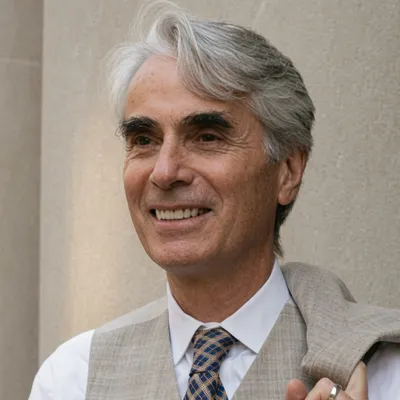
Robert Nozick (1938–2002) was a prominent American philosopher and professor at Harvard University. He is recognized as one of the most important figures in twentieth-century political philosophy and a leading theorist of libertarianism, who posed a fundamental challenge to egalitarian liberalism with his theory of the "minimal state."
Robert Nozick was born in Brooklyn, New York, in 1938. He began his higher education at Columbia University and received his Ph.D. in philosophy from Princeton University in 1963. After teaching at Princeton and Rockefeller universities, Nozick joined Harvard University as a full professor at the age of 30 and remained in this position for the rest of his academic life.
His most important and famous work is the book Anarchy, State, and Utopia (1974), which was written in response to John Rawls's A Theory of Justice. In this work, relying on individual property rights and the self-ownership of human beings, Nozick defends the "minimal state"; a state whose functions are limited solely to protecting individuals against force, theft, fraud, and enforcing contracts. He strongly opposed the redistribution of wealth by the state, equating it with forced labor.
In addition to political philosophy, Nozick left valuable works in other areas of philosophy, including epistemology, philosophy of mind, and decision theory. His book Philosophical Explanations (1981) is one of the foundational works in modern epistemology, which proposed the "tracking theory of truth" for defining knowledge. Nozick is known for his intellectual innovation, lucid prose, and unparalleled ability to devise thought experiments (such as the "experience machine" thought experiment). He passed away in 2002.