Foreign thinker
Sam Harris
Sam HarrisPhilosophy of Mind, NeuroscienceAmerican
"The difference between science and religion is that science freely admits it does not know what it does not know; whereas religion precisely claims to know the very things it does not know."
Life and Thought
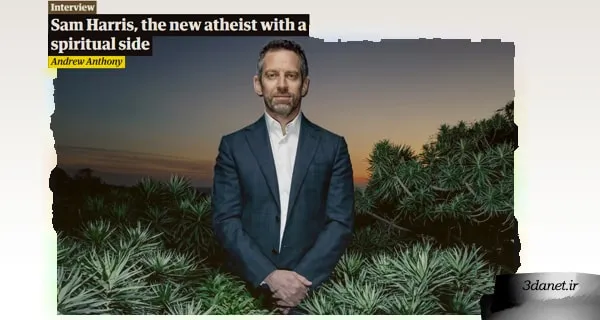
Sam Harris (born 1967) is an American author, philosopher, and neuroscientist, and one of the prominent figures of the 'New Atheism' movement. He is known for writing books on the critique of religion, free will, science-based morality, and meditation. His works have had a significant impact on contemporary debates concerning the relationship between rationality, religion, the mind, and science.
Sam Harris was born in Los Angeles in 1967. He began his studies in philosophy at Stanford University but left for a period to study and gain deeper experience in meditation and Eastern traditions in India and Nepal. He later returned to Stanford and received a bachelor's degree in philosophy, subsequently earning his Ph.D. in neuroscience from the University of California, Los Angeles (UCLA). His academic research focused primarily on examining brain scan images during belief, doubt, and denial.
His first book, *The End of Faith* (2004), written in response to the events of September 11, was widely acclaimed and won the PEN Award. This work, along with his subsequent books, established Harris alongside figures such as Richard Dawkins, Christopher Hitchens, and Daniel Dennett as one of the 'Four Horsemen of New Atheism.'
In his later works, Harris addressed fundamental philosophical topics aligned with scientific findings. In his book *The Moral Landscape* (2010), he argues that science can determine human values and that morality is a category concerning the well-being of conscious creatures. Also, in the book *Free Will* (2012), he rejects the foundations of the traditional belief in human free will, considering it an illusion based on causality and neuroscience. In his book *Waking Up* (2014), he explores the possibility of profound subjective experiences and spirituality without the need for religious beliefs, based on an investigation into the structure of consciousness.